There are feminists and other liberals (in the American political sense) who want to portray American campuses as being hotbeds of rape and sexual assault which gets overlooked by college administrators and law enforcement officers alike because they are in thrall of the Patriarchy. Anyone sensible knows this is bullshit: women on American college campuses are not raped and sexual assaulted at a rate only ever seen by women in African war zones, and hundreds of thousands of bright, middle-class women would not borrow so heavily to live in them if this were the case. But third-wave feminists and their supporters know this, of course. They just hope that by spinning this narrative often enough they can usher in oppressive regulations and laws with which they can control people who harbour thoughts they don’t like.
|
|||||
|
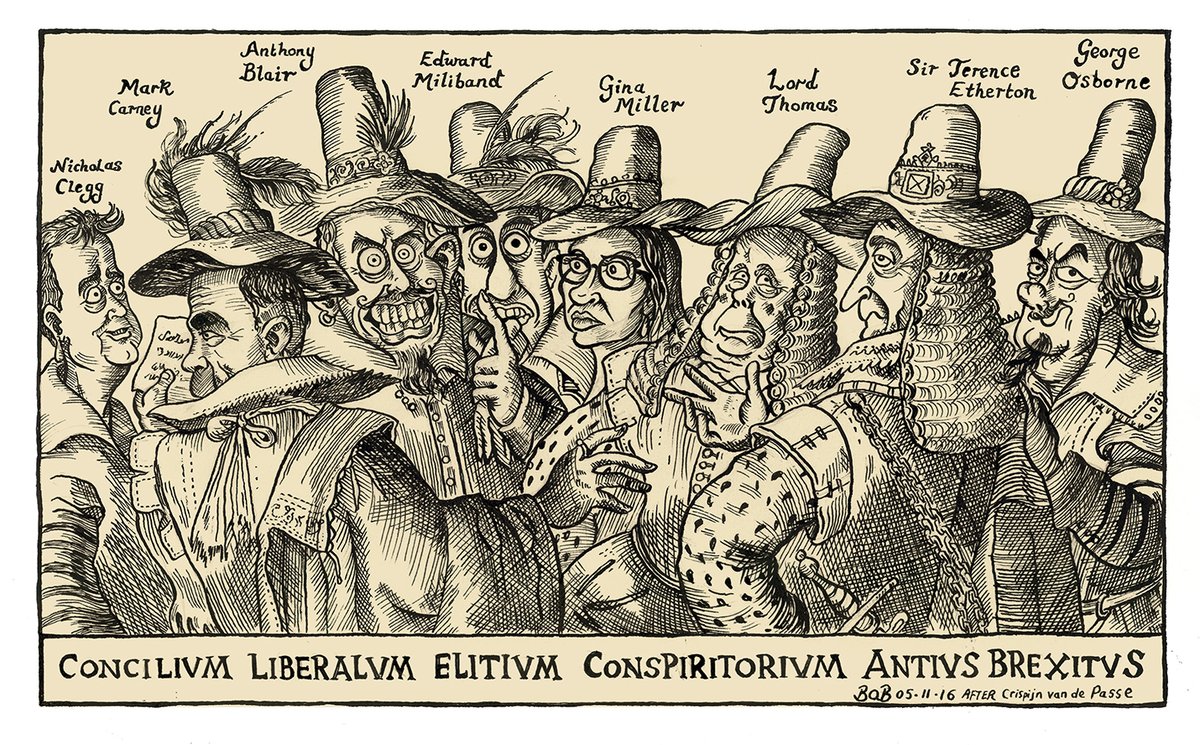
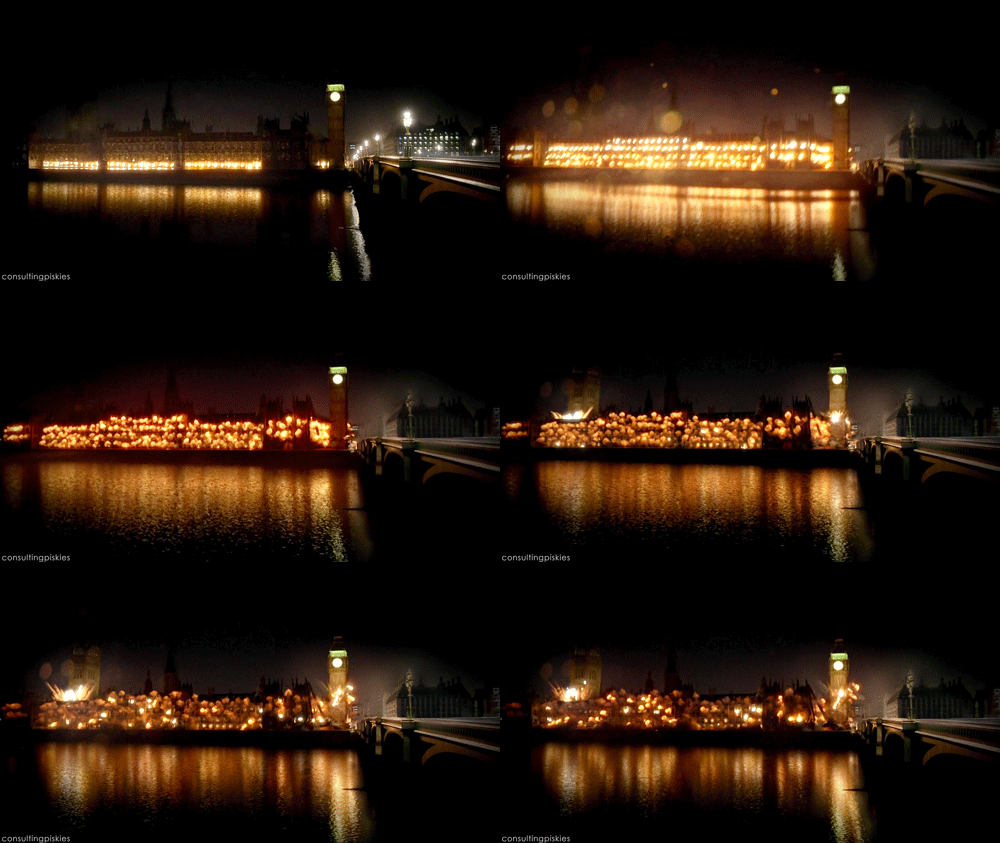
It is often said that Guy Fawkes was the only man to ever enter Parliament with honest intentions… 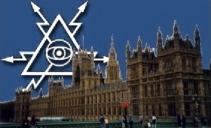 But to mix the metaphors, this year more that most.
November 5th, 2016 | 8 comments - (Comments are closed)
 I wrote this comment on the blog following an earlier posting by Perry de Havilland; I decided to recast it a bit for a comment I hope deserves another airing here. With all the nonsense of the Remainers claiming that the dignity of Parliament must be preserved (a poor joke, considering how Parliament has seen its powers eroded by various forces, including the EU, in recent years), surely the point has to be made that this referendum was presented, by former Prime Minister David Cameron et al, as not merely a giant public opinion survey, but as a referendum the consequence of which would, if the vote was for leave, trigger an exit by the use of Article 50. The Cameron government had a majority of MPs in the House of Commons; they approved this referendum and its terms of reference. (If they had chosen to revolt, they plainly decided not to do so.) This was, therefore, a process that had support of the majority of parliament, and was not undermining parliament or pushing MPs aside. There can be no attempt at convenient amnesia on this point from those who are sore at being on the losing side. The fine details of exactly how an exit will be achieved can be for the lawmakers in the Commons and Lords to decide, but the binding nature of the referendum result is not a matter of debate. By a clear majority, it was for Brexit, based on a 70 per cent turnout, the highest turnout in more than 20 years. Had the referendum result been for Remain, you can bet that the Remainers would have said the outcome was a settled one, and that no further attempts to hold such a referendum should be held for many years. That is, after all, the position taken on the Scottish Referendum result by the victorious side. And they are right to do so. What this whole saga shows is a high-handed disdain for voters (I have had my fill of being told how Brexit voters are all racists, fools or fantasists by people who conveniently forgot their support for the wretched euro and other hubristic projects.) The arrogance of it only serves to reinforce my belief that Brexit is not just the best course, albeit with certain risks, but desirable in that it is giving heartburn to the kind of creatures who deserve to suffer it. And consider this – the outcome was a clear majority, of over a million people; that contrasts with how, under our first-past-the-post system, a government can wield power based on the votes of a minority percentage of the voting population. This point is one that needs to be made, given the clear imperfections of our FPTP system. After all, politicians such as Nick Clegg, the former leader of the (greatly diminished) Liberal Democrats, and an ardent supporter of proportional representation (as opposed to FPTP) might, you would suppose, see the force of using referenda to deal with cases where the current FPTP system yields unsatisfactory outcomes. But he doesn’t in this case, because majority voter opinion is against his desire for ever-closer moves towards a federal Europe. Even so, I don’t think referenda should be used a great deal, and should be reserved for special occasions where there is an enormous, and insupportable gap, between public opinion on a matter of constitutional importance, and those of MPs. (Imagine if most MPs wanted to remove the monarchy, a view clearly at odds with that of the public.) We should hold referenda rarely. There is, after all, the practical problem of exhausting the patience of voters. Representative democracy, after all, involves a certain division of labour in the Adam Smith sense – we send people to Parliament to deal with specific issues and if we dislike their general approach over time, can remove them; we are not expected to follow the details of every policy and decide them en masse ourselves. I agree, broadly, with the old Edmund Burke point that MPs are representatives, not just delegates and ciphers of the electorate; The point, however, like all such arguments, has its limits, particularly when the views of most MPs are clearly at odds with the majority of the adult voting population, as they have been on the European Union. That divide between MPs and the opinion of the country has become so wide that a referendum was needed to settle the matter. It has been. Addendum: It is argued by Andrew Lilico that because the majority of MPs before 23 June were for Remain, they plainly lack a clear mandate, and authority, to take the UK out of the EU, and that to remove obstructionist MPs and gain a fresh mandate requires a general election. Of course, given the current state of the polls, such an election should lead to a larger Tory majority, composed, one assumes, of more pro-independence MPs. November 4th, 2016 | 29 comments - (Comments are closed)
This argument is illogical and does not hold water. There are many acts which the government can carry out on the international plane under the European treaties which have the effect of altering UK domestic law, and in doing so either confer rights on people or deprive them of rights. Whenever the UK representative on the Council of Ministers joins in passing into law a directly applicable EU Regulation then the Crown in using the prerogative power to alter internal UK law without that alteration of the law going through Parliament. This is simply a consequence of the direct effect machinery of the 1972 Act. So why should it be OK to have “more Europe” through exercise of the prerogative power, but wrong to have “less Europe” as a result of Article 50 being invoked and the direct effect parts of EU law ceasing to apply within the UK? Nothing in the wording of the 1972 Act supports such a distinction. – Martin Howe QC, Thomas Sharpe QC, Clive Thorne, Francis Hoar from Lawyers for Britain November 4th, 2016 | 8 comments - (Comments are closed)
November 3rd, 2016 | 15 comments - (Comments are closed)
I believe in making a bit of a fuss about visiting pro-free-market luminaries. Our movement needs celebs, and one good way to get celebs is to make our own people into celebs. One more photo of whoever it is, on a blog, won’t turn him into a celeb on its own, but every little helps. So, below is a photo I took last week, of Robert Lawson, during the Q&A after a talk that he gave at the Adam Smith Institute office in Great Smith Street, on the subject of the Economic Freedom of the World, and more to the point, on the measuring of it:
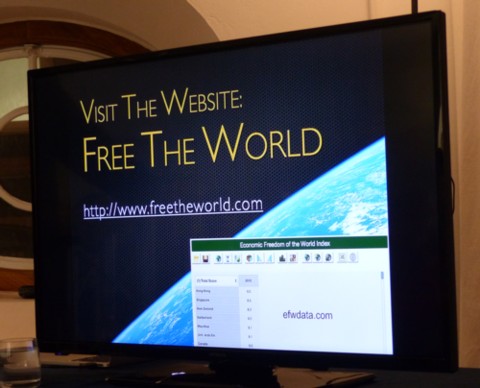
He looks like he’s conducting an orchestra, doesn’t he? Actually, he was drawing graphs in the air in front of him. The lighting in the ASI’s upstairs premises where this talk took place prefers to light the walls rather than the speaker, so that was one of the very few semi-adequate photos of Lawson that I managed. This other photo, on the other hand, which showed the final graphic that Lawson gave us on one of those big telly screens that used to cost a fortune but which are now ubiquitous (thank you: economic freedom), came out much better, because the screen supplied its own light:
Free The World indeed. This work by Robert Lawson, putting numbers to which countries are doing what in the realm of economic freedom, should not be confused with that being done by a rival enterprise, the Heritage Foundation. It’s good that there is competition in this important intellectual arena, but to me it is very confusing, and I don’t think I am the only one thus confused. The ASI email about the event included the words “Economic Freedom of the World Index”. But googling for that before the event took me to this Heritage site. On the subject of this rivalry, Lawson was very polite, and I think we all sensed some behind-the-scenes animosity there. He described the Heritage Freedom Index as somewhat more speculative and opinion-based and less based on actual data sets, supplied by others, than his own efforts. “Black box” was the phrase he used, by which he meant that it is harder to scrutinise how the decisions were arrived at in the Heritage process than it is to scrutinise the Fraser Institute process. In contrast, all the data that Lawson referred to in his talk, with his other graphic offerings on the screen above, is publicly available. Here is a .pdf of the Economic Freedom of the World 2016 Annual Report, which tells the story as of 2014, which I believe is the latest date that Lawson has done the sums for. Scroll down to page 8 and you get the big national league table. The positions I notice are: Hong Kong in the lead, the UK at number 11, USA at 16. Hong Kong is top every time. The UK is holding about steady. The USA has been falling steadily during the last couple of decades or so. Lawson also drew our particular attention to that remarkable ex-USSR-possession, Georgia, which is trying to do a Leicester City and is currently at 6. (Heritage doesn’t include Georgia in its top 10.) And so on. Hours of fun to be had. The more serious point is that economic freedom the world over had been rising healthily until about 2010, but is now flatlining. True Believer Austrianists might have winced a little at Lawson’s determination to be empirical, to gather evidence, to test theory against fact. He was quite explicit that social science, broadly defined (in the German manner) to mean systematically gathered and systematically tested knowledge about how the world works, is something that is entirely possible. He pointed out that economics is not the only science that is unable to conduct all the experiments it might like to, but instead must mostly depend on theories, and on observations to test those theories. When was the last time you saw an astronomer conducting an experiment with some planets or stars? But, please don’t take my word for any of this. Thank goodness for those websites, because if you really want to get to grips with all this stuff, you need not depend on me to tell you about it. All I really want to say here is: interesting man, interesting talk, and well done the ASI for hosting it. Apparently Lawson was only here because he wanted to be at this sporting event, last Sunday. If so, then thank you: sport. November 3rd, 2016 | 19 comments - (Comments are closed)
Second, anyone who thinks MPs will reject Article 50 in such a vote is deluding themselves. The overwhelming majority of the Parliamentary Conservative Party now wants to get on with implementing the outcome of the referendum, regardless of which side they were on in the campaign. A pleasantly surprising number of Labour MPs have also taken on board the message from their Leave-voting constituencies. Having gone through the unpleasant experience of being at loggerheads with their voters on the doorstep, they rightly don’t want to defy them now they have spoken. The referendum may have been advisory, but its advice was clear – and when seen in pseudo-First Past The Post terms, ie in terms of MPs’ constituencies, Leave won a two thirds majority. Ultimately, de facto sovereignty lies with the electorate, and politicians value their seats. November 3rd, 2016 | 15 comments - (Comments are closed)
The High Court has ruled that the government must get Parliamentary approval before it triggers Article 50. So we are a three-line-whip away from triggering Article 50. Big deal.
November 3rd, 2016 | 55 comments - (Comments are closed)
… then it would be well into the rebellious years of smoking behind bike sheds and dealing with raging hormones, because today Sami turns fifteen, which means it can legally do the wild thing in France as of this moment. What could possibly go wrong? 😛 
November 2nd, 2016 | 20 comments - (Comments are closed)
…it is a symbol that the bearer has made a donation to the Royal British Legion’s Haig Fund. I thought it might be worth pointing that out bearing in mind recent kerfuffles. November 2nd, 2016 | 24 comments - (Comments are closed)
I was searching for God and found Cthulhu. So I asked why he wasn’t running for President of the United States this year. He replied the market for Greater Evils was saturated. November 2nd, 2016 | 20 comments - (Comments are closed)
A while ago a Russian friend of mine in Sakhalin asked what people in the West were saying about Russia. I told him that most people really couldn’t care less about Russia or what it is doing. The average Brit or American cares as much about Russia as they do the sale that’s on at the bread-counter of their local supermarket. The Cold War ended some time ago and the widespread interest in Russia disappeared. It is only those who follow geopolitics that care a jot about what Russia is doing and why, nobody else cares. This is probably something that drives Putin nuts. November 2nd, 2016 | 9 comments - (Comments are closed)
|
Commentary
Economics
Politics
Specialist
Tech |
||||

All content on this website (including text, photographs, audio files, and any other original works), unless otherwise noted, is licensed under a Creative Commons License. |
|||||