[This is the text of a talk I gave on 20 March to the 6/20 Club in London. This is the final part. Part IV is here.]
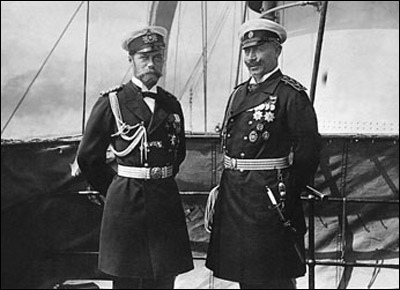
Could the outcome provide a clue? Four monarchies: Germany, Austria, Russia and Turkey were swept away by the First World War.
When I say monarchy I am not talking about the wishy-washy monarchy we pretend to have in the UK. I am talking about real monarchies, monarchies red in tooth and claw, monarchies that can at minimum hire and fire ministers and start wars.
Now, I can almost hear the pedants shouting “But those are precisely the powers the Queen has” To which I say “Only in theory”. Should the Queen or any of her successors ever attempt to actually exercise those theoretical powers they would be out of office in a matter of nano-seconds. Britain is a republic.
When did it become one? I think we can be pretty precise with the dates: sometime between 1642 and 1694. 1642 is the date of the outbreak of the English Civil War, when Charles I tried to impose his idea of absolute monarchy. 1694 is the date William III accepted that his powers were extremely limited. Since then it has been Parliament that makes the laws and votes funding – without which making war becomes extremely difficult.
But think of what happened in that period: four civil wars, one military dictatorship and a foreign invasion.
You think that was bad? Try the French. Between 1789 and 1871 they saw four monarchies, three republics, three foreign invasions and a 20-year war with the rest of Europe.
And now look at what happened in the 20th century. Germany, Russia, Austria-Hungary, China, Turkey, Spain and Portugal all made the same transition from monarchy to republic. I need not dwell on the German or Russian experiences – they are well enough known but all the others follow a similar pattern. China saw a 20-year civil war followed by Mao’s communist regime; Spain, a monarchy, followed by a republic followed by a civil war followed by a dictatorship followed by a monarchy followed by a democratic republic. Even Portugal saw two revolutions, a dictatorship and a series of bloody colonial wars.
The point is that in every case the transition from monarchy to republic is bloody and protracted.
If there is an exception to the rule it is Japan. Japan is odd because in the middle of the 19th Century it had two monarchies. The one we know about – which was as powerless then as it is now – and the Tokugawa Shogunate. The downfall of the Shogun was remarkably swift and afterwards, as I understand it, Japan was pretty stable up until the 1920s. That’s about 40 years. But assuming Japan is an outlier and we have a pattern, then why the bloodshed?
My guess is that once a monarchy looks vulnerable and anachronistic thoughts turn to a future blank slate. This blank slate is an invitation for idealistic, Utopian and statist ideas to fill the vacuum. And so they do. Even England got the Puritans (and, I might add, the Levellers).
This process was in full swing well before the First World War broke out. The Revolution of 1905 had forced the Tsar to call a parliament. The largest party in the Reichstag, the German Parliament, was the Socialists.
There were two basic majoritarian ideas knocking about Europe at the time: socialism and nationalism. Monarchs can’t do much with socialism but it is just possible for them to embrace nationalism (unless they’re Austrian, that is). And so we see Europe from about 1890 on divide on nationalist lines. Russia and Germany started to become hostile. German politicians began to talk of a coming racial struggle.
This put Austria in a bind.
When he was single there was a time when Franz Ferdinand would regularly visit an eligible duchess. The assumption was that he was courting her and that the two would eventually marry. Not so. He was courting Sophie Chotek one of her ladies in waiting. Sophie was from a noble family herself but just not noble enough. The emperor was furious when he heard that the two wanted to marry.
In English we have a rarely used word, morganatic. So rarely-used is it that I have only ever heard it used in one context. This one. It means that in a marriage one of the partners and the children and not allowed to benefit from any of the privileges of the other partner. Franz Ferdinand and Sophie had a “morganatic marriage”. The children were not allowed to inherit Franz Ferdinand’s titles or status. They could not become Emperor or Empress. On state occasions Sophie could not accompany her husband. One of the reasons the couple loved England so much – their last trip was in 1913 – was that Sophie was granted the same status as her husband. One of the reasons Sophie was in Sarajevo on the fateful day was because it was one of the rare occasions on which she could accompany him. It was also their wedding anniversary.
I have often wondered about the significance of this. Why was the Emperor so furious about Franz Ferdinand marrying beneath him? I think the reason is that Austria-Hungary being a multi-national state could not embrace nationalism. The only unifying factor was the monarchy and so everything had to be done to preserve the mystique and uniqueness of the institution. As the Emperor might have seen it when royals start marrying lowly nobles pretty soon you give the impression anyone could do the job. Bye bye monarchy, bye bye empire.
Ultimately, no one is to blame for the First World War as such. The First World War is principally a chapter in the story of central Europe’s transition from monarchy to republic. As such the principal actors were subject to forces that were way beyond their ability – or indeed anyone’s ability – to control. Although, this does not entirely absolve them of blame it absolves them of a lot.