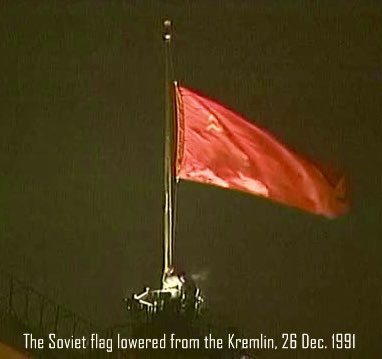
Today is the 31st anniversary of the dissolution of the USSR, one of the most delightful events in history. Hopefully within the next 30 years Russia will be back to its 1263 borders 😀
|
|||||
|
Today is the 31st anniversary of the dissolution of the USSR, one of the most delightful events in history. Hopefully within the next 30 years Russia will be back to its 1263 borders 😀
December 26th, 2022 | 27 comments - (Comments are closed)
 It’s that time of year. Everything slows down and between the overeating, disappointing presents and family rows we have the opportunity to take stock and reflect on the year that has (almost) been. And that means an opportunity to give a thought to those who have done the most in the fight against evil and communism. To this end I am introducing – on no one’s authority other than my own – the Samizdata Awards. I propose the following categories. But please feel free to propose your own. We are libertarians after all. We believe that growing the awards pie is more important than how that pie is distributed. So:
I was going to have a “Man of the Year” but I think that one’s has been taken. “I need ammunition not a ride” may not have the poetry of “We’ll fight them on the beaches” but its galvanising effect was – and is – identical. But I am expecting some keen competition to be runner-up. My nomination is Toby Young. He does Daily Sceptic. He does the Free Speech Union. He does a podcast with James Delingpole. Indeed, he is still on speaking terms with Delingpole which shows unusual fortitude or possibly unusual greed. Come to think of it I think “Fascist of the Year” is also spoken for. But who is the Reichsmarshall to Putin’s Führer? Nominations include Nadine Dorries, the FBI, anyone fired by Elon Musk and the University of Cambridge. But I am sure you can think of some of your own. In the Post of the Year – and I apologize for the lack of levity – I propose this. It changed my mind on something and at my age that is a rare pleasure. I think it only fair to point out that there will be no glitzy awards ceremony. There will be no tacky, gold-plated statuettes. There will be no expensive clothes, hairdos or coke habits. There will be very little vapidity or hypocrisy – deaths due to nuclear power little. At best we’ll have some recognition for those who’ve done some good; at worst an ever more fractious comment thread involving Paul Marks on some completely unrelated subject – probably Bitcoin. December 25th, 2022 | 46 comments - (Comments are closed)
If anything, our modern puritans are worse. At least the stiff folk of the 17th century believed reducing bodily pleasure would help expand the spirit, get one closer to God. The new puritans offer no such spiritual transcendence in return for our curbing of our blowouts – only the bovine payback of a slightly smaller waistline. We eat around 6,000 calories on Christmas Day, disgusted experts say. We can do better than that. Start with a Buck’s Fizz breakfast; don’t scrimp on the Christmas-tree chocs; make brunch a sozzled, carb-heavy mix of your first beer and some Christmas panettone; everything for dinner should be cooked in turkey fat; follow that with a 1,174-cal slice of Christmas pudding; end with more booze and a selection box you don’t pick at but consume entirely. We can beat 6,000 calories. We owe it to old England and the original spirit of Christmas. – Brendan O’Neill (£) I’m up for embracing your admonition, Brendan, going to give it a serious try. Have a Merry Christmas all. December 24th, 2022 | 14 comments - (Comments are closed)
This video of a woman called Isabel Vaughan-Spruce being arrested for praying silently in Birmingham has gone viral. The version to which I link is from the Daily Caller. I have written my own transcription of the dialogue below. It differs from the subtitles provided by the Daily Caller in minor ways, mostly related to British police and legal terminology. * “Um, before I ask you any questions about what’s going on today, I have to caution you, which is just your rights, which is you do not have to say anything. It may harm your defence if you do not mention, when questioned, something that you later rely on in court. Anything you do say may be given in evidence. What are you here for today?” * She was then searched by a policewoman. I doubt the policeman was really that worried that Ms Vaughan-Spruce might harm him or his female colleague. To be fair to him, he was reasonably polite and even sounded a bit embarrassed. However he made it quite clear that the question he had to ask in order to decide whether to arrest her was whether she was silently praying, i.e. what was going on in her mind. He would not have had to ask if she had been praying out loud. December 24th, 2022 | 20 comments - (Comments are closed)
Like so many things on the left, they went from asking us to tolerate something to demanding we celebrate it. December 24th, 2022 | 7 comments - (Comments are closed)
December 22nd, 2022 | 9 comments - (Comments are closed)
Dear all,
As we wind down for Christmas, it is important to ensure that we keep ourselves safe, and I have found this wonderful but short instructional video, purportedly from Finland c. 1979, helpfully showing how to open a door correctly. I would recommend turning on the English subtitles for most of us, but other subtitles are available for those of us unable to understand the wonderful Finnish language.
I have a nagging feeling that this might have been a parody of ‘health and safety’ instructional videos, but if that was its aim, it has failed miserably to stem the tide. December 22nd, 2022 | 16 comments - (Comments are closed)
I was depressed to see Ros Kaveney tweeting this:
I briefly met Roz Kaveney many years ago, at a speech she gave. She dealt very patiently and graciously with the curiosity of her mostly student audience about her having had a sex change, at a time when it was much more rare to meet openly transgender people than it is now. I do not think she is a psychopath or a liar. I just think she has succumbed to the terrible effects of being in a social media reverberation chamber. I had heard of the Lemkin Institute, too, named after the scholar of genocide Raphael Lemkin, most of whose family were murdered in the Holocaust. The world is not yet safe from such horrors, as shown by the Institute’s pages on historical, ongoing and threatened genocides in places such as Armenia, Somaliland and Ukraine. It should get back to the day job, which urgently needs doing. The Lemkin Institute’s “Statement on the Genocidal Nature of the Gender Critical Movement’s Ideology and Practice” is absurd. December 21st, 2022 | 20 comments - (Comments are closed)
I am not being sarcastic when I say that I admire the way that Nick Young, writing for Greenpeace Aotearoa (the country formerly known as New Zealand), at least has the guts to admit that Sri Lanka’s ban on chemical fertiliser was a disaster. In a piece called “Sri Lanka’s fertiliser ban and why New Zealand can phase out synthetic nitrogen fertiliser”, he gives his reasons for supposing that despite Sri Lanka’s experience, it will work next time. He is enthusiastic, for instance, about the prospects for the Indian state of Sikkim which has also prohibited chemical fertilisers. He writes,
It is strange to me to see someone delight in the fact that the choices of shoppers or farmers, the ordinary people whose lives would be affected most, played no part in this change. This Guardian article is five years old now, but I would bet that the problems it describes have not gone away: “Sikkim’s organic revolution at risk as local consumers fail to buy into project.” More recently, Pawan Chamling, who as the then Chief Minister of Sikkim did much to put the policy in place, said that the current Sikkim government “has put Sikkim’s organic mission on the back burner”. He writes,
Freely sold and freely bought. Farmers making their own decisions. How awful. Despite everything, I have nothing against organic farming. But the way that Sikkim being “100% organic”, a source of pride and a key part of Sikkim’s identity according to Mr Chamling, withered as soon the government subsidies dried up suggests that the change was never, if you will forgive the metaphor, organic in the first place. It was imposed from the top down. It had no roots. December 20th, 2022 | 29 comments - (Comments are closed)
In this sense, the problem of EU corruption, rather than being a bug in the system, should be seen as an inherent consequence of the supranationalisation of politics. Making the EU “more democratic” won’t change the fact that the lack of a European demos represents an insurmountable obstacle to the creation of a European democracy, even if Brussels was interested in going in that direction (which it isn’t). The number of corrupt officials involved in the amateurish Qatargate scandal is of little importance; for the EU, it is already too late. December 19th, 2022 | 14 comments - (Comments are closed)
Paul Waugh, the Chief Political Commentator for the Independent‘s spinoff the i Newspaper, tweets, “On @BBCr4today, Unison’s @cmcanea did an excellent job of explaining why Govt claims of “record” funding for the NHS are misleading. (ie health inflation higher than normal inflation + demographic pressure) Here’s a key graph to remember whenever you hear ‘record’ spending” His tweet then shows a graph of the average annual increase in government spending on health in 2019/20 prices for various governments plotted against time. Note that inflation is already accounted for by having all the spending figures at 2019/2020 prices. If spending on the NHS had merely kept pace with inflation, the bars would all have a height of zero. As it is, all of the bars are positive. Therefore not only has there been record funding for the NHS under this government, there has been record funding for the NHS under every government. Whether one thinks this a good thing or a bad thing, it is a fact. December 19th, 2022 | 17 comments - (Comments are closed)
Putin’s insecurity might start with anxiety about his personal future, but he has extended this into a vision for Russia that involves a permanent struggle with the West and its liberalism. There is little NATO can do about this vision except to ensure Russia’s defeat in Ukraine. Trenin’s bleak logic works both ways. There is no turning back for either side. Putin’s future and that of his inner circle is a matter for the Russian elite. The fragmentation of the Russian Federation is not, despite allegations, desired by Western governments in that this would be a source of yet more upset and instability. By and large they would prefer that Russia held together – but again this is not up to them. Moscow’s decision to use outlying regions as a source of military recruits to pursue a catastrophic war means that it will have to cope with the consequences. Whether or not an alternative liberal and democratic vision for Russia can develop in the future, upon which any more stable European security order depends, will also be up to Russians. The West can help if there is something to work with for the consequences of continued chaos and anger will be dire, but the first requirement will be a different sort of leader in the Kremlin, with a strong enough political base to confront the harsh reality of Russia’s situation. In the end the biggest threats to Russian security do not lie outside its borders but inside its capital. December 17th, 2022 | 28 comments - (Comments are closed)
|
   |
||||

All content on this website (including text, photographs, audio files, and any other original works), unless otherwise noted, is licensed under a Creative Commons License. |
|||||
Recent Comments