We are developing the social individualist meta-context for the future. From the very serious to the extremely frivolous... lets see what is on the mind of the Samizdata people.
Samizdata, derived from Samizdat /n. - a system of clandestine publication of banned literature in the USSR [Russ.,= self-publishing house]
|
In the Slavery Abolition Act of 1833, Parliament committed the huge sum of 20 million pounds sterling to compensate slave owners for the loss of their “assets”. That was equivalent to 40 percent of the entire national budget (and five percent of Britain’s GDP at the time), requiring the government to borrow most of the 20 million from private sources.
– Lawrence Reed. These numbers really put the political feat of achieving this in perspective.
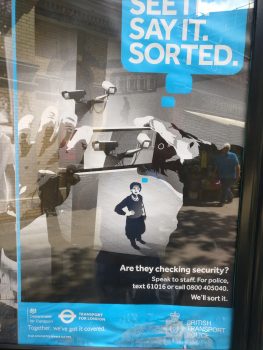
Our masters do not think it is appropriate for us to observe and record the fact we are being observed and recorded…
That reminds me of of something I posted in 2002.
I have never seen so many lefties attacking a Labour leader. And I have never seen so many grass roots Tories attacking a Tory leader. It is a bizarre race to the bottom in which who wins the next election will be based on which despised leader least nauseates their own side.
– Perry de Havilland
Since nasty, backward British voters cannot be trusted to believe in or vote for the right things, we need human rights imposed on us at a European level, so that present and future UK governments could not dial back certain rights or entitlements even if they wanted to. This is predicated on the belief that democracy, popular will, should not trump everything, which is actually a perfectly reasonable position – any good constitution should have checks and balances built in to it in order to prevent the passion of the moment finding its way onto the statute books without due discussion, diligence and consideration of the rights of dissenting minorities.
But the academic Left’s naive approach assumes that the EU will always be a force for the kind of socially progressive agenda that its academics seek to champion. By defending a structure which permanently paints the UK as the authoritarian bad guy and the EU as the right-dispensing good guys, it provides no defence in the event that the EU flips and takes a less expansive view of human rights than is currently the case. And this is more than a theoretical, irrelevant supposition – with the rise of populists and authoritarians throughout Europe, a time may eventually come when some decidedly illiberal policies flow down from Brussels. And what defence would Britain then have, given that the Left trust European voters and politicians over British people to be the final arbiter of rights and freedoms in the UK?
Thus, at best this “resist Brexit to preserve women’s rights” movement is guilty of exceptionally short-term, two-dimensional, narrow thinking in which the policy thought most likely to guarantee certain rights and entitlements today is mistakenly held as the optimal policy for the longer-term, and at worst it is as contemptuous of women as it is of democracy itself.
– Samuel Hooper
As Mr Monbiot put it in Wednesday’s article, he believes that “… the ultra-rich [have] learned how to buy the political system.” If this were true, what would we expect to observe? For example, would the share of aggregate income tax paid by the highest one percent of earners have increased or decreased? (It has increased.) Would government spending on state schools, to which the ultra-rich rarely send their children, have increased or decreased? (It has increased.) Would Remainers or Leavers have won the Brexit referendum? (Leavers won.)
These look like disconfirmations of Mr Monbiotis hypothesis. He does not bother to explain them away, being apparently unconcerned by consistency with observed facts. Nevertheless, I am sure he could if he tried. This is not because his hypothesis that the ultra-rich have bought the political system is true, but because it is merely a slogan. It has no testable implications. It does not answer to reality in the way that scientific hypotheses do. It is, thus, what Popper deemed pseudo-science.
– Jamie Whyte
“I felt a great disturbance in the Force, as if millions of voices suddenly cried out in terror and were suddenly silenced. I fear something terrible has happened.”
― Obi-Wan Kenobi, sensing the destruction of Alderaan by Darth Vader
The circumstances are complicated. Lisa Graves, the satirist behind the most recent incarnation of Elfwick, was reported to Twitter for using an expletive during an exchange on her personal account with another user. The complainant additionally made the demonstrably false claim that Elfwick was an ‘alt-right account’ engaged in ‘targeted harassment’. Before long, all of Graves’ accounts had been subject to a blanket ban. Given Twitter’s curiously draconian response to such groundless accusations, it is hardly surprising that many are assuming that the punishment is politically motivated.
― Andrew Doyle, sensing the destruction of Godfrey Elfwick by Twitter
Jeremy Corbyn and his party of enablers have mainstreamed anti-Semitism in Britain in ways Oswald Mosley could only dream about, so I hope the Brownshirt Left will understand why their grimaces and posturing about ‘extremism’ might not be awfully credible
– Perry de Havilland, referring to this.
Agatha offers sage advice to another worthy:
I think you should undertake a single-handed voyage around the world. I know you have no experience of sailing, but that’s never stopped you taking on other jobs. Just think of the advantages. It would put a tan on that pasty pudgy face. It would take you out of circulation for a year, which would do wonders for your reputation and the quality of your newspaper. You could easily get sponsorship from some of your Russian friends, and announce you’re doing it unpaid for charity, maybe the Clinton Foundation? Go on, do it!
Oh boy, who can this person be?
But not quite in the sense that the Telegraph‘s Brussels Correspondent, James Crisp, thinks.
He has written a piece entitled “Terrible translations of Brexit White Paper make Britain a laughing stock in Brussels”
British officials botched the translation of Theresa May’s discredited White Paper into European languages, part of a UK strategy to win concessions from Brussels, and failed to translate the document into Irish, despite being locked in fraught Brexit talks over Ireland’s border.
The paper’s executive summary, which Britain hopes to use to help solve the vexed border issue, has been translated, poorly, into 22 languages. The full 100-page document has only been translated into one other language, Welsh, which, unlike Irish, is not an official EU language.
After The Telegraph contacted the British Government, an Irish version was published on Thursday afternoon, two days after the other translations but the damage was already done. A DexEU spokeswoman said the translations were being published as they were finished.
Basic errors and amateurish negligence has not only wasted an opportunity to win hearts and minds on the Continent but will confirm Brussels’ worst suspicions about the government. It exposes, once again, how poorly the Department for Exiting the European Union understands Brussels, its priorities and its culture.
When Donald Tusk, the president of the European Council, travelled to Dublin he made a point of addressing reporters in Irish. The gesture was appreciated in Dublin and left some in tears. The EU-27 governments have made it clear they will back Ireland to the hilt with senior figures insisting “we are all Irish”.
In contrast the tin-eared Brits considered the common courtesy of an Irish translation an afterthought.
We saw so many palaces and temples during our visit to Japan that they have merged in my mind. But in one of them, probably the former Imperial Palace at Kyoto, there was a fine recreation of a great daimyo awaiting an audience with the emperor. Etiquette (the sort enforced with swords) forbade him to stroll in and say, “Your Majesty, we need to talk” – even if the emperor needed and wanted to hear what he had to say. No, he had to wait for hours on his knees in a beautiful but austere anteroom, contemplating the painted screens. I thought of that daimyo with his knees aching under his perfectly arranged silk robe when I read Mr Crisp’s line, “It exposes, once again, how poorly the Department for Exiting the European Union understands Brussels, its priorities and its culture.” The priorities and culture of Tokugawa-period Kyoto required that the emperor’s symbolic importance be reinforced by making everyone wait for hours before business could be done. None of the usual reasons or excuses for being kept waiting applied. The wait was the point.
The priorities and culture of European Union-period Brussels require that every document be translated into a couple of dozen languages. I will focus on Irish in particular because for that language the divorce from the usual point of translation, to enable communication, is complete. Not one Irish parliamentarian or official actually needed the White Paper translated into Irish in order to understand it. Probably no more than a handful of them are even capable of reading it in Irish. Like the deference to the emperor in Kyoto when real power lay with the Shogun in Edo, the laborious process of translation into Irish before business can be done is all just a symbolic obeisance, a court ritual, a game.
The UK was never very good at this languages game and will drop it with relief once out of the EU. In contrast Ireland is firmly in the EU and plays the game better than anyone. (Though as I will argue later, this may not be to the advantage of the long term survival of Irish.) Although Irish has been an official language of the EU since 2007, it was only in 2015 that the the decision was taken to upgrade the language to a full working language of the European institutions. By 2022 it is hoped that the “derogation phase” during which the EU was let off the obligation to provide full translation or interpretation services for every document to and from Irish will be over.
The way things are going, the apotheosis of Irish as a full EU working language will coincide neatly with its death as a native language.
Many of the English – and even some of the Irish – shrug their shoulders at the prospect, and talk of “efficiency”. From what I have written so far you might think I was one of them. You would be wrong. I see language death as a tragedy. Quite apart from the loss of beauty, I fear a world unified under one language for the same reasons I fear a world unified under one government. If that last culture falls under the sway of a tyranny, there is nowhere else to flee, no one else to keep the flame alive.
For many reasons I would love to see the apparently inexorable slide towards extinction of more than half the languages spoken on Earth reversed. Alas, that shows no sign of happening. Naturally those who love their threatened language are moved when they hear a visiting foreigner make the effort to speak it. (Really, though, there was no need to burst into tears just because Donald Tusk memorised a few phrases. It was a nice gesture, but if that’s all it takes to get the Irish political class to fall at one’s feet, Theresa May ought to reinstate Boris Johnson as Foreign Secretary and get him to do one of his linguistic party pieces.)
Naturally, too, those who love their threatened language want to see it enshrined in an official position of parity with the other languages of Europe. But “enshrined” is the word. Shrines are not raised to the living. The question comes unbidden: who actually reads the endless streams of EU documents translated so dutifully into Irish? I have a horrible suspicion that the answer is no one, no one at all. Lurking on forums discussing the future of the Irish language I have read well-argued claims that the exodus to Brussels of so many of the best-educated native Irish speakers is one of the factors causing the Gaeltachts, the Irish-speaking areas, to decline. It cements the perception – and helps make the perception fact – that for a young person with talent and ambition there is no life to be had in the Gaeltacht. What a strange life these exiles must have. They grow up in one of the few remaining parts of Ireland where the ancient tongue is still spoken in the streets. Presumably inspired by a wish to preserve that inheritance they study for many years to reach the high standards required to be a professional translator or interpreter, and their voices are no longer heard in those streets. Off to Brussels they go (plus a monthly trip to Strasbourg), where they speak beautiful Irish into headphones tuned into another channel and write less beautiful Irish about Section 6, sub-section 13, paragraph 1(a)(iv) of the Directive on This, That and The Other that not one human soul will ever read.
July 1st 2018:
Jeremy Corbyn backs calls to decriminalise possession of cannabis
Jeremy Corbyn said he would like to see the possession of cannabis to be decriminalised as he backed calls for the drug to be used for medicinal purposes.
July 10th 2018:
Corbyn backs Nordic Model to tackle sexual exploitation
Labour Leader Jeremy Corbyn declared his full support for Britain to look at changing our prostitution laws by criminalising the purchase of sex, also referred to as the ‘Nordic model’.
The Courier reports:
Scottish Government asks eight-year-olds to reveal their Brexit views
The Scottish Government is appealing to children as young as eight to share their views on Brexit.
Critics branded the Twitter plea for youngsters to “work with” the government on a Europe panel “creepy”.
But the SNP administration defended the move as giving those who will be most affected by leaving the EU a “voice in the Brexit negotiations”.
The call by the Twitter account ScotGovEurope said: “Are you aged 8 – 18? Children and young people in Scotland are going to be affected by #Brexit, so we want your views!
“Apply to join the @cisweb Children & Young People’s Panel on Europe to work with @scotgov.”
It sparked claims that SNP ministers are trying to indoctrinate children on the constitution.
…
The charity says that young people have a “right to be heard in the discussions about Brexit”, which they say is backed up by the UN Convention on the Rights of the Child.
A Scottish Government spokeswoman said: “Brexit is the single biggest threat to our economy and future prosperity, and children and young people will be most affected in the coming years.
“We are therefore supporting Children in Scotland to establish the children and young people’s panel on Europe and enable them to have a voice in the Brexit negotiations.”
Here’s where you can apply to join the Panel, but first they recommend that you ask yourself
Is the project for me?
This project might be for you if you like standing up for the things you believe in, and
talking about:
• What Brexit might mean for your family and friends
• What people in charge should be doing to help children
• What rules people in charge should follow when they make
decisions about Brexit
I think we can safely say that most Samizdata readers qualify. However this one might be more tricky:
• Why children should have their say on Brexit
The question of whether those who think that children should not have their say on Brexit could or should join the Panel is left for the reader. Oh, I nearly forgot, to be eligible you do have to be aged between eight and eighteen. Reassuringly,
You don’t need to know much about Brexit to apply. We will share information with you to
help you to take part.
“What all of this points to is a new kind of protest. There is a new generation for whom protesting is largely indistinguishable from a music festival. It has the same vibe, the same style, and the same constituency: the non-working classes, who define themselves through culture rather than labour, and who see themselves as having more in common with global technocratic institutions like the EU than they do with some of the people who live in their own towns (but on the other side of the tracks). If this is radicalism – which it isn’t – then it is passive radicalism. It is an entirely contradictory phenomenon, where on the one hand protesters are telling us actual Nazism is making a comeback, but on the other hand they’re not going to do anything about it except chill out in Trafalgar Square and post to Instagram a photo of them and their friends holding a ‘FUCK TRUMP’ placard.”
– Brendan O’Neill
I avoided all this dreck by spending the weekend in South Devon, drinking local beer, swimming in the sea and walking on the hills above, with no internet access, no TV (which meant not watching the World Cup final). Heaven.
|
Who Are We? The Samizdata people are a bunch of sinister and heavily armed globalist illuminati who seek to infect the entire world with the values of personal liberty and several property. Amongst our many crimes is a sense of humour and the intermittent use of British spelling.
We are also a varied group made up of social individualists, classical liberals, whigs, libertarians, extropians, futurists, ‘Porcupines’, Karl Popper fetishists, recovering neo-conservatives, crazed Ayn Rand worshipers, over-caffeinated Virginia Postrel devotees, witty Frédéric Bastiat wannabes, cypherpunks, minarchists, kritarchists and wild-eyed anarcho-capitalists from Britain, North America, Australia and Europe.
|