We are developing the social individualist meta-context for the future. From the very serious to the extremely frivolous... lets see what is on the mind of the Samizdata people.
Samizdata, derived from Samizdat /n. - a system of clandestine publication of banned literature in the USSR [Russ.,= self-publishing house]
|
“I will not be slienced.” (Greta Thunberg in Bristol)
How would she know? Indeed, how would we know? It savours less of English understatement that of pointed irony to say that noone has tried to silence her. So it seems to me that we and she lack data on this point.
Greta has Asbergers Syndrome. Fans of ‘The Big Bang Theory’ know how many of the jokes depend on the impossibility of silencing the asbergian Sheldon by the gentle methods of social cues and hints, and the ease of doing so when to speak or to act requires that he move outside his idiosyncratic comfort zone. If Greta ever goes to China (obviously required by her proclaimed cause but AFAIK not even hinted at by her handlers or herself) then we may learn how far her ability not to be silenced extends beyond her condition. Meanwhile, we are entitled to reply to her, “How do you know?”
The question could also be put to her about other matters.
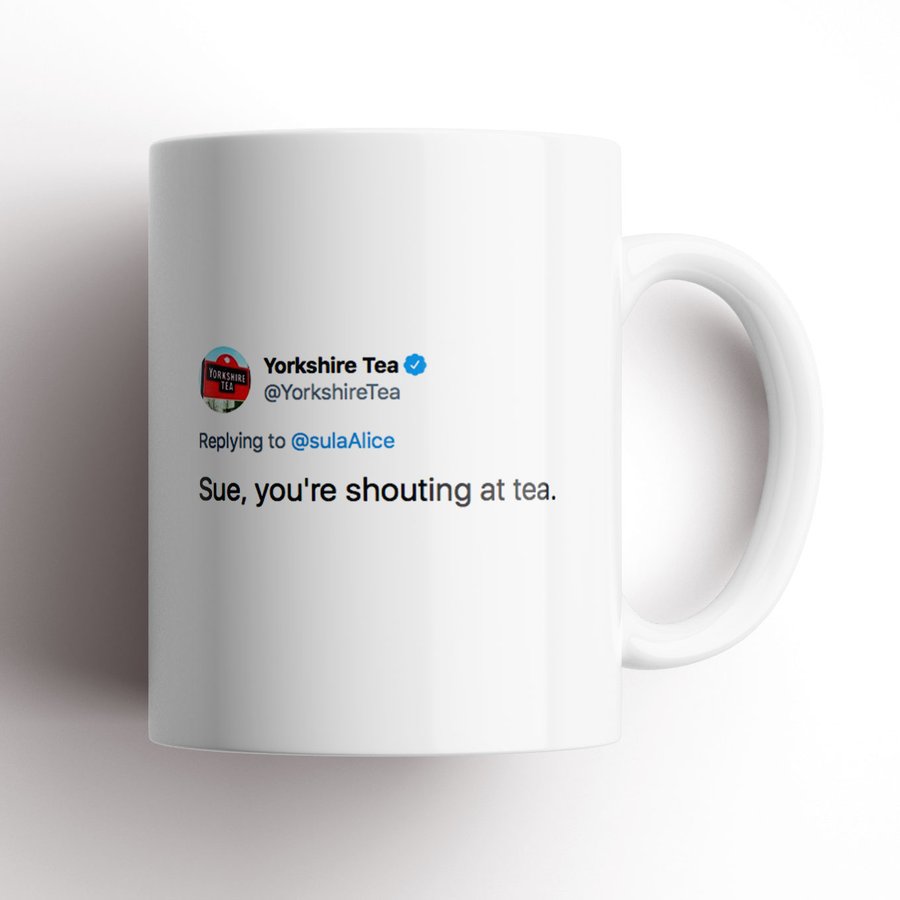
Here in the UK the week began with shouting at tea and is ending with shouting at permanent secretaries. Home Secretary, Priti Patel is accused of doing the shouting and as a consequence there be ructions. Now this is probably not the time to offer an opinion on whether Patel is guilty of this non-crime, but it does raise the question of whether we should care or not.
Being shouted at is not a lot of fun especially by your boss. All things being equal bosses shouldn’t do it. But bosses are not paid to be nice they are paid to be effective. So, does shouting help? Or hinder? Or not make much difference?
Some examples come to mind:
Churchill. He used to have blazing rows – hours-long blazing rows – with Alanbrooke. But the shouting was both ways. Also – outside 1940 – was Churchill effective? Discuss.
Margaret Thatcher. Despite her fierce reputation rumour has it that she was nice towards her staff. Much the same used to be said about her colleague, Norman Tebbitt, the Chingford Skinhead.
Douglas Haig. Apparently he was very calm. As a subordinate you had to really push it get him angry. But was he effective? I have studied him for years and I am still not sure. Probably yes. Paul Marks, on the other hand, has no such doubts. Definitely not.
In my personal experience, the calmer bosses seem to be more effective but as an employee it’s often difficult to tell.
Tomorrow evening, I am hosting a talk at my home which will be given by Jack Powell. Here’s the short biographical note that Powell sent me, to send out to my email list of potential attenders:
Jack Powell founded 1828, which is a new neoliberal news and opinion website, to champion freedom, especially within British Conservative politics. He is the editor of the website as well as being in his final year at King’s College London, studying Spanish and Portuguese.
Interesting guy. Here is the link to the 1828 website.
In the spiel about his talk that followed, Powell goes on to say that 1828 is especially trying to champion freedom in British universities. What this actually means is that he’ll be operating in the territory where politicians and students come together, to think about the bigger picture. An important spot in the political landscape, I think.
In general, Powell’s blurb for his talk abounds with ambition, energy, enthusiasm, attention to detail, and also with the names of Conservative Party politicians (Liz Truss, Priti Patel) and Media organisations (CapX, Guido, Quillette, New Statesman) with whom 1828 has had dealings and who have said good things about the efforts that Powell and the rest of the 1828 team have been making.
I have spent my libertarian life so far trying to spread libertarianism way beyond the merely party political arena, an approach which paid off big time when the internet arrived, in the form of such wonders as, well, Samizdata. But part of the reason I did that was that when I started out being a libertarian activist, it seemed to me that too many people were doing only party politics, and not enough people were trumpetting broader and undiluted libertarian principles to the wider world. There was not nearly enough proclaiming of the libertarian “metacontext”, as we here like to put it. But ever since that earlier time, the last two decades of the previous century basically, the Conservative Party, and in particular its youth membership, has moved away from those freedom-oriented principles and towards the as-much-government-as-we-can-afford-and-then-some position. I am very glad that people like Jack Powell are now trying to reverse that trend.
Recently, and I’m not changing the subject, I attended a talk given by Steve Davies, in which he talked, as he frequently does these days, about political realignment. In particular, Davies has long been noticing a definite shift by the Conservative Party away from free market policies and towards economic dirigisme. This shift, he says, is no mere whim of the people who happen to have been leading the party. He sees a deeper trend in action. So, does that mean that Jack Powell and his fellow 1828-ers are wasting their time talking to and listening to Conservative politicians?
My short answer is: No, they are not.
I say this not because I assume that Davies is wrong about where he sees the Conservatives going. I now suspect that he exaggerates this shift somewhat, but the policy direction he sees is the direction I also see, as, now, do many others. But that doesn’t mean that 1828-ers communing with Truss, Patel and also with the likes of the recently resigned Chancellor Sajid Javid and with the likes of Steve Baker won’t count for anything. When politics goes through upheavals of the sort that Davies now observes, this doesn’t mean that all the politicians who lose internal battles within their parties just vanish. Some do, but others often hang around and find new party settings to operate in, new allies to collaborate with. Davies himself said this in his talk, and offered historical examples of just such behaviour, by William Gladstone for example. Therefore, any time and effort that the 1828-ers spend talking to, listening to and generally cheering on freedom-sympathetic politicians could end up being very significant, no matter what happens to the broader political landscape.
You can never be entirely sure, but neither Sajid Javid nor Steve Baker seem to me like they are about to just fade away without any more fight.
Baker in particular, fresh from his Brexit agonies and ecstasies, is now making all sorts of promising noises. Scroll down, for instance, to the bottom of this piece, where it says:
The outgoing ERG chair has said he wanted to focus more on constituents and that it was time for him to “return to certain economic issues which I consider as least as important to the future of the country as exiting the EU”.
The writer of the piece, David Scullion, adds:
The Wycombe MP is known to be critical of the current system of global finance and what he sees as the problems of Keynesian ‘easy money’.
If you doubt Baker’s continuing commitment to such ideas, just listen to what he starts saying about two thirds of the way through this very recent interview with Scullion. That’s the same link twice, but that’s not the half of what it deserves. Really, seriously. As I believe they say on American battleships: Now hear this! Now hear this! Not many politicians have major impact on two huge issues in one career and in one lifetime, but if I had to pick someone who might be about to score two out of two, I’d now bet on Baker.
So, whatever Jack Powell and his 1828 mates manage to accomplish in the years to come, it is likely to do some good. Listening to him talk about that tomorrow evening will be very interesting.
Just to give a light tap to a small drum, which nobody else will tap if neither of us does, and just to say: fellow Samizdatista Patrick Crozier and I recently did one of our recorded-and-internetted conversations, this time about that strange event called in these parts: The Falklands War, which happened in early 1982. Listen to this by going here. Further thoughts about this historical event and this conversation from me here. (See also an earlier posting I did, about a very strange British public personality who emerged onto British TV during that war.)
Somewhat inconveniently, for many, our conversation does rather go on a bit, for over an hour. But I have recently been finding myself spending what used to be my television time instead listening to things not unlike these conversations that Patrick and I have taken to doing – podcasts, YouTubery and so forth (many of these things involving Dave Rubin (a recent discovery of mine)). So I thought it worth mentioning our effort(s) here.
Some MapPorn:
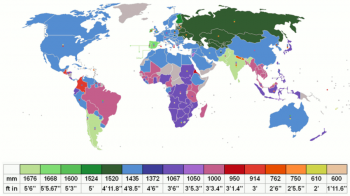
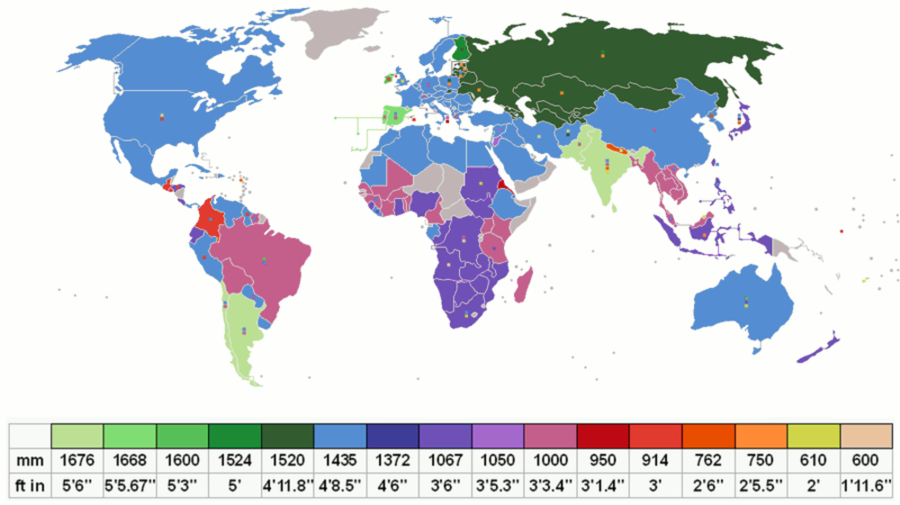
This is a map of the world’s different railway gauges.
Fun fact, if fact it be. In the schmoozing after a talk I attended earlier in the week, someone told me that Britain’s four foot eight-and-a-half inch gauge is the result of how far apart horse-drawn carriages had their wheels, in the pre-railways north-east of England, that being where the railways in Britain got started. The point being that such carriages also had a standard gauge. Their wheels dug ruts in the un-tarred roads of those times, so if your carriage had a different “gauge”, it couldn’t travel in those ruts, and thus couldn’t travel at all. These ruts were rails before rails. And that regular distance apart transferred itself to the newly emerging railways.
I haven’t checked this. I didn’t want to bother with any facts that might destroy my story, until I’d told my story. But as of now: feel free to destroy away.
Another question: Will the railway gauges of the world ever change? By which I mean get somewhat less numerous. Say: As a result of some sort of new intercontinental high speed rail system being developed. I seem to recall reading that in Spain, the new high speed trains are the same gauge as those in France (and thus also Britain) and different from the regular Spanish gauge. Or would a some futuristic global high speed system will just add yet another standard? (Will Brunel’s preferred seven foot gauge for the old Great Western line rise from the dead and conquer the world? Guess: No.)
Cue the commentariat who will, I predict, change the subject to the QWERTY keyboard, and then disagree about how that happened, and about how keyboards will be in two hundred years time.
“The Romans were blinded to what was happening to them by the very perfection of the material culture which they had created. All around them was solidity and comfort, a material existence which was the very antithesis of barbarism. How could they foresee the day when the Norman chronicler would marvel over the broken hypocausts of Caerleon? How could they imagine that anything so solid might conceivably disappear? Their roads grew better as their statesmanship grew worse and central heating triumphed as civilization fell.” (Eileen Power essay on the fall of the Roman Empire, written in the winter of 1938-9.)
“History does not repeat itself, but it sometimes rhymes.” (attributed to Mark Twain)
It happened in Thessalonika near the end of the Roman Empire.
The empire had been in trouble for some time. It was not reproducing itself – “The human harvest was bad” (Seeley). ‘Agri Deserti’ – once-cultivated lands now abandoned for lack of people to till them – could be found in every province.
Internally, the empire tried its usual solution: more government, more laws, more force. Legislation to reward large families and tax bachelors was kept on the statute books for centuries although “successful it was not” (Power). As the empire waned, laws to deal with the consequence of this failure were added: binding cultivators to the soil (the origin of serfdom) was merely the most common example of assigning a hereditary obligation to more and more of the professions the state relied on as soon as a shortfall appeared in them, legally punishing any son who did not follow in his father’s footsteps. To draft and regulate these laws, the numbers and privileges of bureaucrats ballooned from Rome’s former proportion (small in numbers by our standards, but when human productivity was less, each unproductive mouth cost more).
Successful all these laws were not – so, externally, the empire addressed its chronic shortage of manpower by immigration,
to dose it with barbarian vigour. Just a small injection to begin with and then more and more
Goths arrived, first as recruits to Roman army units, then as foederate units under their own leaders, growing like a cancer within the armed forces until an Egyptian mother quite naturally wrote the emperor to return her citizen son who “has gone off with the barbarians” – by which she meant he had joined the ‘Roman’ army.
Emperor Theodosius made the Goths obey him, but his was an insecure authority over them. He used Gothic troops in battles where pyrrhic victories may have been welcome. As one summary of the costly victory of Frigidius (394 AD) puts it,
The loss of 10,000 Goths cannot have distressed Theodosius unduly.
Theodosius also had little choice but to use some of their leaders as governors. Mostly, the empire’s soldiers were also its police – so the leaders of those who were now increasingly providing those soldiers had to be both rewarded by, and used in, such posts. Thus did Butheric the Goth became governor (magister militum) over Illyricum, which included Thessalonika.
The urban elite of Thessalonika were university-educated Greeks.
It would be hard to imagine an education less suited to help them understand the dangers they faced. The study of rhetoric, its links with reality long severed, …
So Eileen Power described the ‘learned’ of the dying Roman world. (Today, 8 decades after she wrote those sentences, it is easier to imagine an education even less suited to helping elite intellectuals understand the dangers facing them, one whose links with reality are even more completely severed.) In the empire’s second century, Hadrian had dispersed those Jews he did not kill around the empire, confident they’d soon lose their primitive prejudices and assimilate to being broad-minded Graeco-Roman intellectuals like himself. Fourth/fifth century Graeco-Roman intellectuals thought the same of the immigrants. Sidonius Appolinaris wrote a ‘good-natured’ description of the “embarrassing friendliness” of the new barbarian neighbours he encountered on a fifth-century visit to Lyons:
“How can he be expected to compose six-foot metres”, [Sidonius] asks, “with so many seven-foot patrons all around him, all singing and all expecting him to admire their uncouth stream of non-Latin words.”
The shrug of the shoulders, the genial contempt of one conscious of an infinite superiority – how familiar it all seems.
Perhaps the Thessalonikan city leaders greeted their new governor in this spirit, as sure as Hadrian was about the Jews that this uncouth Goth would soon lose his barbaric prejudices.
There was in Thessalonika a popular charioteer. As Ganymede was charioteer to the god Zeus and also his catamite, so the Thessalonikan charioteer had strong wrists on the race track and Ganymede’s tastes in the bedroom. On the one hand, knowing Graeco-Roman culture of the time, there is nothing remotely surprising in the idea that the charioteer abused slaves, minors or other victims worse than some Hollywood celebrity of our day (Butheric accused him of assaulting a cupbearer). On the other hand, knowing the culture of the Goths in such matters, same-sex liaisons that were as consenting-adults-only as the sternest MeToo advocate could demand might still have disgusted a Goth.
The sophisticated Thessalonikans were at least as disgusted with their governor. If this uncultured Goth had not yet cured himself of his vile homophobia, had not yet been assimilated to their superior way of thinking, he could at least avoid displaying it in public.
The governor refused to back down. It might be he was very opinionated in such matters even for a fourth-century Goth. It might be he indeed knew there was a real abused victim in this particular case. Or maybe he was like many a governor then and now – challenging his authority only made him the more determined to assert it.
The Thessalonikans refused to back down. Maybe they were genuine advocates for sexual liberty (or for the taking of sexual liberties). Maybe they were full of Gothophobic prejudice (despite – or perhaps because of – the imperial government’s formal endorsement of these rapidly multiplying Gothic immigrants, there was plenty of it about). Or maybe they were infuriated at the way their Gothic governor treated the elaborate expensively-learned rhetorical style of their addresses to him as artificial, boring and silly. Whatever the reason, they cancel-cultured Butheric all right – they killed him.
(Gibbon notes, as the empire died,
“the cruel absurdity of the Roman princes, unable to protect their subjects against the public enemy, unwilling to trust them with arms for their own defence”
but it would seem Thessalonika’s civilians were not forbidden to carry knives.)
Perhaps precisely because of the tensions in his relationship with the Goths, Theodosius had a tetchy first reaction to news of this. By the time the less stern commands of his cooler second thoughts reached Thessalonika, some 7,000 Thessalonikan aficionados of chariot racing were as dead as their late governor.
We know about this – just barely enough to part-reconstruct, part-guess the rest as I have described above (in anachronistic terms) – because of what happened next. Saint Ambrose banned the emperor from receiving Christian communion until he repented his violence to the Thessalonikans. Theodosius yielded and did public penance. He also proclaimed a law: imperial orders for mass slaughter were not to be carried out until after 30 days had elapsed – just in case the emperor calmed down again. (Whether Butheric’s Gothic soldiers-cum-police would have paid attention to it is another matter.)
Theodosius was the very last emperor to rule from the British midlands to the Nile cataracts. In the fifth century, as the empire disintegrated, the educated Graeco-Roman elite acquired the familiar figure of Orosius, explaining that the Roman Empire was founded in blood and conquest, so could ill-afford to throw stones at the barbarians. Instead he advised:
“If the unhappy people they have despoiled will content themselves with the little that is left them, their conquerors will cherish them like friends and brothers.”
In the end, the rudely-awakened Sidonius did not find it so, though he did survive and even got freed from captivity – by composing a panegyric for his particular barbarian conqueror. However the confident so-superior intellectual of earlier years doesn’t seem to have felt too pleased about it:
“O necessitas abjecta nascendi, vivendi misera, dura moriendi!” [O humiliating necessity of birth, sad necessity of living, hard necessity of dying!]
So much for ancient history. I cannot exactly tell you that “Those who do not remember history are condemned to relive it” after telling you that history does not repeat itself, it only sometimes rhymes or merely echoes. What was done in Rotherham is eclipsed by what Goths did between the battle of Adrianople and Theodosius regaining tenuous control over them, just as the total of British dead from jihadi terror is eclipsed by the dead of that battle alone. But there could be rhymes. Imagine an inner-city Labour-appointed London magistrate who thinks Sharia-law has insight in such matters confronting a bunch of university-credentialled (but hardy, in any flattering sense, educated) intellectuals without intellects (also Labour-voting). Avoiding islamophobia can trump acting or preaching against QUERTYphobia, but at other PC intersections echoes of Thessalonikan confrontations can be dimly heard.
The best way to avoid rhymes is to hear distant echoes while they are still distant (my less emphatic version of “Those who do not remember history are condemned to relive it”). If only political correctness did not deafen us. 🙁
I did not pick this gem out of the mud all by myself. This has been the quote of the day at all sorts of places, this one included, for quite a few hours:
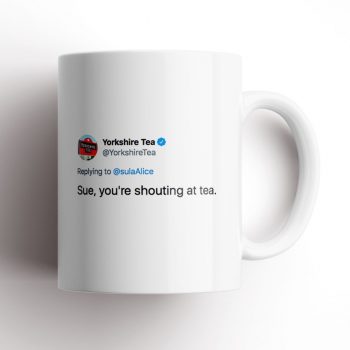
Next up, Walker’s crisps and Pringles.
I had not heard of Naomi Seibt until my phone suggested I read an article about her in the Independent.
It quotes her thus:
Science is entirely based on intellectual humility and it is important that we keep questioning the narrative that it out there instead of promoting it, and these days climate change science really isn’t science at all. […] Climate change alarmism at its very core is a despicably anti-human ideology […] especially as a German, it is so rude to refer to someone as a climate denier because obviously there is a connection to the term ‘holocaust denier’, which carries a lot of weight in Germany. […] immense impact that the sun has on the climate in comparison to CO2 emissions. […] We must not make ourselves the victim of a tight tax corset…we must not deny ourselves, or the people from awfully poor third world countries access to cheap and reliable energy.” […] Rage and panic belong to our opponents […] Do not create an ideology out of something that a young girl has to say. Regardless of the political side she’s on.
All this seems fairly moderate. The Indy describes her thus:
gaining support from right-wing organisations, including Germany’s far-right party AfD party, and a think tank with links to The White House […] Her stance on the climate apparently caught the attention of The Heartland Institute, a US think tank based in Chicago, which has previously lobbied on behalf of tobacco firms, supports fracking and rejects the scientific consensus on climate change. […] The Heartland Institute’s support and promotion of Seibt has set alarm bells ringing. […] those remaining groups and individuals threatened by the weight of climate science appear to believe Ms Seibt is some sort of opposition figure who can inspire people through similar means […] But while Ms Thunberg is merely hammering home the science – that 97 per cent of peer-reviewed climate studies agree with the scientific consensus that manmade global warming is real – Ms Seibt appears to have more interest in ideology. […] Alongside her interest in climate denial, she has voiced concerns about immigration and feminism, and has previously spoken at events run by Germany’s far-right AfD (Alternative for Germany) party. She has denied being a member of the far-right group, but previous reports suggest she is or has been a member of the party’s youth wing.
Deciding whose language sounds more ideological I leave as an exercise for the reader.
Prague renames square in front of Russian embassy after slain Putin critic Boris Nemtsov
Ok, that is pretty damn good. But this…
The Russian embassy in Prague did not respond to a request for comment, nor did the Russian Foreign Ministry comment on the move. Hřib said the embassy had not responded to an invitation to attend the renaming ceremony.

Every generation goes through tremors when something new arrives. Elvis’s hips. Pinball. TV. Rock ’n’ roll. Videogames. For the most part, everyone turned out OK. Sure, we’ve all gone down the rabbit hole of hyperlinks and insect-fighting videos. So what? We’re bored.
– Andy Kessler, Wall Street Journal (behind paywall). He’s criticising what he sees as “hysteria” in the attacks on social media, putting them in the same bracket as alarms over things like heavy metal music and its effects on young people, and so on.
As Trotsky never said about war, and only maybe said about the dialectic, “You may not be interested in politics, but politics is interested in you.”
Richard Morrison is the music critic of the Times and writes for BBC Music magazine. A man at the heart of the arts establishment, one might reasonably think. But he had an unsettling experience not long ago:
Do I talk rubbish? The thought crosses my mind frequently, but with particular force as I chaired a discussion at the annual conference of the people who run Britain’s orchestras. The talk turned to education and I expressed my fervent belief that teaching children to read music is the key that opens up everything.
First jolt: the music director of Arts Council England (ACE), no less, vehemently disagreed with me. Musical literacy doesn’t matter much, she declared. Second jolt: in the ensuing discussion not a single person spoke in my favour. More than 100 people were in the room, all engaged in running orchestras that depend on instrumentalists who can sight-read to an incredible level, and not one agreed that teaching children to read music was a good idea.
After the event I had coffee with someone in the audience. “Of course nobody sided with you,” she claimed. “Everyone here depends on ACE subsidy. Nobody will contradict publicly what the ACE music director says.”
This was not a singular event. As Mr Morrison writes in his Times article, “The arts world is tolerant, as long as you’re left wing and anti-Brexit”,
I wouldn’t recount this small personal trauma except that it suddenly seems so relevant. Today the excellent website ArtsProfessional published Freedom of Expression, a report based on a large survey it conducted last autumn into censorship and self-censorship in the cultural sector. By promising anonymity to participants, it has lifted the lid on a shocking state of affairs.
Here’s a sector that prides itself on tolerance and free speaking. In reality it seems that the opposite is true. Nearly 80 per cent of participants agreed that “workers in the arts who share controversial opinions risk being professionally ostracised”. You can speak freely within your arts organisation, it seems, only if you conform to a narrow set of political and social views.
Take Brexit. I knew that most arts people were fervently against it, but I didn’t realise how much pressure was put on pro-Brexiteers working in the arts to, basically, shut up. One participant claimed that “in our organisation those who voted to leave the EU have been ostracised”. Another noted that “17.4 million voted for Brexit”, but that “most of the opinions of these people, on many subjects, would lose them employment in the publicly funded arts sector”.
The “ArtsProfessional” survey he mentions was introduced here and the findings can be read here (subscription required).
I did wonder why teaching children to read music has come to be regarded as a bad thing. I suspect it is part of the same phenomenon that has caused the Oxford Classics faculty to propose dropping Homer and Virgil from the first part of an Oxford Classics degree.
The Oxford Student newspaper reports that it
…has been notified about a proposal by the Classics faculty to remove the study of Homer’s Iliad and Virgil’s Aeneid from the Mods syllabus, a decision which has surprised many across the faculty.
This proposal forms part of a series of reforms aimed to modernise the first stage of the Classics degree, known as Moderations (Mods), which take place during Hilary term of second year for all students taking Classics courses across the university.
The Mods course, which is assessed by a set of ten exams at the end of Hilary, has been increasingly criticised in recent years, due to the attainment gaps found between male and female candidates, as well as between candidates who have studied Latin and/or Greek to A-Level (Course I) and those who have not (Course II).
The removal of Virgil and Homer papers, which take up two out of the ten Mods papers, have been marketed as a move that will reduce the attainment gaps and thus improve access to the subject.
Educational “attainment gaps” between the official oppressors and the officially oppressed are to be avoided at all costs, except that of providing teaching of a high and even standard to all. What are they afraid of? When the Victorians saw an attainment gap between the upper and the labouring classes they did things like build a University for working people, funded by contributions from the meagre paypackets of quarrymen and farmers. When the early feminists saw an attainment gap between men and women they attained to such effect that the gender gap in the universities is now the other way round. They closed educational gaps by pushing upwards. We don’t even have the honesty to openly push downwards.
FYI, the death rate of COVID-19 among men is about 60% higher than among women. As there are no biological differences between men and women, I conclude this is entirely due to our inability in our society to teach men not to rape.
– Samizdata Illuminatus
|
Who Are We? The Samizdata people are a bunch of sinister and heavily armed globalist illuminati who seek to infect the entire world with the values of personal liberty and several property. Amongst our many crimes is a sense of humour and the intermittent use of British spelling.
We are also a varied group made up of social individualists, classical liberals, whigs, libertarians, extropians, futurists, ‘Porcupines’, Karl Popper fetishists, recovering neo-conservatives, crazed Ayn Rand worshipers, over-caffeinated Virginia Postrel devotees, witty Frédéric Bastiat wannabes, cypherpunks, minarchists, kritarchists and wild-eyed anarcho-capitalists from Britain, North America, Australia and Europe.
|





Recent Comments