There are no limits to our commitment to the euro.
– Christine Lagarde, President of the European Central Bank. The linked Guardian article in which I found the quote is titled “ECB U-turn shows it fears coronavirus could destroy eurozone project”.
|
|||||
|
There are no limits to our commitment to the euro. – Christine Lagarde, President of the European Central Bank. The linked Guardian article in which I found the quote is titled “ECB U-turn shows it fears coronavirus could destroy eurozone project”. March 19th, 2020 | 38 comments - (Comments are closed)
 At first I thought this was une blague pratique. Apparently not, unless Tim Worstall’s denial is merely evidence that he is in on the joke. He writes in today’s Times:
A similar restriction is being applied in Italy, according to The Local.it:
But what if you do not have access to the internet?
March 19th, 2020 | 74 comments - (Comments are closed)
A few years ago I remember the arrival of a sort of clock that measured the terrifying rise of the UK’s public debt, a pile that has got much heavier and scarier as a result of the splurge of spending enacted by the new UK finance minister last week. The idea of some dial on the dashboard of our lives, so to speak, which rises constantly, or maybe eventually slows and reverts, is an interesting one. In the media, some newspapers seem to have these daily counts of the number of people dying of coronavirus. On some of the TV channels there is a scrolling feed at the bottom of the screen (I saw this on Sky News, which is arguably even worse than the BBC these days) do this. It was rather like the tickers for the level of the S&P 500 or the latest cricket scores from Lords. A writer on Linkedin, whom I quote from here but I won’t name as I am not sure I have permission, has written this, and I do sort of sympathise:
Of course the State should not in any way ban or try and interfere with such reporting, whether it is crass, hysterical, or sober. At least in the West the media is covering this outbreak heavily, whereas in China, as appears to be the case, people who blew the whistle on what was going on have been punished or just disappeared. March 17th, 2020 | 71 comments - (Comments are closed)
The games of children, we are told, enable them to learn about how the adult world works and practise its ways. In my childhood we played a game called “Cops and Robbers”. In our innocence we thought we were imitating the grown ups. Perhaps we were, in the 1970s. But in 2020 the grown up coppers have tired of that game and gone off to do something else. The Times reports,
Richards has pleaded guilty, so it all seems to have worked out all right in the end. This time. This is the nice version of what happens when the state justice system fails and private individuals must step in to fill the void. There is also a less nice version. March 15th, 2020 | 29 comments - (Comments are closed)
Seen on a wall in Prague earlier today. Powerful, because most of us do indeed know who Dr. Li Wenliang is, or rather… was.
March 14th, 2020 | 40 comments - (Comments are closed)
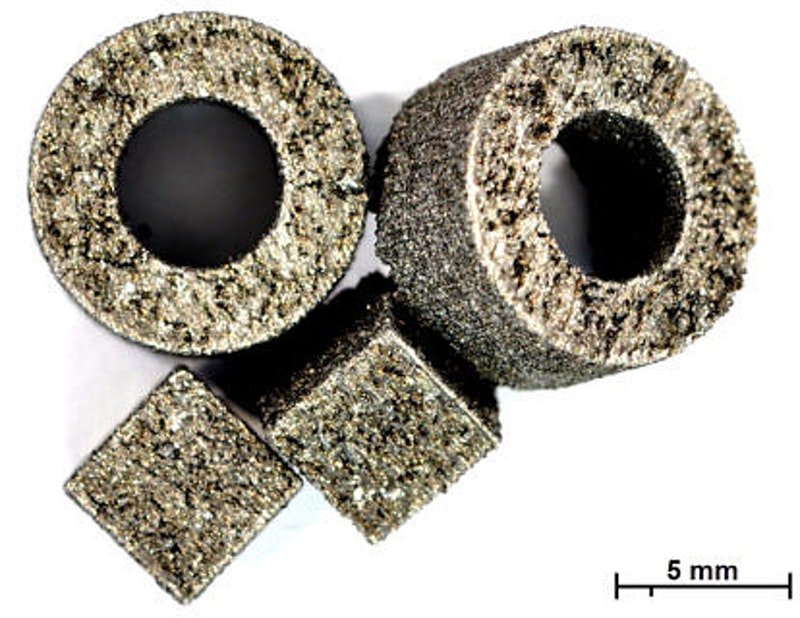
Beneath and beyond all the fretting we’re all now doing about The Virus, the onward march of technology continues. I get emails from Google about advances in 3D printing, and each email contains lots of links, far more links than in any other Google emails I get on other subjects. Links like this one, to a report about some newly contrived magnets:
Note the bit at the bottom on the right, where you learn the size of these things. They are very small. Why are miniature magnets like this so important? And why do they have to be 3D printed? That’s what ignorami like me want to know. The anonymous writer of the report accordingly begins it thus:
A bit later he says:
I had to look up sintering. Blog and learn. → Continue reading: Thoughts provoked by some 3D printed miniature magnets March 13th, 2020 | 23 comments - (Comments are closed)
(from this interesting comparison of Italy with South Korea, h/t instapundit.) How very sad that Italy evidently lacks any pool of state employees whose ordinary tasks could be deferred or done with fewer people, so they could be used to trace contacts while doctors treated patients. How very fortunate that in the UK, we have an overstaffed bureaucracy in many offices of the administration. As doctors will be very busy in coming months on tasks that need their skills, and police busy enough (to defer policing speech? – if only!) and the army perhaps busy if new facilities must be quickly built, the government should immediately give itself the power to allocate up to half the bureaucrats in any state office to the task of tracing the contacts of the infected, requiring the others to step up as needed to keep any essential tasks going (some offices of course, like cruise liners, could go into mothballs pro tem). I despise PC talking heads who demonstrate (yet again) that they see a crisis as just a terrible thing to waste, so would not wish us to imitate them. Does anyone see a problem with my suggestion, considered strictly as a way of addressing the upcoming issue better than Italy has? (Alas, I can see one – and will be interested to see who else has the same thought. 🙂 ) March 13th, 2020 | 21 comments - (Comments are closed)
Seid umschlungen, Millionen! Be embraced, Millions! – Friedrich Schiller’s Ode to Joy, Beethoven’s setting of which is the Anthem of Europe. Sing all the way through this while washing your hands to help avoid the spread of coronavirus. Other songs recommended for this purpose include Stairway to Heaven and Another One Bites the Dust. March 13th, 2020 | 10 comments - (Comments are closed)
With the virus encouraging more people and businesses to develop online, remote working models, it is going to put a premium on things like high-speed, reliable internet, video, two-way video, etc. And paradoxically, that means digital viruses are even more a threat (and often come from the same places as the biological ones, such as China). So I expect that spending on cyber-security, as well as developing more resilient business models (diversified supply chains, closer-to-home manufacturing of essentials such as medicines), and leaner, more scalable medical services, will increase. That should happen as a free market response, rather than because the State wills it. This virus will be used to bash free trade, encourage protectionism, and so on. But the verities about the division of labour and comparative advantage remain. Complete self-sufficiency cannot be squared with a high standard of living; autarky means a cramped, sclerotic world. There is a reason that the 1970s sitcom, The Good Life, was indeed a comedy because it took the piss out of the idea of freeing oneself of a complex division of labour. It brings enormous costs. Protectionism, like its twin, anti-trust, are often the playthings of sore losers in business, and hit the consumer or smaller-scale entrepreneur. We should not lose sight of the enormous gains made since the end of the Berlin Wall and wider expansion of trade. The current disruption should encourage a more clear-eyed understanding of the risks of doing business with dictatorships and closed societies such as China, and a need to find alternatives where possible. Wholesale theft of intellectual property can no longer be tolerated as easily as in the past. How to deal with that remains a difficult question. On the need to avoid undue risk, it is worth pondering the following: According to the US broadcaster Tucker Carlson, 95 per cent of generic drugs used in the US are imported from China, although I am not sure what he uses as a data source for this. Most good investors understand the need for good portfolio diversification, so the same surely will apply to supply chains after this virus episode. The developments might also encourage, or they should, a more self-reliance culture (people should learn first aid, store more non-perishable foods at home and other necessities), and in countries where people have not become too sheeplike, encourage a more robust approach to self-defence and respect for property. Imagine what happens if looting breaks out in certain situations. Another takeway: this horrible episode has put certain rather silly (at least they are to me) concerns into perspective: PC pronouns for certain genders, “woke” remakes of action films like the much-delayed Bond film, “cancel culture”, etc. It might even remind people that screaming that the world is coming to an end unless we switch off industrial civilisation RIGHT NOW is so silly, and so monstrous, that it blunts the public to legitimate worries out there. Greta needs to put a sock in it, and go back to school and hit the books. And the man formerly known as Prince Harry simply must, for our sanity, fuck off. March 12th, 2020 | 52 comments - (Comments are closed)
The 1619 project wasn’t about being right. It wasn’t even about history. It was about pushing an anti-American narrative. It’s best understood as a psywar operation aimed at demoralizing the enemy, in this case the American people. One of my favourite places to find SQotDs is in the little summaries of issues that Glenn Reynolds often adds to the links he supplies. March 10th, 2020 | 12 comments - (Comments are closed)
OK, did anyone notice International Women’s Day? Get any emails? Read any stories about issues that concern women around the world, ranging from employment law through to their treatment in certain parts of the world? Well I did, but I was struck by how low-temperature it all was. The press releases that I received had a sort of “they are just phoning it in” quality. Because whatever else one can say about this event, in recent years it appeared to loom quite large in my life in the media/wealth management world. There is usually lots of commentary about “pay gaps” (a fertile area for the misleading use of data, not to mention a lot of questionable assumptions). Not so much this year. It all felt a bit, well, lame. And it is not just because of COVID-19, although that obviously is a part of it. Certain harsh facts of reality have broken through our “woke” obsessions. (The virus appears to hit men harder than women, which violates a prime directive of modern feminism, that no evidence should be provided that suggests men and women are different other than in strict issues around making babies, unless the difference is to show that men are more “toxic”, reckless, etc.) The day – 8 March – was also a Sunday, so a curiously odd day for such an event when a working day might make more sense (well, Sunday is a working day in Muslim nations, but not in the West for most people). I don’t know whether there is just plain exhaustion out there about the endless claims that men wield all the power, have the best jobs, are “toxic”, that films, music, TV, the sale of services, etc, are all about men, and that this all needs to change. The truth in fact is that in much of the West, this process of complaining about men has gone on so long that fatigue is setting in when the rhetoric does not quite stack up against reality. According to consultancy and research firm Frost and Sullivan, women owners will account for 40 per cent of all registered businesses worldwide this year. In my financial services industry, they account for an increasingly important client base in terms of assets under management. This is particularly the case in regions such as Asia. To take a more philosophical turn here, those of us on the classical liberal/libertarian end of the spectrum should remind folk that our starting point is that life isn’t a zero-sum game. If women succeed more in business or in sports, it is not at the expense of men, nor should it be. Also, if the percentage share of women in occupation/area A is greater than, or less than, that of men as a share of the total population, that is not ipso facto proof that something terrible has happened, and that this must be corrected. For it ignores how entirely free acts at the individual level can have an impact that might appear “disproportionate” at the macro one. At no stage was deliberate worsening/bettering of group intended, because this was not done with reference to a group outcome in the first place. What the “proportionate share” egalitarians would demand is that none of us should interact with another person unless we have gone through some sort of meta-choice process of sifting through a pre-approved “menu”, whether it is hiring an employee, checking out a date on a dating app, etc. For example, how many people should a guy choose from before making a “fair” choice of a woman to go out with and who should set this sample? If he chooses, to stick with the dating example, to say he does not want to date single mothers or those who paint their hair green, or who are clinically obese, or rail-thin, or whatever, who is to say that he should not? And if the man in question decides to stop using such apps, do the old-fashioned thing instead and meet women in bars or social events, who on earth is in a position to screen that? I think a failure to understand things like this is behind bad ideas such as the State seeking to mandate how many women/others should sit on company boards, regardless of how that effectively violates freedom of firms to hire and invite whom they want. Even if adverts for certain jobs forbid certain likes and dislikes being expressed, as anyone knows preferences can and are still expressed in who gets a job. It is very hard to control this; the best “solution” to this issue is to have as competitive a labour market as possible: capitalism is the best solvent of irrational dislikes/likes of people, because it is a cost. Back to more current matters, it does appear that for all the supposed march of identity politics, some countries are, much to the dislike of some, resistant if the quality of candidates is poor. Consider the US. The country in November faces a choice between the incumbent, whom we are told is a moron, Orange Man Bad. And yet the ladies haven’t made much of a dent. The best that the Democrats can come up with at this point are two ageing male Lefties, one of whom is a largely – as far as I know – unrepentant Communist and fan of Fidel Castro, and the other a creep with allegedly wandering hands who might have early-stage dementia. The women on the Democratic race, such as Elizabeth Warren (who absurdly played a native American Indian identity card, and got hammered for it), and Kamala Harris, fell by the wayside as their flaws became all too evident. (OK, Tulsi Gabbard is just about hanging on, but not for long. None of them, to be blunt about it, is a Maggie.) IWD has caused people from different parts of the ideological spectrum, by the way, to claim that this or that group/viewpoint they dislike has “hijacked” it. Take this example from Progress, the UK magazine, in 2016, and more recently, from the Daily Telegraph. Of course, if you want to wind certain people up, as I do in my less mature moments, one way to say that we should mark IWD is to salute the rise of UK Home Secretary Priti Patel, even if you aren’t that sold on her points-based approach to immigration. Triggered! March 10th, 2020 | 12 comments - (Comments are closed)
The latest newly discovered racist is Trevor Phillips.
To me, the remarks in question seem to have an honest attempt to engage with the fact that the attitudes of the Muslim population do differ sharply from the UK average – surely a matter of public interest. Some here, remembering Mr Phillips’ previous role as head of the Commission for Racial Equality and his lifetime of commitment to the ideal of enforced equality, will speak of karma and say “what goes around comes around”. I disagree. As a matter of policy and humanity, when someone starts to move in the right direction we should not rebuff them. March 9th, 2020 | 24 comments - (Comments are closed)
|
   |
||||

All content on this website (including text, photographs, audio files, and any other original works), unless otherwise noted, is licensed under a Creative Commons License. |
|||||

Recent Comments