We are developing the social individualist meta-context for the future. From the very serious to the extremely frivolous... lets see what is on the mind of the Samizdata people.
Samizdata, derived from Samizdat /n. - a system of clandestine publication of banned literature in the USSR [Russ.,= self-publishing house]
|
Take the roiling absurdity outside America since the death of George Floyd. What does the death of a foreigner killed by a foreign policeman in a foreign land say about the state of Britain? The facts of the Home Office’s homicide index are clear enough. Between April 2016 and March 2019, 500 whites, 45 blacks and 38 others were convicted in England and Wales of murdering 583 white victims.
Over the same period, 81 blacks, 11 whites and nine others were convicted of murdering 101 black victims. Roughly 3 per cent of Britons are black. The idea that there is a racial tsunami of murder in this country is monstrous, let alone — “hands up! don’t shoot!” — one waged by our unarmed police. We are being asked to fight against a fantasy.
– The Critic Magazine
Might I suggest people subscribe to this new very high quality magazine, a fine antidote to the debased opinion makers of yore.
Just had to throw away some sausages, and it occurred to me: the same people complaining most about food waste are the ones who object to preservatives, aren’t they?
Why’s every social movement a puritan cult?
– Guy Herbert
“….the Americanisation of culture wars deserves resistance in itself. It homogenises national priorities, obscuring cultural and political differences, to such a ludicrous extent that British people end up arguing about police violence in a year when, yet again, it was revealed that the police had sat back and done next to nothing as a gang of men had groomed and raped young girls in Britain. Police brutality and overzealousness might be a particular problem in a Midwestern US state, while not being a priority in a northern English county; the globalisation of politics obscures local conditions.”
“It also distorts our understanding of the world, limiting our awareness of international affairs to those which are the focus of the narrow spectrum of social media trends. Whether you are a progressive or a conservative, you should be so in the terms of your national circumstances, and with broader frames of references than those which have been provided by social media monopolies.”
– Ben Sixsmith
SAGE minutes make it clear that the public was explicitly petrified in order to ensure compliance with lockdown. Mind-control is objectionable in itself, but has a real cost in lives: before a policy lever like lockdown was pulled, where was the cost/benefit analysis, or was SAGE only thinking of covid-19? Lockdown, after all, affects not just this thing over here (covid-19) but also that thing over there (cancer, cardiac, sepsis, etc.).
Through lockdown, A&E cardiac admissions have been as much as 50% down, so around 5,000 people per month have not been turning up at hospital with heart attack symptoms; heart attacks outside hospital have only a 1-in-10 chance of survival. Same story with strokes. And downstream, many cancers are touch-and-go even if you catch them early; give them a two month head-start and Stanford’s Professor Bhattacharya estimates the impact of urgent cancer referrals running 70% below normal levels will be around 18,000 deaths.
– Alistair Haimes
Here’s a thought for today: If the Democrats claim (the cynic in me suggests that party is full of BS on this) that police forces must be “defunded”, ie, that fewer resources should be steered to said police, how are they also going to make good on any threats to outlaw the private possession of firearms?
I know that those of a more libertarian slant have no problem with wanting to reform policing to reduce abuses and so that police actually protect life and property rather than enforce victimless crime laws, and be corrupted by the likes of asset forfeiture rules, politically-motivated “woke” crime enforcement, and so on. One thing to be clear on is that if qualified immunity is removed from cops, cops are also entitled to be protected against frivolous lawsuits from idiots since otherwise no rational man or woman will want to serve as a cop in such a situation. And that applies to any kind of policing or security, including private security guards.
And a more libertarian model of policing is congruent with a population of law-abiding persons being free to own firearms and competent to look after themselves. In fact, having law-abiding people own guns, and be trained in their responsible use, is a net plus for civil society and peaceful order. (An armed society is a polite society, as R A Heinlein liked to point out.) But what is NOT compatible is to claim that we should shut policing down, empty the jails, and all the rest of it, and still push for gun control. To take that stance is to treat the public as idiots.
Have I got this right?
BLM are in no way responsible for the stabbings in Reading as it happened two hours after their “protest” ended.
But somehow all of us white people are still responsible for slavery 200 years after it was ended.
Is that about the gist of it?
– Mick.Lert
Adam Price, the Leader of Plaid Cymru, writes in Nation Cymru:
Wales, colonised and coloniser: a reflection
The murder of George Floyd and the desperately unequal burden faced by people of colour in the grip of the global pandemic have placed the question of racial injustice, at the forefront of our politics, in Wales just as in the wider world.
Accepting that to be silent at this time is to be complicit, I have committed to use the platform that I have to call for action: for the Welsh Government to instigate a wide-ranging review into the realities of structural racism, to decolonise the curriculum and to build a National Museum to celebrate the history of people of colour.
In the middle of this global moment of truth some criticism – some of it fair and some it not – has been levelled at me for some comments that I made about the Welsh colonial experience. I have spoken publicly about this before and I planned to do so again, having discussed it in depth with Plaid’s BME Section and others. While continuing to reflect on the criticism I have been more interested in listening than defending or explaining myself, not wanting to distract from the bigger issues at hand. But in response to claims that my actions mean Black Lives do not matter in Wales, I feel it’s now right that I respond.
Gwan, give us the dirt.
In October last year in an article headlined Westminster owes Wales reparations, I wrote:
“The Wales Office – that colonial outpost of a Westminster Government – stands in Whitehall in the building that once housed the Slavery Compensation Commission which infamously paid out to the slave owners after abolition rather than the newly liberated slaves. The argument that the British Empire owes reparations to the people of its former colonies is powerfully well-made by the Indian politician Shashi Tharoor. But England’s first colony should be added to that long list of creditors.”
You may have noticed that Mr Price mentions that when the British government abolished slavery in British colonies it “infamously” paid compensation to the slaveowners. He is right, it did pay an enormous sum to free the slaves. I am not sure what other path to liberating them Mr Price thinks the British government of 1833 ought to have followed. Perhaps that of France? The French revolutionary government declared all slaves in the French colonies free as early as 1794. Unfortunately words are not deeds, and in most places the declaration was ignored. Then in 1802 Napoleon restored slavery, and that was that for another forty six years. The other way of defeating a well-entrenched pro-slavery interest is this. While sometimes that sort of thing has to be done, I cannot help thinking that the British method was better for everyone, including the slaves.
I digress. Mr Price continues,
Much of the criticism has focused on the use of the word ‘reparations’. Historically this has been used to denote payment by way of compensation by a State to make amends to those it has wronged e.g. the reparation payments imposed on Germany after the 1914-1918 War.
In recent discourse, however, the word has been more closely associated with the campaign to recognise the financial debt owed to the descendants of the victims of the transatlantic slave trade and to the former colonies of Western countries, including Britain, in Africa, the Caribbean and South Asia and elsewhere (a campaign I fully support). In many conversations I have had since I spoke in October I’ve come to understand that many people of colour strongly believe that the word reparations should now be reserved exclusively for the context of slavery and western colonialism in acknowledgement of the unique scale of human suffering involved.
Now that we know that small self-appointed groups can take words out of common ownership, let’s buy up some Welsh words for our exclusive use. I am sure progressive Welsh speakers won’t mind the loss of them. They can always use English words instead.
Mr Price concludes:
I didn’t fully appreciate the force of this argument nor the strength of this feeling. I recognise now that this was a mistake. It was wrong to blur this distinction, and I would express myself differently today. If my poor choice of words caused anyone pain then I am profoundly, deeply, genuinely sorry.
Not a dry eye in the house.
Cut off by your gas company for wrongthink? What’s stopping you drilling your own North Sea well?
– Tim Newman, nicely describing why certain strains of libertarian thought are self-defeating.
“One dead and one wounded in shooting in Seattle police-free zone”, the Guardian reported an hour or so ago.
Let me say at once that I know nothing about the circumstances of this killing, other than that it occurred and that young men should not die by violence at nineteen.
But almost regardless of the circumstances, a lot of people are going to be saying, “I told you so” to the leftist protestors who formed CHAZ, the so-called Capitol Hill Autonomous Zone.
They might also say it to us. “Hey, you ‘libertarians’ or ‘anarcho-capitalists’ or whatever you call yourselves, this is what you want, isn’t it? No state, no cops, citizens with their own guns making their own rules?”
How would you answer?
True, they were hypocrites. Jefferson himself was clearly aware of the ghastly contradictions. Pity they did not apply their own wise philosophies even-handedly, but they didn’t. That is was why Samuel Johnson hated them. And yet, their good ideas stand on their own merits.
– Perry de Havilland in response to “How do you respond to people who say that the Founding Fathers were hypocrites for owning slaves?”
“Rather than aiming for a better future, woke militants seek a cathartic present. Cleansing themselves and others of sin is their goal. Amidst vast inequalities of power and wealth, the woke generation bask in the eternal sunshine of their spotless virtue.”
– John Gray
(As a reminder to readers, quoting a person does not imply I endorse everything that the writer in question says. Gray is a decidedly mixed bag of a thinker. Far, far too gloomy for my liking and he buys the whole Green deal, or at least he did. But this essay makes important points about the parallels between the culture war being played out in the West right now and the madness of the 15th and 16th centuries. Yes, I think those parallels are accurate. This is a rat with a long tail.)
- Riots
- Claims of discrimination
- Calls for the police to be abolished
- Involvement of communists
- The media taking the side of the rioters
- The creation of no-go zones for the police
- Calls for the army to be used
- Attempts to appease the rioters
I need hardly remind readers that over the following 30 years some 3,000 people were killed and that even though now the killing has stopped the enmity remains.
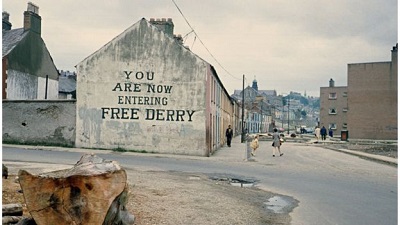 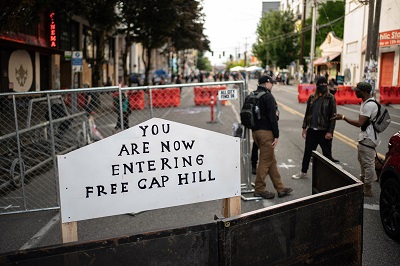 The similarity is intentional.
|
Who Are We? The Samizdata people are a bunch of sinister and heavily armed globalist illuminati who seek to infect the entire world with the values of personal liberty and several property. Amongst our many crimes is a sense of humour and the intermittent use of British spelling.
We are also a varied group made up of social individualists, classical liberals, whigs, libertarians, extropians, futurists, ‘Porcupines’, Karl Popper fetishists, recovering neo-conservatives, crazed Ayn Rand worshipers, over-caffeinated Virginia Postrel devotees, witty Frédéric Bastiat wannabes, cypherpunks, minarchists, kritarchists and wild-eyed anarcho-capitalists from Britain, North America, Australia and Europe.
|





Recent Comments