We are developing the social individualist meta-context for the future. From the very serious to the extremely frivolous... lets see what is on the mind of the Samizdata people.
Samizdata, derived from Samizdat /n. - a system of clandestine publication of banned literature in the USSR [Russ.,= self-publishing house]
|
[Judge-only trials] also misses the actual point of a jury. We might think they’re there to evaluate evidence, decide what is right or wrong, to decide upon guilt of the accused. But they’re not. They’re there to decide whether a crime has been committed. Which includes telling the law, the judge, the politicians and the entire system to bugger off as and when 12 good men and true decide that this isn’t a crime.
Sure, the British legal system absolutely hates any mention of jury nullification. But that is what they’re actually there for. Which is why we shouldn’t do away with them.
– Tim Worstall
“Coronavirus in Scotland: Parents and children left to struggle after councils ban online teaching”, Helen Puttick of the Times reports.
It seems many private schools in Scotland are using video conferencing and other internet tools to continue to educate pupils while they are in quarantine. Some state schools are doing likewise. But fear not, Scotland’s ever-vigilant local councils have been alerted:
However, a number of councils in Scotland have banned state education via live video interaction. East Dunbartonshire council said: “Streaming live lessons is not recommended at this time due to safeguarding and possible equity issues.” East Renfrewshire said they were “not advocating” the approach. East Lothian and Stirling also cited safeguarding issues. Midlothian council told headteachers: “No platform is considered suitable for interactions involving young people at this time.”
You may send any enquiries as to what “Possible equity issues” might mean by letter or postcard* to:
East Dunbartonshire Council
12 Strathkelvin Place
Kirkintilloch
G66 1TJ
*Enclose a stamped self-addressed envelope if you wish to receive a reply. Please note that the council does not accept owl post as not everyone has owls.
East Dunbartonshire council thanks you for your ongoing understanding and co-operation as we put measures in place to support our children and their families during this difficult time.
The (Glasgow) Herald reports,
Mandatory climate change classes plan for Scottish leaders
MSPs, business leaders and newly enrolled university students may be asked to take mandatory climate change studies if plans currently under consideration are adopted.
The studies would help arm them with facts and knowledge to make urgent changes to society as it emerges from COVID-19 lockdown. The Scottish Government has already committed to enrolling at least 100 senior officials to the Climate Solutions course.
The news comes just days before Tuesday’s one-year anniversary of Scotland’s First Minister Nicola Sturgeon declaring a climate emergency.
The course was devised by experts at the Perth-based Royal Scottish Geographical Society in partnership with the Institute of Directors, Stirling University’s Business School and the University of Edinburgh’s Centre for Carbon Innovation.
Among the main areas the course looks at are issues around transport, energy use, supply chains, social behaviours, mitigation and planning for the future.
Former UN executive secretary on climate change Christiana Figueres who brokered the Paris Agreement, former Bank of England Governor Mark Carney who is now UN special envoy on climate action and finance and ex Irish President Mary Robinson who set up a climate justice foundation, are among heavyweight names lending their support.
The Test Acts, in case you had forgotten,”were a series of English penal laws that served as a religious test for public office and imposed various civil disabilities on Roman Catholics and nonconformists.”
Mr Robinson, said: “What we’re really hoping is we can make it universal.
“The conversations I’ve had are with six universities is about making it mandatory for students as a matriculation course. Stirling and Edinburgh universities are already further down the line on that than others.
“I’m also talking to others about making it as mandatory as we can in all other sectors – including business – because we need everybody to wake up a bit to their responsibilities.
“The Scottish Government are already committed through their programme of government to put through 100 senior staff on it.”
As I mention every time this subject comes up, I am more of a believer in anthropogenic climate change than many here. But the Scottish Government is working on that. If profession of a certain belief becomes a test of office, then soon enough every office holder will profess that belief. But why should anyone believe them? Well, they would say that, wouldn’t they?
It shakes. It convulses. It casts off its old body. It emerges softer and more flexible.
Don’t kid yourself. It’s still a tarantula.
Clare Foges writes in the Times, “We need Big Brother to beat this virus”.
Hands in the air! Step away from the Easter eggs!” The Keystone Coppery of recent weeks has had some people muttering darkly that we are heading the way of a police state. Those who style themselves as defenders of ancient British liberties will soon have bigger fish to fry: the digital surveillance tools that government hopes to use to trace the infected. Prepare for dire warnings of state intrusion and an avalanche of Nineteen Eighty-Four quotes on social media warning that Big Brother is upon us.
Yet if we are to beat a path out of this pandemic without destroying our economy, overblown concerns about threats to our liberties must be countered by pragmatism. To recover some semblance of normality before a vaccine is found, we must accept the need for the state to access more information about ourselves, our health and our whereabouts — and not waste precious weeks arguing about it.
Look east to see how digital surveillance is an integral part of returning to “normal” life. Hong Kong has mandatory tracking wristbands for those in quarantine. In Taiwan the phone-tracking system is known as an “electronic fence”; those who are meant to be in isolation will be visited by the authorities if their phone is turned off. In South Korea the pooling of data from credit card use, mobile phones and CCTV cameras means that they can detail the movements of an infected citizen down to where they sat in the cinema and which bar they went for a beer in afterwards — and in less than ten minutes can trace and contact the woman who was sitting two stools down. Public support for these measures is high, for the simple reason that they are working.
A writer I follow is Joel Kotkin, who is based in the US and writes a lot about how cities and other human settlement patterns are changing. COVID-19 will accelerate changes in place, such as moves from big, crowded cities towards more roomy surburbs and the rural areas (this obviously comes up against issues such as zoning and planning controls). One thing that his article here does not say a lot about though is the future of the car. For the last few decades, the standard narrative from what might be loosely called “The Established Elite” is that cars are bad when the masses have them, because of congestion, pollution, not to mention how they encourage the plebs to go where they want. The whole idea of owning and caring about a car, of guys chatting about engine sizes, 0-60 speed performance and all that Jeremy Clarkson sort of stuff, drives our Established Elites nuts.
But if public transport struggles to win back the punters after the plague dies down, and people remember how valuable it was to have a car, where does this leave the anti-car agenda?
(As an aside, here is a playful article by a libertarian chap who connects up the experience of freedom with driving cars and riding motorbikes.
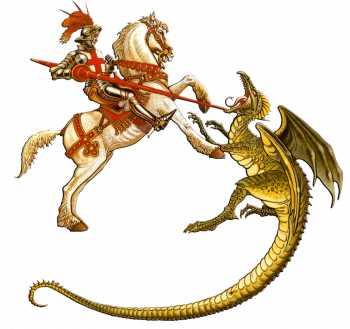
Seriously old chap, you need to slay that damn dragon, you know, lance through her head, and then head back to England. You even missed your grandmum’s birthday FFS! You’ll be forgiven, but only if you return alone.
Once more unto the breach, dear friends, once more;
Or close the wall up with our English dead.
In peace there’s nothing so becomes a man
As modest stillness and humility:
But when the blast of war blows in our ears,
Then imitate the action of the tiger;
Stiffen the sinews, summon up the blood,
Disguise fair nature with hard-favour’d rage;
Then lend the eye a terrible aspect;
Let pry through the portage of the head
Like the brass cannon; let the brow o’erwhelm it
As fearfully as doth a galled rock
O’erhang and jutty his confounded base,
Swill’d with the wild and wasteful ocean.
Now set the teeth and stretch the nostril wide,
Hold hard the breath and bend up every spirit
To his full height. On, on, you noblest English.
Whose blood is fet from fathers of war-proof!
Fathers that, like so many Alexanders,
Have in these parts from morn till even fought
And sheathed their swords for lack of argument:
Dishonour not your mothers; now attest
That those whom you call’d fathers did beget you.
Be copy now to men of grosser blood,
And teach them how to war. And you, good yeoman,
Whose limbs were made in England, show us here
The mettle of your pasture; let us swear
That you are worth your breeding; which I doubt not;
For there is none of you so mean and base,
That hath not noble lustre in your eyes.
I see you stand like greyhounds in the slips,
Straining upon the start. The game’s afoot:
Follow your spirit, and upon this charge
Cry ‘God for Harry, England, and Saint George!’
I read (iirc in one of Viktor Suvorov’s books) that in the Ukraine of the 1930s, a peasant who was not starving and thin automatically came under suspicion of food hoarding. Whereas, in besieged WW2 Leningrad, the populace were starving, and I read somewhere that there was a sub-stratum of the population who had unusually rosy cheeks and an almost healthy glow compared to their starving fellow citizens, they were not under suspicion by the Party. These were not privileged Party members, but cannibals, who had resorted to devouring the abundant supplies of human flesh.
Grim as that was, and we are nowhere near anything like that yet, I can’t help but noticing that the impact of the CCP-Covid-19-Terror is beginning to show in people. This is a country where, whilst not illegal per se, getting a haircut other than from a member of your household (and how many live alone or with those unable to help) necessarily involves leaving your home (or someone else leaving there’s) without ‘reasonable excuse’ under the (not quite limited) excuses, so if your hair is now neat and short, or dyed or coloured in your usual fashion for those so inclined, you might come under suspicion of having failed to have followed ‘social distancing rules’ or having patronised a business operating illegally. Will we see a ‘haircut hotline’ open up for us to denounce a neighbour whose thatch is well-trimmed?
Will we have Ministers of the Crown denouncing professional haircutting at the daily 5pm press conference, a ‘Two Minute Hate’ against the ‘Socially Undistanced’ (or should be the ‘Unsocially distanced’)?
What else might be a give-away in this new culture of conformity? Looking unconcerned as the economy collapses, or not clapping the sky when the time comes to applaud the NHS?
There is more to be done. Perhaps to deter breaching of ‘social distancing’ in those elements of the populace who pay for ‘personal services’, the Queen could grant a Royal Charter to a new organisation “RASEL – The Royal Anti-Sex League“, that might give the Duke of York, who currently seems to be at a loose end, a useful role as its Patron should he seek a new role and a spot of image polishing, there’s not much use for his Airmiles at the moment, and even if there were, he might wish to avoid countries with US extradition treaties, just in case he is unjustly accused.
I expect ability to procure was some way down the list of attributes they were expected to demonstrate at the interview, coming behind devotion to the cult of the NHS, commitment to diversity, and being utterly subservient to upper management and bureaucracy.
– Tim Newman responding to reports of NHS procurement ineptitude.
I’ve just been reading the twitter feed of a senior journalist and also of a well-known philosopher. They seem to me to be preposterous figures. One of the extraordinary effects of digital is that it reveals the hollowness and mediocrity of those we’d once have lauded.
– Douglas Carswell
“NHS phone app holds key to lifting UK’s coronavirus lockdown”, the Times reports.
Ministers have ordered the creation of an NHS mobile phone app the government hopes will help end the coronavirus lockdown.
The app would allow mobile phones to trace users who have come into contact with infected people, alerting them to get tested.
This would make it possible to start lifting the most stringent social-distancing measures from late next month, ministers hope.
Senior sources say NHSX, the health service’s technology arm, has been working on the app with Google and Apple at “breakneck speed”. The system will use Bluetooth technology to alert those who download the app if they have been in close proximity with someone who has tested positive for Covid-19.
Combined with a vast expansion in testing, which ministers claim will hit 100,000 a day by the end of the month, the app is a central plank in the government’s push to lift the lockdown. “We believe this could be important in helping the country return to normality,” a Whitehall source said.
Matt Hancock, the health secretary, is considering how to incentivise people to install the app. Experts say the “track and trace” concept only works effectively if 60% of people adopt it.
One idea under consideration would mean people being told they could resume normal work and home life if they installed it on their phones.
As I said in the title, the worst of it is that this might be the way to control the epidemic, an outcome greatly to be desired. And then it might be the way to control us.
“Police under fire for telling dad he can’t play with his kids in his own front garden”, LBC reports.
I found myself with a certain sympathy for the cop lady. Daniel Connell, the man who made this recording, gave her an unnecessarily hard time by pretending to misunderstand what she meant by “special powers”. But his pretended misunderstanding of her powers was not nearly as serious as her actual misunderstanding of them. As the title of this post says, it is not asking too much that those entrusted with the police power should have some basic knowledge of what that power does and does not entitle them to demand.
South Yorkshire Police released a statement on Twitter, saying: “This encounter was well-intentioned but ill-informed and we’d like to apologise for the way it was handled.
“We’ve spoken to the officer concerned and made our approach absolutely clear.
“Again, we apologise for any inconvenience caused and will continue our work to support the NHS.”
I’m amused to see we’ve now reached the “interracial marriage is bad” part of the transition of the illiberal left into 1950s conservatives.
– Marcus Walker responding to this.
|
Who Are We? The Samizdata people are a bunch of sinister and heavily armed globalist illuminati who seek to infect the entire world with the values of personal liberty and several property. Amongst our many crimes is a sense of humour and the intermittent use of British spelling.
We are also a varied group made up of social individualists, classical liberals, whigs, libertarians, extropians, futurists, ‘Porcupines’, Karl Popper fetishists, recovering neo-conservatives, crazed Ayn Rand worshipers, over-caffeinated Virginia Postrel devotees, witty Frédéric Bastiat wannabes, cypherpunks, minarchists, kritarchists and wild-eyed anarcho-capitalists from Britain, North America, Australia and Europe.
|