We are developing the social individualist meta-context for the future. From the very serious to the extremely frivolous... lets see what is on the mind of the Samizdata people.
Samizdata, derived from Samizdat /n. - a system of clandestine publication of banned literature in the USSR [Russ.,= self-publishing house]
|
This looks like it could be interesting!
London School of Economics
6pm Friday 17th February 2006
Room D702
Head-to-Head
“Freedom of speech: Who cares what Muslims think?”
Sajjad Khan vs. Claire Fox
Sajjad Khan
Editor of New Civilisation Magazine – A quarterly publication providing a unique perspective on Islamic political thinking to the western world, initiated as a unique forum to debate and discuss issues relating to Islamic political discourse seeking to do away with the tired labels of fundamentalist or moderate and instead engage with people holding a concerted rational opinion on these matters from all shades of the political spectrum: left, right and centre.
vs.
Claire Fox
Director of The Institute of Ideas. Its mission is to expand the boundaries of public debate. It is committed to scientific and social experimentation, intellectual ambition and curiosity. Embracing change and making history. Art for art’s sake, knowledge for its own sake, and education as an end in itself. Freedom. To think, to act, to say what needs saying – even if it offends others. Challenging irrational social panics. Open and robust debate, in which ideas can be interrogated, argued for and fought over. Civil liberties, with no ifs or buts.
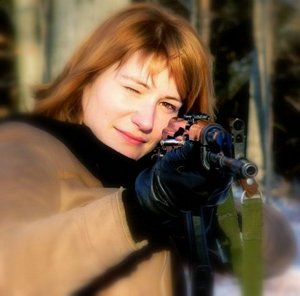
Various precincts of the respectable press and the blogosphere having gotten wrapped around the axle regarding Vice President Cheney’s hunting accident, I thought a little background on quail hunting in Texas (by an actual Texas quail hunter!) might be in order.
It is not uncommon for a quail hunter to get “peppered”, due to the tendency of quail to fly somewhat erratically at relatively low levels. Unlike ducks and dove, which come in high, and pheasant, which take off vertically, quail often fly at head level. Not to mention that quail often live in brushy country where visibility can get a little short, and people tend to hunt them with open chokes which spread the pattern out. Serious injuries are rare, due to the small pellet size, open chokes, and (often) smaller gauge guns used by quail hunters.
I myself have just barely avoided shooting an actual pickup (bright red, thank you, about 20 yards away) while quail hunting, and have had a member of my party peppered (not by me, thank the gods). It was a pretty typical incident – a few stray pellets in the neck, no harm done. It is, in short, easy even for a very conscientious shooter to have an accident.
That said, based on the rumor and speculation in the press, it sounds like what happened to Mr. Whittington was a little more than your typical peppering. The length of his hospital stay alone points to more of a direct blast than a few stray pellets.
The typical rules of gun safety simply do not apply in their usual way when hunting upland game. To verify, to the same degree as with a rifle or pistol, that there is nothing at all in your line of fire before shooting would preclude wingshooting at quail, grouse, and other birds, where you are swinging your gun through a low-flying bird at high speed. For that reason, safety is assured to a large degree by having a disciplined shooting line – everyone stays more or less in line, and everyone knows where their zone of fire is.
The story is that Whittington came up behind Cheney, or that Cheney shot Whittington when he was behind him. Someone can come up behind another hunter and still be in his designated zone of fire, and everyone in the party has a responsibility to stay clear of each other and not show up where unexpected. Its possible but by no means certain that Vice President Cheney was only negligent, and that there was some contributory negligence by Mr. Whittington.
Here in Texas its just good manners to say that it is your fault if you get involved an accident like this (as Mr. Whittington has apparently done). That said, the crashing silence from the Vice President is a little disturbing. Not to blow this accident out of proportion (as the partisan press is busily doing), but he needs to stand up and take responsibility like a man.
The current complaint from the press that they were left out of the loop tells us a lot more about their self-regard, and about how well they have trained the Bush White House to treat them as enemies and tell them nothing, than it does about anything else. Still, the VP needs to hold a press conference, say his mea culpas, mix in some good words for Mr. Whittington, utter a few nostrums about gun safety, and generally be a gentleman (in the older sense of the word) about this.
UPDATE: Cheney finally takes the podium. Looks like the mea culpa I would expect of him.
Nothing says “I love you” quite like saturated fat and slutty lingerie.
“Chatting over a llama is certainly a novel way to meet people in a relaxed environment, and participants can enjoy a romantic picnic afterwards.”
-Charity worker Mary Walker, providing Valentines Day advice that is more useful than most I have heard this year.
I must say that I always enjoy reading what Michael Totten has to say even if I do not always agree (though in truth I find myself agreeing more and more often). His reports from Lebanon were always compelling.
He is now writing from Iraq (Kurdistan to be exact) and I strong recommend people take a peek at his blog.
In the past I have had opportunities to spend money at Carrefour, but due to a conflux of circumstances, I am happy to say that I have never bought a thing from this large French supermarket chain. And now I never will.
Via Tim Blair.
‘Humbug’ wrote an e-mail to Samizdata regarding the Free Expression versus Islamic intolerance issue that takes a more introspective view
I do not know why I am wasting my time waiting for Hollywood or anyone in the music industry to come out and stand up for free speech. Here we have a global conflict that will forever impact our future and these ‘sophisticated elites’ are hiding behind the gates in their upscale neighborhoods. The ‘shocking’ photo of the dull Kanye West or the equally ‘provocative’ photo of Madonna as The Madonna are simply boring.
Of course neither of them would ever dare pose as Mohammed or appear wearing a burqa. Heck no, that would not be the run of the mill, piss off the parents material, that might actually get them a fatwa.
Eminem, likewise would never dare insult the ‘one who must not be seen’. No, he will stick with making fun of groups where the penalty is merely a slap on the wrist, like homosexuals and women. Michael Moore we can all forget about it, just as we can forget about the Dixie Chicks. The problem here is that standing up for free speech in this case, does not involve Bush bashing and it actually takes courage to fight this battle. With icons like these, who needs an invading army?
But then, I am just repeating what many have already said.
Update: however Lil’ Kim shows the correct way to wear a burqa
If ever developments heralded the demise of the television licence fee, it is the ubiquitous spread of the digital media. Now that televisions have spread to the mobile phone, the BBC is not far behind. Whether it be on your PC or your phone, you must pay the pirates for the privilege of not watching them:
As the mobile industry debates the future of television on phones and other portable devices at its convention in Barcelona, there’s a warning closer to home that the new technology will still be subject to licensing regulations laid down in the 1904 Wireless Telegraphy Act.
TV Licensing, the body charged with collecting the £126.50 fee (rising to £131.50 on April 1), said that it doesn’t matter whether you are watching television on a PC, mobile phone or old fashioned cathode ray tube, you must be covered by a TV licence or face a fine of up to £1000.
“There is no difference between a mobile phone or a television or any other piece of electronic equipment used to watch live or as-live programming. You will need to be covered by a TV licence,” a spokesman for the body confirmed.
It can not be long now before even politicians see the abolition or curtailment of the BBC licence fee as a no-brainer.
MPs have just voted in favour of making it compulsory for Britons to have an ID card when they apply for a passport. Bastards.
U.S. Vice-President Dick Cheney wounded a fellow shooter of quail in an accident. Well, I guess it shows what a gulf now exists between the U.S. government and our own. I cannot imagine a single senior Labour politician who would spend time out shooting. (Imagine John Prescott doing it. Actually, don’t). The story reminds me of another deputy leader, the late William Whitelaw (a decorated soldier in the Normandy WW2 campaign), who managed to fire some buckshot at someone during a grouse shooting meeting in the Scottish highlands.
Many politicians in the past have enjoyed the pastime of shooting game. Many MPs were landed gentry, who could not wait to get out of smelly London in the summer months and, once the game season started in August, would blast away at hapless birds, bagging them in prodigious quantities. And several paid the price. Robert Peel, Prime Minister in the 1840s, suffered a nasty buzzing in one of his ears after a gun went off too close. Salisbury and Churchill shot game, as did Macmillan and Alec Douglas Home. Across the big pond there was no greater hunter of game, of course, than Teddy Roosevelt.
All that tradition is fading out. I cannot imagine Tory leader David Cameron shooting game (imagine how that would jar with his trendy image) although his ancestors probably nailed whole flocks of pheasants in their time.
Anyway, the lesson of all this is that if you find yourself in the company of a politician holding a shotgun, stand well behind.
Erik and Arthur Wneir from No Pasaran took on several thousand Muslim protesters and only the intervention of French police prevented a repeat of the Battle of Tours.
More seriously, watch the video to see the characteristic Muslim reaction to people daring to state an opinion different to theirs.
Like my co-Samizdatista Jonathan Pearce, and like Mark Holland of Blognor Regis, I have also been watching the Winter Olympics. In truth I find the winter Olympics to rather more fun than the summer Olympics, partly because it is genuinely a more lighthearted event with more of a party atmosphere than the summer games, and partly because power in the world is rather turned upside down. (Here is a competitor from Norway – he must be good. Here is someone from the United States of America – he will be mediocre). Mostly though, I think it is the simple insanity of many of the events that I find most enjoyable. Winter sports lead to extremes of human achievement that (a) one is amazed that they are possible, but not so much as (b) one wonders why anyone would actually do this, and how the sport was invented in the first place, for surely the first twelve people to try it must have ended up killing themselves.
Mark wonders just how Britain has a luge team, or as he puts it…
Anyway, I get to wondering how on earth a chap from Pinner decides to take up the sport. I mean, say for instance I’d been so inspired by the top luging at the Calgary Olympics that I’d immediately thought, “That’s the event for me!” where am I supposed to go from there? If I’d have gone to my games teacher, Mr “Manly” Stanley, and said, “you know how this football and rugby doesn’t interest me at all, well instead I fancy taking up sliding down an icy tube at 130 km/h whilst lying on a glorified tea tray”. What’s he supposed to do? Phone up the local British Luge Federation affiliated club? That’s not going to happen is it.
Of course, in Australia, the answer as to how and why people take these things up, is that there is an official taxpayer funded organisation that encourages them to do it. At the winter olympics, Australia tends to specialise in something called the “Womens aerials”. For those who have not watched aerials (one of the events in a wider school of insanity called “freestyle skiing”), it involves skiing down a slope, up a ramp, doing three backwards somersaults and a double twist, and then landing on the snow on your head and breaking your neck.
Actually you are not supposed to land on your head and break your neck. You are supposed to land upright on skis and continue down the mountain. Landing on your head and breaking your neck does appear to happen relatively frequently, however. Again, the question of why anyone would do this does come to mind, and the question of why the Australian taxpayer pays for it comes to mind even more. → Continue reading: This is insane
|
Who Are We? The Samizdata people are a bunch of sinister and heavily armed globalist illuminati who seek to infect the entire world with the values of personal liberty and several property. Amongst our many crimes is a sense of humour and the intermittent use of British spelling.
We are also a varied group made up of social individualists, classical liberals, whigs, libertarians, extropians, futurists, ‘Porcupines’, Karl Popper fetishists, recovering neo-conservatives, crazed Ayn Rand worshipers, over-caffeinated Virginia Postrel devotees, witty Frédéric Bastiat wannabes, cypherpunks, minarchists, kritarchists and wild-eyed anarcho-capitalists from Britain, North America, Australia and Europe.
|







Recent Comments