Aunt Agatha seeks to give advice to another troubled public figure in Britain… I wonder who it could be?
|
|||||
|
Is a fair summary of the antics of a bunch of Cornish bureaucrats in Padstow, (a harbour and tourist attraction on Cornwall’s north coast) supported by the local MP Scott Mann, in a battle against street traders, who are within the law. And we have that bureaucrats favourite concept, a ‘multi-agency approach’, (which I first heard in the early 1990s), with the following wastes of public money involved: Cornwall Council, Devon & Cornwall Police, Padstow Town Council, Padstow Harbour Commissioners (the Harbour is established by law with government oversight).
It is rather concerning that the local Police are getting involved in a matter that is not illegal, street trading by selling services is not, well, according to Cornwall Council’s legal advice.
Or as the bureaucrats find to their evident dismay.
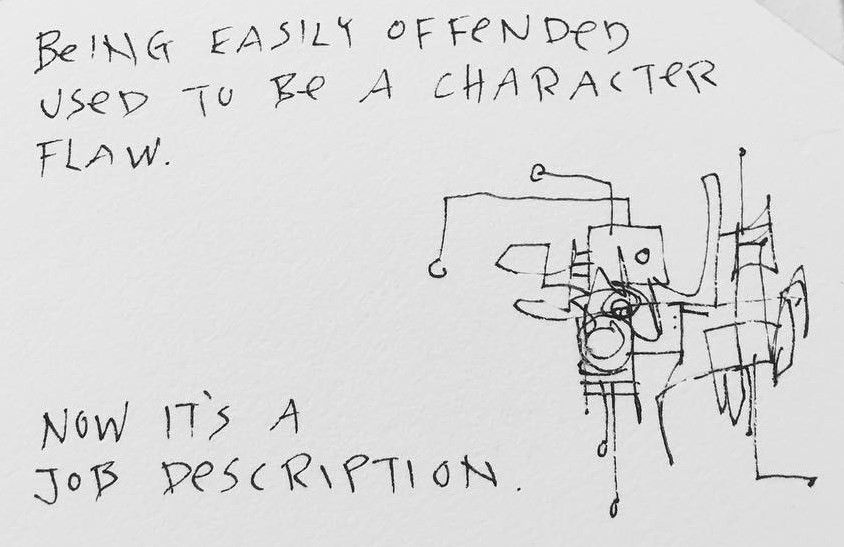
Yes, Parliament never regulated this, so why don’t you all eff off back to your desks, submit your resignations, and ask for your jobs not to be replaced? It’s freedom that upsets you, isn’t it? No one is getting their hair braided without consent, no one is getting tattooed by force, just don’t buy it. There is no trespass, no obstruction, no nuisance, no wrong done, it’s just something that you can’t (yet) licence. A chink of light through the curtain of licensing darkness. It is not a loophole, it is simply not banned. A loophole would be making it legal to sell goods on the street without a licence only if you wore a red hat. It is for Parliament to propose changes in the law, not bureaucrats, who are paid to do their jobs, and Councillors are, really, paid bureaucrats. Let the public pester the MP, and let him propose what he might, so that her Majesty, with the Advice of the Commons and the Lords Temporal and Spiritual, may so enact if it please her. To be fair to him, this appears to be what he has in mind. It is a symptom of the political culture in Britain, even far from London, that this is something for bureaucrats to fret about, all mask of neutrality has fallen here. The attitude of the police officer involved is particularly dismaying:
Why didn’t he say something like:
OK, the last sentence is perhaps a little unkind. May 16th, 2018 | 14 comments - (Comments are closed)
 I’m not making up my mind on Gaza until I’ve heard what Gary Lineker and Lily Allen think – Jeremy Briar offers sage words of advice 😜 May 15th, 2018 | 17 comments - (Comments are closed)
You know you are a nerd when you are avidly googling the name of the author of a series of erotic novels all of which feature the word “cocky” in their titles because of the interesting legal issues the “Cockygate scandal” has brought up. Dale L Roberts vlogs about self-publishing. In this video published on May 7th he explains that Faleena Hopkins, the author in question, wrote a slew of “Cease and Desist” letters to other indie romance authors on Amazon using the word “cocky” in their titles. Amazon, with typical cowardice, removed these other authors’ books as soon as Hopkins asked them to. Worse yet, Faleena Hopkins’ letter to the other authors included the phrase “My attorney at Morris Yorn Entertainment Law has advised me that if I sue you I will win all the moneys you have earned on this title plus lawyer fees will be paid by you as well.” I suspect that Morris Yorn Entertainment Law are not entirely happy with this summary of their advice. I came across this story via the fantasy/SF author Chris Fox. His nine minute video dated May 11th explains well why this incident should and did arouse the anger of the community of authors who self-publish on Kindle and similar platforms – but he also spares a thought for Hopkins herself. In the four days since the earlier video, the situation had changed dramatically – and the trouble with internet shaming is that even when some punishment is deserved, there is no off switch. May 14th, 2018 | 17 comments - (Comments are closed)
May 13th, 2018 | 7 comments - (Comments are closed)
…if I could find the right bloody sketch on YouTube. First I thought it was “Negotiations” from Not The Nine O’Clock News, but it wasn’t. My goodness, they wouldn’t allow the line at 1:30 nowadays, would they? Sticking with Mel and Griff, I then tried “The Union Man” with no better success. The sketch about Gerald the Gorilla was always a long shot. Nope. Just couldn’t find it. It’s the one where there’s this meeting between the leaders of the different unions, the TUC or whatever they called it, and they are having a break and someone says, “tea or coffee?” and one of the blokes says, “let’s vote on it” and so they vote and tea gets more support, only the bloke who wants coffee has a block vote of three million when the all the ones who wanted tea together only added up to two million or something like that or vice versa. That one. Look, back in nineteen whaty-whatever it was quite surprising to see anyone on TV mocking the trade unions. All the luvvies were lefties even then. Anyway, I thought of that sketch when I saw this story pop up in the Guardian:
That’ll be one million for coffee then. * Breaking news: I am adding this clip of a * Edit: Hat tip to Patrick Crozier who found the relevant Not the Nine O’Clock News episode here. The block vote sketch in question starts at 8:00. The actual result of the vote was five hands raised giving one and a half million votes for tea, outvoted by Mel Smith’s five million votes for coffee. May 12th, 2018 | 24 comments - (Comments are closed)
There’s a conference called A Conservative Renaissance in London today. But I can’t see any renaissance coming to pass whilst the Conservative party is being run by a Blairite. Before any rebirth, the old order needs to die, and given the dire threats we face from within, we don’t have the luxury of waiting for them to literally pop their clogs, so the sooner the better. – A certain Tory who shall not be named. I made a somewhat similar observation myself. May 12th, 2018 | 8 comments - (Comments are closed)
Labour is now described as having an antisemitism problem. But those who talk like this are neglecting the fact that for many Corbynites antisemitism accomplishes something very important. It helps to drive out of the Labour Party all of those Labour supporters who think that the badness of antisemitism ought to be publicly talked about, instead of these Labourites silently or vocally caving in, for now, to the Corbynite project. And that, as far as the Corbynites are concerned, is a feature rather than a bug. We can see this process described in this piece, by “New Labour” (i.e. the kind of Labour that the Corbynites are determined utterly to destroy) Prime Minister Tony Blair’s senior shouter-down-the-phone, Alastair Campbell:
Campbell is right. The Corbynites do indeed hate Campbell and his ilk far more than they hate the Conservatives. The Conservatives, by allowing themselves to be lead by people like Theresa May, are bringing the day of glorious socialist triumph ever closer. Campbell and his sort are a far more immediate threat to Corbynism. So if antisemitism serves to cure Alastair Campbell of his tribal love of Labour, … good for antisemitism. As of now, the Corbynites are far more interested in establishing themselves in unchallengeable command of the Labour Party than they are in merely winning elections. Their thinking is that, sooner or later, capitalism will be hit by another crisis, and that at that point they’ll win a general election, and then the question will be: will there be any New Labour Alastair Campbell type bastards around to prevent them from turning Britain into Venezuela or worse? Meanwhile, they can agitate, do local activism, recruit the right sort of unswervingly loyal cadres, on the internet and in real life, and generally speed up the arrival of that crisis of capitalism and be ready for it. Having helped to bring about their crisis of capitalism, they can then blame capitalism for it and sweep to power. At some point during all this, Corbyn will step aside and be replaced by a younger, better dressed and better shaved personage, more emollient, more “centrist” in tone, in appearance more like Alastair Campbell. Britain as a whole will be fooled. That “crisis” general election will be duly won, and then the “project” can really begin. And an essential part of that process is clearing out backsliding scum like Alastair Campbell, who, if they hang about and continue to attend Labour events, might blow the gaff in time to stop all this. At the very least such persons will be an unwanted nuisance. Personally, I think that this is all a very long shot. But I wish it was a whole lot longer than it is. The other thing to be said about antisemitism is that eradicating it from the Corbynite clan will be impossible. The Corbynites may, any year now, once all the Blairites are flushed out or permanently silenced, tone it down in public, once that besuited and beshaven person steps forward. But they will still all be antisemites. May 11th, 2018 | 19 comments - (Comments are closed)
For [Adam] Smith, the dangers that natural liberty faces are not a result of the system of free markets itself, but of mankind’s flawed human nature, particularly the desire of those he called “merchants and manufacturers” (among others) to “rig the system.” The natural desire to “better our condition” motivates us to strive for a better life. This is the motivation that underlies the success of natural liberty. Yet this same natural desire also leads to cronyism and corruption when businesses and others use the power of government to procure for themselves “systems either of preference or of restraint.” In so doing, Smith said, they impose an “absurd tax on the rest of their fellow citizens,” retard growth, and increase inequality. As a result, free markets are neither self-establishing, nor self-sustaining. If we are to continue to reap the very real benefits of natural liberty, we must be prepared to defend against cronyism. May 10th, 2018 | 16 comments - (Comments are closed)
Earlier today the Press Gazette reported,
You did read that right. Tom Watson’s amendment to Section 40 would have meant that newspapers refusing to join Max Moseley’s pet* regulator Impress would have been liable for costs when sued for libel even if they won the case. In recent years the Guardian has not often lived up to its name. But I am glad to note that even they balked at such blatant perversion of the justice system. In the event Watson declined to put his amendment to a vote, and Ed Miliband’s less shameless but still repressive amendment regarding a second Leveson enquiry into press regulation was defeated. Perhaps that’s the end of it, perhaps not. This monster has been apparently killed before but did not stay dead. I do not know what stage of the horror movie we are at. May 9th, 2018 | 9 comments - (Comments are closed)
I saw a fascinating letter in the Continental Telegraph to Agatha Antigone asking for advice. There is something about it that makes me strongly suspect I know who the man of wealth and taste seeking wise counsel is… any ideas? 🤣😂😜 May 9th, 2018 | 14 comments - (Comments are closed)
No, no, not eating Irish children, this is 2018 (not that I have anything against grass-fed Irish children), but rather a modest proposal to ensure national unity:
Seems perfectly reasonable to me 🤪 May 8th, 2018 | 26 comments - (Comments are closed)
|
   |
||||

All content on this website (including text, photographs, audio files, and any other original works), unless otherwise noted, is licensed under a Creative Commons License. |
|||||
Recent Comments