We are developing the social individualist meta-context for the future. From the very serious to the extremely frivolous... lets see what is on the mind of the Samizdata people.
Samizdata, derived from Samizdat /n. - a system of clandestine publication of banned literature in the USSR [Russ.,= self-publishing house]
|
On a recent visit to Lancashire (a county in the north of England) I found a 1906 Chambers encyclopaedia in the house I was staying in.
Now whilst the encyclopaedia had lots of the then newly fashionable statism within it (the “historical method” in economics and other such nonsense), it did have some interesting articles and the one on Iceland caught my eye.
Most libertarians are aware of the Iceland example of a basically free society. How incoming settlers arrived in an empty land (apart from a handful of monks in a tiny area), and established a private property based society without such things as taxes.
Also how things first went well over time – for example with slavery dying out (the Norse settlers started off with Irish slaves – but, over time, the practice of slavery fell apart) without any civil war.
However, then (after centuries of settlement) tithes were introduced in the 1080’s (Iceland had become Christian in 1000 – so Christianity did not mean religious taxes at first). And then (after a couple of more centuries) a few families tried to monopolise the courts of justice (which arbiter one went to had been a matter of choice), fell into conflict – and the Icelanders made the fatal mistake of inviting in the power of the King of Norway.
First under the Kings of Norway and then (far worse) the Kings of Denmark statism grew in Iceland, with state control of much land, monopoly of trade and on.
A sad tale – supposedly one well fitted for grim minded people like myself.
However, the story did not end there. I have long known that in stages in the 18th and 19th century a lot of freedom was restored to Iceland (by later Kings of Denmark), but I did not know just how much of a free society Iceland became again.
Reading the Chambers article was instructive. Not only was Iceland a free trade country (which I knew) it was also a land of a fairly high cultural level.
In about 1900 (a time when there were hardly any state schools in Iceland – indeed when there was very little government at all) virtually every person could read and write (they were taught, by their families, in childhood) – and a large proportion of adult men could get by in several languages.
This was at a time when in, for example, Sweden (with its system of state education) about one in four people was illiterate.
Certainly after 1904 local government was allowed to grow in Iceland – but the fact remains that Iceland had, for a time, become a basically free society again.
It is these sorts of things that makes me (much to the confusion of the people who know me) take a fairly positive view of the future of the human race. The growth of statism is not inevitable – government control can decline without a collapse into chaos and a free society can be rebuilt.
Modern Western nations are (as is well known) fiat money, credit bubble, welfare states. They will fall apart, most likely quite soon – say over the next ten years.
However, I do not think that this will mean a collapse into savagery (mass starvation, cannibalism and so on). I believe that (with hard effort and good luck) something much closer to a free society will emerge.
I do not expect to live to see it (my own position is not a good one, and I am a fairly realistic man – not in the habit of accepting comfort from lies), but I firmly believe that many libertarians now living will see it.
You have both my best wishes and my confidence.
Switch on the TV, open a magazine, buy a newspaper or surf the net and it won’t be any time at all until you come across an advertisement for some diet-related product. Be it an exercise-contraption, a formula drink or a low-calorie food range, the market cup runneth over with weapons we can use to fight the Global War on Flab.
As a veteran footsoldier in this campaign (my abdomen is more ‘lunch-pack’ than ‘six-pack’) I bear many scars of battle. But I long ago realised that I can never really win this war. Though I have succeeded, with grim determination and effort, to cast off the oppressive tyranny of blobdom, my liberation has only ever been temporary. Somehow, by various means, the forces of fattiness manage to regroup and come roaring back to overwhelm me again and take me prisoner.
Still, surrender is not an option and I am always on the lookout for new ideas that may, I pray, grant me permanent victory and eternal snake-hips. Somebody recently suggested that getting one of those Jane Fonda videos might help and, prickly with expectation, I went out and bought one. Another let-down, I’m afraid. I spent the whole of last weekend watching ‘On Golden Pond’ and I didn’t shed an ounce.
Now, fortunately, I have private health insurance which means that my midriff mission-creep has few practical consequences apart from a vampiresque aversion to full-length mirrors and the occasional ‘magic flying shirt-button’. The same cannot be said for many of my fellow citizens who find themselves at the less-than-tender mercy of the state healthcare system:
Patients could have to sign up to healthier lifestyles under new plans being considered by the Labour Party.
Written contracts would ensure a certain standard of treatment in return for people following doctors’ advice and attending appointments.
Or, ‘Ve haf vays of making you slim’. Okay, in some ways I am quite pleased that this is now out in the open because it has actually been bubbling away just below the radar for a good few years now, mostly as ominous mutterings from NHS doctors that they might refuse to treat patients who smoke (despite the fact that taxes paid by smokers prop up the NHS).
Yes, carry on I say. How about a ‘no dangerous sports’ contract? A ‘stress-free career’ contract? A ‘no casual sex’ contract? A ‘no riding motorbikes’ contract? Why not? Since the NHS is clearly destined to become a lifestyle-policemen they may as well go the whole hog. And I sincerely hope they do because then our dirty, little secret will be secret no longer. The dirty, little secret (that no-one ever mentions in polite company here) is that nationalised healthcare is not free healthcare, it is rationed healthcare and this is just the latest rationing scheme.
The unpalatable truth is that this is a cost-cutting measure. Not so much doctor’s advice but bureaucratic diktat. Despite the extra squintillions of pounds that have been poured into it by the current government, the NHS still cannot meet the market demand for healthcare and so increasingly ruthless ways to cut the waiting lists are having to be formulated.
I have no doubt whatsoever that proposers of the scheme will argue they are only finding ways to improve people’s health and forcing them to lose weight and give up smoking is therefore a truly kind act of a caring government. But that is not why they’re doing this. And, while no reasonable person would argue that losing weight and quitting the weed can by anything but beneficial to health, a threat to withdraw healthcare for those who fail is nothing but a squalid act of bullying.
But, this is time for satisfaction not outrage. The great fabian promise of free healthcare for all regardless of who they are or how much they earn is finally showing up for the lie it always was. Let it grow and deepen. Perhaps, when some poor sod has been turned away from a hospital because of his ‘irresponsible’ roller-skating hobby, the British public will finally realise what Ayn Rand realised a long time ago: that the difference between a welfare state and a totalitarian state is merely a matter of time.
David Farrer links to this story, about a call from a Scottish lawyer to legalise not just cannabis, but all drugs.
A LEADING Scottish criminal lawyer yesterday called for the legalisation of all drugs.
Donald Findlay QC said legalising narcotics such as heroin, cocaine and cannabis was the only way to “break the link” between users and dealers.
The advocate also attacked politicians and the Scottish Executive for failing to get to grips with the problem of drug abuse, accusing them of fostering a “tough on crime” image rather than looking for radical solutions.
However, politicians last night hit back at Mr Findlay, describing him as “irresponsible”.
The Executive also denied Mr Findlay’s claims, pointing to a raft of recent policies to tackle drug abuse.
Mr Findlay, who last week attacked the Executive’s policy on crime, said: “Drugs is a huge issue and there is no question that what drugs do to families and communities is the biggest problem that we have had in recent years, and it is a problem that politicians just will not tackle.
“Since the mid-1980s we have had drug offences. It is now more than 20 years on and the problem is continuing to grow.
“From the law’s point of view, there has to be much more effort to break the cycle, and I really think we should be having a proper look at legalising drugs. You have got to try something to get people away from the dealers.”
Mr Findlay said simply decriminalising cannabis did not go far enough.
Alas, there’s no chance of Findlay QC winning this argument in the near future in Scotland, because, as David notes, Mr Michael McSomeone has said that this would “send the wrong message”. There was, Mr McSomeone added, “a clear need for a consensus”, by which he meant everyone agreeing with him.
I also believe that there is a clear need for a consensus, by which I mean everyone agreeing with Findlay QC and with me. This would send the right message, namely (and with thanks to P. J. O’Rourke for saying something along these lines on a Cato tape I once listened to): (a) do what you want with what’s yours, and (b) accept the consequences.
Those who look for symbolism as a guide to events might like to note that ‘Evian’ spelled backwards is ‘Naive’. Whilst I would never suggest that that is anything except concidental I do reckon that even a casual observer of the latest G8 conference in that Southern French town would have noticed that idealism (to the extent that it ever existed at all) has given way to thorny realpolitik.
No amount of mutual backslapping and bonhomie can disguise the fact that this latest conference was little more than a cosmetic exercise in alleged unity of purpose where none, in fact, exists. Quite aside from the fact that US-EU tensions are hardly going to be settled by a couple of days of diplomatic chinwagging in the Alps, the early exit of George Bush illustrates pretty effectively where he feels his priorities lie:
President George W Bush was not present for the summit’s final session on Tuesday, having left the previous day on the Middle Eastern leg of his foreign tour.
Nothing could illustrate more clearly that the Americans regard the Middle-East as a more pressing concern than the latest round of plaintiff appeals for ‘international somethingorother’ from the likes of Chirac and Shroeder. The former demands attention, the latter can be safely stacked in the pending tray.
But even aside from that, there are cracks which just cannot be papered over with reams of polite communiques. Even a left-of-centre and devoutly internationalist British PM is pressing for a different worldview than the one assiduously promoted from Paris. The result will be no single worldview at all.
I suspect that this G8 malarkey has had its day and not because of the travelling circus of the ‘Great Unwashed’ wreaking havoc and gutting town-centres in its wake, but rather because the reasons for its inception just no longer hold true. This annual round of global group-hugging was only important when it was felt (perhaps not unreasonably) that the interests of the world’s great industrial powers were converging. They are not converging any longer and, if anything, they are diverging. This is not so much globalisation as polarisation.
This will likely not be the last G8 summit. There will probably be more in the future. But I suspect we have seen the last meaningful one and that the summits of tomorrow will be prove to be nothing more than an exercise in formality and politeness where the delegates exchange chit-chat whilst waiting for something bigger and more exciting to come along.
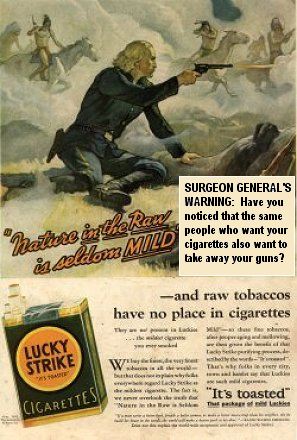
Hint: it is not about health and safety…
at least not your health and safety
We now know that Salam Pax worked for a time as an interpreter for New York Times and Slate journalist Peter Maass. Maass had absolutely no idea of his interpreter’s secret identity until he returned to the US, found out some more about Salam Pax, and eventually realised that Salam Pax had been blogging about his experiences with Maass (although he hadn’t revealed Maass’ identity either – presumably to protect his own). We thus had a situation where Maass and Pax were working together, and both were writing for large global audiences, but one of them was unaware of who the other was and what he was doing. There were no doubt people in the west who were reading both Maass and Pax, and had no idea that the two people were talking about the same things – quite literally – from different points of view. Plus we have the fact that the blog and the blogger are a much more interesting story than anything in the New York Times. (It’s probably possible to relate this to Dave Winer’s bet in Wired that the blogosphere would be more authoritative than the New York Times by 2007, but I am not sure quite how. I don’t think anyone thought things would unfold like this).
When Maass first met Salam, Salam was reading a copy of Philip K Dick’s The Man in the High Castle. Dick was the master writer about issues of identity. His books are full of questions about who is who, and who is real, and what is real. Although Dick wrote most of his books in the 1960s and 1970s, the issues raised in them have steadily become more relevant and fascinating to people as the decades have gone by, and the world has come to seem more like the world he envisaged. Hollywood has been influenced more and more by Dick’s work, both in terms of direct adaptations like Blade Runner, Total Recall and Minority Report, as well as by works obviously Dick influenced, such as The Matrix, Dark City and Vanilla Sky. The Man in the High Castle is set in an alternate world in which America has lost World War Two, and America is partitioned into a Pacific Zone ruled by Japan and an Atlantic Zone ruled by Germany. And it is about occupying powers becoming fascinated with the question of the authenticity of the culture of the country they occupy . By being seen to read it, Salam Pax almost seems to be making some kind of deeply ironic statement about his situation.
And that seems to me the odd contradiction. Pax seems largely unaware of the extent that he is famous in the outside world (or at least claims to be unaware) and yet at the same time he is reading and referring to cultural items that are about the kind of awareness and interconnectedness that he is denying. The question is to what extent he is doing this deliberately, and to what extent this is simply a consequence of the zeitgeist of the age. As I discussed a few weeks ago, Pax previously compared the situation in Baghdad to something out of a William Gibson novel, unaware that Gibson himself, on his blog, had already compared Pax to a character out of one of his novels. Then of course we had Gibson commenting about Pax commenting about…
And that is the extraordinary thing about all this. Salam Pax is the most Gibsonian and Dickian figure to ever actually exist, I think. The writings of Gibson and Dick are about the muddiness, murkiness and complexity of the modern world, and the patterns that arise from that muddiness and murkiness. As Maass observes, Iraq is very muddy and murky, and Salam Pax himself appears to be a pattern coming through this, as well as a suberb chonicler of it. And through his actions, Salam Pax seems to be making a peculiar commentary on himself. And yet to make that commentary one thinks he would have to understand more than he actually does, and indeed understand more than it seems possible that anyone in Iraq could understand. From his writing it is easy to tell that Salam is very smart, but is he that smart? This is why I am finding the Salam Pax saga to be such an extraordinary story.
(This is also why I am finding the “Salam is a tool of the Ba’athists” theory steadily less likely. The more detailed and intricate the story gets, the less I simply can believe they could have the imagination to dream something like this up).
Are you sick of popular entertainment with every sort of bad person being bad in it except the actual bad people we all know we are actually up against?
Go see a movie. The terrorists trying to blow up the world will be from the Balkans, won’t they? Or they’ll be Germans. Or Russians. In Hollywood movies the villains (and many of us over here take a kind of quiet pride in this) are often British.
What they won’t tend to be is Islamofascist. Islamofascist bad guys are just too close to the truth. If Jeremy Irons wants to make a living playing Brit villains, or German villains, fine. Nobody will confuse that with reality, so no skin off any noses. But Islamic villains? Well, that might cause actual offence, mightn’t it. That might reinforce conventional stereotypes. The sort of conventional stereotypes that are quite widespread. The sort of conventional stereotypes that are quite widespread, because they are rooted in reality. Because, that is to say, they are true. So, no true stereotypes please, they’re trouble. Get Jeremy Irons to do another implausible European, and confine the plausibility to such things as detonators and passports and hidden cameras and AK47s.
However, this does rather create a realism problem. Take this TV series they’re showing now, on the BBC, called Spooks. Episode one of the new series, shown last night, had a villain from – yes you’ve guessed it – the Balkans. A Serbian to be exact, steeling guns from the British army and then shooting up or blowing up the “Cobra” committee or whatever it is, which consists of the Prime Minister and Head of the Army and other such Head Government Persons. But we have a real terrorism problem in our midst and we all know it. Spare us this.
Episode one was on BBC 1 from 9pm until 10pm, and then episode two was at 10.30pm on BBC 3 (a digital channel which I now have), and at the end of episode one they showed foretaste excerpts of episode two which made it seem quite enticing and interesting. For what is this? Episode two starts up, and a fat bloke in a beard and with a cloth around his head, is spouting stuff about how this country will one day soon be entirely Islamic and that it is the great achievement of “a boy like you” that you have kept yourselves pure, so try this on. And he hands this boy a suicide jacket. → Continue reading: The British Islamofascist menace – more than a ripping yarn from the BBC
I always thought Burke’s metaphor of the English oxen ignoring the buzzing political insects was a good thing, however in the present situation placidity in the doorway of the abattoir may not be a virtue.
– Doug Collins
As is obvious from reading this blog, we boys and girls at Samizdata are not exactly big fans of the European Union and its attendant horrors of red tape and regulation. So, here’s an interesting experience of mine from last weekend. I managed to leave and enter France and then return without having a single item of paperwork inspected, including my passport. How come?
Well, I sailed to Cherbourg on a yacht from Portsmouth, stayed overnight in France and came back to Portsmouth. No passport check was carried out at either end. Now, I am sure if British Home Secretary David Blunkett were reading this (dream on!), he’d be aghast. (“You mean people can travel, breathe and eat without my express permission? Form a committee!”). But actually, I found the experience rather liberating. I was able to travel, using my own humble skills as a yacht sailor, to travel to and from a Continent without being troubled by officialdom.
And of course I loaded up the boat on cheap wine due to lower French duties on booze. So all in all the whole weekend was a poke in the eye for the offices of the Blairite state. C’est magnifique!
It is hot and humid Monday morning here in Britain and, right about now, millions of people are waking from their slumber to the start of another week.
Bleary-eyed and sticky with sweat, they will munch their toast, slurp their coffee, grab their keys and head out of their doors to do battle with another working day. A day, on the face of it, much like any other day.
Only it isn’t. Not quite. For today, 2nd June, is Tax Freedom Day in Britain. This is the day when we stop working for HMG and start working for ourselves. From today, we can begin supporting our families and not the state. Up until today, from January 1st, we have laboured non-stop for the benefit of the public sector; for all those legions of bureaucrats and rubber-stampers without whom life would be worth living.
There will be no celebrations though. No party hats, no holiday cheer and no group hugs. For the vast majority, the day will pass by without so much as a brief acknowledgement of the temporary release from bondage. There is something sad about a whole nation being so inured to the painful bites of the government that they do not even notice when the biting ceases.
Nearly half a year. Nearly half a life. What a waste.
No sooner has Perry reminded us that the Conservative Party are not to be trusted when it comes to liberty, than, as if right on cue, the buggers prove him right:
Patients should be issued with “entitlement cards” to stop illegal immigrants abusing the National Health Service, the Tories said yesterday.
Liam Fox, the shadow health secretary, said the cards, which would be issued to every UK citizen, would stop so-called “health tourists” being treated at the taxpayers’ expense.
Now, to be fair, the problem they are referring to is a valid one. It is an outrageous abuse of the already over-burdened British taxpayer to force them to pick up the healthcare tab for anyone anywhere in the world who happens to want it. However, the blindingly obvious way of putting a stop to this would be to deregulate health services and dismantle the Soviet-inspired monstrosity of the NHS.
But, no, the Tories would never dream of doing anything to upset the left. They would much rather that we were all issued with an electronic tattoo which is not only obnoxious and anti-British, it will also prove ineffective in solving the problem referred to. Within weeks of the introduction of any such ‘Entitlement Card’ the country (and possibly the rest of the world) will be flooded with forgeries and, even if that were not the case, neither the Human Rights regime, nor EU law will permit the NHS to discriminate against non-UK nationals. Added to that is the massive cost of administering and policing the system the burden of which will also fall on the taxpayers and probably prove more expensive than treating foreigners for their arthritis.
The Tories clearly have not thought this one through but ‘thinking’ is generally frowned upon in those circles. I expect very little from the British Conservative Party and I am rarely disappointed.
As a general rule of thumb, when two non-government organisations, the French foreign minister, Dominique de Villepin, the BBC and the New York Times agree that the whole powder keg’s about to go up, it’s a safe bet that things are going swimmingly.
-Mark Steyn, reporting in the Telegraph about the lack of a humanitarian crisis in post-war Iraq.
Actually, the whole article is terrific, particularly his explanation of why the NGOs need to be sent home.
|
Who Are We? The Samizdata people are a bunch of sinister and heavily armed globalist illuminati who seek to infect the entire world with the values of personal liberty and several property. Amongst our many crimes is a sense of humour and the intermittent use of British spelling.
We are also a varied group made up of social individualists, classical liberals, whigs, libertarians, extropians, futurists, ‘Porcupines’, Karl Popper fetishists, recovering neo-conservatives, crazed Ayn Rand worshipers, over-caffeinated Virginia Postrel devotees, witty Frédéric Bastiat wannabes, cypherpunks, minarchists, kritarchists and wild-eyed anarcho-capitalists from Britain, North America, Australia and Europe.
|





Recent Comments