We are developing the social individualist meta-context for the future. From the very serious to the extremely frivolous... lets see what is on the mind of the Samizdata people.
Samizdata, derived from Samizdat /n. - a system of clandestine publication of banned literature in the USSR [Russ.,= self-publishing house]
|
John Naughton has written an article about blogging and much to my surprise, he avoids all the usual Big Media whinging.
In fact, when it comes to many topics in which I have a professional interest, I would sooner pay attention to particular blogs than to anything published in Big Media – including the venerable New York Times. This is not necessarily because journalists are idiots; it’s just that serious subjects are complicated and hacks have neither the training nor the time to reach a sophisticated understanding of them – which is why much journalistic coverage is inevitably superficial and often misleading, and why so many blogs are thoughtful and accurate by comparison.
Third, there is the problem – not often touched upon in the New York Times, by the way – that many controversial public issues are ignored by Big Media for the simple reason that the ideological and commercial interests of their proprietors preclude it.
Read the whole article, it is good stuff!
Sadly none of Britain’s mainstream political parties are, they just vary (slightly) in who they want to benefit from their regulation of civil society. When it comes from choosing amongst which tribal faction of statists will regulate your life, we are spoilt for choice.
So next time you have an earnest young Tory hopeful turn up on your doorstep asking for your vote and pledging to save you from those beastly Labour socialists, ask him where his party stands on the issue of ID cards, which will naturally start off as ‘National Health Benefit Cards’ and then very quickly become mandatory for pretty much anything you try to do, such as open a bank account or rent an apartment.
And then look ‘earnest young Tory’ in the eye, explain why his party is part of the problem rather than part of the solution and then tell him to fuck off. A choice between a party which brought us Michael ‘a touch of the night’ Howard and one which has brought us David ‘RIP’ Blunket is no choice at all. But if you cannot bring yourself to resist the syren call to the ballot box, vote UKIP.
Former Italian prime minister Lamberto Dini, one of the people drawing up the new European Constitution on the EU Convention on the Future of Europe, has flatly and explicitly contradicted British ministers who claimed that the new constitution is only a ‘tidying up exercise’.
Anyone in Britain who claims the constitution will not change things is trying to sweeten the pill for those who don’t want to see a bigger role for Europe
If this constitution is adopted by Britain, control of much of how the state intrudes into society will be placed in a power centre far more remote and less amenable to the British public’s democratic influence politically. It is nothing less than the wholesale disenfranchisement of Britain, talking a moderately effective democratic system of accountability (albeit a long decaying one) and replacing it with European-wide ‘democracy’ that in fact places vastly more power in remote bureaucracies.
Although I never doubted that Tony Blair was simply lying through his teeth, can anyone now doubt that what the Labour government is saying is intentional falsehood pertaining to altering the most fundamental underpinning structure of the British state?
If the Tory opposition was capable of rational analysis, they would start realising that Blair has torn up the rule book and soon rolling back the tide of statism will simply be beyond the legal power of British politicians. If the Conservative Leader was to stand up in Parliament and say “a future Tory government will simply abrogate this constitution on Day One and repatriate democratic accountability to the British people”, then there might be some grounds for thinking they had actually decided not to just be Labour Party Lite as they blather on about ‘good public services’ and tolerate the likes of Chris Patten in amongst their numbers.
What I find so exasperating is the Tory’s refusal to think outside the box. Will they just meekly accept that once the primacy of the EU is complete, they will just have to adapt into their allotted role as a European style ‘Christian Democrat’ Party of the statist centre in return for a place for their snouts at the Euro-trough? Perhaps so. The Conservative Party is a noxious organisation so I cannot say I am surprised, but unless they quickly rediscover their radical roots, Britain as a self-governing entity is finished regardless of the lies to the contrary (just see the remarks of our honest enemy Lamberto Dini).
Unlike most of continental Europe, there is a significant anti-statist element in the mainstream of British society… I don’t mean people like me, who are essentially out on the ‘lunatic fringe’, but the sort of people who Maggie Thatcher tapped into in her excitingly radical but maddeningly inconsistent way. Once this swathe of society finally realises that they no longer have any meaningful outlet for their political aspirations, I wonder if they will just be content to shrug and surrender to the Europe wide majority who favour regulatory top-down statism? I think not.
The Labour Party and all who support Euro-wide statism have seen the way to put all the bits about the role of the state they value beyond British politics: their vision of regulatory statism is about to be locked in and in future, politics will just be about factional pleading for a share of the monies appropriated from the remaining productive sections of the economy. The only antidote to this is for anti-EU politicians to simply refuse to cooperate. The Tory Party would be more useful if they simply walked out of Parliament and declined to return unless the constitution is completely gutted (which of course will never happen). After all, so what if Labour used that opportunity to pass all manner of nasty laws? They have such a large majority they can do that anyway and so it is only by radical action that the Tories can de-legitimise what is being done… i.e. by provoking a constitutional crisis because we are bloody well in one already!
2. The Member States shall facilitate the achievement of the Union’s tasks and refrain from any measure which could jeopardise the attainment of the objectives set out in the Constitution.
If anti-EU activists ever manage to start mounting effective resistance to the EU and actually undermining its authority, do you seriously doubt that laws suppressing what we say and do will not follow?
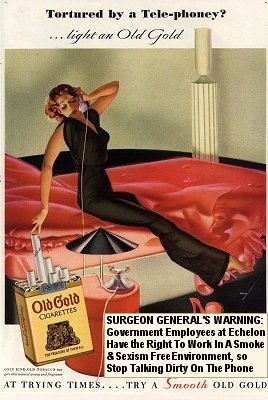
Letter to editor (from Blunkett)
Re: Blunkett’s biometrics
Date: 12 May 2003
Sir – I was entertained by Wednesday’s leading article (leader, May 7), which managed to cobble together critical comment about secure passports using biometric technology with laments about state bureaucracy.
Here is a “free country”, “free enterprise” newspaper failing to address the consequences of what free-thinking America is about to do, namely introduce biometric-based entry requirements that will make free entry to that country very difficult for people whose countries do not follow suit.
Jim Henley is right about one thing… Iraq is indeed a quagmire. Rather than a quick campaign with decisive results that vindicated their views, they are still fighting to prove their position was justified, struggling to massage the facts, trying to divert attention away from the reality of the effect of overthrowing a nation’s government as their loudly trumpeted ideas of a few short months ago ‘circle the drain’.
I am of course referring to the people who were Saddam Hussain’s ‘useful idiots’ and who opposed the armed overthrow of Ba’athist Socialism… and who are now desperately clutching at daily US casualty rates which can be counted on one hand as some means to snatch a tiny measure of victory from the jaws of absolutely crushing intellectual defeat. I expect more Americans are murdered by other Americans in any one of several major US cities every day than are dying in fighting in Iraq now, just to put it all into some perspective.
One does not have to support the way the US is going about running (or not) Iraq to nevertheless admit that the war itself was a triumph not just for the allies but for the Iraqi people. So to borrow Jim Henley’s tone, damn to hell all the ‘cowardly’ paleo-libertarians and their socialist confreres who really did not care what Saddam Hussain’s regime was doing to the people in Iraq and who still feel no remorse that all the horrors of Ba’athism would still be happening in Iraq today if they had gotten their way.
Salam has got a great post defending himself and his family. A lot is happening around him, not least the news that Guardian just hired him to write a “Baghdad Blog” for them.
Salam’s passionate defence of his father was sparked off by comments from those who see conspiracy theories behind everything outside their everyday experience. Salam is real, alright, I have my reasons not to doubt him. Those who challenge his identity and connections are simply ignorant of the workings of a world profoundly different from theirs. It does not fit the same categories and does not conform to the same black&white distinctions.
The fact Salam is disillusioned with American ‘occupation’ of Iraq and that he falls into the same ‘liberal mindset’ traps as many intellectuals in the West is not a sign of Ba’atish mis-information machine at work, as some have suggested. Simply, Salam has seen enough of the West not to believe that it has a panacea for Iraq’s woes. Can you blame him for that? He may take a very different journey from that point to the one we take at Samizdata.net but so what? That can happen to anyone and it does not make them a KGB agent.
I do feel a bit of regret that Salam has been dragged to the media spotlights, not because I begrudge him the popularity but because his idiosyncratic style and personality will get edited and analysed ad nauseam. Until, of course, something else becomes the flavour of the day.
I hope Salam’s future is safe and wish him best of luck.
Rory McCarthy of The Guardian has apparently tracked down Salam Pax in Baghdad, and describes him as a “quietly spoken, 29-year-old architect”. (Found via Tim Blair). Pax is still unwilling to completely reveal his identity, at least partly because he is gay, which is a relatively uncomfortable position to be in Iraq, and also no doubt simply because in a society as paranoid as Iraq must be after decades of Saddam Hussein, speaking too publicly is not something that comes naturally. No doubt the people who believe he is a Ba’athist will seize on this, but Pax seems no friend of Saddam Hussein. (This seems to be happening. Those who found Pax convincing are impressed by the Guardian article, while others are less impressed). He may not necessarily be a friend of the invading British and American forces, and he may not have enjoyed seeing Iraqis surrender, but he does seem to genuinely detest the former regime. (That doesn’t necessarily mean he was entirely unconnected from the regime, of course).
Like all Iraqis, Salam was familiar with the dangers. At least four of his relatives had gone missing. In the past year, for no apparent reason, one of his friends was summarily executed, shot in the head as he sat in his car, and two others were arrested; one was later freed and another, a close friend, has never returned.
Not only had Salam criticised the regime, he had written openly about the fact that he is gay. It was a frank admission in a repressive dictatorship and one that, even in the new, postwar Iraq, which at heart is still a conservative, Islamic society, represents a significant risk. And so he continues to guard his identity. “I am not going to be the first one to carry the flag. I hide behind computer screens,” he says
The simplest explanation may just be that he is introverted and rather shy, like many bloggers.
The article gives the story from Pax’s point of view about how he became a blogger and how his message got out to the world, which is more than a little interesting. He also rather seems to resent the fact that some people assumed that he was a fake because he knew so much about global popular culture. He describes them as “culturally arrogant” and I think he is probably right. People in western countries don’t always realise just how far the details of popular culture stretch into the rest of the world. (The producers of the Academy Award ceremony in Los Angeles are always trying to prevent presenters and winners from making obscure industry in jokes because they don’t believe that viewers outside LA will get the jokes. They are wrong. The viewers in Tashkent are fully aware who Harvey Weinstein is). Pop culture does stretch even to war torn dictatorships, at least among the children of the middle classes.
What do I think? Well, I always believed Pax was authentic in the sense that he was really an Iraqi and was really blogging from Baghdad on his own initiative. As to who he actually was, I found it hard to say. I found the “Tokyo Rose” theories suggesting that he was somehow an agent of the Ba’athists deeply unconvincing, although we should be probably prepared for intelligence agencies to try this trick next time we fight a war. He was obviously middle class, and from a family that largely kept their heads down, and this seems confirmed. It is not impossible that he has some less than savoury connections, but my feeling is probably not. Oddly, I think that this is someone who is exactly what he claims to be.
However, for now, he continues to write very well
A day before that I talked to Rory from the Guardian. He paid for a great lunch in a place which had air-conditioning and lots of people from foreign. You know how much you would pay for a pizza before [attack of the media types II] started? Two thousand five hundred dinar, a bit more than $1. Do you know how much it costs now? Six thousand dinars, a little less than $6. Plus the exchange rate is totally fucked up and the real estate market is getting bizarre. You can follow the trail of the foreigners by how much things cost in a certain district. Of course, Rory didn’t buy me the 6,000-dinar pizza – that would have been too cheap. He paid an extra $3.
What I would like to know is the precise details of how the real estate market is getting bizarre. If we can get some details, this is likely a better way than most of finding out how things are actually going in Iraq post-war.
The Guardian have also signed Salam Pax up to write a regular column for them. This is a smart thing for them to do, and I hope he has negotiated a good fee. That said, Jeff Jarvis’ observations on how the Guardian have edited him already tend to suggest it might be best if we continue to read the blog rather than the newspaper.
OK, so I Googled for federast too. And yes, we are the first result and we rock. Whatever.
But unlike this commenter, I looked beyond the second result and look what I found. A record of Parliamentary debates dated 20 Apr 1999 (column 687) that shows that “federast” was not used by David or Perry for the first time (sorry guys, but this is worth it).
I have reproduced most of the debate as I think it is interesting to see what discussions our ‘representatives’ were having in 1999 about the EU:
The Minister of State, Foreign and Commonwealth Office (Ms Joyce Quin): The Government are in favour of a European Commission that is efficient, transparent and accountable. The independent experts’ report revealed a catalogue of deficiencies in the Commission’s internal structures and practices, but the resignation of the Commission gives us an opportunity to ensure that, in future, the Commission carries out its functions more effectively and makes much better use of taxpayers’ money. The Berlin European Council took a decisive step towards that by agreeing the nomination of the new Commission President.
Mr. Blizzard: Does my right hon. Friend share my view that the only sensible words ever uttered by the noble Baroness Thatcher were that “advisers advise, Ministers decide”? That is the principle that underlies the civil service in this country; should it not also be true of the European Commission? Will the people of this country not accept more readily the institutions of the EU if they are confident that decisions are taken by democratically elected Ministers, rather than by unelected bureaucrats? Will my right hon. Friend use this opportunity to press for reform of the European Commission that brings about that state of affairs?
Ms Quin: The Government have tabled a number of proposals for reforms. It should be emphasised that, in European decision making, the elected Council of Ministers has the final say and is responsible for making final decisions; that is a system of which we approve. As for the accountability of the European Commission, a great deal can be done to improve matters in terms of its relations with both the European Parliament and the Council of Ministers, and we have made proposals in that respect.
Mr. Bercow (Buckingham): In backing for the presidency of the European Commission Mr. Prodi, who says that economic and monetary union and political union are two sides of the same coin, why can the right hon. Lady not admit in Britain what is widely acknowledged on the continent–that Mr. Prodi is a committed “federast”, who is determined to create a single defence policy, a single economic policy, a single foreign policy, a single immigration policy, a single social policy, a single constitution, a single Government and a single state called Europe?
Ms Quin: First, I remind the hon. Gentleman that the appointment of Mr. Prodi at the Berlin Council was linked firmly with Commission reform, and that is why he received the support of all member Governments. Secondly, the hon. Gentleman obviously has a short memory. I am not sure whether he was in the House when Romano Prodi’s predecessor was appointed, but I remember the press coverage at the time about the fiercely federalist Jacques Santer, who was the Conservative Government’s appointee.
Mr. Bill Rammell (Harlow): Does the Minister agree that, in taking forward the essential reform process, we must establish a mechanism whereby individual acts of proven misconduct against individual Commissioners can result in their disciplining or dismissal? We should not always have to take the nuclear option of forcing the entire European Commission to resign.
Ms Quin: My hon. Friend makes a very important point. We must not only move ahead in appointing a new Commission, but consider the terms and conditions that govern such appointments in order to address some of the issues to which my hon. Friend referred.
Mr. Michael Howard (Folkestone and Hythe): Mr. Prodi has declared his intention to use his presidency to create a single economy and a single political unity; yet the Foreign Secretary said recently that the Maastricht treaty was a high water mark of integrationism. How can those positions be reconciled?
Perhaps, we should warn Mr John Bercow, MP about the company he keeps…
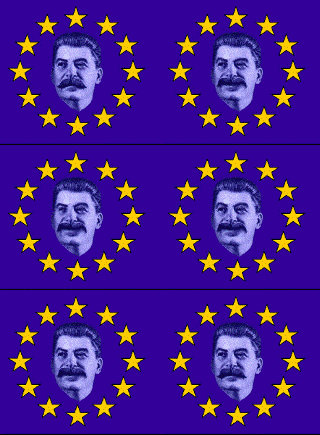
With Orwellian double-think, the preamble to the European Convention begins with a quote from Thucydides:
Our Constitution is called a democracy because power is in the hands not of a minority but of the whole people
So should we not vote on it?
It is�about as ‘democratic’ as the Warsaw Pact Treaty.
Paul Staines
Robert Matthews, a regular writer for QED column in the Sunday Telegraph, looks at the “wonders of technology” David Blunkett, the Home Secretary, decided it was time we should all benefit from.
Mr Blunkett appears to have fallen under the spell of biometric methods, which use characteristics ranging from fingerprints to handwriting to verify the identity of people. He seems to favour a particularly sophisticated version of the technology, which uses the unique iris patterns of the eye to check ID.
…there is still a stunning lack of awareness of a basic mathematical result that shows why we should all be very wary of any type of screening, biometric or otherwise.
In the case of screening – whether for breast cancer or membership of al-Qaeda – the [Bayes’s] theorem shows that the technology does not do what everyone from doctors to Home Secretaries seems to think it does.
To take a concrete example, suppose a biometric screening method is 99.9 per cent accurate: that is, it spots 99.9 per cent of imposters, and incorrectly accuses one in 1,000 bona fide people (in reality, these are very optimistic figures). Now suppose that every year a horde of 1,000 terrorists passes through Heathrow airport. What are the chances of the biometric system detecting any of them?
The obvious answer is 99.9 per cent. But, in fact, Bayes’s Theorem shows that the correct answer is about two per cent. That is, when the alarms go off and the armed response team turns up at passport control, it is 98 per cent likely to be a false alarm.
Why? Because not even the amazing accuracy of the biometric test can cope with the very low prior probability that any one of the 60 million passengers using Heathrow each year is a terrorist. Sure, it boosts the weight of evidence in favour of guilt 1,000-fold, but that is still not enough to overcome the initially very low probability of guilt.
So there you have it. You just need to calculate your probability of being one of the incorrectly accused one in 1,000 bona fide people and books your ticket accordingly.
1. skeptic, sceptic, doubter — (someone who habitually doubts accepted beliefs)
… so in reality we are not truly ‘eurosceptic’ as we do not ‘doubt’ the harmful nature of the EU, but rather we regard that as axiomatic. What is more, we have nothing against Europe per se, it is the regulatory statist political entity called the European Union we abominate. Hell, I used to work for the EU which probably explains why I dislike it so much: I know how it really works.
Scepticism seems to imply ‘doubt’. We have no doubt whatsoever.
|
Who Are We? The Samizdata people are a bunch of sinister and heavily armed globalist illuminati who seek to infect the entire world with the values of personal liberty and several property. Amongst our many crimes is a sense of humour and the intermittent use of British spelling.
We are also a varied group made up of social individualists, classical liberals, whigs, libertarians, extropians, futurists, ‘Porcupines’, Karl Popper fetishists, recovering neo-conservatives, crazed Ayn Rand worshipers, over-caffeinated Virginia Postrel devotees, witty Frédéric Bastiat wannabes, cypherpunks, minarchists, kritarchists and wild-eyed anarcho-capitalists from Britain, North America, Australia and Europe.
|





Recent Comments