We are developing the social individualist meta-context for the future. From the very serious to the extremely frivolous... lets see what is on the mind of the Samizdata people.
Samizdata, derived from Samizdat /n. - a system of clandestine publication of banned literature in the USSR [Russ.,= self-publishing house]
|
Alice Bachini has posted an interesting reply to my recent article called The world is a messy place. Alice writes in When is violence OK?:
Bashing people for the purpose of communicating something moral might sound like an oxymoron, but I don’t think it is. I think the idea “No to badness!” is expressed usefully, and anyway, sometimes the only alternative is between that or “Yes to violence!” in the non-bashing alternative. It might seem generous to absorb the other person’s nastiness by taking it on the chin and walking off in silence, but unless they interpret this in the right spirit, it’s worse than useless.
I could not agree more!
Now at some risk of provoking an adverse response, I am going to have to raise a point regarding what is and is not a reasonable view regarding violence.
Although we have written many articles about the subject on Samizdata, I am not talking about self defence this time, which to most libertarians is a ‘no brainer’… if you are threatened with violence, you may defend yourself. Nor was I talking about the legitimacy of war against Iraq, which though more contentious is, I think, also a legitimate use of violence.
No, I am discussing the use of violence in everyday life. Now this is still a subject many have written about on this blog, usually with regard to violence and coercion directed at children as one of our contributors is the redoubtable Sarah Lawrence of Taking Children Seriously fame, and two of our frequent guest writers are supporters of TCS.
But I am not really talking about whether or not a child should be hit by their parents specifically but rather whether it is ever justified to use force outside the context of self-defense. When discussing the use of coercion against children, I was once asked if I would ever use force against an adult just because I disapproved of their behaviour in non-self defense situations. My answer was that whilst I would agree that as a general principle I am indeed against the use of force, there are indeed situations in the real world in which violence in the only way to communicate meaningfully.
About 18 months ago, I was crossing a street in Battersea with my 81 year old grandmother. A driver recklessly rounded a corner and only just managed to slam on the brakes in time to avoid running my grandmother down. Far from apologising for his reckless driving and the fact he nearly killed her, he blew his horn and abused her.
There were no witnesses to hand, meaning a formal complaint would just be our word against his, and as he was clearly about to drive off, I was faced with either doing nothing or expressing my displeasure forcefully. I reached in the open window, dragged him out of his car by his collar and punched him in the face. Although we did not discourse at great length, I can say with some confidence that I am sure he understood the causal links which had lead to his face and my fist coming into close proximity.
Do I recommend this as method of communication? Generally no, but the choice I had was simply to allow him to drive away after having nearly killed my grandmother or use force to demonstrate that such behaviour in entirely unacceptable. If there had been witnesses to hand I suspect I would have noted his licence plate and called the police but that was not so… I chose to react forcefully and would do so again in similar circumstances. It may not have been the legal thing to do but I would contend it was the correct thing to do.
The point I am trying to make is that in the real world, sometimes people act entirely unreasonably and thus to try and reason with them is unlikely to achieve much more or less by definition: they are unreasonable. 99 times out of 100 violence is not the answer. On that 100th time however, some level of violence is the only meaningful reaction. The world is a messy place.
LIBERTY 2002: the European conference of The Libertarian International and Libertarian Alliance
Saturday 9 November – Sunday 10 November, 2002
10.00am-6.00pm
The National Liberal Club
Whitehall Place
London
SW1A 2HE
England
Speakers:
- Professor Norman Barry – Business ethics and regulation: A libertarian view
- Stefan Blankertz – Nature or Nurture: A libertarian perspective on the Debate on Intelligence
- Professor John Burton – Why libertarianism is losing out
- Dr. Eamon Butler – ‘Third Way’ interventionism in the UK and its lessons
- Professor Antony Flew – A critique of welfare rights
- Alan Forester – Why libertarians should take children seriously
- Professor Terence Kealey – Science is not a public good – and requires no public support
- Sarah Lawrence – The semblance of consent: how tyrants use the illusion of freedom
- Professor Tibor Machan – Are political principles stable?
- Richard Miniter – The reality of the Middle East and libertarian policy dilemmas
- Dr. Ken Minogue – The chameleon servility and its contemporary camouflage
- Robin Ramsay – In defence of paranoia: myths and realities of “conspiracy theory”
- Francois-Rene Rideau – Government as the rule of “Black Magic”: On Human Sacrifice and Other Modern Superstitions
- Panel Discussion: Libertarian Iinternational and Libertarian Alliance Representatives – Liberty and Strategy in International Context, Chaired by Hubert Jongen, Chairman of The Libertarian International.
- Panel Discussion: Mark Littlewood, Dr. Sean Gabb & Dr. Chris R. Tame – The Destruction of Civil Liberties in the UK and its lessons
The £75 conference fee covers conference attendance, morning and afternoon tea and coffee, and the closing Banquet (but not accommodation – see below for a suggestion on this).
Are you going to attend the LIBERTY 2002 conference? Several members of the Samizdata Team will be there, so ask around and I am sure you will be able to find us. → Continue reading: More on the LIBERTY 2002 Conference
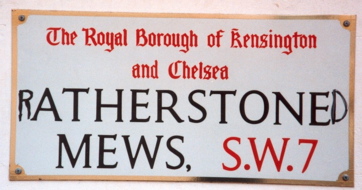
The Samizdata.net editors were out searching the streets of London for a new HQ… when they suddenly spotted the perfect address!
1. noun. One who reads many blogs but leaves no evidence of themselves such as comments behind; a silent observer of blogs.
2. noun. One who reads many blogs but has no blog of their own; a blog-watcher or blog voyeur.
Usage: “But, Mikey, I can’t have a blog of my own! I’m a blurker!”
There is an excellent article in the Telegraph which serves as a splendid example of just why so many libertarians regard democracy, as it exists in most countries, with profound ambivalence.
So they are being frogmarched back to the polls to reverse the decision they reached just 15 months ago. This is European democracy, Henry Ford style: you can reach any answer, as long as it is yes. In simply refusing to recognise the outcome of the first referendum, the government makes the point of the No campaigners more eloquently than a thousand speeches.
[…]
Mr Ahern and his supporters are relying upon the electorate accepting that there was something wrong with the June 2001 referendum. Although it produced a clear 54-46 victory for the No side, the turnout was just 35 per cent. This mandate is considered sufficiently unsatisfactory for another to be sought, although nobody for a moment believes that Ireland would be holding a second referendum had the same numbers produced a Yes vote.
If you ever wanted a demonstration of the fact the last thing democracy is about is ‘the consent of the people’, this is it. It is about justifying the actions of political elites.

When the state watches you,
dare to stare back
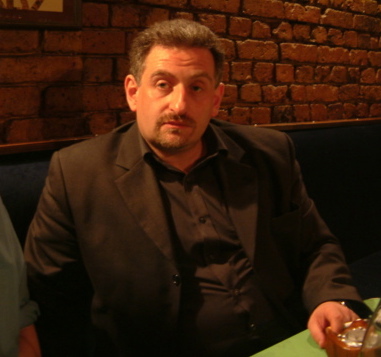
David Carr about to make someone ‘an offer they can’t refuse’
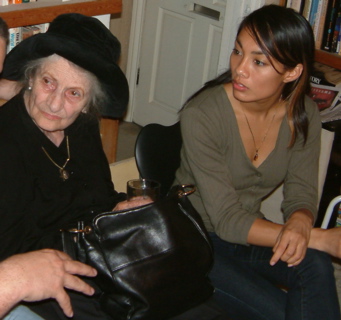
Judy Hatton and Amoy Ing listen closely as Joe demonstrates some surreal performance art called ‘The so-called Jessie Jackson’
Or so says leading New Labour talking head and failed Northern Ireland Secretary Peter Mandelson.
He says one of Europe’s “huge challenges” in the next couple of years includes “rebuilding the Atlantic alliance”. Well this is indeed a ‘European’ problem, but not a British problem. British relations with the United States and Canada are just fine, thanks… it is the governments of France and Germany which have problems with anti-Americanism at the highest levels.
At least I agree with the dismal Mandelson on one point: the need for ‘British Leadership’ in Europe. Let the nations of Europe follow Britain as it walks briskly for the door marked EXIT.
noun. Using googlebombs (qv), comment spam (qv), hostile trackbacks and other technical means to propagate memes.
noun. Intentionally altering a concept or phrase, or using it in a different context, so as to subvert the meaning. Also: memehack
Usage: for example the use of ‘socialist’ imagery to in fact advocate capitalism:

|
Who Are We? The Samizdata people are a bunch of sinister and heavily armed globalist illuminati who seek to infect the entire world with the values of personal liberty and several property. Amongst our many crimes is a sense of humour and the intermittent use of British spelling.
We are also a varied group made up of social individualists, classical liberals, whigs, libertarians, extropians, futurists, ‘Porcupines’, Karl Popper fetishists, recovering neo-conservatives, crazed Ayn Rand worshipers, over-caffeinated Virginia Postrel devotees, witty Frédéric Bastiat wannabes, cypherpunks, minarchists, kritarchists and wild-eyed anarcho-capitalists from Britain, North America, Australia and Europe.
|





