We are developing the social individualist meta-context for the future. From the very serious to the extremely frivolous... lets see what is on the mind of the Samizdata people.
Samizdata, derived from Samizdat /n. - a system of clandestine publication of banned literature in the USSR [Russ.,= self-publishing house]
|
I was struck by the tone of an article I recently read by a conservative journalist who simply could not understand why libertarians have not abandoned Ron Paul now that the supposedly deadly leftist power word has been uttered against him along with great waggling of magic wands.
My answer to him and others is that we are a tough lot and I laugh in the face of the PC power words. Unlike Conservative journalists I do not wet my knickers at the thought of someone attempting to tar me with it. Since I know I am not a racist, I simply do not care what anyone says or writes. I am immune, and that is perhaps one of the things which makes people like me and other libertarians even more frightening to the powers that be. We lack proper fear.
Anyone who like myself has been on the front lines of libertarianism for years, for decades even, understands. We have been fighting our battle against hopeless odds with pretty much everyone against us except when it was to their advantage and they felt they had nothing to lose. We are used to losing and then dusting ourselves off and going off to the next battle, and the next battle. Like a horde of Don Quixote’s we have continued to attack the blades of the windmill, but unlike him we are having an effect. Every strike of the lance vibrates the blade, every vibration wears on the bearings, and the wear is starting to make the axle wobble. One day the entire Statist enterprise will tear itself apart and send blades cartwheeling over the countryside and it will be in no small thanks to us.
This is not to say we do not hunger for personal tastes of victory, even if in small ways. The Ron Paul candidacy is one of those. No matter what happens now, we have won hugely. Millions of people have been introduced to ideas that will resonate long after they forget where they heard them. The libertarian genie is well and truly out of the bottle. We win with every day that goes by with us in the race. We win with every million dollars the Ron Paul campaign pours into broadcasting our message, a message of freedom and individualism the media has long ignored, filtered, twisted or blocked. Should he take Iowa and New Hampshire the old boys network of the Republican Party will be out in even more force with their friends in the Democratic Party to stop him. The two may be very different in what they want to do, but they both share a common love of power and your money.
Some made the mistake of thinking the Conservatives were our friends. I knew that was not true. They were only interested in us so long as they thought they could use us to their advantage. Has anyone noticed how the Conservative media turned against us as soon as it looked like we might actually have a real effect on the election? Even Pajamas Media has taken a decidly anti-libertarian turn. I must admit that one surprised me a bit, but as to the rest, I fully expected it.
I still do not expect Ron Paul will win, but God Almighty, I do intend to let those Sons of Bitches know we libertarians were there. If you are Conservative and you still do not understand why we fight after reading this missive… you are really rather dense.
It is simple. After thirty-five years, we have finally tasted blood in the political scene and for once it is not our own.
I like this:
CAPE TOWN. After 28 years of silently tolerating it, a group of unemployed local musicians have joined forces to release a Christmas single, entitled ‘Yes we do,’ in response to the Bob Geldof inspired Band Aid song, ‘Do they know it’s Christmas?’
Thankyou to Tim Worstall for spotting this.
Speaking at the launch of the single, whose proceeds will go towards teaching discipline, literacy and contraception at British schools, composer and singer Boomtown Gundane said that for years he had been irked by Geldof’s assumption that hungry Africans were also stupid.
Sadly, it’s a joke. But quite a good one, I think.
“One of the more unexpected things I discovered as CEO of a pharmaceutical company was that I had to think as much or more about the federal government than I did about our competition. I had known on an intellectual level that government was involved in the private sector in a great many ways, but it was only when I was actually in business that I felt the full impact.”
Donald Rumsfeld, Known and Unknown, page 253. He is describing his time in the private sector during the late 70s and 80s, and emerges as quite a firebrand for supply-side economics (he got to know Arthur Laffer).
Whatever you think of Rummy as a defense secretary (under the Ford and George W. Bush administrations), he comes across as a formidable man of US public and commercial life.
Here is something that I wrote about the FDA and associated drug regulation issues a while ago here.
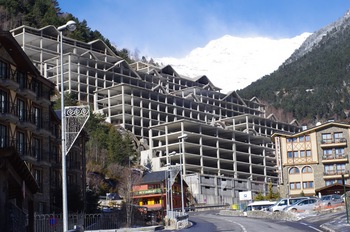
Arinsal, Andorra. January 2011.
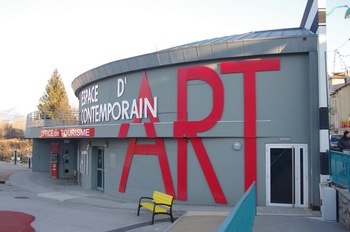
Bourg Madame, France. January 2011.
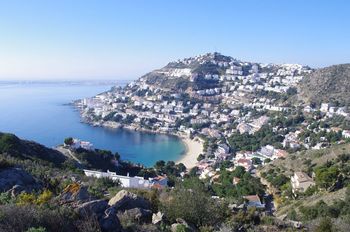
Roses, Spain. January 2011.

Lisbon, Portugal. February 2011.
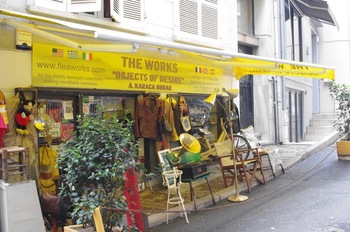
Istanbul, Turkey. March 2011.

Slunj, Croatia. April 2011.

Bihać, Bosnia and Herzegovina. April 2011.
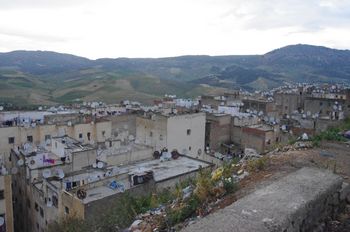
Fez. Morocco. May 2011.
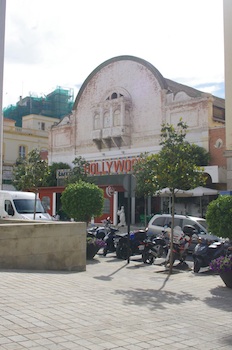
Ceuta. May 2011.

Algeciras, Spain. May 2011.

Banwar Seri Begawan, Brunei Darussalam, May 2011.

Coolangatta, Australia. May 2011.

Labuan, Malaysia. May 2011.

Sepilok, Sabah. June 2011.

Lawas, Sarawak. June 2011.

Meden Rudnik, Bulgaria. August 2011.

Bucharest, Romania. August 2011.
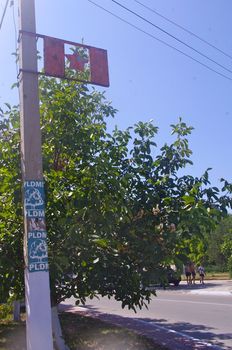
Comrat, Gagauzia. August 2011.

Balti, Moldova. August 2011.

Chernivtsi, Ukraine. August 2011.

Kraków, Poland. September 2011.
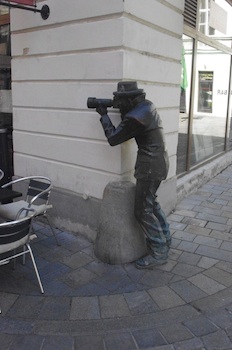
Bratislava, Slovakia. September 2011.

Brno, Czech Republic. September 2011.
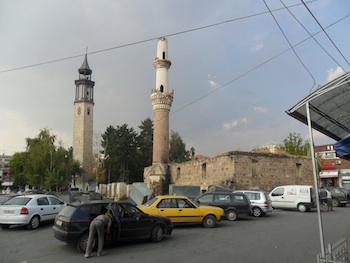
Prilep, Macedonia. September 2011.

Elbasan County, Albania. September 2011.

Prizren, Kosovo. September 2011.

North Stradbroke Island, Australia. October 2011.
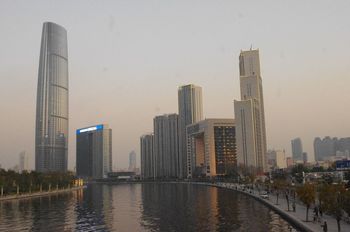
Tianjin, China. November 2011.

Vale de Telha, Portugal. December 2011.
On Boxing Day the whole family sat round to watch The Borrowers. This is the latest TV retelling of the charming tale of the two inch tall people who live under floorboards, scavenging from us big people for food and other useful items.
Much of the plot of this version revolves around a professor played by Stephen Fry who captures some of the little people, wants to show them off to the world as an amazing new discovery of natural history and (and this is where it gets far fetched) threatens to dissect them. So the little people spend their entire time avoiding the big people and escaping from them. Which is my problem with The Borrowers.
It is typical of the misanthropy of the mainstream creative arts. Evil humans only want to dissect and eradicate little people. What should happen is that Stephen Fry reveals the little people to the world, and so begins a new age of emancipation for them. There is no question of dissecting them: the human rights activists would not stand for it. And think of the advantages of trade. No more hiding under floorboards and scavenging; the little people get all the benefits of big people technology and big people get all the benefits of little people labour. Not only could they do useful work in confined spaces, but they seem to have human equivalent intelligence so we could run our call centres and get our computer programming done in exchange for fewer resources.
It’s a win win, which supposedly doesn’t make for good drama.
A musical mood struck me on the way to the coffee shop this afternoon and upon my return I recorded this song for friends and any one who finds it interesting. I am more than a couple years away from gigging and touring and sitting about studios and given how busy I am with other things I decided to skip the guitar backup since it would take a day to get it up to performance quality. This is not to say that recording a song in three takes from the printout of the lyrics to ‘final’ on a telephone headset is anything like what I’d do in a professional studio setting. But it will serve and I do not think Judy Garland will come back and haunt me for it.
Have Yourself A Merry Little Christmas. Dale Amon vocals
Merry Christmas to all!
This morning I was prodded by the scourge of epidemiocracy, Chris Snowden, to read this piece by Theodore Dalrymple. What most struck me was not the main argument (I find predictable agreement almost as wearing as disagreement) but this piece of supplementary information:
A higher proportion of the Dutch population smokes than average for a developed country (27 percent), and fewer Dutch people are aware of secondhand, or second-lung, smoke — that breathed in from other people’s tobacco — than any other comparable country.
Why should that be? I think it demands an explanation. Certainly the Dutch population cannot easily be classed as ill-educated or poorly-informed. (I have been sworn at by a drunk tramp on an Amsterdam tram who switched instantly to English invective when he realised that it was going to be more effective in my case.) My mind leapfrogged towards ideas about the Dutch liberal tradition. They choose not to know, because they do not like to hassle people about their private behaviour, perhaps…
Unfortunately there are no sources quoted. When I looked for stats and background info, I found something even odder. That remarkable factoid contains no truth. → Continue reading: Facts and attitudes
Taylor Dinerman has written a piece for the Hudson Institute on what may be coming in North Korea. I am of two minds. So long as the existing leadership keep up the facade for the rest of the world, the level of palace intrigue can become Roman in its proportions with little effect on the countryside. The key for the North Korean Aristocracy is to do one of the things it does best: keep the majority of the population outside of the Imperial City in as deep of a dark as possible.
Should their infighting erupt in a way that allows rumours to spread into the countryside, however, the entire edifice is going to come crashing down in a matter of weeks if not days.
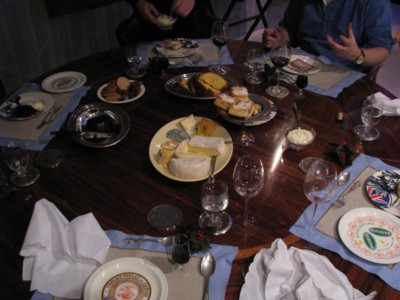
A belated and photographic thankyou for the Christmas hospitality the night before last at Chateau Samizdata, which was predictably perfect. Madam Hostess having originated from a part of the world where they do their feasting on Christmas Eve rather than the day after, this meant that the food was no mere warm-up for the real excesses to come. This was it.
Here is some of the food we enjoyed. Guy Herbert is a cheese-spotter, a fact from which we all benefited:
Although, I marginally preferred the Christmas pud. Good as the cheese was, that was even better.
Here are our hosts:
The Dear Leader is side lit by another camera, an effect I have always liked. Head-on flash is abomination, I think. But flash from the side, done either with an attachment at the end of a wire, or by some other photographer joining in, is another thing entirely. My next camera will definitely let me do this.
Because all this was on Christmas Eve, I had no trouble getting back to my home, without any expense, for the quiet and contemplative Christmas that I now so much enjoy.
Christmas, they say, is a time for families. Mine exchanged convivial phone-calls. A beloved grandmother who reached a hundred just over a year ago, has just died, peacefully, well looked after, and not before learning that she had recently acquired a new great grand-daughter. (Which means I am also a great uncle for the first time.)
Christmas, it is also decreed, is a time to accumulate unwanted things. But mine, this time around, has been a time for ejecting such stuff. My great clear-out continues. Today, Boxing Day, more boxes will be removed. (Although I did buy a few things for friends, in the form of a couple of battery-less wind-up torches.)
Has this been, I wonder, the Second Great Kindle Christmas, when, on Christmas Day itself, people discovered that they possessed new Kindle e-books that they themselves had not asked for? The point being that the First Great Kindle Christmas was the Christmas when people were first given actual Kindles on a large scale. Which happened last year, did it not? Downloading for others brings a whole new meaning to last minute Christmas shopping, doesn’t it? So when is the absolute final deadline? 11.59 pm on Christmas Day? Or is that just too late?
Christmas now, for me, in the age of instant global communication, also means the start of the Melbourne test match, which begins in England even before Christmas Day itself has even ended. This time around Australia are playing India. As an England cricket fan I can now feel very smug and indulgent about this event. This year, England began by thrashing Australia, and then proceeded to thrash India. Whoever wins this series now won’t be better than England. Long may it last. Australia are 277-6 after day one (which is a lot better than they did after day one at Melbourne this time last year). And guess what, when I first typed that, Sri Lanka, playing South Africa were … 277-6, just before the end of the first day of that game.
So, a Happy Christmas. Next, a prosperous new year? No chance. Hence the wind-up torches.
This is not good… according to the BBC there may have been 69 Patriot missiles caught in a cargo ship in Finland.
This is bad. Really, really bad.
I let Guy Herbert buy me a drink. Nobody should ever let Guy Herbert buy them a drink. I should always buy him a drink.
– Rob Fisher, to me, a year or so back, shortly after the plans for the ID card were abandoned. The fight continues, but battles have at times been won.
Also: Merry Christmas, everyone.
It may be Christmas, Cthulhumas or Whatevermas for you.. but Samizdata wishes all friends of liberty peace and prosperity over the festive season and for the coming New Year.
|
Who Are We? The Samizdata people are a bunch of sinister and heavily armed globalist illuminati who seek to infect the entire world with the values of personal liberty and several property. Amongst our many crimes is a sense of humour and the intermittent use of British spelling.
We are also a varied group made up of social individualists, classical liberals, whigs, libertarians, extropians, futurists, ‘Porcupines’, Karl Popper fetishists, recovering neo-conservatives, crazed Ayn Rand worshipers, over-caffeinated Virginia Postrel devotees, witty Frédéric Bastiat wannabes, cypherpunks, minarchists, kritarchists and wild-eyed anarcho-capitalists from Britain, North America, Australia and Europe.
|






Recent Comments