Zac Goldsmith is the far-left of the Tory Party, purest château bottled shit
– Perry de Havilland
|
|||||
|
October 2nd, 2015 | 21 comments - (Comments are closed)

October 2nd, 2015 | 23 comments - (Comments are closed)
Class War claims to represent a local community that is sick of rising house prices and an influx of wealth from overseas. However, Cereal Killer employs people from the local community, and many more residents come to the café to socialise and bond over a bowl or two of Coco Pops. The café remains defiant in the face of bullying and intimidation, and locals have since rallied behind it, with other businesses dropping off care packages for the owners. Moncrieff told me that footfall has actually increased since the attack. The Fuck Parade was made up of a small core of balaclava-wearing pillocks and a lot of posers. People who rail against gentrification are, thankfully, the minority, and they have no right to speak for residents who are probably too busy enjoying new amenities and job prospects to protest. Gentrification is not part of some conspiracy against the poor. Opportunities for people in Shoreditch to improve their lives are growing, and that is no bad thing. Fortunately, a bunch of idiots throwing cornflakes at a shopfront won’t change that. October 1st, 2015 | 46 comments - (Comments are closed)
Or perhaps issuing them, as, if reports are true, an unfortunate German woman has found. After 23 years of renting her apartment off the state, in the form of the municipality, Frau Gabrielle Keller is the second German woman who has been told to leave her apartment by the end of the year, reportedly to make way for refugees. If true, this would be a salutary lesson in life. The words of Dido’s song, Life for Rent, spring to mind (albeit I think the song in point is more about commitment to a relationship).
And look at the lives and effort Air Marshal Sir Arthur Harris put into dehousing Germans in WW2, only for them to do it to themselves in peacetime. Of course, there are lessons here. 1. Private ownership of property (real or otherwise) is the bedrock of civilised life. I suspect some form of ’eminent domain’ will probably end up being used in Germany and elsewhere to achieve the State’s desired results in any event, if not on this pretext, on some other. This is not just an issue in Germany, but is a tale re-told across the world, where political convenience leads to particularly cruel acts of government. And of course, the legal position is presumably that a person who occupies a property in Germany as a tenant may be given notice to leave for any reason or no reason whatsoever (unless, of course, discrimination is involved). The political ramifications of the crisis appear to be that the ‘Ossis’ (the former East Germans and their offspring) now distrust the Kanzerlerin Dr Merkel more than the ‘Wessis’, the former West Germans, per the article.
Not that this decision could be put directly at the door of one of the few West Germans to emigrate to East Germany (albeit as an infant), but this is on her watch. September 30th, 2015 | 101 comments - (Comments are closed)
The UN report is not “well-meaning.” It’s an effort to use the hysteria of privileged Western women to slip through global censorship in service of autocrats and oligarchs at home and abroad. The people pushing it are not good people who are going too far. They’re awful, horrible people exploiting useful idiots. September 30th, 2015 | 15 comments - (Comments are closed)
Nobody who asks for “authenticity” in politicians understands how decadent this sounds. Most people in most societies for most of history would have made do with administrative competence, incorruptibility and a disinclination to plunder citizens or conscript them as war fodder. Mid-20th century Britons dreamt of low inflation and heated homes before they caressed hopes of conviction politics. A country with the leisure to take umbrage at scripted interviews and bloodless technocracy is doing fine. The modern distaste for spin, which makes heroes of plain-speakers such as Jeremy Corbyn, the leader of the UK’s opposition Labour party, is like the campaign against obesity: warranted, but also a mark of how far we have come. There are worse problems to have and we had them not long ago. I made a related point about the use, or misuse, of the word “authentic” a short while ago here. Some people demurred and said a better word might be “integrity”, but I think that the way that people are praising Corbyn for being “authentic” is that they perceive him as being the opposite of slick or spun. That is all well and good, but I can see only one merit in being an authentic admirer of the IRA, of socialist Venezuela, of Hamas, of nationalisation, punitive tax and central bank money printing – and that merit is that the warning is out there, big and bold. There is no pretence.
September 30th, 2015 | 6 comments - (Comments are closed)
“1990″, which is a drama on the BBC (made in the late 1970s), portrays a Britain where emigration by persons in certain professions is banned, extortionate taxes are imposed. In short, a Britain where the hard left is in charge. The series was not issued onto DVD (I wonder why?) but can be viewed on YouTube. It is quite striking that the BBC made this at all. (H/T: The Conservative Woman. Read the whole article.) September 29th, 2015 | 31 comments - (Comments are closed)
The ‘mining giant’ Glencore, a commodity trader/mining company formed in the heat of a commodity price boom a few years ago, appears to be encountering some difficulties, of the sort that you find when your debt exceeds the value of your assets. The current instar of this company formed as commodity prices ‘boomed’ (for no obvious reason it would seem, it was on the back of a rather well-noted ‘recession’), with a take-over of the Anglo-Swiss commodity trader/mining company Xstrata in May 2013. Now, however:
The CEO of Glencore, Mr Ivan Glasenberg, is certainly a very capable and impressive individual, and had, when younger, been a world-class race-walking athlete, barred from international competition by his South African citizenship. We were even fed stories of how, when he paid his income tax in the Swiss village he calls home, Rüschlikon, the locals got a rebate on their income tax (how distasteful, why not cut taxes for the man himself with a cap on total take, like the Isle of Man?) Could it be perhaps that the monetary policy of the Federal Reserve, followed by others around the world, had created an illusion of value in the mining sector, that led to what (for now) might appear to be a prodigious mal-investment, as commodity prices fall? Mr Glasenberg has followed the ‘price signals’ coming from the markets in building up the company that he manages. Now, however, the price signals may well have been a mirage. What if debt had not been ‘cheap’? Might this company now be in better shape? Wouldn’t almost any Austrian economist have said, back when this merger was being contemplated, that commodity prices were a bubble (and that they still are)? Would anyone involved, blessed with some foresight, economic knowledge and patience, have said ‘Let’s wait for the bust after the boom before deciding what to do next.‘. (Of course, the boom in money hasn’t ended yet, it’s just that the prices have stopped moving up for now). Then again, why should those involved care? Now consider that lesson right across the world, what might it look like if ‘cheap debt’ had never existed, but only debt that came, not from creating money from nothing in a fiat money system via Central Banks, but via borrowing others’ savings, which were not being spent elsewhere? Everything from the cost of a home’s rent or mortgage, to the cost of the metal in a nail on your wall, might be different. What might that world look and be like? September 28th, 2015 | 6 comments - (Comments are closed)
I came across this quote on Facebook by a person whom I won’t name – since it was on a closed group – and it was written in response to an item about tax as a cost. The idea that tax is a cost struck this person (who I don’t think was trolling, but just holding collectivist views) as bizarre:
The idea that taxes cut into existing productive activity, and that as a cost, will be passed on to consumers (such as the financial transaction tax passing on costs to bank clients, shareholders, etc) doesn’t occur. No, taxes are part of that wonderful magic money tree. Why stop at a pathetic 50 per cent? Why not tax the lot? Give it all to the State, so those clever people can spray it around and make us richer, except of course the money has that odd way of disappearing from our paychecks……..Sorry, excuse me, time for my pills. You do have to wonder what a century or more of compulsory education has wrought.
September 28th, 2015 | 37 comments - (Comments are closed)
By now, everyone knows about the Volkswagen scandal. VW have admitted installing software that cuts exhaust emissions when their cars are being tested and lets them spew death and disease every which way when they’re not. So who is the villain here? To my mind there are two possible suspects: the US Environmental Protection Agency and the European Union. I know what you are thinking: why can’t we pin the blame on both of them? Well, cheer up because I think we can. To my mind pollution is simple. The polluter pays the victim. I would like to find some non-state means for doing this and as I understand it in the days prior to environmentalism just such a mechanism – albeit involving courts – did indeed exist. Of course, since then government has queered the pitch for everyone introducing two principles which it rolls out according to taste. One, that the polluter pays the government. Two, that the polluter becomes subject to government violence – or to put it in statist terms: pollution is regulated. So, the government imposes regulations in which if you score below a certain number you are left alone and if you score above they send the boys round. Black mark against the EPA. But meanwhile the EU has been promoting diesels like crazy over recent years. Whether this is a sinister French plot or the result of the global warming hoax, who knows. The really sad thing is that we have ended up with that abomination: the diesel-powered sports car. Oh yeah, and London’s air ain’t too great either. 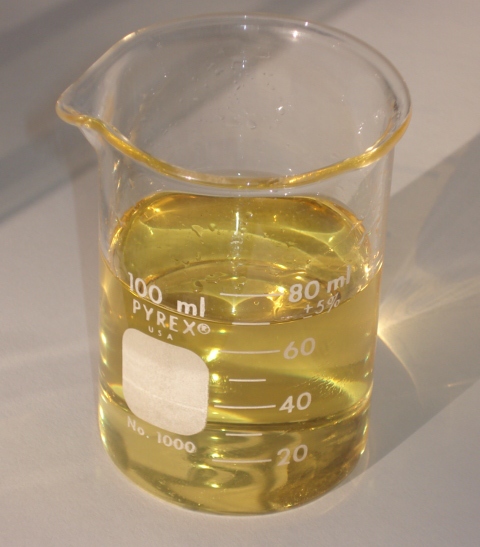 Some diesel Miscellaneous thoughts and questions Why is that we are quite happy to use the term NOx but not the term COx? It makes no sense. What were VW doing selling diesel cars in the US? Petrol (US = gasoline) is much cheaper there. So the market for diesel cars is much smaller. Come to think of it it’s probably because they were trying to make inroads into the market in the expectation that diesel taxes would come down making diesels more attractive. It is a tax issue isn’t it? Why is it that cars are regulated in this way? I find it difficult to believe that a lorry or bus is in any way cleaner than a car. But I bet the latter two are not nearly as stringently regulated. To ask the question is, of course, to answer it. They do it because they can. Did anyone else catch that excellent Mark Evans documentary about the diesel engine on BBC4 the other night? Comet swirl chambers, eh? September 26th, 2015 | 60 comments - (Comments are closed)
Via JohnW and the rest of the internet,
(Just a little note to the Telegraph subs: she isn’t actually farming minister yet. Labour would have to win an election for that.)
September 26th, 2015 | 22 comments - (Comments are closed)
In the green corner, a 3 min 41 sec clip from an LBC radio interview with the Green Party leader Natalie Bennett by Nick Ferrari dated 24 February 2015: (I posted about this interview back when it happened.) Most cringeworthy moments: her ghastly fake coughs at 2:07, 3:10, and 3:25 whenever Nick Ferrari pressed a point particularly hard. She really did have a cough, but even a real cough sounds wrong when told to perform before it is ready. Ferrari’s expression of sympathy after the 3:25 coughing fit was not meant to deceive her or the audience. In the red corner, a four minute clip from a BBC Northern Ireland radio interview with Jeremy Corbyn by Stephen Nolan dated 8 August 2015, while Mr Corbyn was the front-runner in his ultimately successful bid to become leader of the Labour Party: The most cringeworthy section again involves a pretence. Listening from 3 minutes until the end, Mr Corbyn’s initial claim not to have heard was credible; there was interference from another station to contend with. But as the interviewer doggedly repeated the question in an admirably clear voice, my belief in Mr Corbyn’s deafness trickled away.
Who wins this round? September 26th, 2015 | 8 comments - (Comments are closed)
|
   |
||||

All content on this website (including text, photographs, audio files, and any other original works), unless otherwise noted, is licensed under a Creative Commons License. |
|||||
Recent Comments