The Investigatory Powers Act legalises powers that the security agencies and police had been using for years without making this clear to either the public or parliament. In October, the investigatory powers tribunal, the only court that hears complaints against MI6, MI5 and GCHQ, ruled that they had been unlawfully collecting massive volumes of confidential personal data without proper oversight for 17 years.
|
|||||
|
Incoming, from a libertarian friend whose views I always pay attention to:
Yes I have seen it, but have not yet read it (or watched it). I was definitely already going to attend to this, and now I definitely will. But, no need for me to do that before mentioning it here. Read and watch here. Earlier Samizdata Patrick Schumacher posting here. Schumacher will also be speaking, at this Adam Smith Institute event in early December, about “Governing private cities”. I already have my ticket. November 18th, 2016 | 34 comments - (Comments are closed)
 Jennifer Saul, a professor of philosophy at the University of Sheffield, has a had a figurative and literal rude awakening. Writing in the Huffington Post, she says,
I laughed at her political naivety until I remembered that I shared it. Whether the local authority was Labour, Conservative, or any other party, I would not have expected to read of vanloads of police with arc lights and bullhorns descending at dawn on any street of the UK for anything short of a raid on armed and dangerous gangsters. Nor should Sheffield City Council get away with this less dramatic but equally ominous manipulation of the law:
November 18th, 2016 | 27 comments - (Comments are closed)
Perhaps it is as hard for those who are part of the Gaelic nomenklatura to imagine a world without subsidy as it would be for an Ancient Pict to imagine a discussion about aerodynamics. But BBC staff have the same problem in imaging life without the TV licence fee. – Mr. Ed, who may or may not identify as a horse of course. November 17th, 2016 | 16 comments - (Comments are closed)
“WITH THIS SHORT film, director Paul Duane and I are hoping to accomplish the near impossible,” writes Eoin Butler in TheJournal.ie. “That is, to start a conversation about the Irish language that is rational, unswayed by emotion, dogma or any political agenda, and informed by the facts as they are, rather than how we might wish them to be.” Here’s a link to the article, and click on the video link within to see the film, which is twelve minutes long. “We spend mind-boggling amounts of public money on the Irish language. Cén fáth?” The film is well worth a look to libertarians and people interested in revitalising minority languages, and practically compulsory* (OK, not literally compulsory. Libertarian purity police, stand easy!) for anyone like me who is both. It starts off in nostalgic sepia with Butler speaking in subtitled and platitudinous Irish. Thirty seconds in, the colour comes on and he switches to English and says, “Actually everything I just said there is an easily debunked lie.” I’d like to zoom in to a section near the end of the film. Starting at the ten minute mark, Mr Butler argues that compulsory Irish is a failed policy but a network of vested interests has grown up around it. This network, he says, “does nothing to really promote the language or broaden its appeal. Switching off the life support could shock the language back into life.” At this point I would imagine that most of those anxious about the future of Irish shrivel a little inside and think, that sounds like a strategy of last resort. To which I would respond, it is. Irish is at the point of last resort. As detailed in the first few minutes of the film, the strategy of compulsory Irish lessons in every state school has failed utterly to stem the decline of Irish as a community language, as have other state measures such as making the Irish rather than the English version into the definitive version of each of Ireland’s laws. Quite soon the legal texts and the schoolbooks may be the only places where Irish lives on. When all else fails, why not try something crazy, like acting as if the Irish language were a good thing that people might choose to have? And as a matter of fact, Mr Butler does give an example of an aspect of Gaelic culture that turned off the pressure and thrived thereby. He says, “I mean, look at Gaelic games. For seventy years the GAA [Gaelic Athletic Association] had a closed, defensive mentality. Its members were banned not just from playing but even attending rugby and soccer matches Today the ban is long gone […] the GAA, with minimal state subvention and zero compulsion on anyone to participate has never been as popular.” It is not a perfect analogy. The GAA is a private club, not a state, and I would defend its right to impose whatever rules it wishes on its members who joined it voluntarily. But it is notable that when the GAA changed from a strategy of “push” to one of “pull” its fortunes revived. A hat tip for the finding of Mr Butler’s film to the Irish Republican site, An Sionnach Fionn (The White Fox) although the writer of that site was not such a fan of the film as I was, describing it as “simply a modern form of “settler racism”, part of the poisonous legacy of several centuries of foreign colonial rule in this country.” November 17th, 2016 | 34 comments - (Comments are closed)
Certain words are losing all meaning. Over at Slate Star Codex, where the author is far from a fan of Trump, is a very thoughtful analysis with evidence about why cries of all the various -isms and -emacists are a load of nonsense. We know all this, but this is a good source of dialectic rather than rhetorical argument.
Okay, I am picking the most rhetorical sounding parts, but it is all backed with evidence in the article.
Here’s another good bit:
November 17th, 2016 | 18 comments - (Comments are closed)
November 17th, 2016 | 42 comments - (Comments are closed)
As noted elsewhere, the people here that are getting the vapors and seeing this election as a modern day Reichstag fire are the same people who spent the last 8 years weaponizing government. They have seen what happens to Christian bakers and pizza places who show badthink. They don’t want the tables turned and their angry and afraid. – Commenter Duffy over on White Sun of the Desert. November 16th, 2016 | 20 comments - (Comments are closed)
… this rant is one of the best bits of political and social analysis I have seen in years. To quote from Wikipedia:
But seriously, this is awesome. This time he is talking (mostly) about US politics and society. November 16th, 2016 | 43 comments - (Comments are closed)
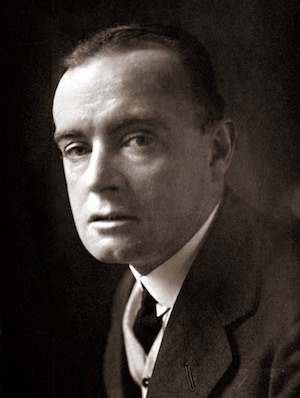
H H Monro – who wrote under the pen name Saki – was a writer of mainly short stories. In most of them the innocent and gullible find themselves in an unequal struggle with the sly and devious. In his novel When William Came he wrote about what would happen in the event of a German invasion. It is not a particularly good novel but it does describe the process by which die-hard patriots find themselves ever more isolated as more and more of the smart set – desperate to carry on as before – adapt themselves to occupation When war came, Monro was a man in his 40s and as such could have stood aside. Instead he joined up. He was killed on the Somme a hundred years ago yesterday. One our regular-ish commenters posts under the same name as one of Saki’s recurring characters so it will be interesting to hear Clovis Sangrail’s take.
November 15th, 2016 | 35 comments - (Comments are closed)
And the final sentence of Tim’s piece is the crunch argument for me as to why the Single Market is a cruel hoax (and Mrs Thatcher, who signed the Single European Act in 1986, kicked herself for not grasping this). We are told that to have access to the Single Market and the supposed benefits of such membership, “We” (Britain) “must” (because it says so, apparently) accept regulation of everything, down to the size of the plug on electric kettles, the rules governing sales of vitamins, the lot. And while no-one should have any illusions as to zeal with which local politicians in the UK might want to regulate these things, it is a million miles easier to resist such nonsense at the national level than at the supranational one, not least because MPs cannot hide behind the “Brussels made us do it and anyway we need to because of the Single Market” line they come out with. Free of the EU, we are free of a great mass of legislative empire building that has, as such examples show, tiddly-squat to do with trade, commerce and entrepreneurship. Of course, this debate does not touch on the fact that at the global, not European level, there are all manner of intergovernmental agreements and treaties that will continue to affect us in or out of the European Union. I can think, for example, of a global system coming into force called the Common Reporting Standard, a bland term that describes how scores of governments, ranging from the likes of Singapore to Germany, will swap financial data with one another to hunt down alleged tax evaders. And in one of those beautiful ironies, the US, home to Delaware, one of the most secretive legal jurisdictions on the planet, isn’t a signatory, and under Mr Trump, isn’t likely to be. November 14th, 2016 | 51 comments - (Comments are closed)
It has been argued that Brexit will make us freer. Not just in an economic or political sense, but also in terms of individual civil liberties. spiked’s Mick Hume wrote that ‘the referendum result is a triumph for free speech and a smack in the eye for the culture of You Can’t Say That’. And it is. Post-Brexit Britain will no longer be bound by an EU Code of Conduct that seeks to police the online speech of over 500million citizens and ban ‘illegal online hate speech’. Or an EU law that encourages the criminalisation of ‘insult’. Or a proposed EU law that undermines fundamental freedoms by purging Europe of every last shred of supposed ‘discrimination’. We can distinguish ourselves from our European neighbours that are intent on pursuing more and more censorship. Just over the summer it was reported that prosecutors in Spain initiated criminal proceedings against the Archbishop of Valencia for preaching a homily alleged to have been ‘sexist’ and ‘homophobic’. In the Netherlands, a man was sentenced to 30 days in prison for ‘intentionally insulting’ the king on Facebook. And in Germany a prosecution was launched against a comedian who made jokes against Turkish president Recep Tayyip Erdogan. These kinds of cases have become normal on the continent. So much so that they barely generate news. And they are often willingly cheered on by the EU and other European institutions. Britain can tread a different path. There is just one, small problem: when it comes to censorship and the quashing of civil liberties, the UK doesn’t need any encouragement from the EU, or anybody else. November 13th, 2016 | 18 comments - (Comments are closed)
|
   |
||||

All content on this website (including text, photographs, audio files, and any other original works), unless otherwise noted, is licensed under a Creative Commons License. |
|||||
Recent Comments