A friendship founded on business is a good deal better than a business founded on friendship.
– John D. Rockefeller
|
|||||
|
December 7th, 2004 | One comment - (Comments are closed)
 December 7th, 2004 | 10 comments - (Comments are closed)
In a detailed post about about the Identity Cards Bill Chris Lightfoot makes this point: …Hilariously, they haven’t even fixed s.12(4) in which The things that an individual may be required to do under subsection (3) are– — this is the same as in the draft, and they haven’t even bothered to add `reasonable’ as many responses to the consultation suggested. Presumably if some bored Crapita employee does send out a notice of the form, You are required to attend the summit of Mt. Snowdon at 0300h tomorrow morning so that we can take your fingerprints; failure to attend will be punished by a civil penalty of £1,000. Do not pass `go’. the courts will eventually tell him to go fuck himself, but we have to wait to find out. December 7th, 2004 | Comments are closed
The Democratic Leadership Council, a faction of the US Democratic Party, is calling for the resignation of Kofi Annan as the only way to restore the UN’s credibility. The litany of condemnation includes:
The British diplomatic response as reported by the BBC is to condemn Americans as a “lynch mob”. Someone supposedly called “Lord David Hannay”, a former British diplomat is defending Kofi Annan from those redneck peasants (including the DLC). Apart from the fact that calling someone “Lord David Hannay” is a most improper form of address, it turns out that this creep was “first secretary of the negotiating team for entry into the EC” according to the UN’s global security website. So if anyone got kickbacks for betraying the British fishing industry or agriculture, or the excessive payments by British taxpayers to the European Economic Community (as it was called then), Lord Hannay should know who got the brown paper envelopes. He may even know a thing or two about the massive fraud going on at the European Commision, as he worked there, but I prefer to believe that he is simply blind to the wrong-doing of others. It seems that a bi-partisan alliance of critics of the UN may be forming in the US Congress. Obviously some Rebublican sceptics want the UN reformed others want it abolished. What the DLC report suggests is that the less blinkered supporters of transnational government can see that getting rid of Annan is their best hope for restoring credibility. Shame that the BBC and “Lord David Hannay” are such provincial ignoramuses that they don’t get the message. December 7th, 2004 | 22 comments - (Comments are closed)
Slander: Liberal Lies About the American Right I see from the current issue of Reason that Ann Coulter is not entirely persona grata with other enemies of the left. “Why are conservatives trying to rehabilitate McCarthyism and the Japanese internment?” asks Cathy Young, but treats only the second half of her question. Coulter is faulted for her favourable view of McCarthy in her book Treason– but Young does not discuss it. “In both cases there was a geniune security risk and a wrong headed government response that did grave damage to the very freedoms it was supposed to protect,” she writes. In fact it is the pairing of the two issues that is wrong-headed. In Treason, Coulter says nothing about the rights and wrongs of the internment, but does point out that the “liberals” supported it. It “was praised by liberal luminaries such as Earl Warren, Felix Frankfurter and Hugo Black. The national ACLU didn’t make a peep… There was one lonely voice opposed to the Japanese internment: that of J. Edgar Hoover (pp. 194-5).” Moreover, the intermnet was (Democrat) government initiated and enforced; McCarthy was trying to stimulate government activity. Does Young mean by the “wrong-headed government response” its passivity and stonewalling of McCarthy’s attempts? I do not think so. This introductory paragraph might not have been necessary if I had read Ann Coulter’s books in the right order, instead of coming across her Treason hardback (2003) in a charity shop before finding her Slander paperback (2002) for five times the price in Borders Books. In this book she attacks what she sees as bias against the right in what is now termed the Mainstream Media (MSM) in the US- effectively the press and TV networks. Our own media in Britain (as in the rest of the world) is left unexamined, though someone else might find it worth looking at to see what the differences are, both in variety of political orientation and in national coverage. → Continue reading: Slander December 7th, 2004 | 26 comments - (Comments are closed)
I have just begun reading Niall Ferguson’s Empire: How Britain Made The Modern Word, and I know that it will be a finisher, so to speak. Here is his description of how the British Empire got started: In December 1663 a Welshman called Henry Morgan sailed five hundred miles across the Caribbean to mount a spectacular raid on a Spanish outpost called Gran Grenada, to the north of Lago de Nicaragua. The aim of the expedition was simple: to find and steal Spanish gold – or any other movable property. When Morgan and his men got to Gran Grenada, as the Governor of Jamaica reported in a despatch to London, ‘[They] fired a volley, overturned eighteen great guns . . . took the serjeant-major’s house wherein were all their arms and ammunition, secured in the great Church 300 of the best men prisoners . . . plundered for 16 hours, discharged the prisoners, sunk all the boats and so came away.’ It was the beginning of one of the seventeenth century’s most extraordinary smash-and-grab sprees. It should never be forgotten that this was how the British Empire began: in a maelstrom of seaborne violence and theft. It was not conceived by self-conscious imperialists, aiming to establish English rule over foreign lands, or colonists hoping to build a new life overseas. Morgan and his fellow ‘buccaneers’ were thieves, trying to steal the proceeds of someone else’s Empire. The buccaneers called themselves the ‘Brethren of the Coast’ and had a complex system of profit-sharing, including insurance policies for injury. Essentially, however, they were engaged in organized crime. When Morgan led another raid against the Spanish town of Portobelo in Panama, in 1668, he came back with so much plunder – in all, a quarter of a million pieces of eight – that the coins became legal tender in Jamaica. That amounted to £60,000 from just one raid. The English government not only winked at Morgan’s activity; it positively encouraged him. Viewed from London, buccaneering was a low-budget way of waging war against England’s principal European foe, Spain. In effect, the Crown licensed the pirates as ‘privateers’, legalizing their operations in return for a share of the proceeds. Morgan’s career was a classic example of the way the British Empire started out, using enterprising freelances as much as official forces. For a more respectful, and proudly Welsh, view of Morgan’s place in history, try this. And see also this posting here, early last year, about the TV show Ferguson did after writing his book. December 6th, 2004 | 13 comments - (Comments are closed)
Michael Bloomberg, founder and owner of the unlisted financial media firm bearing his name, is planning to sell up and transfer much of his assets to a charitable foundation on similar lines to that of Microsoft’s Bill Gates. As Mayor of New York, Bloomberg has not really been able to give much day-to-day attention to his media empire, preferring to spend his time on matters such as banning smoking in bars. I do not like much of what I hear about Bloomberg the politician, but I do greatly respect Bloomberg the businessman. The single-minded determination he has shown to challenge, and in some cases beat, rivals such as AP Dow Jones and Reuters has been impressive. In the space of little more than 15 years, Bloomberg has broken the near-duopoly on wholesale financial news and data once held by Reuters, the listed British firm which is more than 150 years old, though still bigger in terms of overall coverage of news. If Ayn Rand were still alive, I would wager a small bet that she would think of the fellow as a likely business hero. It is going to be interesting to see what happens to this segment of the news business over the next few months and years. December 6th, 2004 | 27 comments - (Comments are closed)
Two years ago a South Korean woman reportedly asked a North Korean why President Kim Jong Il was the only fat man in the country, and was detained for several days as a result. – from a Christian Science Monitor report about a small tourist enclave in North Korea, run by the Hyundai Coporation of South Korea and visited mainly by South Koreans. December 6th, 2004 | 18 comments - (Comments are closed)
I am given to understand that the art of being a successful confidence trickster lies in the ability to identify what their victims really, really want and then plausibly appearing to offer it to them. This con artist knew exactly what his ‘mark’ wanted and he offered it up to them on a plate:
When the victims of con men recount their tales of woe, it nearly always results in the same charge: ‘How could you have fallen for that’? The answer is always the same: the victim believed what they were told because they wanted to believe it. On the face of it, a claim that a major global concern was going to fall on its collective sword is wholly implausible. At the very least it is the kind of claim that begs for verification; verification that could easily have been sought by means a quick and expedient telephone call to the company’s headquarters and which would have resulted in dismissal. But that telephone call was never made because the apparent admission of guilt by Dow Chemicals had set BBC hearts-a-flutter. In their minds, Dow Chemicals is guilty, regardless of any facts to do with the Bhopal disaster. Dow is guilty of profiteering, of raping the planet, of making evil chemicals, of being a multinational corporation, of being big. All of a sudden they get an iron-clad confession from the Beast itself: an unimpeachable confirmation and reinforcement of everything that BBC journos believe as Gospel. They sought no corroboration for the claim because they wanted it to be true. They needed it to be true and, like lovesick adolescent girls who swoon for the duplicitous declarations of love from disingenuous paramours, they gladly opened their legs. This grubby little incident is a snapshot of everything that is wrong with the Fourth Estate and the BBC bit of it in particular. It is not they are negligent or dishonest but neither are they objective and therein lies the problem. December 5th, 2004 | 20 comments - (Comments are closed)
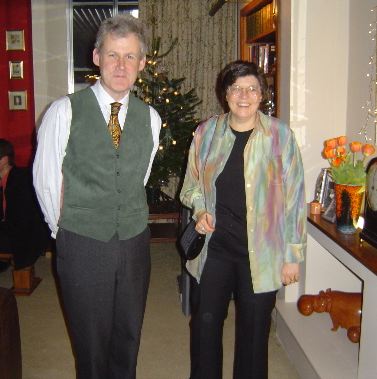
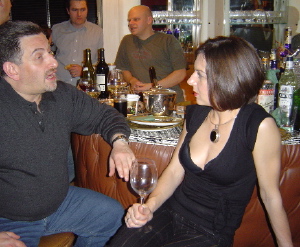
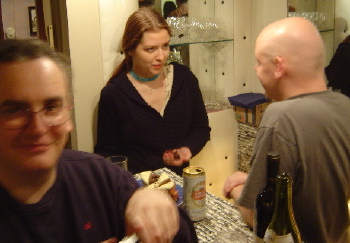
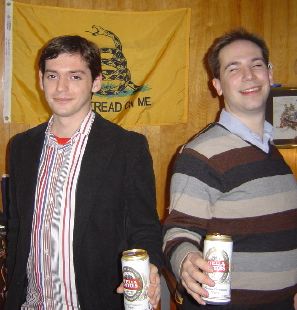
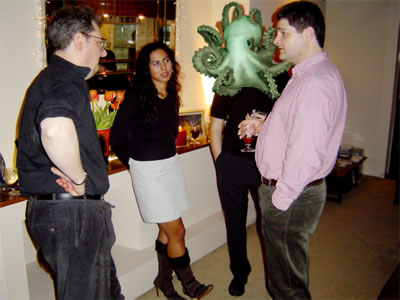
Pfff… The Samizdata.net Christmas/Cthulhumas Party has wound down with the last inebriates staggering off at a mere 02:30 in the morning. Lightweights! We have had blogger bashes last until 9:00 am the next morning!
December 5th, 2004 | 32 comments - (Comments are closed)
Yeah. I just realized something. Something that really never occurred to me before. We’re going to win. – Buffy the Vampire Slayer. (Probably really Joss Whedon). December 4th, 2004 | 14 comments - (Comments are closed)
Three months ago, I was ‘an extremist’. Today, I am merely ‘controversial’. I have not changed my opinion, but what is called “the public mood” has changed, at least in London. The Metropolitan Police Commissioner, Sir John Stevens, interviewed in the Daily Telegraph (free subscription needed), has shifted the official middle-ground:
Curiously the blame for the present insane situation where burglars can sue for damages if they are injured whilst invading a home, and where people can be prosecuted for resisting burglars, seems to lie with the common law and judges. The solution according to Sir John, is a statute:
December 4th, 2004 | 30 comments - (Comments are closed)
|
   |
||||

All content on this website (including text, photographs, audio files, and any other original works), unless otherwise noted, is licensed under a Creative Commons License. |
|||||




Recent Comments