We are developing the social individualist meta-context for the future. From the very serious to the extremely frivolous... lets see what is on the mind of the Samizdata people.
Samizdata, derived from Samizdat /n. - a system of clandestine publication of banned literature in the USSR [Russ.,= self-publishing house]
|
I am having problems with my two blogs, Brian’s Culture Blog and Brian’s Education Blog. Go there, and you just get big coloured blanks next to the sidebars. I cannot post new stuff, and the only way to read my latest from when I could post is to look in the January archives (here and here). And all this at a time when I am heavily involved doing other things, and do not need such complications as these.
The good news is that this computer genius is even now giving this problem whatever attention he can spare, in among all the other demands that the world has for his skills.
I have told him to take his time. Culture and education will continue. Digital photographs will go on being taken and being displayed on the Internet, even without my inspiring example. Classical CDs will still be enjoyed, even though I am unable to tell people which. People will continue to teach and to learn, even though I am temporarily unavailable to teach them, or to say what I have learned.
Meanwhile, my thanks to all those who have kindly enquired after these blogs, and especially to those who have said that they miss them. They will return.
Dr Eamonn Butler writes on the Adam Smith Institute Blog:
Soon after 9/11, Britain introduced draconian anti-terrorist legislation that included the power to imprison suspected terrorists without trial. It required an abrogation of human rights laws, and was a denial of habeas corpus: but the argument was that in some cases, producing evidence in a trial might expose secret sources or prejudice the lives and safety of the security services and their informers.
Not surprisingly, the High Court objected. So last week, Britain’s Home Secretary, Charles Clarke, replied that instead of detaining suspects in prison, he would keep them under house arrest, bar them using the internet and mobile phones, and so on.
Home Office ministers said we shouldn’t worry about this, because nice Mr Clarke would keep all such detentions under constant review. And because it only applies to international terrorists. But then other ministers said it might apply to animal rights campaigners too, since they were pretty dangerous characters. Err…where is this going to end?
Sure, a liberal order must protect itself from those who would destroy liberalism itself. And maybe, at times, you have to act illiberally to do that. But you should still act according to the rule of law. If there is evidence, it should be produced in court. If the evidence is too sensitive to be made public, then it should be heard in private before qualified judges. At the moment we are jailing people, and soon we will be imprisoning them in their homes, on the say-so of a politician. That is scary.
Remember this?
The sun’s rays, which are called ultraviolet A and ultraviolet B rays (UVA and UVB rays) damage your skin. This leads to early wrinkles, skin cancer and other skin problems.
Being in the sun often over time, even if you don’t burn, can lead to skin cancer. A tan is the body’s desperate attempt to protect itself from the sun’s harmful rays.
Well, forget that. Now learn this:
Sunshine might stop certain cancers from growing, including skin cancers, according to two new studies.
One found it helped beat the deadly skin cancer malignant melanoma. The other found the sun helped with non-Hodgkin lymphoma.
Tobacco is also known to prevent cancer. So get out that sunbed and a packet of cigarettes now. It’s for your own good.
“You can kill burglars” was the message that came blaring forth from the tabloid press with that flourish of heady triumphalism that usually accompanies a victory-for-the-common-man story (and which, on closer scrutiny, nearly always means that the government has just fucked over the common man good and proper).
To the cursory eye, the impression given is that the government has backed down and responded to public pressure for a change in the law to give citizens more rights to fight back against intruders and attackers. In reality, the government has done no such thing. Instead, those various branches of the state responsible for law enforcement have collaborated on a public statement:
Anyone can use reasonable force to protect themselves or others, or to carry out an arrest or to prevent crime. You are not expected to make fine judgements over the level of force you use in the heat of the moment. So long as you only do what you honestly and instinctively believe is necessary in the heat of the moment, that would be the strongest evidence of you acting lawfully and in self-defence. This is still the case if you use something to hand as a weapon.
As a general rule, the more extreme the circumstances and the fear felt, the more force you can lawfully use in self-defence.
None of which sounds unreasonable per se, but all of which is merely a re-statement of the law as it currently stands. This is not a change of heart or a climbdown or a fresh start or anything else of that nature. This is just yesterday’s bill of fare, re-heated and served up with a garnish of finely-chopped press release.
In essence this is political chaff; a big bunch of glittery tinsel ejected into the air in order to deflect the heat-seeking missile of public disquiet. It appears to have done the trick.
As I have said before, the law does need changing in order to more accurately reflect the pre-1967 Common Law positions but, more than that, there needs to be a reversal of the last half-century’s worth of anti-self-help culture.
On the downside, we are still a long way from any of that change but, and on the upside, at least the ball is now in play.
An interesting email arrived in my inbox this morning. It was from Stephen Mayne, telling me, along with 5,300 other subscribers, that he and his wife had sold their e-magazine crikey.com.au for $A1 million.
The interesting thing about this is the business plan that Mayne established. Although the website holds plenty of interesting articles about Australian politics, news, sports, media and business, the main effort that Mayne and his team put their energies into is the daily news email. Subscribers pay a fee, and in return, the daily email with between 15 and 20 news and gossip items come into their inbox.
It is a gossipy sort of publication, but no more so then the mainstream Australian media, and it was at least a different point of view then the reliably statist points of view that are published in the mainstream Australian press. Although Mayne has given up control, he will still be contributing so I hope the ‘crikey.com.au’ spirit lives on, and I am pleased for Mayne personally. The man has worked incredibly hard over the last five years to build up his little niche in the Australian media.
And it also gives hope to others that there is a long term viability to ‘new media’. You do have to work incredibly hard, and take risks, and you need a bit of luck. The only equivilent online publication I can think of is the Indian website Tehelka.com, which, after many adventures, seems to have made the transition from online to print media. (Samizdata magazine, anyone?). So well done to Mayne, and I hope he enjoys his new fortune to go with his more established fame.
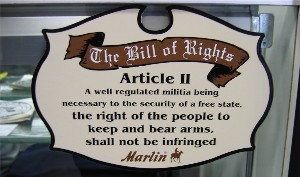
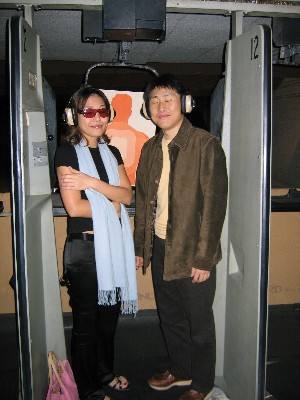
Months before I arrived in Los Angeles this past December, my friend Robert Avrech told me, “When you come to LA, I will take you shooting.” Robert, an Orthodox Jew and veteran of the Yom Kippur War, has written about what Jewish law says about private ownership of guns, and has taught his wife and daughters how to load, unload, and shoot various guns. Could I have had a better teacher for my first time shooting?
And yes, that is right: Despite being born and raised in the USA, I had never touched a gun until my recent visit to LA. I was raised not to respect the power of firearms, but to fear them. I was raised to believe that the responsibility for personal defense lies not with the individual, but with the state. I was raised to believe a lot of wrongheaded, backward things about guns and what the US constitution says about them.
Our shooting expedition took place at the LA Gun Club, in a not-so-nice area of Los Angeles. Robert, who is a screenwriter and producer as well as a publisher, told me that if one ever sees a shooting range scene in a film, it was most likely shot at the LA Gun Club. The place itself is impressively stocked with a wide range of rental guns, ammunition, targets, t-shirts, and all the other accessories that a gun owner could want.
Of course, the clientele was made up of your typical right-wing gun nuts.
As Robert explained to me, Asians in LA realise more than most the necessity of being proficient shooters, as they are one of the most besieged communities and amongst the very first targets whenever a riot breaks out.
In case you cannot tell, I really enjoyed my first time shooting. I found the Springfield a bit too powerful for my girly arms, but the ‘cowboy gun’ – a Ruger – was very much to my liking. It was easy to load, a breeze to unload, and very fun to use.
I have a lot more training to undergo before I am a confident shooter. Alas, it looks like I will not be taking that training in London – or anywhere else in Britain – anytime soon. And with the regulations that the legislature insists on piling upon American gunowners, I would advise US-based readers to exercise their freedom to bear arms while they still can.
Funny that the same people to whom diversity is a holy word so often bemoan diversity of opinion as divisive. But in a democracy, politics are naturally divisive: you vote for this candidate and someone else votes for that one; you vote yes (or no) on a proposition and other citizens disagree. What’s not divisive? Saddam and his 99.96% of the vote. That’s how it went during the previous Iraqi election – an illustration of the Latin roots of the word fascism, which actually means a bunch of sticks all tied together in one big unhappy unified bunch, and not (despite what many assume) any variation from p.c. received-wisdom regarding gay rights, affirmative action, bilingual education, etc. This election was different because it was divisive, which means it was better.
– Cathy Seipp
The cities of York, Oxford and Norwich have all recently passed protest motions against against identity cards. Councillor Andrew Aalders-Dunthorne, a Labour member of Norwich City Council said:
Finger printing ordinary people and making them feel like criminals, then charging them for the pleasure, has no place in a supposedly free and liberal society. New Labour is becoming alarmingly authoritarian, to the point where even their own Council Groups cannot support them.
ID cards are an expensive white elephant designed to pander to the Daily Mail. Once people realise what the scheme actually entails and the charge they will have to pay personally, opposition will grow.
Apparently, Norwich and York City Councils – which have also affiliated to the campaign group NO2ID – have stated that ID cards will not be required for access to council services, and that the cities will refuse to cooperate with the scheme as far as possible within the law.
(Alex Singleton blogs here.)
Tim Worstall asks: “Are We Still a Free People?“:
We have a Home Secretary who has been told by the courts that locking foreigners up and denying them their right to trial is illegal. The basic presumption is that one must either be tried and convicted, or be being held on remand while that process is put in train, for it to be allowable for the State to lock you up. His reaction on being told that foreigners have the same rights as natives was, quite amazingly, to remove that right for natives. Quite.
The most basic foundation of the relationship between citizen and state, that of the right to trial, Habeus Corpus and all the rest, has been altered. It is seriously proposed that the Home Secretary should be allowed to intern anyone at all, on no evidence that he has to reveal (and thus can be argued against), for as long as he wishes. We all know that miscarriages of justice happen, the Birmingham Six and Guildford Four being examples, even when there is an open system with judges, juries and the like. We’ll never know under the new system as no one will ever have to tell us.
Quite. The illiberal moves by this government are rather worrying.
The first Iraqi election, which I gather was to elect delegates to their constitutional convention, went off better than expected, and plenty good enough to go forward. The number being bandied about for turnout nationwide is 60% – higher in the Kurdish north and the Shiite south, lower in the Sunni triangle. This would make it higher than in any US election in recent memory.
At first, I thought the practice of requiring voters to be indelibly marked with purple ink was a major error, as it would target them for terrorist retaliation. As it happened, though, the purple finger has become a symbol of defiance against the killers and hope for the future. The illusion that the various terrorist gangs that roam a few neighborhoods in Iraq have the power to influence the course of this nation may have taken a mortal wound. Terrorism in Iraq has always lacked a popular base to speak of, existing mostly on foreign lifelines from Iran, Syria, and the Western media, but now the isolation of the terrorists from the Iraqis has been vividly displayed.
We don’t know who won, of course, but the fact that the Iraqis turned out to elect delegates to a constitutional convention is an enormous positive. Now, I know some find it fashionable to affect a certain ennui toward such bourgeois artifacts as elections and written constitutions, but I regard elections as a necessary, but not sufficient, condition for a free society, and a written constitution as damn useful sand in the gears of the seemingly inevitable expansion of the state. The Iraqis have taken their first step down the road. Lets hope they make it all the way.
One of the unspoken benefits of globalisation is the use that professionals make of the new instruments and techniques that are publicised over the internet or through the wider dissemination of networks to newly emerging economies, such as India. However, as one example demonstrates, medical professionals in India read or learn about new developments from the West in their specialism but are unable to apply them because they are too expensive or the instruments cannot be imported or the patients are not rich enough to afford them. This is providing a spur to entrepreneurial and philanthropic activity.
Narayana Hrudayalaya is a medical foundation established in India by Mother Teresa’s cardiologist, Davi Prasad Shetty. Acknowledging the dilemma faced by all professionals in poorer countries, Shetty aimed to pioneer low-cost cardiac surgery that would prove affordable, with charitable supplements and insurance for even the Bengali peasantry and textile workers inhabiting the countryside around Kolkata.
In an interview with New Scientist, Shetty understood that governments and international bureaucracies were a hindrance, not a benefit.
If there is one organisation that can be squarely blamed it is the WHO. Headquartered in Geneva, separated from reality, it runs its global activities with help from government representatives who are mostly bureaucrats. In the countries I travel to, bureaucrats are a class of people who are experts in nothing but authorities on everything. They are not best-suited to guide planning at the WHO. One of the WHO declarations was “Health for all by 2000”. How can a global body make that kind of statement when a country like Zambia does not have an echo-Doppler, without which you cannot detect any heart problem, or when one cannot find a single functioning ECG machine in many African countries?
Apart from the WHO, I have stopped blaming the politicians and bureaucrats. We are better placed to bring about changes by being outsiders, not by being a part of the system. All that the government can do is to stop being an obstacle. If it decides to be a bystander, things will fall in place. My belief is that within ten years, the government healthcare systems in all Third World countries will fold up. The government will not be able to pay even salaries, never mind offering healthcare. In that situation, organisations like ours should come forward to take over and manage it in a professional manner.
Whilst Shetty describes himself as a social worker as a libertarian, he has recognised that governments cannot provide the resources to meet his objectives and that it is best if they stand aside or collapse. When the state is no longer a factor, the economics or healthcare starts to add up.
Yes, it’s very different. In Western hospitals, about 60 per cent of the revenue is spent on salaries, while in government hospitals in India, 90 per cent goes on salaries. By contrast, in our hospital only 12 to 13 per cent is spent on salaries. That doesn’t mean our doctors are being exploited. Since their output is ten times more, unit operating costs are very low. To earn a given salary in another hospital, a doctor would have to perform one operation a day. With us he might have to operate on five patients. We also work with zero inventory, so the burden lies with the supplier. And since we are the largest consumers of medical disposables, we procure them at a discount of 30 to 35 per cent.
Increasingly, for the pragmatists of the world, freedom provides the answers that the state is unable to.
Iraqis are going to the polls. I hope the whole process goes well. I came across this link here which gives all kinds of information about the election and the participants. Cynics may dismiss the whole process and of course the problems of that tortured country will remain for a long time. As an uncertain supporter of the war to topple Saddam, my main reason for deposing the vile Baathist regime was that its removal was in my view the least-bad option, but the chance of sowing the seeds of liberal democracy in the Middle East was a key bonus. I hope that the citizens of Iraq can start to look forward to a better future.
|
Who Are We? The Samizdata people are a bunch of sinister and heavily armed globalist illuminati who seek to infect the entire world with the values of personal liberty and several property. Amongst our many crimes is a sense of humour and the intermittent use of British spelling.
We are also a varied group made up of social individualists, classical liberals, whigs, libertarians, extropians, futurists, ‘Porcupines’, Karl Popper fetishists, recovering neo-conservatives, crazed Ayn Rand worshipers, over-caffeinated Virginia Postrel devotees, witty Frédéric Bastiat wannabes, cypherpunks, minarchists, kritarchists and wild-eyed anarcho-capitalists from Britain, North America, Australia and Europe.
|






Recent Comments