We are developing the social individualist meta-context for the future. From the very serious to the extremely frivolous... lets see what is on the mind of the Samizdata people.
Samizdata, derived from Samizdat /n. - a system of clandestine publication of banned literature in the USSR [Russ.,= self-publishing house]
|
My Climategate pieces here have been of two sorts. There have been the big set-piece pieces where I at least try to say vaguely original things about it all, which given my life experiences tends to mean what sort of argument this is, how it is going and how it seems likely to go on going. And, there have been little bits like this one which basically just say: be sure not to miss this.
So anyway, be sure not to miss this, which is a report, from one of Bishop Hill’s readers, of a tactical discussion by a bunch of climate alarmist journalists, thinking aloud about how to handle the situation now that the general public has started smelling rats all over the place, rats which they helped to bury, but which those mad bloggers have been digging up. How to bury all the rats now?
Typical quote:
I used to think sceptics were bad and mad but now the bad people (lobbyists for fossil fuel industries) had gone, leaving only the mad. We published a string of articles in late Jan, early Feb showing that people had misinterpreted the emails as casting doubt on CC.
We as in the Guardian. And that worked really well, didn’t it?
Oh well, at least they are finally getting that we sceptics say what we say because we actually believe it, rather than merely because we have been paid to say it. That’s something. Next thing you know, they may even be admitting that some of their fellow climate alarmists are only still climate alarmists because someone is paying them, and that many more who would like to be sceptical are staying mum for similarly economic reasons.
Don’t miss the comments, which say everything that the good Bishop himself didn’t feel the need to say.
LATER: Bishop Hill now has a Tip Jar. The Bishop has a wife and three children, and I am guessing that even a quite small amount of cash that has been earned directly from his blogging efforts would make him an even more potent force in the Climategate debate. If the commenter who says Big Oil might be about to switch sides in this argument, again, is right, then how about a little oil money in the Bishop’s collecting plate?
One of my current top bloggers Richard North points to a new blog, Political Facts, where posting number one is about the Convenient Criminal. And since Richard North is now one of a lot of other people’s top bloggers also, that means that news of this new blog will spread fast, perhaps faster than its writer might have preferred.
The story its first posting tells if of how the British police, animated by the desire to meet targets rather than to mete out justice, have resorted to arresting the easiest persons to arrest, rather than the guiltiest. The guilty ones flee before the police arrive but the victims of the villainy stay, waiting for help and support, unpractised in the arts of obstructing the police. So they, or their angry sympathisers, get arrested, basically for being a bit angry about having been set upon by actual criminals.
Police arrive. One police officer tells the violent drunk, now a few yards away, to leave the area. The bleeding victim is helped to his feet and tries to point our his attacker but by now he has already left the scene as instructed by a police officer. Not good for the police who have attended an assault but now have no boxes to tick.
One girl tells the police they are useless and is arrested for a Section 5 Public Order Offence for screaming and swearing at the violent drunk as he assaulted the young man. A female bouncer from the nightclub who has witnessed this rushes across the street and tries to tell the police they have the wrong person. (Captured on CCTV) Police tell her to go away and proceed to issue a Fixed Penalty notice. Another Convenient Criminal without police having to take the time and effort of now trying to find and arrest the violent drunk. Effortlessly ticks all the boxes the officers need ticked for their performance targets while justice is thrown away.
But are that event and another similar one outside a pub real events, or were they merely, as they say in the movies, “based on fact”? Are these actual people, or merely composites. This first posting is strong on principle, not so strong on chapter and verse. A widespread set of prejudices about how the police now operate is eloquently laid out. But where are the actual reports of actual events, in local papers or in other blogs? At first glance, the posting looks to be full of links, but all that bold-and-in-colour stuff turns out merely to be bold-and-in-colour. It doesn’t lead anywhere.
But, as I say, it’s early days for this blog and with luck it soon will start to lead somewhere. More to the point those facts alluded to in the blog’s title may start gravitating towards it. After all, the blog’s readers now at least know the kind of facts being sought. The man can obviously write, and with luck, he will turn out to be well placed enough, near enough to the kind of dramas he now describes in a generalised way, soon to be deploying some serious facts and making some serious waves.
“The declaration of neutrality on the issue of the sovereignty of the Falklands issued by the US State Department is clear proof of the uselessness of the Obama administration.”
James Corum, military expert, ex-US soldier and writer in the Daily Telegraph. I would point out, in fairness, that in the early phases of the Falklands conflict in 1982, some members of the Reagan administration initially were sympathetic to Argentina, or at least tried to prevent a UK military recovery of the islands. But the Obama administration clearly has little love for the UK. Fair enough: let the UK follow its national interest and f**k the White House.
The problem is that 71.3% of what passes as peer reviewed climate science is simply junk science, as false as the percentage cited in this sentence. The lack of trust is not a problem of perception or communication. It is a problem of lack of substance. Results are routinely exaggerated. “Scientific papers” are larded with “may” and “might” and “could possibly”. Advocacy is a common thread in climate science papers. Codes are routinely concealed, data is not archived. A concerted effort is made to marginalize and censor opposing views.
And most disturbing, for years you and the other climate scientists have not said a word about this disgraceful situation. When Michael Mann had to be hauled in front of a congressional committee to force him to follow the simplest of scientific requirements, transparency, you guys were all wailing about how this was a huge insult to him.
An insult to Mann? Get real. Mann is an insult and an embarrassment to climate science, and you, Judith, didn’t say one word in public about that. Not that I’m singling you out. No one else stood up for climate science either. It turned my stomach to see the craven cowering of mainstream climate scientists at that time, bloviating about how it was such a terrible thing to do to poor Mikey. Now Mann has been “exonerated” by one of the most bogus whitewashes in academic history, and where is your outrage, Judith? Where are the climate scientists trying to clean up your messes?
The solution to that is not, as you suggest, to give scientists a wider voice, or educate them in how to present their garbage to a wider audience.
The solution is for you to stop trying to pass off garbage as science. The solution is for you establishment climate scientists to police your own back yard. When Climategate broke, there was widespread outrage … well, widespread everywhere except in the climate science establishment. Other than a few lone voices, the silence there was deafening. Now there is another whitewash investigation, and the silence only deepens.
And you wonder why we don’t trust you? Here’s a clue. Because a whole bunch of you are guilty of egregious and repeated scientific malfeasance, and the rest of you are complicit in the crime by your silence. Your response is to stick your fingers in your ears and cover your eyes.
– Willis Eschenbach is unimpressed by Dr Judith Curry‘s ideas about reestablishing trust in climate science. Lots more Climategate commentary and links from North.
Over at Devil’s Kitchen, the blogger uses justifiably salty prose to describe what he thinks of Nick Clegg, the leader of the Liberal Democrat Party, after Mr Clegg gave various proposals for taxing City bankers and the like, including such brilliant ideas as raising the rate of capital gains tax to 50 per cent on top earners, in line with the new, 50 per cent income tax rate due to kick in at the start of April. Clegg gave an interview to the daily freesheet, CityAm.
Clegg, let us not forget, could be in a position to be an important power-broker if the outcome of the next UK general election produces a hung parliament in which no one single party has an overall majority. Given that both the Tories and of course Labour have shown no reluctance to pander shamelessly to anti-banker, anti-capitalist sentiment, it is likely that if any of these parties gets into bed with the LibDems (a truly gruesome thought, Ed), that such “bash-the rich” crapola will get worse. So we can expect the exodus of wealthy people from this country to continue if this sort of zero-sum economics nonsense holds sway.
Under trade descriptions legislation, the LibDems’ own brandname would be declared as false advertising. Liberal they are certainly not.
People sometimes ask me why I travel, and how I choose where I travel to. Let me give a recent example.
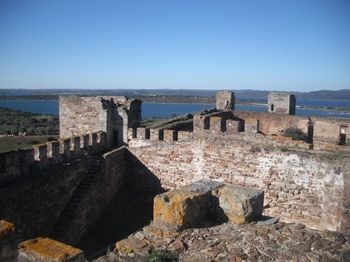 I have recently been making an effort to fill in gaps in my knowledge of modern European history. In particular, I have been attempting to learn about the Napoleonic Wars, and the subsequent growth of Prussia and its evolution into the German empire. The remnants of Europe’s 20th century history are obvious and everywhere, but the remnants of earlier upheavals are equally there if you look for them. I have a certain penchant for looking at odd and peculiar remnants of the past, sometimes big, sometimes small. When in Poland late last year, for instance, I found myself visiting the remains of the mausoleum of Prussian General Gebhard Leberecht von Blücher, victor alongside the Duke of Wellington at the Battle of Waterloo. This was desecrated by the Red Army in the closing days of the Second World War – Russian soldiers used the general’s skull for a game of football when doing so – and is not particularly easy to find these days, as Poland does not exactly advertise its presence, but it is there if you look for it.
And when reading about those same wars, I discovered an interesting fact: that there is an outstanding territorial dispute between Spain and Portugal from the same era. The river Guadiana forms the approximate border between Spain and Southern Portugal, although there are significant pieces of land that are east of the river and nonetheless part of Portugal. There used to be more. The town of Olivenza (in Spanish) / Olivença (in Portuguese) was Portuguese from the thirteenth century until the nineteenth (full details here). However, as Portugal allied itself with England in 1373 and the Spanish kingdoms were more often allied with France or other continental European powers, European wars along with local rivalries meant that the border was often fortified and there were various military skirmishes in the area over the centuries. For instance, the Ajuda Bridge across the Guadiana (which like many bridges in rural Portugal is often claimed to be Roman but which was actually built in the 16th century) connecting Olivença to the nearby Portuguese town of Elvas, was destroyed in 1709 during the War of Spanish Succession. Lack of resources, continuing instability, and the devastating earthquake of 1755 prevented it from being rebuilt before Olivença fell to the Spanish in the War of the Oranges in 1801, and was ceded to Spain in the Treaty of Badajoz that same year.
One article of that treaty stated that if either side breached any article of the treaty, the whole treaty was void. Spain and Portugal went to war again in the Peninsular War of 1807, at which point Portugal claimed that the Treaty of Badajoz had been abrogated as a consequence. Upon the final defeat of Napoleon, Britain promised to aid Portugal in achieving the return of Olivença, and a clause was inserted in the Treaty of Vienna in which it was agreed that the powers would “endeavour with the mightiest conciliatory effort to return Olivenza to Portuguese authority”. After a bit of foot dragging, Spain signed the treaty.
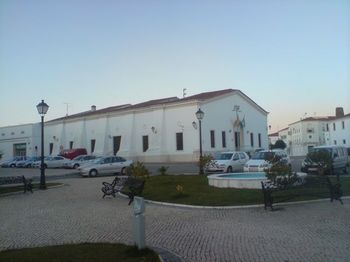 And that is where we are today. Spain occupies Olivenza to this day, stating that agreeing to “endeavour with the mightiest conciliatory effort” is not the same as agreeing to do something, and claiming that the Treaty of Badajoz is still valid. Portugal rolls its eyes at this, and states that the Peninsular War makes the Treaty of Badajoz null and void anyway, plus Spain agreed to give Olivença back under the treaty of Vienna. The Napoleonic wars apparently continue on this small corner of the Iberian Peninsula, just as the Franco-Prussian War apparently still goes on in Liechtenstein. In practice, nobody gets too worked up about this, as modern relations between the two countries are good.
Before Christmas, I learned all this and I thought it was kind of interesting. In addition I was able to get a very cheap airfare to Faro on the Algarve and a cheap car rental when I arrived there. Plus the forecast in London was for heavy snow, and I wanted to get out of the cold for a few days. Plus I always have a lovely time when I go to Portugal – especially when I drive into the interior. There is a certain cliche of rural France (much represented in French cinema and much parodied in Stella Artois commercials) that seems largely gone when one visits rural France. One still finds it rather more in rural Portugal, and I find this rather charming.
So, the plan was set. I would fly in, have a look at the coast, and drive up the Portuguese side of the border, roughly following the Guadiana river, ultimately ending up at Olivenza. I would look for lingering signs of Portugueseness and resentment from the Napoleonic wars. If I had time, I might then head for the coast near Lisbon, look for the location used in a music video of a song by a Romanian pop princess that I had viewed in a bar in Transylvania a couple of weeks earlier, for no particular reason other than it reminded me a little of home. → Continue reading: Do or not do. There is no endeavour with the mightiest conciliatory effort
Eric Raymond has a thoughtful and compassionate article at his blog about two people he knows who are down on their luck in the US economy. They are not uneducated bums, or lacking in motivation. But they are examples, he says, of how the rising costs of hiring and firing people has, when coupled to other factors, meant that many people will not enjoy the benefits of any subsequent economic recovery. Money quote:
“I now think the increasingly jobless recoveries from the last couple of downturns were leading indicators. The end of the post-New-Deal fantasy that we could increase the friction costs of capitalism without limit, regulating and redistributing our way to prosperity, is hurtling towards us like a dark sun. A and B are two of the luckless bastards who are spiraling down its gravity well. Multiply them by ten million to see what it’s like when the contradictions of socialism on the installment plan come home to roost.”
I tend to associate labour market rigidities with Western Europe – where high levels of unemployment have persisted alongside relatively high GDP growth (that’s assuming you believe government GDP figures, Ed). It is tragic that the same process is at work in the US, at least if Mr Raymond’s article is indicative of a broader trend.
“What’s really going on, I think, is that the nature of class war has changed. The old virus has mutated. The old social and political divisions have given way to two new classes — rather as on the trains. Those in economy are most of us, paying for the comforts of those in first class. And those in first class are the new political class — all those who owe their advancement and their security and their pensions and their privileges not to their backgrounds or their talents, or even necessarily their political parties, but to the state and our taxes.”
– Minette Marrin
Patrick Crozier has an interesting list of things that might disappear if AGW alarmism, now very much on the defensive, loses support from policymakers.
Here are a few suggestions from me about products that might wane or go into defensive mode:
Carbon-trading hedge funds and other financial firms trying to make money out of cap-and-trade rules.
All those various “Green” mutual funds and even the occasional hedge fund. They sometimes smell like a scam, and the latest revelations of AGW alarmist skulduggery do not help.
Sellers of loft insulation where there is not a genuine economic demand for it.
Pressure to change building codes in the light of AGW alarmism might abate somewhat. New homes, I have noticed, often have tiny windows so they resemble houses in a children’s story book. We might go back to having bigger, more light-enhancing windows.
Alas, I don’t expect the alarmism theme to diminish in Hollywood movies or BBC documentaries. Mind you, as I said in a comment on one of Brian Micklethwait’s posts the other day, you know the prevailing climate of opinion (excuse the pun) has changed depending on the kind of villain chosen for a Bond movie. When they cast a deep Green scientist as a baddie, and put the villain’s lair in a bunker in deepest East Anglia, we’ll have won.
Suggestions welcome.
Incoming from Rob Fisher, to whom thanks (and oh look, I get a mention in Rob’s latest posting), alerting me to this.
This is worth a look. The chap handles himself very well.
Indeed. His name is Bob Patefield. It comes across rather strongly that his real crime is not “being anti-social”, but telling the first semi-police-officer, a “Police Community Support Officer”, very politely, that he wasn’t prepared to give his personal details, because he didn’t believe that the semi-police-officer had the right to demand such details. That semi-police-officer then told a real police officer about this act of defiance, and the real police officer then moved in, inventing the claim that the photographer was taking pictures in an anti-social manner.
He was held in custody for eight hours, and then released without charge.
What a difference an internet makes. Not just in spreading the news of such harassment, but in rewarding those who resist it with a bit of glamour and attention and praise, from the likes of us. And punishing the police for such behaviour in an equal and opposite way.
The bottom line of all this, I believe, is that none of us actually believes that the way to stop terrorists, any terrorists, is to stop people taking photos of buildings. There are just too many people who take such pictures for entirely innocent reasons for such harassment to make any sense. Contrariwise, have terrorists ever crept about the scene of their subsequent crime, taking snaps? If so, I sure we would now be being told about it relentlessly. I like to take pictures of tourists taking pictures in the centre of London, and they constantly take pictures of buildings that are surely a lot more likely to be attacked by terrorists than is Accrington town centre. Like: the Houses of Parliament. The police never seem to bother them.
Maybe the police want to establish a track record having harassed lots of people who they have no reason to suspect of being terrorists, so that when they really do suspect someone of being a terrorist, who is also taking photos, and they ask him who he is, they can avoid accusations of racism, Islamophobia, etc. But if they have reasons for such suspicions, why all this kerfuffle when they haven’t? These PCSO people in Accrington should perhaps be told about this.
Maybe the truth of this is that these PCSOs are simply picking fights with people, in order to prove that they are doing something other than just wandering about rather aimlessly and not really earning whatever they are paid. Maybe it’s that simple.
Political bloggers of the Guido Fawkes/Iain Dale variety have found themselves, I suspect, and as I suspect that the traffic numbers may now be proving, being ever so slightly sidelined during the last month or two. Who cares about the petty pilferings of MPs when there is a world of lies and plunderings out there, under the general rubric of “Climategate”? It’s not that the blog-as-gossip mongers been ignoring this story, more that they have faced a problem of how to respond to it. Should they hurl themselves into the science of it all? Probably better to leave that to specialists. Should they switch from contemplating the merely local government of Britain, to contemplating the government of the world, no less? Probably not.
One way for these bloggers to turn Climategate into their kind of story is to follow the money, especially if it is flowing through Westminster. Iain Dale, a political blogger very much inside the Westminster Bubble, yesterday featured an expensively produced climate change propaganda guidance leaflet entitled the rules of the game. Characteristic quote:
Those who deny climate change science are irritating but not important. The argument is not about if we should deal with climate change, but how we should deal with climate change.
Which just goes to show how much difference Climategate had made and continues to make. Without Climategate, the wider public was just left having to trust the scientists and acquiesce to this kind of stuff. Now “those who deny climate change science” are a whole lot more than irritating, important even, and the question very much is about if we should deal with climate change by any means other than simply adapting to it, as and when it really does occur.
Besides which, the second part of the quoted claim is also false. The argument being put by these climate propagandists is that we all should “deal with climate change” in the particular manner that they demand. Us saying that we have different opinions about how to adapt to climate change is also to be ignored, just as is the claim from any of us that “climate change”, i.e. climate change of the man-made and catastrophic variety, may not even be happening.
The whole thing is disgusting, of course, and kudos to Iain Dale for featuring it. But the point I want to make here and now is that this disgustingness is only now clear. For as long as “climate science” was widely trusted, or at least not widely contested, this leaflet was just a leaflet, not a story. Publishing it before Climategate would merely have resulted in counter-comments from those who agree with it to the effect that they agree with it.
I recall being told by some pessimistic commenters on this early Climategate posting of mine here (done during the time before that word had even been decided upon as the name for all this), and reading elsewhere, that this story would, contrary to what I was already then enthusiastically asserting, soon go away. It would, that is to say, be made to go away. This Iain Dale posting is just one small example of very how untrue that notion is proving to be.
Back into the Westminster Village. Readers may have already seen the news reports alleging that Gordon Brown bullied members of his own staff in Downing Street (his office, it should be said, denies such claims). Apparently, a charity that runs a sort of hotline service took a call or calls from folk at Number 10 pleading for help. The issue threatens to turn into a major political storm. On the BBC Breakfast News this morning, one of the presenters was trying quite hard to put the charity on the defensive but the charity adamantly backed up the claim that complaints of bullying had been received. It did not, it should be noted, state that it believed Brown was in the wrong.
Some may say that harping on such matters misses the “Big picture”: should it matter whether a prime minister is a decent person to work for or is a total jerk? I think it does matter, just as it matters when it turns out that so-called climate scientists fabricate evidence and then try and lie about it, or bully or generally try to intimidate anyone who disagrees. It matters, in other words, that some of the people that we might disagree with in our ideological battles are shits and liars. For one of the emotional tactics that collectivists of various hues have used over the ages is that “We are good people.” To be an AGW skeptic, for instance, is not just to be wrong, it is a sign that you are a Bad Person. To have disagreed with socialism was, for a long period of time, also a sign that you were “bad” in some way, or that you failed in terms of compassion, etc. Mr Brown is a man who goes on a lot about “values”: indeed, he waves his morally excellent beliefs around like a badge. So to find out that he allegedly bullied junior staff who might be reluctant to answer back is a useful fact to know about.
This point should not be pressed too far. After all, people whom I regard as being broadly on the side of the angels can sometimes be hard work and be rude. But it is interesting, I think, that a person known to be tough as a debater and sometimes rude to cabinet colleagues, as was the case with Mrs Thatcher, was well known for treating her staff in Downing Street with great kindness and consideration, according to various accounts that I have read. In the end, I think it matters in how a powerful person treats those who are not powerful. On that basis, the stories coming out about Brown are very damaging indeed.
This could be an interesting week in UK politics.
Update: I see that Rod Liddle has suggested that the alleged victims of workplace bullying grow a bit of backbone. I guess he has a bit of point, but Mr Liddle would presumably draw the line when an employer starts throwing physical objects at staff, causing potential injury. Many years ago, I used to hear stories about a news editor for a regional publication who would hurl typewriters at staff, lose his temper uncontrollably, etc. In that case I think an employee should not only sue, but if necessary, hit the employer in self defence.
|
Who Are We? The Samizdata people are a bunch of sinister and heavily armed globalist illuminati who seek to infect the entire world with the values of personal liberty and several property. Amongst our many crimes is a sense of humour and the intermittent use of British spelling.
We are also a varied group made up of social individualists, classical liberals, whigs, libertarians, extropians, futurists, ‘Porcupines’, Karl Popper fetishists, recovering neo-conservatives, crazed Ayn Rand worshipers, over-caffeinated Virginia Postrel devotees, witty Frédéric Bastiat wannabes, cypherpunks, minarchists, kritarchists and wild-eyed anarcho-capitalists from Britain, North America, Australia and Europe.
|





Recent Comments