We are developing the social individualist meta-context for the future. From the very serious to the extremely frivolous... lets see what is on the mind of the Samizdata people.
Samizdata, derived from Samizdat /n. - a system of clandestine publication of banned literature in the USSR [Russ.,= self-publishing house]
|
…out of my cold, dead hands. I am always using the tech industry as an example of how wonderful things can be when largely unregulated by governments. But of course it is not really true.
There are currently seven specifications for graphics cards – G1, G2, G3, G4, G5, G6 and G7. Graphics cards of the G7 classification have a bandwidth of 128 GB/s (GigaByte per Second) and more, without an upper limit today. The category depends on the performance – in this case measured in memory bandwidth. These GPU categories are also paired with a certain level of energy efficiency. If a graphics card doesn’t live up to the standard set by the EC it can be removed from all markets within the EU. The rules will now be constricted, which threatens next generation graphics cards.
Blah, blah, blah, etc. The thing to realise is that the EC is taking an arbitrary measurement (memory bandwidth), making arbitrary categories, and then applying energy consumption limits to the categories. But innovation does not work that way. Specialised graphics processing hardware might choose any number of other trade-offs than memory bandwidth to achieve other goals. What will happen now is that human effort will be spent on maximising performance within constraints set by bureaucrats.
Hat-tip to the libertarian sub-Reddit.
Update: The source article has been updated (thanks to Sigivald for noticing). It seems graphics cards with a high enough memory bandwidth are now said to be exempt from the regulations. But this is in itself a restriction and regulations only ever get more restrictive.
A command economy is kind of like using steroids: Yes, your national biceps get bigger, which looks impressive, but at the same time your national testicles are shrinking.
– Glenn Reynolds applauds the success of President Obama’s more private sector orientated space policies.
ARMA III is a realistic first person military simulation game set on an accurate, high-definition rendering of the Greek Island of Lemnos which is close to Turkey. Last year the mayor of Lemnos expressed his displeasure at this, citing the Island’s peaceful reputation, while the head of the town council worried about national security.
This year, two of the game’s developers visited the island and ended up in prison for allegedly taking photographs of military installations there. Perhaps they had not heard of what happens to plane spotters in Greece. They are having to wait in jail for their trial for a long time because Greek judges have gone on strike in protest against austerity measures.
I am not sure what all this means but I will be considering other holiday destinations. Hat tip to Reddit.
We work hard to create a community everyone can enjoy and which also enables people to express different opinions. This can be a challenge because what’s OK in one country can be offensive elsewhere. This video – which is widely available on the Web – is clearly within our guidelines and so will stay on YouTube
– YouTube Official Statement. Bravo YouTube!
I have frequently noted here the obsessive fortification of the state during the last decade: how all public buildings in Britain have steadily become the opposite – closed-off, accessible only through guardrooms, by special permission.
A fascinating and frightening piece by Anna Minton in the FT Locked in the security cycle describes something I did not know. Though I had noticed a more general neurotic security obsession in new developments, I thought this was merely a matter of insurance and corporate cowardice. Some of it may be. But some of it is official coercion. Minton explains:
High security is now a prerequisite of planning permission for all new development, through a government-backed policy called Secured by Design. […]
Secured by Design is administered under the auspices of the Association of Chief Police Officers and backed by the security industry, with the initiative funded by the 480 security companies that sell products meeting Secured by Design standards. It is also supported by the insurance industry, with lower premiums for the increasing levels of security offered by Secured by Design standards.
Beware the security-industrial complex!
Note this is enforced by state power: since the all-nationalising Attlee government of 1945-51 planning permission controls all building in Britain. It is a panopticon of the built environment, covering all significant building or alteration of building: nothing is legally done privately; nothing is legally done without prior official approval. So “a prerequisite of planning permission”, means developers comply or they don’t build. But the standards to be applied by planning officers are controlled by a ACPO – a closed professional body for senior police and civilian policing officials – and far from correcting the producer interest, as choice might, deliberately incorporate it as a driving factor.
What will we get – what are we getting – all around us? An architecture calculated to reproduce the assumptions of those in security positions and industries of what’s a good place for people to live, trade or work, for children to play or be educated. Those are assumptions about order, ‘appropriate’ persons and behaviour, the need for oversight, the nature of – and constant presence of – threat. Hence the suspicious building syndrome: you will be increasingly screened to permit entry, and watched, controlled inside the perimeter. Hard, plan-defined boundaries, rather than freely negotiated common use of space.
But look! Lots of jobs for guards and electrical maintenance crews. Compliance by large builders will make their lives easier and competition more difficult. ACPO members will find valuable consulting work. Politicians can say we live in a society with “world class” security. The execution of policy will be deemed its success. Everybody (who matters) wins. Positive feedback.
But not the only feedback loop. The authorities are not interested in contrary evidence. Public bodies and quangos are skjlled at commissioning proleptic studies, and the institution of ‘public consultation’ is highly developed as an art of obtaining affirmation for policy, but even so, there are clear signs that that official security obsession creates psychological insecurity in the populace. Minton again:
Although crime has been falling steadily in Britain since 1995, fear of crime is soaring and 80 per cent of the population mistakenly believes crime is rising. Fear of crime does not correlate with actual crime but with trust between people, which is being eroded by high-security environments. […]
One of the key drivers for this project [Minton’s forthcoming NEF-published report] is the dearth of evidence that Secured by Design and high security prevent fear of crime and create strong, stable communities. Of the few existing studies, an investigation into CCTV by the Scottish Office found that while people often believed CCTV would make them feel safer the opposite was true, with both crime and fear of crime rising in the area investigated. The author concluded this was because the introduction of CCTV had undermined people’s personal and collective responsibility for safety. Research has also found an “unintended consequence” of extra security can be that “symbols of security can remind us of our insecurities”
[my emphasis]
I would add: they also remind us of something else. The pressure for all this comes from regulatory culture. As with the fortification of the state, it reveals and propagates the intense fearfulness in authority itself. Authority is frightened of the unsupervised individual, and thinks we should be too. To recycle a phrase, they hate our freedom. The possibility that life may be lived harmlessly in divers ways is just as much anathema to a secular bureaucrat as a religious totalitarian. If rules and fear are not everywhere, we might not accept that the people who make up rules always know best.
I have loved David Thompson’s Friday ephemera postings ever since they started, and the latest list contains something I especially enjoyed finding out about.
You wouldn’t think it would be possible to make the bicycle an order of magnitude more simple, but it would appear that the bicymple is just that. Instead of that big triangular bicycle frame in the middle, they just have a single strut across the top. The wheels are as near to each other as they can be without bumping into each other. The pedals of the bicymple are attached to the middle of the back wheel, which gets rid of the chain.
Unridable? Well, here is a video of a guy riding it. And here is an interview with the inventor.
The world is full of bizarre transport gadgets that “work”, in the merely mechanical sense, but which nobody seems to want to use for anything other than pratting about in pointlessly. So, whether the bicymple will ever catch on in a significant way is anybody’s guess. My guess is a definite maybe. I will sit decisively on the fence, and wait to see what happens with this strange little contraption.
All I can say with certainty is that I am looking forward to reading any guesses about the possible future of this bizarre gizmo that our often very tech-savvy commentariat feels inclined to offer.
Azhar Ahmed has not been sent to prison for expressing his offensive opinions on Facebook, but he has been sentenced to 240 hours community service and fined £300.
I protest.
Azhar Ahmed’s “crime” was saying on Facebook that he hoped that soldiers fighting for Britain in Afghanistan would “burn in hell”.
This was clearly not an incitement to violence. Azhar Ahmed was merely expressing the wish that Allah should inflict violence. Azhar Ahmed is not himself planning to burn anybody in hell, nor is he inciting any other particular individuals to burn anybody in hell.
I think this is a perfect opportunity for all those of us who believe in the right of individuals to say offensive things to protest vehemently on Azhar Ahmed’s behalf, and to tell him and anyone else listening that he should not have been legally punished in any way for what he merely said. There is an important principle at stake here, and this is a truly excellent moment for many, many people who agree about this principle to say so.
It is also a perfect opportunity for us all to say other offensive things that we each happen to believe in, thereby doing the old “I’m Spartacus” trick. In that spirit, let me now say some other offensive things that I happen to believe in, and which I also believe to be pertinent to this argument.
I hate Islam. Not just “Islamic extremism”. Islam. I agreed with Osama Bin Laden about very little, but I did and I do agree with him about what Islam says and what it demands of its followers. That’s all part of why I hate it. I think that if you are a Muslim, then simply by saying that you are a Muslim, even if you never do anything else evil at all, you encourage evil-doing by others. You should stop being a Muslim. Your only morally reasonable excuse for remaining a Muslim is that you are scared of all the grief you will suffer from Muslims of your acquaintance, and from Muslims generally, if you do stop being a Muslim. None of my best friends are Muslims.
So, those being my opinions about Islam, and now that I have said them, again, on a blog, should I also be sentenced to 240 hours of community service?
If not, this hardly seems fair to Azhar Ahmed.
What I have just said will surely offend most Muslims (though probably not all) who read it. Tough. Muslims have (by which I mean should have) no right not to be be offended. And nor do all those British citizens who are offended by what Azhar Ahmed said on Facebook. Tough. Live with it. We don’t all agree about things. Many non-Muslim British people consider Islam harmless, even entirely good. I am offended by what I consider to be the stupidity of such head-in-the-sand opinions. And I continue with my life. I also have no right not to be offended.
The correct way for people with my opinions about the whys and hows of reducing the influence of Islam in the world, and of persuading people to abandon it, is for us to say – to argue – that Islam should be reduced in influence in the world and that people should abandon it. The correct tactic is not for us to agitate to make the expression of Muslim opinions illegal. Violence should only be used against Muslims when those particular Muslims have done something that is – and should be – legally wrong. (Done something like: physically attacking someone who has stopped being a Muslim.)
Azhar Ahmed should not be legally punished for what he has merely said. Muslims in Britain should be legally punished only for what they do, for what they do that is and ought to be illegal, not for what they think or what they say, no matter how offensive.
Perhaps Azhar Ahmed has, in the opinion of some British people in authority, done actual wicked things, illegal things, things that are illegal and which ought to be illegal. Perhaps this is why they are going after him. If so, let them present the evidence that Azhar Ahmed has actually done these bad things. Meanwhile, let Azhar Ahmed say whatever he wants.
(My thanks to Bishop Hill for pointing me towards the Padraig Reidy piece in the Telegraph. There always was more to the Bishop than just the climate.)
LATER: Here is a somewhat more detailed description of the trial. Azhar Ahmed is reported in this as saying that soldiers should “die and go to hell”. That’s slightly closer to incitement, but only closer. Not close.
All part of how depressing this trial was is that Azhar Ahmed was reduced to claiming that what he said was not that offensive, when it clearly was very offensive indeed to many people. He ought to have been able to just say: “Offensive? So what? There’s no law against it.” Sadly, it would appear that there is.
Last night, I watched the Biden/Ryan debate on my television, courtesy of the BBC. Mostly I only watched it. I kept switching the sound on, being disgusted by the disgustingness of what was being said and of how it was being said, and silencing it again. All I wanted to know was the score. Who won, and by how much? Thanks to the internet, I could see immediate reactions, while it was happening and as soon as it ended, many of them via Instapundit.
I agree with those who say that Ryan won, for all the reasons they are saying. Biden squirted forced merriment on matters that required solemnity and gravitas rather than grinning and interrupting. Ryan looked like a Vice President, Biden like his failing and flailing challenger, and not merely to me. If you want to learn more of my opinions about this debate, I blogged about it last night, here. I didn’t put that here because I was very tired and feared putting something very silly. I stayed up very late.
I did note one circumstance of mild general interest, and particularly, perhaps, of American interest, which I have not noticed anyone else noticing. The BBC lady who was present at the debate and who commented on it as soon as it had finished scored it a narrow win for Ryan. She started by calling it a tie, but then said that since Biden needed to win (to get some momentum back for Obama following his Debate One fiasco) but did not win, that alone meant that Biden had lost. For Biden, it was mission not accomplished. Then she mentioned Biden’s grinning and interrupting, and said that many would probably not have cared for that. So, a Ryan win then.
What other BBC people are now saying about this debate, I do not know. But I think it mildly interesting that their instant verdict on the debate was in favour of Ryan, albeit narrowly.
Presumably Matthew Woods learned a powerful lesson about the potential consequences of tasteless humour when a 50-strong mob turned up at his house and the police had to arrest him for his own safety. Jailing him on top of that is insane. Sick jokes can upset and offend. Hurriedly formed vigilante mobs can kill. If the state earnestly believes that the former pose a greater threat to social order than the latter, the state is nuts.
– Charlie Brooker, quoted here, on the latest person in Britain (last time I checked) to be sent to prison for a Facebook posting. Sometimes we end up on the same side of the barricade as the Guardian in-crowd.
You thought that no one could top awarding a Nobel peace prize to Barack Obama, a decision taken, if I recall correctly, eleven days into his presidency?
They topped it.
This is sublime. This is art.
European Union wins Nobel peace prize
What I like about these fake London Underground signs is the implicit disrespect of authority. If this idea catches on, some poor Transport for London official will have to make a statement about the importance and seriousness of signage on the London Underground and the terrible risks of meddling with it. This will only add to the fun, much as the fake cigarette health warning stickers were made funnier by the neo-puritans’ humourless reaction to them.
I want to see more of this kind of misbehaviour.
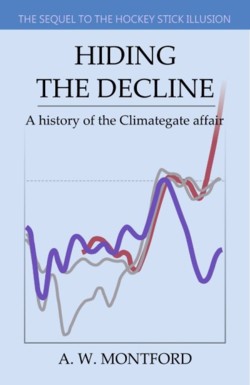
When historians get around to describing the late twentieth and early twenty first century hysteria about climate, Andrew Montford will get a big mention as one of the individuals who particularly contributed to turning back this bizarre tide of irrationality.
He blogged. Then he started blogging in particular about climate. Then Climategate happened. He had meanwhile written a book about it all. He blogged some more. And now he has written another book:
Whenever I write about how blogging has made the world a significantly different and better place, the words “Bishop”, “Hill”, “Andrew” and “Montford” always seem to be included in what I put.
Says a Bishop Hill commenter:
Will buy.
Me too.
|
Who Are We? The Samizdata people are a bunch of sinister and heavily armed globalist illuminati who seek to infect the entire world with the values of personal liberty and several property. Amongst our many crimes is a sense of humour and the intermittent use of British spelling.
We are also a varied group made up of social individualists, classical liberals, whigs, libertarians, extropians, futurists, ‘Porcupines’, Karl Popper fetishists, recovering neo-conservatives, crazed Ayn Rand worshipers, over-caffeinated Virginia Postrel devotees, witty Frédéric Bastiat wannabes, cypherpunks, minarchists, kritarchists and wild-eyed anarcho-capitalists from Britain, North America, Australia and Europe.
|





Recent Comments