40 years ago today John Glenn rode his Mercury-Atlas rocket into the pages of history. His short mission in the Friendship 7 capsule was the first American manned orbital flight.
|
|||||
|
A meta-context is not a philosophy or a political belief, but rather the lens through which someone sees the world. It is a tradition of thought, a vibe, set of ‘givens’, the frames of reference within which questions are posed and answers found. A person’s prevailing meta-context has an enormous impact on the way they make decisions and evaluate evidence. Imagine a series of laws has been enacted to create programmes for alleviating poverty in London or Warsaw or Accra or Miami. Imagine also that year after year poverty remains in those places much as before, regardless of the well intentioned programmes. Many would say, most in fact, that clearly better laws are needed and better programmes. This is not a matter of ‘left versus right’. The socialist (or ‘liberal’ in the USA) might argue that the reason the worthy programmes have not succeeded is that the root causes remain, and more needs to be spent on state education/racial sensitivity training/murals on playground walls. Laws must be adjusted to serve the objectives of ‘social’ need. The conservative however might argue that what is needed is less dependency on state handouts and demand that people take whatever jobs can be found or lose all state benefits… and maybe a partnership between state and faith-based organisations to do something or other would be good. Laws must be adjusted within the bounds of some form of ‘constitution’. The state does much the same sort of thing, just a bit less of it and favouring different ‘social’ objectives (discouraging single mothers/pornography/extroverted sexuality etc.). Both left and right see themselves as opposed, and on some levels indeed they are. Yet both are arguing with each other within a profoundly statist meta-context: if only the unitary state was organised this way with our safe pair of hands on the political tiller, things would get so much better. An example of this mindset on the right can be found in the United States when people cannot have a discussion about economics, philosophy or even morality on the Internet, addressing a global audience, without bringing up constitutionality, in every case meaning the US Constitution, and not the constitution of Uzbekistan or Australia or Senegal. Not only is this amusingly provincial, it presupposes that all matters of morality and interaction revolve around boundaries defined by the state and its legal documents. A leftist example however is something I heard on the BBC News just today, reporting that disgruntled university students in England are ‘forced to work part-time due to the fact they now receive student loans rather than student grants from the state’. The news reader put emphasis on the word ‘forced’. Clearly it is implicit, a meta-contextual ‘given’, that the fact a person is having to earn the means to support a service they are receiving (education) for their own benefit, is regarded as an imposition, a questionable compulsion. I wonder if the BBC feels students are ‘forced’ to pay for the food they eat, the beer they drink and the clothes they wear? Perhaps they do. To view the world within a statist meta-context is to view the world as being entirely politicised and politics is just a euphemism for the application of force-by-proxy. No interaction between people can therefore be truly free of the state. Unregulated interaction becomes interaction not yet regulated. Most people would not care to have their neighbours provide unsolicited and mandatory input on their conduct as parents. Yet the democratically mandated state does that all the time, politicizing the act of raising your own children. Only a pervasive statist meta-context allows this to happen at the same time as people bizarrely think they live in a ‘free society’. In fact they hardly live in a ‘society’ at all, but rather a state which has nationalised private life itself. Tom Paine would not have approved. 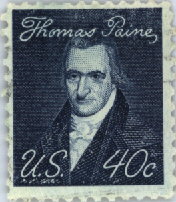 February 20th, 2002 | Comments are closed
 That sound is the return of Will Wilkinson to the blogosphere. He has writen an excellent piece on the psychology of the post modern/anti globalization left called Pathologizing Dissent
Terrific stuff. February 20th, 2002 | Comments are closed
Or perhaps language ‘lesions’ might be a better description over on Spanglolink‘s page Inside Europe: Iberian Notes. Their resident ‘cranky yanqui’ seems to be living up to his billing! Not for the delicate of disposition. February 20th, 2002 | Comments are closed
I was just checking in at Xcor to see what they’ve been up to the last week or two. No new flights listed, but they are selling this really neat poster. Go for the signed copies. If they manage the next step – suborbital – it will be like having the autographs of the Mercury 7 team from 1960. Besides – all you old net heads from the days of Space Digest know at least three of the people in the photograph besides Dick Rutan: Jeff Greason, Doug Jones and Aleta Jackson. By buying one you’ll help fund the research program which will let you to go up some day soon. Yes, I do have an interest in this. I know and like some of these people, I want them to succeed… and I want to go myself. February 20th, 2002 | Comments are closed
As many of you may already know, blogger.com and blogspot hosting was down for most of today. We will be looking to move off the blogspot server in the near future. Also thanks to Sandra who sent us the 100k screen shot. We hope you like your extorted prize. We blew through 100,000 visitors fast.  February 20th, 2002 | Comments are closed
I was fully expecting Steve Thoburn and the other ‘Metric Martyrs’ to lose their appeal before the Lords today. That they did, however, still resulted in my spending almost the entire day in a bug-eyed rage. I spent the afternoon doodling designs for giant siege engines that we could use to surround Brussels and reduce it to brickdust. But, upon examining the actual rationale behind the verdict, the veins in my head have stopped throbbing with quite such gusto. I am forced to examine the small-print as both a Libertarian and a lawyer and I find myself largely agreeing with Brian Micklethwait below. The application of EU Directives in British Law is, in fact, governed by British Law, namely the European Communities Act 1972 which rendered all British law as being subject to override by European Community Law. However, the Communites Act itself is a Constitutional Act. As such, it cannot be side-stepped by any subsequent legislation but it can itself be amended or even repealed by the British parliament. There is a way out of the EU; all that is required is the parliamentary will. I will disagree with Brian, though, that the Lords ruling is an implied ‘Declaration of Independence’. That ‘Declaration’ can only be made by a sovereign British parliament and, given the near-blanket commitment of our current political class to the EU project, the manifestation of that ‘will’ is still along way off. February 19th, 2002 | Comments are closed
From this little article lifted in its entireity from today’s JPMorgan Chase Tech Industry Daily, it would appear that the corporate world is starting to take notice.
Fellow bloggers, hang on to your hats. This ride could get wild. February 19th, 2002 | Comments are closed
I followed the link Perry gave us re the Metric Martyrs case, and read the piece by Helen Szamuely with interest, indeed fascination. Now I realise that nothing involving the EU is ever quite what it seems, but my understanding of Helen Szamuely’s understanding of the case is not that the EU now rules Britain, but that the EU now rules Britain on British sufferance, which can, any time we like, be unsuffered. The basis of EU rule in Britain is that Britain switched it on with a Parliamentary Statute, and Britain can switch it off. The British Parliament is and will always remain sovereign. At the heart of the EU project is the claim that once you’re in, you can’t leave. Not so, say our judges. The Metric Martyrs lose, not because the EU says so, but because the EU says so and we say, for the time being: okay. But in the future, we could decide to say: not okay. Britain is not yet a province of the European Superstate, according to these judges. It would be complicated to unravel, very complicated, and it would require a great and highly self-conscious, so to speak, Parliamentary convulsion, in the manner of, say, contriving a new amendment to the US Constitution. But, say Their Lordships, we could unravel it if we chose to, and declare national independence again. Which means that, in a sense, they just did. February 19th, 2002 | Comments are closed
It is a small matter really, just a trivial case involving some grocers who sold some fruit using Imperial rather than metric measurements. Yet the implications are staggering for the entire structure of British life. 
Don’t co-operate in your own repression February 19th, 2002 | Comments are closed
Warning: explaining free markets and freedom is too trite and too simple! Yep, that is right…or at least according to an “unbiased” teacher of mine. Last week we had to write an essay fro class answering the question, “The 20th century showed us the problems of freedom, as seen in WWI, WWII, and Sept. 11. Please explain the future implications of this problem of freedom, specifically in the policy realm.” In explaining the question for us, the teacher clearly (and wrongly) explained how freedom caused WWI and WWII and Sept. 11. He also said that from this we can learn that freedom causes societal chaos…we need government or a level of control to prevent freedom from causing this chaos. Any reader of Libertarian Samizdata knows how many lies this statement contains. Is this teacher actually going to tell me that Hitler or Stalin or Mao or Mussolini or FDR and the results of their administrations were a result of freedom when the logical answer clearly would dictate the exact opposite? Anyway, I wrote a very lengthy essay debating his premise about freedom causing problems. And today, I got my essay back, and his one and only comment on my paper was: “While I do not mind the fact that your essay debates my premise, and indeed I am glad to see it does, your argument is too simple and results in simple rhetoric about free markets equaling freedom, C+”. My twenty-six page essay that raised twenty separate questions weighing the costs and benefits of free markets vs. collectivist states in a clearly detailed manner was too simple for his liking. My friend, who, in one sentence accepted the premise and explained the question in one and a half pages, was told that his essay reached the appropriate level of depth and understanding. Now while I am the first to admit page numbers do not attest to a paper’s level of logic (Marx wrote a lot, but did that make him logical? Short answer: no!), my paper was well reasoned and well documented. In fact, I took it to three of my other professors and asked them to read it for logic only. The verdict reached by each was that I had great logical writing in this piece. The remark about my paper being too simple is merely a cover for his real thought: you are wrong in your belief of free markets. Is it any wonder why we foster such lack of thought in today’s younger generation? February 19th, 2002 | Comments are closed
Within the next few hours we will get our 100,000th visitor (as I write this we have already had 142,643 page views)… we would be grateful if the person who makes it 100,000 takes a screenshot and sends it to us. We are small fry compared to Instapundit but that is not shabby for having only been around for four months! In the last 72 hours we have had e-mail from USA, UK, Ireland, Italy, Switzerland, Senegal, Pakistan and Australia. February 19th, 2002 | Comments are closed
|
   |
||||

All content on this website (including text, photographs, audio files, and any other original works), unless otherwise noted, is licensed under a Creative Commons License. |
|||||

Recent Comments