We are developing the social individualist meta-context for the future. From the very serious to the extremely frivolous... lets see what is on the mind of the Samizdata people.
Samizdata, derived from Samizdat /n. - a system of clandestine publication of banned literature in the USSR [Russ.,= self-publishing house]
|
This is an thoughtful posting:
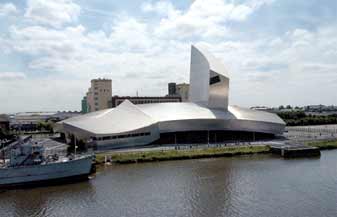
The weekend was spent in Manchester, via Oxford. On Sunday morning a friend and I visited the Imperial War Museum North, which forms part of the dramatic redevelopment of the quaysides around the ship canal on the Salford/Trafford border.
I was brought up on school trips to the Imperial War Museum in Kennington. The huge naval guns at the entrance, the trench experience, the endless tanks, artillery pieces and bombers’ cockpits you can climb over, the uniforms, guns and bayonettes in cases. Regardless of your attitude towards war, you can’t deny it is a fascinating collection.
So we expected something similar in Manchester, but were surprised. There are very few physical exhibits: one T34 tank, a field gun, a fire engine, and for reasons I still don’t understand, a Trabant car. The cases are sparsely filled. The emphasis is not on weapons or uniforms or battles, but on the effect of war on people – refugees, children, prisoners, asylum-seekers, and peace protestors. So there were more letters and diaries than rifles and grenades. There was even a case filled with cultural items which reflect Britons’ obsession with WWII: Warlord comics, action man, and Dad’s Army.
There are frequent films projected on the vast walls – we saw one about children in war, and one about the ’causes of war’ (it’s all about oil and money).
This is not a place for a military historian or one who wants to see the development of the machine gun, but perhaps that’s not what people want anymore. Does the new type of musuem reflect changing social attitudes, or is it trying to mould them?
At least the architecture of the building, designed by Daniel Libeskind, is stunning, and you can buy Airfix models in the giftshop (very tempting!).
“Stunning” means, from the outside, looking like this:
Normally, I do not dislike buildings of this sort. For modern art something along these (curvey) lines is very appropriate. But put it like this, if the people who fought and died in the wars being propagandised about inside this edifice were asked what they thought of it, what do you think they would say? Or is it that I now associate such buildings with harmless trivialities, that therefore it really does not matter what they look like, and that therefore the architect might as well have some fun – but this is a museum about war?
By the way, to add some other design-related facts, the genius who did the recent redesign of Samizdata.net, and who designed this and this, and also, not surprisingly, this, also did this.
They are off on a recruitment drive again:
A minister gave a strong hint yesterday that the Government will press ahead with plans to lower the voting age to 16.
David Miliband, the schools minister, told a conference of A-level students that it was illogical to prevent 16-year-olds voting when they were allowed to get married and work at that age.
Do you think he was playing to the gallery at all?
The Electoral Commission is investigating the case for lowering the voting age and several ministers have said they have an open mind…
An ‘open mind’? Is that what they are calling it now? I always thought of it as vast, untamed wilderness situated between their ears, full of tumbleweeds and bleached bones.
The Labour Party has floated the idea in its “Big Conversation” policy document and Lord Falconer, the Lord Chancellor, has called for a debate on this “very important” issue.
Yes, it’s keeping me awake at nights.
The voting age was 21 until it was lowered to 18 as a result of the Representation of the People Act 1969. Most countries have a minimum voting age of 18, although it is 17 in East Timor, Indonesia, North Korea, the Seychelles and the Sudan, 16 in Brazil, Cuba and Nicaragua and 15 in Iran.
North Korea!!? Now there’s a thriving engine of lively democratic values to which we can all aspire. And let us not forget the important contributions to the advance of citizen empowerment being forged in Cuba and Iran. These are the trail-blazers of mankind, Ladies and Gentlemen. Ours is but to give humble thanks for the gifts they have bestowed upon us as we eagerly take up the mantle of their enlightened legacy.
The Electoral Commission will publish its report on the subject towards the end of next month and it is expected that it will support enfranchising 16-year-olds.
Go ahead, make my day because this has got ‘backfire’ written all over it. The teenyboppers will just constitute yet another demographic block that stays away from the voting booths in droves. Either that or they will all earnestly rush to the polls to vote for the BNP. However it pans out, I predict disappointment or disaster or both.
If anyone is considering a trip to Australia then may I most heartily recommend that you travel by rail. It really is the only way to see the real, authentic Australia:
The first passenger train to cross Australia from south to north arrived in Darwin yesterday to be welcomed by women flashing their breasts and men baring their backsides in a mass “moon”.
The Australians: so dignified, so cultivated, so urbane.
Government invasion of privacy – for example via Identity Cards – is high profile. Arguably a greater danger is when society itself ceases to respect privacy and believes it OK to breach it as a matter of course.
I’ve recently learned via the Liberty discussion board and handbag.com about an organisation called Millenium AuPairs.
I must stress that as far as I know this organisation is entirely reasonable and above board. Unfortunately their application form is not. See here:
Millenum AuPairs registration form
Now, the question about weight might be non-PC, but that’s not the issue. Scroll down and you see that they are asking prospective nannies if they have “ever been a victim of sexual, emotional or physical abuse?”. And “If you have answered yes to any of the above, please give details”. Details!
This is outrageous. Why ask? Are they assuming that victims of abuse are more likely to be abusers? I don’t know. What I do know is that this question is an invasion of privacy.
As chocalatedrop put it on handbag.com:
can you imagine someone asking if you’d ever been raped on an application form in as many words, because this is what is being asked.
OK, this probably doesn’t affect you today. But imagine if this sort of intrusive question becomes accepted practice on any application form…
We now have several very cool Samizdata.net wallpapers for your computer desktop, the link to which can be permanently found in our sidebar under ‘network’!
More illuminated graphic splendours from the Dissident Frogman!
 The mighty Frogman is on a roll… he has added yet another wallpaper to the selection! The mighty Frogman is on a roll… he has added yet another wallpaper to the selection!
One of Australia’s greatest golfers, Greg Norman, is among a number of male golfers who want to limit, if not resist completely, the number of women golfers playing men in top-class tournaments.
Straight off, before the equal opportunities industry kicks into gear, we should remember that however dumb and sexist many golfers are said to be (or in some cases, actually are), golf clubs are, by and large, private associations. If women are annoyed at missing out on playing golf against the best, then by all means let golf clubs be opened which cater for both sexes, but we should also resist all attempts to ban the right of clubs, however fuddy-duddy, to set their own rules.
Also, a point for Norman and his ilk to recall is this – the handicapping system. So long as the golf handicap of a man is treating equally – on a par (heh) with that of a woman, then why are the guys getting upset? After all, if you have to be a scratch golfer to make the cut at the Masters, say, then if women really aren’t good enough to play, then the handicapping system in play will expose this rather quickly.
In truth, I suspect that Norman and his fellows probably fear that women are getting better at the game and will give them a serious run for their money.
But like I said, this issue is strictly for the clubs, the members, and the paying customer. Message to government – stay out of it.
Right, time I went to the driving range.
Perhaps the ‘idiotarian’ opposition to the US is over the top, a bit like suggesting that Pol Pot was better than Richard Nixon because Nixon taxed more people. But I offer three honest reasons (well, one is cowardly) for opposing British military intervention and occupation of Iraq:
- The British armed forces are not properly equipped. I did say so beforehand. Let me be clear: if the cause is just, but the equipment is not ready, kit up first, then go to war.
N.B. This is not an argument against US intervention in Iraq. I note approvingly that in the Second World War, the US federal government starting arming before launching assaults on Axis-occupied territories.
- This one will really not be popular on Samizdata.net… Suppose that it is not possible to defeat Islamic fundamentalism by force of arms – at least as far as the UK is concerned. A final ‘victory’ worldwide that follows half a dozen nuclear terrorist outrages in the UK and a racial war in most of the UK’s towns is not worth it. As far as the UK is concerned, it might be safer to appease and let others do the fighting. I think of Switzerland not declaring war with Germany over the treament of the Jews in 1941.
- To be a libertarian must include at least some reservations about using other people as ends for one’s own purpose. I do not have the right to force one person (A) to do something to another (B) that I think is moral, but that (A) did not wish to do, even though (B) may deserve it. This means among other things that I do not have the right to levy money by compulsory taxes in Yorkshire, to pay for my pet social-engineering experiments in Basra. I should add that the argument against compulsory aid for the disabled is the same.
In effect a libertarian who says it is fine to use tax-funded resources to liberate Bagdad from tyranny and economic ruin, and argue that it is not alright to use a fraction of the money to liberate a paraplegic from economic disadvantage, could be said to be inconsistent.
Failing to recognise the points I list above could lead to the following sorts of problems:
- A British soldier killed because he lent his body armour to a colleague. This sort of thing happened in the Crimean War with coats, right boots, blankets etc. In Kuwait the British troops got the nickname ‘the Borrowers’ from the US troops. I imagine that the French troops in the Crimean saw their British colleagues in much the same way.
- Consider this scenario: by the end of the ‘war on terrorism’ in 2015, France has not had a single nuclear terrorist strike, the US has had 20, the UK has had six and Spain, Italy and Poland one apiece. Who’s the idiot?
- In 2010 President of the EU Blair announces a “libertarian” programme of the Peace Corps: all 18 year olds will serve in a peace-keeping unit to promote the values of freedom around the world. The move is popular as it cuts youth unemployment in the EU from 45% to 40% and crime.
I repeat: removing Saddam Hussein is great. So why worry about all the lies or mistaken intelligence? It matters because we may be asked to believe another set of pretexts. It would be nice if the next lot were a bit more coherent and plausible. Of course it will be harder to persuade many people who swallowed the “45 minute” threat line of Tony Blair’s. Refusing to support a war just because Tony Blair says it is right does not make someone an idiot.
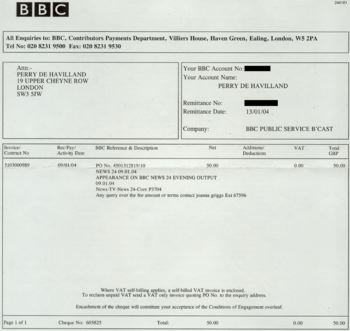
It made me chuckle when I received a cheque for £50 ($85) from the BBC for my recent appearance on BBC News 24. It is rare that I get both the satisfaction of responding to a question pertaining to the Kilroy-Silk affair on live TV that, to paraphrase, “Surely this was not objective journalism by Kilroy-Silk” by saying “Surely you are not going to claim that the BBC itself is purely objective and does not take editorial positions in issues?”… and then to get paid by the BBC for saying it!
But then it dawned on me that £50 is less than half of the TV tax I am forced to pay annually to fund that monstrosity… and in any case they were only giving me back my own damn money. Oh well.
The Big Blunkett’s draconian measures to ‘fight terrorists’ would not be necessary if the British justice system was functioning. When this and this can happen with increasing frequency, no wonder that terrorists have a ball in the British courts and Mr Blunkett can continue warping British laws with self-righteous indignation of a politician.
Telegraph reports that civil liberties groups and Muslim community leaders lined up yesterday to denounce plans from David Blunkett to conduct secret trials of suspected terrorists.
He said the threat from extremists was now so great that the burden of proof in criminal trials should be reduced from “beyond reasonable doubt” to “the balance of probabilities”.
He also wants a debate over whether intelligence information against suspects should be given in camera to avoid compromising security. Mr Blunkett’s ideas – to be proposed formally in a Home Office paper later this month – are intended to address what the Government sees as a serious threat from Islamist fundamentalists.
We need to debate how we deal with these delicate issues of proportionality and human rights on the one hand and evidential base and the threshold of evidence on the other.
That is quite a challenge because we are having to say that the nature of what people obtain through the security and intelligence route is different to the evidence gained through the policing route. It needs to be presented in a way that doesn’t allow disclosure by any of the parties involved which would destroy your security services.
Lady Kennedy, QC, a Labour peer, compared Mr Blunkett to Robert Mugabe, the president of Zimbabwe and described the proposals as “a classic Blunkett tactic”.
He really is a shameless authoritarian. We can be confident that many of his colleagues in the Cabinet, including particularly the Attorney General, will sit on this, because it really is an affront to the rule of law.
You suggest all kinds of outrageous and awful things because then you get away with half of them.
Mark Littlewood, the campaigns director of Liberty, said:
Simply introducing more laws, greater powers and stiffer penalties will go a long way to undermining British justice and will not make our country any safer.
Michael Howard, the Tory leader, said:
You have to try and strike the balance between giving the British people the proper protection against terrorism and not depriving innocent people of their liberty.
Massoud Shadjareh, the chairman of the Islam Human Rights Commission, said:
This sort of legislation in Germany led to concentration camps.
Let’s hear it for the sharia law solution to terrorism.
Do you love red squirrels? I love red squirrels. They are very red and they are very squirrely. I love them. There are also some ecologists in England who love them too, almost as much as I do. They just love those big fluffy red tails.
They love them so much they hate anything which may come to lessen their numbers. They particularly hate grey squirrels, with a determined pathological intensity. They hate them so much, that they find great pleasure in killing them, wherever they can find them. Fine action for beardy ecologists, you may think, wiping out one species with murderous fury, to preserve another specially blessed one. But in this case, it’s OK, because the grey squirrels deserve it. Check out the Redsquirrel.org.uk home page, to find out why. Notice the lead phrase:
Sadly, thanks to the invasion of its grey cousin introduced from America, RED SQUIRRELS have been driven out from much of their territory
Invasion. America. Their territory. → Continue reading: Better dead than not red
If it was not so late and if I had not had such a long day, I would launch myself into a rooftop-raising rant about this. But it is late and I am weary and, besides all of that, I am beginning to wonder precisely what good a rant from me (or anybody else for that matter) would do anymore:
Home Secretary David Blunkett wants new anti-terrorism laws to make it easier to convict British terror suspects.
He has discussed lowering the standard of proof required by a court and introducing more pre-emptive action.
Possible plans, revealed on his six-day trip to India and Pakistan, also include keeping sensitive evidence from defendants and secret trials before vetted judges.
Is there any significance to the fact that David ‘Mugabe’ Blunkett elected to unveil his sinister plans on a trip to South Asia? Was he driven into delirium by the heat and the dust? Or maybe a particularly acute case of Delhi-belly left him feeling all bilious and vengeful.
But civil rights groups have condemned the proposals as shameful and an “affront to the rule of law”.
It’s not an ‘affront’, it’s a point-blank dismissal. ‘Lowering the standard of proof’? ‘Pre-emptive action’? ‘Secret trials’? ‘Vetted Judges’? What next? Trial by Ordeal, Ducking stools, Iron Maidens and The Rack?
The truly frustrating thing here is that not only is Big Blunkett unlikely to be opposed to any meaningful degree (the Conservatives are already weighing in on his side) but his ripping up of our last remaining bulwarks of civil liberty is probably going to make him more popular. That is because civil liberties are unpopular. They are merely the boring obsession of pot-smoking hippies and wishy-washy do-gooders; a shielding sanctuary behind which terrorists and child-molestors can hide from justice.
So, go ahead, Mr Blunkett, kick the crap out of them. With a bit of luck nobody will miss them until they have gone (by which time it will be too late).
|
Who Are We? The Samizdata people are a bunch of sinister and heavily armed globalist illuminati who seek to infect the entire world with the values of personal liberty and several property. Amongst our many crimes is a sense of humour and the intermittent use of British spelling.
We are also a varied group made up of social individualists, classical liberals, whigs, libertarians, extropians, futurists, ‘Porcupines’, Karl Popper fetishists, recovering neo-conservatives, crazed Ayn Rand worshipers, over-caffeinated Virginia Postrel devotees, witty Frédéric Bastiat wannabes, cypherpunks, minarchists, kritarchists and wild-eyed anarcho-capitalists from Britain, North America, Australia and Europe.
|






Recent Comments