We are developing the social individualist meta-context for the future. From the very serious to the extremely frivolous... lets see what is on the mind of the Samizdata people.
Samizdata, derived from Samizdat /n. - a system of clandestine publication of banned literature in the USSR [Russ.,= self-publishing house]
|
‘Just let us put in place our hierarchy of rights. The right to live. The right to go to work on the underground. The right to have an ID card. The right not to have data abused.’
– Charles Clarke to MEPs before the second bombing, talking up data retention.
Freedom has no natural place in a “hierarchy of rights”. Freedom used to be what was left over when other people’s rights to their choices were taken into account. But the priesthood seems keen to ensure that there are “rights” everywhere, with no space for anything else, and that “rights” are not options, they are compulsions. Lenin would be proud.
I have just returned from just over two of the funniest hours spent at the cinema for quite a while. Wedding Crashers, starring Vince Vaughn and Owen Wilson, is an outrageous, politically incorrect, deplorable romp of a movie, the perfect tonic for these unpleasant times.
Vaughn is also refreshingly free of the political posturing that tends to colour my views of Hollywood these days.
Last month I was in France, and as always I thoroughly enjoyed it. What a beautiful country it is. And if only because I like France so much I am saddened at how badly us Anglo-Saxons and the French seem to get along with each other. But now, after my recent visit, I think I have a partial explanation for some of this hostility to offer.
On one of the days I was in France, I wandered around the village where my hosts lived, on my own, and I was struck by how almost everyone I met or even merely passed said “Bonjour!” to me. Everyone said it. Even quite young girls, on their own, girls who in England (or the USA?) would never say a word to a middle aged man whom they did not know.
Everyone said “Bonjour!”, I said to my hosts when I got back home. It was rather nice, I said. Very communal. Well, they said, do not read too much into it. “Bonjour!” is all that they say, and in a year’s time, “Bonjour!” may still be all that they say. They are not making friends, just being polite.
Quite so. Just being polite. But it is a politeness that we Anglos tend not to bother with. When we go into a shop, for example, we tend to get straight down to business, with only the most cursory of hellos. Only after we have done our business do we unbend and become human, and say “Thank you!” rather effusively, and perhaps shake hands. Ever since I started thinking about this posting I have noticed myself and the people I have dealings with here in London doing this same one-two pattern, of business, followed at the end of our brief relationship by politeness. First we do the business, impersonally and correctly, and only then, when the business is done, do we unbend, make eye contact, smile, and generally behave like nice friendly people.
So my hypothesis is this. The French have no deep hatred for us Anglo-Saxons on account of our Anglo-Saxon-ness, our foreign policies, our Hollywood movies or our lousy state medicine. It is simply that they do not like rudeness, or rude people, and to them, we come across as extremely rude. Instead of saying “Bonjour Madame” to the lady selling patisserie, we pitch right in and tell her which patisserie we want, without any preliminary courtesies. Which, in France, is very rude. That is why madame is always, to us, so grumpy.
I once had an extremely unpleasant acquaintance, whom I now avoid, who was and remains notorious for saying unpleasant things to everyone he ever meets, perhaps because he has a permanent pain in the top part of his back and wants to spread the pain around. I remember him saying to me once: “Everyone’s in a terrible mood these nowadays.” I knew why. Everyone he met had just had the misfortune to meet him. They were fine until he showed up. They were in a bad mood because he put them in a bad mood.
Well, I surmise that maybe we Anglos tend to do that to the French. They are not snooty and unpleasant all the time. They are just snooty and unpleasant to us, because we immediately come across to them as very rude, and they do not like it.
Could it really be that something as superficial as our different styles of greeting one another is a big reason for the Anglos and the French not getting along? I really think it might be. I would welcome suggestions for further reading along these lines, but am not able to offer much linkage myself, as I have never heard anything similar suggested.
The nearest related thinking I can suggest is the work of Deborah Tannen, who has written books about contrasting conversational styles among us English speakers – Southerners and Northerners in the USA, slow speechmakers and fast interrupters, and most famously, women and men. Maybe she could do another book about us and the French.
Final thought: Australians are famous over here for saying “G’day” all the time. I wonder if they get along better with the French than other Anglos. Maybe not, because it is not just what you say, as Tannen has spent half a lifetime explaining, it is the way you say it.
In its childish, impenitent comment (login: grauniad@stereo.lu, password: grauniad) – so dreadful that it seems no one on the Guardian staff wished to have the byline attributed to them – on having to sack a terror-supporting reporter, the newspaper attempts to portray blogger Scott Burgess as a disgruntled, rejected applicant for its trainee program. Burgess is the man who broke the story of Dilpazier Aslam’s background, and instead of being thankful to him for helping to rid their newspaper of a cancer, the Guardian is instead trying to damage his credibility.
Except, of course, that the Guardian is fudging on this one. And they know they are doing it in full view of the network that brought about Aslam’s downfall in the first place. Have they learned nothing?
First, check out the first instance on his blog where Burgess mentions applying for the Guardian’s trainee program. On June 1, 2004, he wrote:
Regular readers may be interested to know that I am applying for this job. As I’ll almost certainly be hired, readers are advised to quickly inform me of any competing employment opportunities they’d like me to consider.
Perhaps the Guardian’s journalists do not do irony, and so took this comment by Burgess at face value. But they had another chance to catch the joke, two days later, when Burgess submitted his application:
… I thought that perhaps my responses to these two consecutive questions might raise a chuckle:
“What would you add to The Guardian newsroom?”
Ideological balance and accurate research.
“Please describe issues of the moment in Britain and the world that most interest you. Why?”
…As an American living in Britain, I can’t help but also be interested in the way in which Americans, their society and their government are perceived – not only in Britain, but throughout Europe. While many of the negative opinions expressed by Europeans are no doubt valid, others seem to be based on crude stereotyping of the sort that is rightly condemned when applied to other national, ethnic or religious groups. I’d like to help bring some balance to the way Britain and the rest of Europe view my compatriots, not only through my writing, but also by presenting myself as an intelligent, articulate, and non-obese example.
Burgess ends his post with the question: When do you suppose they’ll be getting back to me? The answer seems to be: When you expose their wrongdoing, via an attempted smear on their website.
It will come as no surprise to anyone with a realistic view of how the media operate that the Guardian is in this instance less interested in the truth and more interested in limiting the damage to its own credibility. It is surprising and discouraging to see a media entity which claims to ‘get the blogosphere’ indulge in such shameless dishonesty, knowing full well that the evidence of the truth is public, permanent, searchable, and so easily passed along this network.
If the Guardian is as committed to the truth as it claims to be – more, as it is supposed to be – it will issue a correction and clarification of its disgraceful comments about Scott Burgess.
To run from armed police who are shouting at you (rather than shooting at you) at any time is an extremely bad idea… to do so at a time like this in London is utter madness.
Anyone running from armed cops who have challenged them first in London today should expect to get shot dead given the clear and present danger we are in… but that does not makes this any less of a horror. If Jean Charles de Menezes just reacted idiotically to the situation he found himself in, that does not mean we should feel distain for him.
We really need to know exactly what happened and why, but shooting a man dead who is suspected of being a suicide bomber and who is running away and trying to board a train(!) when being called on to stop is not the incorrect response. It was a tragedy of execution (in ever sense of the word) but not an incorrect policy.
If anything, it is the failure of multiculturalism to generate real reciprocal respect and provide legitimate avenues to social participation that provides the psychotic self-justification the murderers indulge in as part of their vision of nirvana.
– Andrew Jakubowicz, a sociology professor, explains to Australian newspaper readers that suicide bombers have nothing to do with Islam.
I know this post is not ‘on topic’ in these days of Islam casting its shadow over the Western society but it is tonight I am watching Doctor Zhivago.
I remember reading the book by Boris Pasternak in 1980s, as a teenager. I got only about 70% of it because I was too young. Despite the fact that I was living in deep communism. I guess that was the reason I understood even that much of the story, at the tender age of 14… Never mind the love story – it is the backdrop that interests me. The Russian Revolution of 1918.
The film shows the destraction of an individual, educated and sensitive, a doctor and a poet. Not a perfect human being by far, who loved his country and saw it and his life rent apart by a brutal change, his loved ones in danger and all he treasured destroyed.
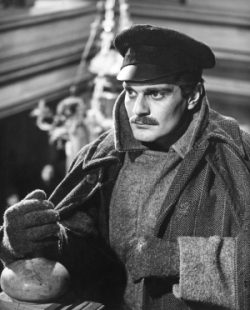
Let me relay some snippets that I found memorable.
Zhivago’s house in Moscow has been taken over by the local Soviet run by two sour-faced comrades. They tell him, reproachfully, that there is room for 13 families there. He says: In that case, this is a better arrangement. More just…
Doctor Yuri Zhivago was a member of the Russian intelligentsia and believed that there was a need for reform of the country. At the start, he saw the Communist Party as performing a deep operation cutting out a cancerous tumour. Today he probably would be reading the Guardian or the New York Times calling himself a progressive. A bleeding heart liberal, perhaps. But Pasternak puts the Zhivago character through the reality of a dystopia coming true.
There is a conversation between Doctor Zhivago and Strelnikov, a commander of the Red Guard of legendary reputation, the scourge of the country.
Strelnikov: Are you the poet? I used to admire poetry, it’s so personal, the flight of affections and humanity. Personal life is dead in Russia. I can see how you could hate me.
Zhivago: The fact I hate you, does not mean I want to kill you.
And later in the same conversation:
Zhivago: You burnt the wrong village.
Strelnikov [agitated]: A village is burnt, the point is made.
Yes, I remember the stern self-righteousness (or more accurately a psychotic moral high-ground), the fragile power that many experienced until they were the next batch to be devoured by the monstrous system. The glorious Party, the Workers, the Justice, Equality and the Better Tomorrow… airbrush the Gulags and you have the Guardianistas…
And then there is the nihilism of the ‘revolutionaries’.
Tonya’s (Zhivago’s wife) father: They shot the czar and all his family… [exclaims] What’s it for?
Zhivago: To show that there is no going back…
A young boy is found dying in the field after the attack of the partisans who kidnapped Zhivago for his medical expertise. The boy dies while Zhivago looks sadly on unable to save him. A partisan says:
It does not matter.
Zhivago: Did you ever have any children?
Partisan: I once had a wife and four children. None of this matters.
Zhivago: What matters, commander?
Partisan: Tell me, I have forgotten.
Towards the end of the film, Zhivago’s brother says of Lara, his lover:
She vanished and died somewhere in one of the labour camps. A nameless number on a list that was afterwards mislaid…
Watching the film reminds me of what an unqualified and unchecked evil the Soviet Revolution and communism was. Horrific in its suppression of the individual, ruthless in its ritual extinguishing of the human spirit and freedom, terrifying in its imposition of the most toxic variety of dystopia, arrogant in its denial of reality and brutal in the execution of those who dared even breathe against it. Evil, pure evil that will never be fully understood by those who have not experienced it.
Yeah, I should have gone out on Saturday night…
It appears that the ‘bomber’ who was shot by the police yesterday was just in the wrong place at the wrong time. This is horrendous news.
“From a certain point of view, the journalist, the politician, the police chief, and the terrorist can be seen as locked in a macabre waltz of the mind, no less distorting for being unconscious. We should not join that dance.”
– Matthew Parris in The Times
Indeed. What is it that causes skepticism here about the motives of the state and its agents to collapse as soon as Islamist violence is involved? I really want to know.
Most magazines and newspapers employ “fact checkers”, whose job it is supposedly to ensure that the content of articles is accurate and truthful. The nasty little secret however, is that the purpose of such people is not so much to ensure that the readers of the magazine receive articles that are accurate, but to protect the editors and owners of the magazine from libel law. Therefore, a lot of the time what is actually checked is the accuracy of human sources rather than the accuracy of facts and the internal consistency of articles. If an article says that “Joe Bloggs said that the moon is made of blue cheese” then it is likely to be checked that Joe Bloggs actually said this. If it is merely stated that “The moon is made of blue cheese” then this is less likely to be checked. After all, the moon is unlikely to sue.
As a consequence of this, one finds a great many factual errors in the general media, particularly about scientific and technical information. And one finds dreadful innumeracy – which is a shame given the fact that a basic knowledge of the modern world is pretty much impossible without a decent understanding of the workings of the modern world and a basic understanding of the modern world.
However, this varies by publication, or course. In the British media, The Guardian is far better at getting factual information on technical subjects right than any other paper with the possible exception of the BBC. The Times and Telegraph are worse, and in the electronic media the BBC is usually dreadful. (This wasn’t always so. There used to be a strong pro-enlightenment wing of the BBC, but the decline of this is just one general symptom in the moonbat ascendancy in the BBC that has happened in recent decades).
In any event, an example. Last week I had a long flight in front of me, and as a consequence I grabbed a couple of magazines to get me through the flight. The July/August edition of Foreign Affairs had series of articles entitled “The Next Pandemic”, which considered the possibilities as to what might happen if the world faced an outbreak of a new, nasty, influenza strain. Foreign Affairs is the trade journal of a certain kind of pompous, overly statist Washington D.C. Policy wonk. In any event, it is read by what in D.C terms are “serious” people. I find this slightly distasteful, but I have a certain morbid fascination for the subject of contagious diseases and ways of coping with them, so I bought the magazine.
The lead article in the section (and one of the others) was written by Laurie Garrett, author of The Coming Plague: Newly Emerging Diseases in a World Out of Balance and Betrayal of Trust: : The Collapse of Global Public Health”. I have read the first of these books but not the second. I found it interesting in that it gave lots of historical information that I was not previously aware of, but I found its central argument – that standards of public health in the world is in decline and a consequence we are newly vulnerable to emerging diseases – to be unconvincing. I particularly disagree with the semi-stated corollary that the solution is the expenditure of vast amounts of public money. Certainly there are places in the world where standards of public health have declined (eg in British and Canadian public hospitals) but in a global sense sanitation has never been better, and global best practice (ie that of the United States) has clearly improved. On top of this we are in the midst of a biotechnology revolution of astonishing speed. Fifty years ago biology was largely taxonomy and medicine was largely “Try this and see if it work”, whereas today we have real understanding of how biological systems works and how diseases work, and as a consequence a much more basic understanding of how to attack them. → Continue reading: And you believe I should take you seriously?
It is easy, with all the terrible events going on in London at the moment, to let other significant stories slip under the radar. However, last week the UK senior finance minister, Chancellor of the Exchequer Gordon Brown, tweaked the rules of UK budget policy in an offhand manner that takes the breath away for sheer barefaced cheek.
Brown has a so-called “Golden Rule” that stipulates that the government’s books must be in balance over the course of the economic cycle. The books are currently seriously in the red at the moment, which would appear alarming given that we have had a relatively decent period of economic growth recently. So what does the gloomy Scot do? He shifts the year in which a key part of the economic cycle is supposed to have started by two years, the effect of which is supposed to show that the Golden Rule has not been broken. This sleight of hand produced fairly scant coverage outside the business sections, but in its own little way illustrates the utter contempt this government has for the financial markets, or the general public.
Brown has done this sort of thing before. And it makes one wonder just how long Brown can go on before the economy, supposedly Labour’s strongest card in the last election, turns south.
I never bought the argument that Brown was a great Chancellor, as, with all his faults, was Nigel Lawson, for example. Brown has been enormously lucky to inherit an economy left in fine fettle by the previous Conservative government, and apart from his wise move of making the Bank of England independent, has done precious little right since. He is an ardent meddler and micro-manager, making the tax code into a hideously complex morass that does precious little for growth apart from make lots of jobs for tax accountants.
How the world changes. A few weeks ago the political trainspotters were wondering how soon Brown would take over from Blair. I suspect the likelihood of that happening has been pushed away by quite a distance.
The Guardian has finally got rid of the anti-Semitic, terror-endorsing Dilpazier Aslam from its staff. But that does not stop them from pouting about having to do so (login: grauniad@stereo.lu, password: grauniad).
Links via Marcus at Harry’s Place
|
Who Are We? The Samizdata people are a bunch of sinister and heavily armed globalist illuminati who seek to infect the entire world with the values of personal liberty and several property. Amongst our many crimes is a sense of humour and the intermittent use of British spelling.
We are also a varied group made up of social individualists, classical liberals, whigs, libertarians, extropians, futurists, ‘Porcupines’, Karl Popper fetishists, recovering neo-conservatives, crazed Ayn Rand worshipers, over-caffeinated Virginia Postrel devotees, witty Frédéric Bastiat wannabes, cypherpunks, minarchists, kritarchists and wild-eyed anarcho-capitalists from Britain, North America, Australia and Europe.
|





Recent Comments