We are developing the social individualist meta-context for the future. From the very serious to the extremely frivolous... lets see what is on the mind of the Samizdata people.
Samizdata, derived from Samizdat /n. - a system of clandestine publication of banned literature in the USSR [Russ.,= self-publishing house]
|
“IPN is the bastard child of the Institute of Economic Affairs.”
– Indymedia
I am not exactly a fan of David Cameron, the 39-year-old (same as yours truly) who won a crushing majority of votes for the Tory leadership from fellow MPs. Yes, he is obviously bright, telegenic, youngish, and might have appeal outside the Tory ranks, but er, could we actually find out what he actually believes in, please?
What on earth does this mean, for example:
Slipping into the language of the street, Eton and Oxford-educated Conservative leadership hopeful David Cameron urged radio listeners on Friday to “keep it real”.
Huh? The rest of the Reuters article offers zero illumination. Now, I realise that expecting politicians to set out their stall in full has its risks. As a regular commenter, Verity, put it the other day, if a politician has a goodish idea, the chances are that Blair will steal it, or at least pretend to copy the policy (what happens in reality is a bit different). Politics is rather like business in that regard.
Meanwhile, Clive Davis wonders whatever happened to meritocracy in politics?
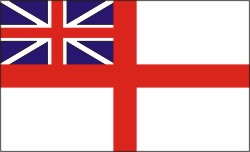
Just to remind everyone that today is a rather special Trafalgar Day.
Nicely done, Horatio.
This story seems to be making the rounds…
The US military said Wednesday it was investigating a report carried on an Australian television network that claimed American soldiers in Afghanistan burned the bodies of two Taliban fighters and then used the action to taunt other Islamic militants
…and my response is why oh why is this news? Just to state the obvious, the Taliban bodies in question were dead prior to being burned, so who cares?
I guess is that if they had not burned those bodies, the same people making a big deal of this would be penning articles with the title:
US forces start epidemic in Afghanistan!
As for this being an ‘affront to Islam’, if the object was to ‘smoke out’ the enemy by enraging them, again… so what? The job of US forces is to KILL members of the Taliban and I fail to see why it is unacceptable to outrage their sensibilities and perhaps even hurt their feeling prior to punching them full of 5.56mm holes.
James Waterton takes a look at the Middle East and comes up with some conclusions that you may or may not agree with, but all of which are certainly worth examining
It is arguable that securing energy supplies is the most important single challenge within the international security agenda. Entire foreign policies are based around this aim, and nations are constantly jostling to cut deals – in all sorts of ways and often at the expense of others – with energy suppliers, private and governmental. It is hardly surprising, for energy drives our modern economies and is an indivisible component of economic and social growth. The recent war in Iraq and the continuing upheaval in that country is a prime example of an attempt to secure energy supplies. Certainly, stating that Iraq was a “war for oil” is a gross simplification. However, the Middle East is strategic primarily for its energy reserves, and thus it is certainly in the world’s interest to promote a stable Middle East. Such an aim has been a central plank of the foreign policy of every major world power for decades. Of late, however, the developed world has become increasingly engaged in the Middle East – with the overarching aim of securing energy supplies. This has inflamed cultural and often geopolitical tensions, arguably culminating in the current “War on Terror” scenario. I will examine some of the forces at play in the Middle East relevant to global energy supply, and attempt to provide a solution to the energy supply challenges faced today. The West must play the leading role in this envisaged solution, not just because it is most able to; it has the most to gain by determining the solution to the world’s energy supply problems. It can secure its comfortable, energy-reliant way of life into the distant future, as well as making for more peaceful global relations.
Western involvement in the Middle East stretches back long before the existence of the concept of “The West” itself. Obviously, this history impacts on events today, however plenty has been written about that and I don’t want to dwell on it here. In the place of historical analysis, I will state the obvious and highlight the Middle East’s current strategic importance. At the end of 2003, it contained well over half of the world’s known reserves of crude oil. Crude oil is humankind’s most important, widely used and versatile energy source, and it is the largest selling commodity in the world by value of sales. Saudi Arabia, the nation with the largest reserves of crude oil in the world, sits on approximately a quarter of known reserves. Following Saudi Arabia (in descending order of size of reserves) is Iran, Iraq, the United Arab Emirates and Kuwait. These four nations contain approximately 40% of the world’s known reserves of crude oil between them. → Continue reading: Reducing the opportunity cost of energy
It never takes more than a week or two to have my dislike for the political class resoundingly reinforced yet again.
In particular, those who wish to see a Tory government rescue our civil liberties from the predations of New Labour would do well to read this and this and then ask themselves why they think voting for these people is going to make the slightest bit of difference when push comes to shove.
Not content to rest on their laurels after defending the British people from the menace of pedestrians, our political masters have ensured that this “Freedom of Information” nonsense will not be allowed to stand in the way of confronting that most implacable threat to our way of life… this will put the cat amongst the pigeons! (sorry)
The UK government is making it possible — ahhhhh! – to let new fathers take three months’ paid leave off work. How nice. How generous. How could the heartless, flinty Gradgrinds like we libertarian free-marketeers oppose such a fine and dandy state of affairs?
You know the answer. The answer of course is that the cost of paying fathers paternity leave will be born by the employers, and hit small businesses disproportionately hard, as well as those employees who either through personal choice or circumstance do not, or choose not, to have children. And of course the whole issue ignores those subversive capitalist types who happen to be self-employed. What are they supposed to do, exactly?
My father (ex-RAF and farmer for 40+ years) would be chortling out loud at being told, just as the wheat harvest was about to start, that my birth would let him take three months off, far away from the combine harvester, plough and cattle shed. Perhaps we should start compiling a list of which Labour Party MPs have ever run a business from scratch and had to meet a payroll? I bet the list is short.
If our political masters were really wise on this issue, they would cut the overall burden of tax, so that parents could have a higher post-tax income with which to make decisions about family life that suit their own circumstances. Why is such a simple approach so difficult? (And by the way, I expectantly await what the Tory leadership candidates say about this).
Sorry about the title, a tad misleading…
There was an interesting article on the Adam Smith Institute blog yesterday highlighting the results of a YouGov poll which was examining people’s attitudes to wealth, wealth creators and business generally. Whilst I tend not to put too much stock in polls, this does makes quite encouraging reading.
“On sighting an elephant Selous would instantly remove his trousers as he found it easier to pursue them in his underpants.”
As one does.
The quote is from Tom Quinn, Shooting’s Strangest Days.
CNET News.com reports what we have knowns for some time…
Microsoft has warned that the U.K.’s national identity card plans pose a security risk that could increase the likelihood of confidential data falling into the hands of criminals.
It is frustrating that after months of debate, it is still news. I guess the real news is that it is Microsoft saying that. I particularly like this bit:
Jerry Fishenden, a top security and identity management expert at Microsoft, said that the British government’s current technology proposals are flawed. He also criticized other technology suppliers for failing to speak out publicly about their concerns for fear of damaging any future bids for part of the lucrative contract for ID cards.
So what are the 30 coins worth to a technology supplier, I wonder? But before we rejoice too much, Mr Fishenden is not on concerned about the issue of ID cards and biometrics in the first place, just about a more secure and efficient way of gathering and storing the data:
I have concerns with the current architecture and the way it looks at aggregating so much personal information and biometrics in a single place. There are better ways of doing this. Even the biometrics industry says it is better to have biometrics stored locally.
A friend of mine alerted me today to this story, of 34-year-old property developer Sally Cameron:
She was walking from her office in Dundee to her home in the suburb of Broughty Ferry when she was arrested under new anti-terrorist legislation and held for four hours.
She said: “I’ve been walking to work every morning for months and months to keep fit. One day, I was told by a guard on the gate that I couldn’t use the route any more because it was solely a cycle path and he said, if I was caught doing it again, I’d be arrested.
“The next thing I knew, the harbour master had driven up behind me with a megaphone, saying, ‘You’re trespassing, please turn back’. It was totally ridiculous. I started laughing and kept on walking. Cyclists going past were also laughing.
“But then two police cars roared up beside me and cut me off, like a scene from Starsky and Hutch, and officers told me I was being arrested under the Terrorism Act. The harbour master was waffling on and (saying that), because of September 11, I would be arrested and charged.”
My friend was trying to imply that the police were somehow overdoing it here. But this seems like a perfectly reasonable set of circumstances to me. After all, you do not want swarthy looking young men in anoraks hanging around harbour installations. But, you cannot pass a law called the Anti-Swarthy-Looking-Young-Men-In-Anoraks Act. It has to be anyone doing anything suspicious, like, you know, walking about.
But, cyclists are obviously not a problem. Cyclists are good. This is a well known fact. So, whereas public footpaths in the vicinity of harbours are an obvious problem and need to be shut down, there is clearly no need to involve cyclists in this prohibition. Cyclists are, I repeat, good. So, these footpaths can simply stay as they are, but be cycle tracks. But, that means that pedestrians must now be told to steer clear of these ex-footpaths, despite the fact that they still exist.
At which point, since this is the Anti-Terrorism Act that is being imposed here rather than merely some exercise in traffic control, any insubordinate pedestrian who causes trouble, by – I don’t know – laughing when you tell him, or her, about the new arrangements, must clearly be treated as the terrorist that he, or she, may well be. I mean, better safe than sorry. This is the survival of our very way of life that we are talking about, the preservation of our ancient liberties against the forces of barbarism.
I cannot see why the Times Online is making such a fuss about this utterly routine matter.
|
Who Are We? The Samizdata people are a bunch of sinister and heavily armed globalist illuminati who seek to infect the entire world with the values of personal liberty and several property. Amongst our many crimes is a sense of humour and the intermittent use of British spelling.
We are also a varied group made up of social individualists, classical liberals, whigs, libertarians, extropians, futurists, ‘Porcupines’, Karl Popper fetishists, recovering neo-conservatives, crazed Ayn Rand worshipers, over-caffeinated Virginia Postrel devotees, witty Frédéric Bastiat wannabes, cypherpunks, minarchists, kritarchists and wild-eyed anarcho-capitalists from Britain, North America, Australia and Europe.
|





Recent Comments