We are developing the social individualist meta-context for the future. From the very serious to the extremely frivolous... lets see what is on the mind of the Samizdata people.
Samizdata, derived from Samizdat /n. - a system of clandestine publication of banned literature in the USSR [Russ.,= self-publishing house]
|
There is a snarky article in the Guardian about UK bloggers (including us). I was rather puzzled by Oliver Burkeman’s description of Samizdata.net being “operated from a large and dimly lit flat in a pristine mansion block in south-west London”.
Flat? Pristine mansion block? I do not recall if we gave Oliver a drink or three at our famous Cold War era bar when he came to visit but Samizdata HQ is a semi-detatched four floor house. Oh well, this is the Grauniad we are talking about.
Just browsing in my local newsagents brought me face to face with the burning cars that coloured the covers of Time, Newsweek, and other current affairs magazines. A quick flick through left me cold except for one quote (unfortunately unsourced) that made sense.
An Italian analyst argued that riots were far less likely to occur in Italy as the country was too corrupt and everyone was working in the black economy. Whereas the French state prevented immigrants from making any money at all and destroyed their aspirations, Italian graft was far more amenable to the hard graft of immigrants.
Stella Rimington, the Judi Dench of the twilight world, has acted as a conduit for intel’s view on ID cards. They will not work.
Asked at a further education conference whether she thought ID cards would make the country safer, Dame Stella Rimington replied: “No is the very simple answer, although ID cards have possibly some purpose.
“But I don’t think anybody in the intelligence services – not in my former service – will be pressing for ID cards.”
On the same day, Sir Ian Blair gave the Dimblebore Lecture, trying to disguise his support for a single police force a la NuLab, behind honeyed words of opening debate and acquiring responsibility.
First, we want a single police service, not a multiplicity of them. By, that I do not necessarily mean a single national police force but one holistic service to cover the whole of the mission.
Despite calling for a debate which involved the public, Blair betrayed his liberal-left roots, praising the welfare state (namechecking Beveridge) and decrying local constabularies as islands of lower middle class conservatism. He painted a bleak picture of high crime, violence and anti-social behaviour that required the police to act as the moral arbiters of society, All as part of the debate. The conclusion boils down to “We have lost your respect, That is your fault and you must do something about it by having a debate led by us.”
Sir Ian Blair’s support for Labour’s policies of a national police force, obscured by totems of accountability and transparency, ran through this speech. Perhaps he genuinely welcomes a debate, but only if the conclusions are correct. The invocation of the 7th July as ‘the event’ around which all police work should be organised was another hint at the paramilitary policing which would provide moral comfort to state defined communities. ID cards never got a look-in just to avoid the appearance of bias.
You see, the British never really got to grips with policing because the lack of a written constitution demonstrates our lack of forethought in these and, no doubt, so many other matters:
And here I come to the second question, which is ‘who is to decide?’ and I return to my story about running back that far.
Despite my whole professional lifetime in policing, I believe it should be you, not me, who decides what kind of police we want. I’ll return to the third question – about how – later on.
For nearly two centuries, the British have not considered any of these questions very thoroughly. That is fairly typical.
We are one of the few countries in the world without a written constitution.
We have none of the exact distinctions between the executive and the legislature of the United States or between the roles of central and local government in France; we operate through gradual compromise and evolution.
But, even in that context, the police have a disadvantage.
We have been a service which has always been separate and silent, which successive governments – until recently – and all of you, your parents and your grandparents, have broadly left alone to get on with the job that you have given it.
Two answers: remove gun control and elect chief constables for each county or borough. Easy, isn’t it!
This is not some silly idea of the phoney left. It is a mainstream idea of modern times. It is a new kind of identity and a new kind of freedom. I respect the noble Lords’ views, but it would help if they respected the fact that the Bill and the identity cards represent the future: a new kind of freedom and a new kind of identity.
– Lord Gould of Brookwood (most decidedly New Labour) speaking at yesterday’s Committee of the Whole House on the Identity Cards Bill.
Chilling, eh?
I file this under “Self ownership” because the Bill (do read it) seeks to end all that sort of thing. No more of the messy business of people deciding for themselves who they are and how much to involve the government in their lives.
A regular commenter on this blog asked the question of whether the present Labour government is the most corrupt UK administration, ever. It is an interesting one. Blair and his wife enjoy the trappings of office, and at the taxpayer’s expense, with a gusto that is certainly hard to take. Cherie Blair’s activities are particularly questionable, such as the fees she reportedly made for speaking on behalf of charity. The recent demise of David Blunkett, who resigned earlier this month as Secretary of State for Work and Pensions in scandal about his financial dealings, underscores how socialists are often unseated by money.
But is this the most bent government ever? I don’t know. It would be nice if there were some sort of mathematical metric to judge the relative probity or venality of different administrations. The previous Major government had its share of pretty corrupt politicians. In the early 1990s we had the Matrix-Churchill affair concerning arms shipments to Iraq. Mrs Thatcher’s governments were relatively straight, although a few ministers did move remarkably easily into the top jobs of industries they had privatised. The Callaghan government, as far as I know, had few major financial scandals, although the Harold Wilson government had its low points, not least in Wilson’s unfortunate choice of friends. → Continue reading: How corrupt is Blair and does it matter?
Samizdatistas David Carr was on the Jeremy Vine Show (BBC Radio Two) this morning, arguing with some Labour member of Parliament who believes that firemen and ambulance drivers should enjoy higher levels of legal protection than the ordinary people in the street.
David puts his views forcefully and you can download and listen to it here (mp3 file).
Here is another in my intermittent series pointing out unusual blogs.
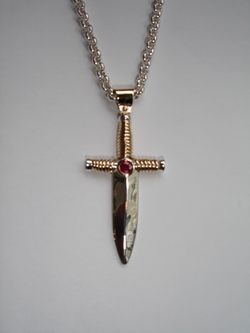
Hard Diamond is the blog of a British master jeweller by the name of Paul Hatton (and as any Londoner knows, Hatton Gardens is the centre of the UK jewellery trade). He takes commissions and explains here the reasons for bespoke jewellery. These are uniqueness, range and price & access to maker.
Jewellery is very personal: it is often used as a very unique way of showing love and affection, or human bonds. It often remains in families as heirlooms passed from generation to generation. It is only natural that when expressing a bond of love for another, people wish to seek something wholly unique to express the uniqueness of their feelings. Rather than something bought from even a high-end chain store, a design from a designer/maker, or a piece of bespoke jewellery, commissioned with an input in design, perhaps personalized with a birthstone or other symbolic stone or precious metal, speaks volumes about our feelings in a solid, eloquent and lasting way. I enjoy and am uplifted by working with people to make in fine jewellery or tableware an expression of their love or affection for another. Similarly, with symbols of status such as watches. A Cartier watch is a beautiful thing; but you will also see the same watch worn by other people. If I make a watch for you, often for the same price or less, you will have a unique and lasting timepiece no-one else can own.
What makes his blog fascinating is that it does not just display his rather groovy artefacts that he has created so far…
…but it also tells a story of his trade, such as this description of setting a gem in an emerald ring:
Emeralds are very fragile stones, as you may have seen from my first blog entry on the Moh’s hardness scale. It’s not recommended that this method of setting an emerald be used, as you have a 50% chance or more of damaging the stone. It takes extreme skill and experience to accomplish successfully this type of setting. When one has successfully achieved such a setting, great relief is felt, as emeralds of this quality don’t come cheaply, as I wipe the sweat from my brow…
Blogs like this make his profession come alive and he turns it into his own medium as well as a ‘inside’ story-telling space. Take a peek for yourself.
After a long overdue cleanup I rediscovered and enjoyed listening to Carmina Burana, composed by Carl Orff. This is an operatic piece of music set to texts from a collection of 13th century Bavarian poems and songs, mostly in Latin.
The music is famous for its first (and last) section, O Fortuna, which has been used in an enormous range of settings in the last fifteen to twenty years. I first heard it in an advertisement in Australia in the late 1980s. However the work is much more then that, and no doubt serious music fans could provide a far more comprehensive discussion of its merits then I am capable of. But I find both the instrumental and choral sections very lovely.
The texts are sung in their original Latin/Low German that they were composed in, and refer to themes common to people of that age and ours- the pleasures of spring, the pleasures of the tavern, and the pleasures of love. In that respect, it is not so different from much of today’s music, although The Roast Swan suggests more imagination (it is the lament of a swan who has been roasted on a spit). When we are in the tavern ends on a strikingly modern note:
Six hundred pennies would hardly suffice, if everyone drinks immoderately and immeasurably. However much they cheerfully drink, we are the ones whom everyone scolds, and thus we are destitute. May those who slander us be cursed, and my their names not be written in the Book of the Righteous.
A complete translation of the text used in Orff’s Carmina Burana can be found here.
Orff himself was as much a music educator as much as a composer, and Carmina Burana is the only work of his that is widely known to the general public.
And of that work, it is O Fortuna that is most widely recognised, by its use in advertising and movies. Most recently, it was used as the base for The Big Ad in Australia, and it has been modified by all manner of musicians, in all sorts of styles. Given that US creative industries keep pushing to expand copyright protections over their works, people with a creative bent that wish to base their work on a familiar cultural item are going to look increasingly beyond US shores and beyond US culture. This trend in turn helps to devalue the value of the copyrighted material. Which once again underlines the delicate balance of rights management, a lesson rights holders seem slow to learn.
Among a fringe community of paranoids, aluminum helmets serve as the protective measure of choice against invasive radio signals. We investigate the efficacy of three aluminum helmet designs on a sample group of four individuals. Using a $250,000 network analyser, we find that although on average all helmets attenuate invasive radio frequencies in either directions (either emanating from an outside source, or emanating from the cranium of the subject), certain frequencies are in fact greatly amplified. These amplified frequencies coincide with radio bands reserved for government use according to the Federal Communication Commission (FCC). Statistical evidence suggests the use of helmets may in fact enhance the government’s invasive abilities. We speculate that the government may in fact have started the helmet craze for this reason.
– Ali Rahimi, Ben Recht, Jason Taylor, and Noah Vawter of MIT, getting down to the really important research. I wonder what they think of lampshades? (Link from Scott Wickstein).
Switzerland is a bastion of efficiency and rationality surrounded by the boiling maelstrom of stupidity that is Europe… and yet even they are falling foul of idiotic political correctness and absurd defensive ‘sensitivity’.
Swiss Santa Clauses have been banned from sitting children on their laps because of the risk that they might be accused of paedophilia […] Large groups of St Nicholases parade through the streets that day before visiting children. They traditionally sit them on their laps before asking if they have been well-behaved. “We want to counteract any possible accusations of paedophilia involving our members,” the Society of St Nicholas said in a statement. “We regret having to do this, but the public has become very sensitive about child abuse.”
Hardly the end of the world but it is not a good sign that even the dependibly sensible Swiss have this crap to deal with.
As already reported here, there are two conferences of possible interest to Samizdata readers this coming weekend, Novermber 19th-20th, in London.
There is this one about the theory and practice of Rational Selfishness. And (as already reported here) there is the one I will rationally and selfishly be attending myself: Liberty 2005: The Annual London Conference of the Libertarian Alliance and the Libertarian International.
The reason that I mention this latter gathering in particular today is that now is just about the last moment for booking yourself in to the banquet on the Saturday night. Sean Gabb needs to know by Wednesday at the very latest (so best to make that this evening) so that the National Liberal Club (a fantastic, must see before you die building, by the way) can be told the number of guests to cater for. If past versions of it are anything at all to go by, this banquet will be an excellent occasion, and a splendid opportunity to socialise with libertarians from all over the planet, so if you want to be there, email Sean Gabb now.
Turning up on the day on the day to hear all the speakers, waving banknotes, is okay, and you will be made very welcome if you do that. But for the banquet, if you have not already booked, it is now or never.
Sean tells me that the Conference is already sure to break even, but the more the merrier. It is a big place, as well as a great looking one.
By the way, unless I am much mistaken, the relevant stretch of the Circle and District Underground line will not be in action (see para 5) over this weekend. Watch out for that.
The Research Defence Society, a body supporting animal research in medicine, has started a blog. They intend to use it to keep people up to date with their activities, to counter disinformation and highlight how animal rights extremists use terrorism against scientists, and to support staff involved in animal research.
|
Who Are We? The Samizdata people are a bunch of sinister and heavily armed globalist illuminati who seek to infect the entire world with the values of personal liberty and several property. Amongst our many crimes is a sense of humour and the intermittent use of British spelling.
We are also a varied group made up of social individualists, classical liberals, whigs, libertarians, extropians, futurists, ‘Porcupines’, Karl Popper fetishists, recovering neo-conservatives, crazed Ayn Rand worshipers, over-caffeinated Virginia Postrel devotees, witty Frédéric Bastiat wannabes, cypherpunks, minarchists, kritarchists and wild-eyed anarcho-capitalists from Britain, North America, Australia and Europe.
|





Recent Comments