We are developing the social individualist meta-context for the future. From the very serious to the extremely frivolous... lets see what is on the mind of the Samizdata people.
Samizdata, derived from Samizdat /n. - a system of clandestine publication of banned literature in the USSR [Russ.,= self-publishing house]
|
The Independent has a terrifying story, if there is no public outcry over which, I have no hope for the short-term survival of liberty in Britain. Perhaps it is just our turn to live under totalitarianism, and our children’s and grandchildren’s too (assuming liberati and other anti-social types are permitted to breed in the well-ordered society) …
Britain is to become the first country in the world where the movements of all vehicles on the roads are recorded. A new national surveillance system will hold the records for at least two years.
Using a network of cameras that can automatically read every passing number plate, the plan is to build a huge database of vehicle movements so that the police and security services can analyse any journey a driver has made over several years.
Read the whole thing here. Then answer me this question: by what right is this power assumed? It is no doubt being done in the name of ‘public safety’, in which case where’s the democratic mandate, and when was parliament asked?
Cross-posted to Samizdata
The Independent has a terrifying story, if there is no public outcry over which, I have no hope for the short-term survival of liberty in Britain. Perhaps it is just our turn to live under totalitarianism, and our children’s and grandchildren’s too (assuming liberati and other anti-social types are permitted to breed in the well-ordered society) …
Britain is to become the first country in the world where the movements of all vehicles on the roads are recorded. A new national surveillance system will hold the records for at least two years.
Using a network of cameras that can automatically read every passing number plate, the plan is to build a huge database of vehicle movements so that the police and security services can analyse any journey a driver has made over several years.
Read the whole thing here. Then answer me this question: by what right is this power assumed? It is no doubt being done in the name of ‘public safety’, in which case where’s the democratic mandate, and when was parliament asked?
Cross-posted to White Rose
Mark Thatcher was involved in a failed but very commendable private sector attempt to oust an African tyrant, no doubt motivated by personal gain (an entirely reasonable motivation) and as a result, Prince Albert has decided that Mr. Thatcher is not a suitable person to have his residence in Monaco. Somehow this is part of a new ‘ethical’ approach to running the Principality.
So let me get this straight… trying (but failing) to overthrow some petty ruler who treats his country as a personal possession make you un-ethical? So does that mean being supportive of the government of Equatorial Guinea would make a person… ethical?
One might almost think that Prince Albert just does not like the idea of people overthrowing any ruler of a pissant country. I wonder why that might be?
“If you’re determined to be altruistic about it, the only way you can be of any good to others is for you to be self-sufficient. The biggest burdens in a crisis are those who were so concerned about the welfare of everyone else that they never provided for themselves.”
Harry Browne, How You Can Profit From the Coming Devaluation, pp. 199-200, Arlington House Publishers, Westport, Connecticut. I also recommend this classic by Browne.
I am travelling in Slovakia and the Czech Republic at the moment and internet access is rather hard to find. This all too brief internet lifeline is a welcome fix to help alleviate my OWLS (On-line Withdrawal Lamentation Syndrome). Horror is a foreign keyboard.
But at least the locals in the deepest rural Moravia are helping me get over the internet withdrawal shakes by stuffing me full of splendid pastries, for which this part of the world is rightly famed.
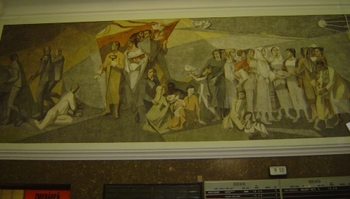
Interesting glimpses of the recent communist past abound but are becoming less visible by the year.
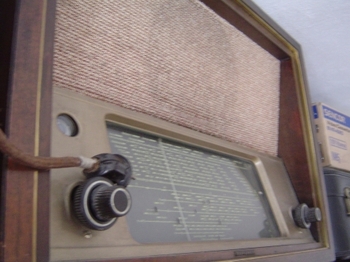
Remember a time before the internet? Hard to believe, I know! My hosts used this to listen to broadcasts from the West.
I am with the original samizdat people from whom I took so much inspiration and the reason I came up with the name for this blog.
The Chinese economy is set to be bigger in GDP terms than that of Britain by the end of this year, according to this report. Of course, raw statistics, such as aggregate economic numbers, do not tell the entire story, such as the degree of upward mobility, quality of life, extent of personal opportunity and so forth, but even so, China’s growth remains for me the most compelling economic story of the past year. It is interesting to speculate just what the world economy would be like without the dynamo of China.
What remains to be seen, of course, is whether China’s economic dynamism is eventually reflected in greater individual liberty. The jury is well and truly out on that question. Meanwhile, this article in Forbes is worth a look.
That was the question sung by Dr. Alban, the one hit wunderkind, who, if my poor memory serves me, washed up on the shores of Sweden in the mid-1990s. However, a more interesting answer to this conundrum has been posed by Dr. Paul Davies, an Australian astrobiologist. Davies argues that the primary quality of life is the ability to replicate information, and that this process can be viewed as a quantum phenomenon.
Viewed this way, the problem of life’s origin is switched from hardware to software. The game of life is about replicating information. Throw in variation and selection, and the great Darwinian experiment can begin. The bits of information have to be physically embodied in matter somehow, but the actual stuff of life is of secondary importance. There is no reason to suppose the original information was attached to anything like the highly customised and evolved molecules found in today’s living cells.
Therefore, the origins of life are no longer reserved for chemical structures or the complexities of single-celled organisms. Life is defined as a process for the replication of information and is not limited to one particular source.
All it takes to get life started is a quantum replicator – a process that clones bits of information attached to quantum systems by allowing them to interact with other quantum systems in a specific way. The actual system could be anything at all – the spin of an electron, a meta-stable atomic state, or a molecule that can flip between two conformations. The uncertainty inherent in quantum mechanics provides an in-built mechanism for generating variations.
The leading question from this speculation is why did replication shift towards larger and more complex structures. We are a sturdier and more stable foundation for data storage! No wonder many think that our mind children, with better memory capacity, will replace us.
If you are free tomorrow evening and wish to sing carols in aid of Iraqi children and enjoy a spontaneous demonstration of faith, hope, joy and/or religious tolerance in defiance of Section 132 of the Serious and Organised Crimes and Police Act 2005, please check out Bloggerheads.
All hail the Bugatti Veyron, the world’s most expensive car that you can drive on a road, as opposed to a circuit. From nothing to 250mph in less than a minute. The audio system alone costs $30,000. Have you got $350,000 to spare? Then go for it. That will cover the deposit if you want to place an order.
And all hail to Jeremy Clarkson for featuring this mighty vehicle on Top Gear. It is this evening’s repeat, of the show first shown on December 11th, which I am now listening to.
Clarkson also wrote in the Times – on November 27th, but I doubt (see below) if any faster car has appeared since then – about the Bugatti Veyron, and the struggle to make it go as fast as it does:
Somehow they had to find an extra 30kph, and there was no point in looking to the engine for answers because each extra 1kph increase in speed requires an extra 8bhp from the power plant. An extra 30kph then would need an extra 240bhp. That was not possible.
The extra speed had to come from changing small things on the body. They started by fitting smaller door mirrors, which upped the top speed a bit but at too high a price. It turned out that the bigger ones had been keeping the nose of the car on the ground. Without them the stability was gone.
In other words, the door mirrors were generating downforce. That gives you an idea of how much of a bastard the air can be at this speed.
Volkswagen, the parent company, decided to make this Bugatti wonder car as a mere “engineering exercise”, and they are apparently taking an enormous loss on each one that they sell. Clarkson reckons this is a car Concorde, and that what with “everyone twittering on about global warming”, they might never again make another such.
Having, almost three months ago now, tracked down the latest Rolls Royce, this is my current must-photo car.
Earlier this month, I wrote:
Hollywood is of course notorious for this sort of thing, where actors and actresses have their notions of their own worth and talent over-inflated by agents, publicists, and the media.
So it is only fair that I point to this welcome exception to the rule – the mediocre Woody Allen:
“I’ve disappointed myself most of the time.
“People think I’m an intellectual because I wear glasses and they think I’m an artist because my films lose money.
“My relationship with the American audience is exactly the same as it has always been. They never came to see my films, and they don’t come now.
“I’ve often said that the only thing standing between me and greatness is me.”
I have a similar problem with greatness, and I’m glad to see that I am not the only one!
I have not commented on the recent riots in Sydney, which have been reported in the global media, for the reason that the scale and size of them are not particularly great. They certainly have been overblown in the media, both in Australia and overseas.
Of course, that is not to detract from the nastiness of them for the victims. People have been beaten, stabbed, and had their property vandalised in a deeply unpleasant way. But compared to what happened in Paris, these disturbances are very small beer.
However they are also very different to the Paris riots because the causes of them are totally different. In Paris, people were rioting because of the perceived heavy handedness of the French state and discrimination issues. There may or may not have been an Islamic element as well.
The Sydney disturbances were nothing of the sort. They were started by outraged ‘surfers’ and beach bums who were incited by populist media types, and also by some deeply unpleasant racist thugs. They were continued by the people that they were protesting about- the gangs of thugs who have been causing a constant law and order issue for Sydney residents for several years now.
These gangs have been allowed to ‘run amok’ because, not to put too fine a point on it, they are Lebanese Muslims. The nominally ‘centre left’ ALP state government has been too terrified of being accused of racism to uphold the rule of law. This leads to massive double standards in the enforcement of justice, which has been a feature of policing in Sydney.
There have been two developments in consequence to these riots, both of which are deeply depressing. The first is that the NSW State government is using the riots to claim for itself massive increases in police powers in order to ‘deal’ with the situation. Those who have seen the NSW police force in action over a long period are unlikely to have confidence that these powers will not be abused.
Secondly, the Australian media has indulged itself in a veritable orgy of self-flagellation about race relations in Australia and ‘multiculturalism’. The few blogs willing to point out the law enforcement issues involved have been ignored.
Equality before the law is supposed to be a core principle of any government that fancies itself to be democratic. Yet in Australia, no one wants to talk about it. Draw your own conclusions.
This afternoon I was in Newport in South Wales. I had half an hour or so to kill before my train back to London was to depart, so I went to a nearby pub and ordered a pint of ale. Due to the general lousy state of WiFi hotspot provision in Britain, I was not able to connect my laptop to the internet. However, I also had my PDA with me. The PDA in question is branded as an O2 XDA IIi, but the device is in fact made by a company named High Tech Computer Corporation (HTC) of Taiwan, and is known generically as the HTC Alpine, as well as being rebranded by a variety of other companies under a variety of other names. It runs Windows Mobile 2003SE, which includes stripped down versions of Internet Explorer, Microsoft Word and Excel, and a variety of other applications. The device also functions as a GSM cellphone, and in what is I think is the way of the future, the device has several different wireless technologies built into it – 802.11b (WiFi), Bliuetooth, and at that moment most importantly. GPRS, the usual packet switched data overlay of the GSM cellphone system.
What did this all mean? Well, it meant that I could connect my PDA to the internet via a GPRS cellular connection and check my e-mail and browse a few blogs. The limitations of this were that I was using a rather limited browser and I had a slow connection – in practice probably only around 20kbps. This means that I didn’t want to view too many separate pages – each takes a while to load and as one is paying by the megabyte, one also doesn’t want to download too much in the was of fancy graphics. Being asked to browse through six pages to read one article is something of an imposition. Lots of popups and flash animation is also bad. Relatively straightforward HTML is best.
After a quick trip to Samizdata, I went to Instapundit to see what was up. I scrolled down, and came to the observation that Time Magazine’s choices as “People of the Year” were lame, and a link to a Michelle Malkin piece that had more to say about it. That wasn’t terribly helpful in itself, because I didn’t know who Time Magazine had chosen, but I followed the link.
Michelle didn’t say precisely who the award had gone to either, but there was a comment about philanthopists, rock stars, and Bill and Melinda Gates. Okay, so at this point my guess (which ultimately turned out to be correct) was that the award had been given jointly to Bono of U2, as well as Bill and Melinda Gates for charitable efforts in the third world.
Actually I find the (joint) award of Man of the Year to Bill Gates is kind of interesting. I have long thought that it was an absurd oversight that Time had never given the “Man of the Year” award to Gates. I am no fan of Microsoft’s products, but even I have to concede that that the man’s career is an extraordinary one, and even that the argument that he was the most significant man of the 1990s is quite a strong one. One man came from nowhere and in 20 did a considerable job of seizing control of one of the most important industries in human history. That Time missed this and failed to give him the award at any time in the 1980s or 1990s was really lame. (Time almost got off to a good start in recognising the PC revolution with “Man of the Year announcements”. They apparently intended to give it to Steve Jobs in 1982, but ultimately lamed out by giving it nebulously to “The Computer” instead after discovering that Jobs had a difficult personality. (Laming out is something they have been doing for a while).
Malkin does make some observations on this, stating that she thinks that Time’s vaguely blah leftist politics are in play here, and that they wouldn’t have given it to Gates in the 1990s when he was doing something significant because that was filthy capitalism of which they do not approve, and that they would now rather give it to him and his wife now that she has civilized him and he is doing something “worthy”. Although Time does have a bit of a history of rewarding starry eyed “one world” stuff, and that certainly explains the Bono thing here, I am not sure it does explain the Gates award.
In truth, I think that Time is almost trying to apologise for not giving the award to Gates before. → Continue reading: Time is lame in so many ways
|
Who Are We? The Samizdata people are a bunch of sinister and heavily armed globalist illuminati who seek to infect the entire world with the values of personal liberty and several property. Amongst our many crimes is a sense of humour and the intermittent use of British spelling.
We are also a varied group made up of social individualists, classical liberals, whigs, libertarians, extropians, futurists, ‘Porcupines’, Karl Popper fetishists, recovering neo-conservatives, crazed Ayn Rand worshipers, over-caffeinated Virginia Postrel devotees, witty Frédéric Bastiat wannabes, cypherpunks, minarchists, kritarchists and wild-eyed anarcho-capitalists from Britain, North America, Australia and Europe.
|







Recent Comments