We are developing the social individualist meta-context for the future. From the very serious to the extremely frivolous... lets see what is on the mind of the Samizdata people.
Samizdata, derived from Samizdat /n. - a system of clandestine publication of banned literature in the USSR [Russ.,= self-publishing house]
|
When I happened upon this website campaign, my first reaction was to dismiss it as a hoax. After all, in an age when political and civil discourse has been so debased by post-modern neurosis, the art of parody must respond by vaulting the high water-mark of absurdity in order to be at all effective.
But, because we live in such strange and discordant times, I have, upon further reflection, decided that the people behind reFlag are probably deadly serious. In their opinion, our Union Jack is too arcane, vulgar and embarrassing to be tolerated:
A number of countries around the globe have black in their flags to represent the colour of their people. It makes sense for the UK to have black and white in our flag, to represent the different races and cultures which make up the country at the beginning of the third millennium.
We haven’t conquered racism, nor many other forms of prejudice, but by changing the nation’s main emblem, we can reclaim the union flag from those who have hijacked it for their own ends, so that our flag reflects the diversity of the people of the UK.
So it’s out with the racist, old standard and in with the new symbol of ‘diversity’:
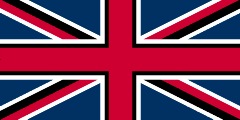
I don’t like it. And it certainly is not a flag to which I am going to rally any time soon or at all. Of course, one might argue that flag design is not an issue that should matter to any libertarian and that all national flags are constructs which can, and indeed do, change from time to time.
But that is to miss the point. The cause of my revulsion lies not in the symbol but in the creepy deconstructionist impulse that lies behind it (much of which is dressed up in corporate ‘re-branding’ jargon). The depths of this psychosis can perhaps best be judged by the breath-takingly hypocritical claim that the Union Jack has been ‘hijacked’ and they need to take it back. Take it back from whom, I wonder? From various obnoxious national socialists? From football hooligans? Or from the increasing numbers of quite reasonable and decent Britons who defiantly fly the flag in response to the sordid and sustained attempts of much of the establishment left to demonise it?
It is that latter group who are really taking the flag back and perhaps that is what the people behind ‘reFlag’ really fear the most. Maybe the trend they are so clearly desperate to stem is the growing general contempt for the dangerously balkanising agenda of the cultural marxists and an increased willingness to resist the tools of manipulation and social engineering through which it operates.
I cannot say for sure because there appears to be no indication on their website as to who these people are, who or what is behind them or how they are funded. So maybe it is a hoax and an elaborate one at that. Right now there may be some gang of wags guffawing in ‘ha ha gotcha’ hoots of laughter. But if it is not a hoax then perhaps these people should be flushed out into the open so that we can tell them, face-to-face, that what they are trying to do is not just silly it is dangerous. I think we should leave them in no doubt that they are vigourously fanning the very flames of conflagration that they purport to be seeking to avoid.
Or, maybe, they know full well what they are doing and conflagration is precisely what they want. Who can say?
Well, that didn’t last too long. Hot on the heels of yesterday’s moderately good news comes today’s customary bad news.
Again, I was sort of expecting this to happen and now that it has happened it proves that my ‘Glumness Meter’ is actually quite reliable:
Burglar Brendon Fearon who was shot and injured by Tony Martin has won the right to sue the jailed farmer for damages.
A judge at Nottingham County Court on Friday overturned an earlier decision which threw out his claim.
Fearon, 33, hopes to sue Martin for a reported £15,000 following his wounding during a break-in at the farmer’s home in Emneth Hungate, Norfolk, in August 1999.
Which goes to prove I suppose that you just can’t keep a bad man down and that the word ‘absurd’ is fast becoming redundant in this corner of the world.
An earlier hearing was told that Fearon, of Newark, Nottinghamshire, claimed that his injuries, which included a leg wound, had affected his ability to enjoy sex and martial arts.
Which he doubtless enjoys best when practised simultaneously. Still, I’d best temper my comments regarding Mr.Fearon lest he ‘win the right’ to come after us with a defamation suit.
“I have to take the view that there are important issues here that need to be determined and that it would be wrong, subject to other considerations, to deprive the claimant from airing his claim and having a full trial,” said District Judge Oliver.
He said that to deny Fearon the right to his claim could contravene the burglar’s rights under Section 6 of the Human Rights Convention.
I must be honest, when I first heard the term ‘burglar’s rights’ being bandied about I thought it must be some kind of blogosphere joke or a bit of British tabloid ribbing. Turns out they actually mean it. I should have known better than to assume that parody could actually be a match for reality these days.
I suppose some clarification of this decision is required. Please note that Fearon has won the ‘right’ to sue Mr.Martin. That does necessarily mean that his claim will succeed. However, as regards that latter prospect, my ‘Glumness Meter’ is already twitching ominously up in the high eighties.
When I first heard about this case, a few days ago, I was glumly convinced that this man would be convicted of manslaughter and sent to prison.
I was wrong:
A company director accused of killing a burglar who had sneaked into his business to steal a lorry has been cleared of manslaughter.
Steven Parkin, 46, of Derby Road, Nottingham, was alleged to have battered Mark Brealey with a pickaxe handle and slashed him with a knife as he fled the site.
It remains to be seen whether or not the Crown intends to pursue any other charges against Mr.Parkin but there is no mention of this either way in the story. All I can say is that I certainly hope not.
Judge Richard Pollard directed the jury to return a verdict of not guilty after a pathologist told the court he could not rule out the possibility death was caused by an accident.
Given the Judge’s direction, I think it is a little premature to assess whether or not this marks any sort of change in the judiciary’s institutional anti-self-defence culture. Probably not. But at least this man is not languishing in prison for defending his property and that is good news.
HMG is being high-handed, undemocratic and arrogant. That is the view of the British tabloid newspaper The Daily Mail on the refusal by the government to put the issues of the EU constitution and joining the single currency to the British public in a referendum.
In response, they have been running a campaign in the form of a ‘People’s Referendum’ which gives members of the public an opportunity to let HMG know how they feel and demand a formal, legally-binding referendum of these issues. The campaign ends at midnight tonight.
Whilst I can wholly sympathise with the sense of outrage and injustice that has driven this ‘voxpop’ campaign, I have chosen not to participate because, strange as it may sound, I do not want a referendum.
I do not wish to be too harsh on the organisers of this campaign or the proprietors of the Daily Mail. They are being far more proactive in advancing the debate in this country than just about any other organ of the fourth estate and, to the extent that the eventual result provides a bellweather of public opinion, it may prove useful in terms of boosting moral. But, tactically, to demand a referendum on these issues is to play right into the hands of the enemy.
I say this because with a government which is committed to the EU project, coupled with the ability to write out a blank cheque to enable them to realise their vision, a referendum is anything but the level playing-field that too many people fondly imagine it to be. There are loads of ways that the result can be pre-determined and HMG is almost certain to employ every single one them.
First off, the ‘yes’ campaign will have access to unlimited tax-payer funds while the ‘no’ campaign will have to rely on voluntary donations from their supporters. The (state-owned) BBC propoganda machine will be put into overdrive and current sceptical non-state media sources will be bought off or bullied into switching sides. Organised indepenence campaigns will be infiltrated with people who will start making nazi-type noises to the press at the right moment, thus giving the impression that the ‘no’ campaign is merely a fig-leaf for a scarey national socialist movement and, every day of the campaign will see dark, ominous op-eds in various established media outlets warning of the ‘dire economic consequences’ of a ‘no’ vote.
Added to all this, of course, is the distinct possibility that the actual voting figures themselves will be diddled. I wouldn’t put it past them. Even if that were not the case and, by some miracle, the ‘no’ campaign won a slim majority, we all know what happens next. Yes, that’s right, just as in Denmark and Ireland, we would have to endure another referendum in order to get the ‘right’ result.
In short, the referendum on the Euro and the Constitution will be as rigged as an 18th Century tea clipper. If the independence movement has put all its eggs in the referendum basket, then where does it go from there? The answer is nowhere. Having been spiked by the appearance of a ‘democratic consensus’ we will have no choice but to watch helplessly while Mr.Blair abolishes our country with a flourish of moral authority.
That is why I will not join in the voices calling for a referendum. I choose, intead, to demand complete British withdrawal from the EU and not to settle for any less. It is the only position which cannot be bargained away, compromised or outflanked.
Neither this nor any other government has the right to sign away the sovereignty of the British people and I do not accept as legitimate any show of hands which purports to provide it with the authority to do so. I demand independence and I will accept no substitutes.
I was just watching a report on early morning TV which was in itself a rather mundane piece about how the authorities in Britain are clamping (immobilising) cars which are stopped on the road and found to have unpaid vehicle tax. Yeah yeah, whatever.
But then came a remark which astonished me…
“Unpaid annual Vehicle Excise Duty costs the British economy millions of pounds per year”
Now without getting into the rights and wrongs of vehicle ownership taxes (as opposed to road use taxes), the implication is clear: money not paid to the state for the privilege of owning your own several property does not create wealth… only when that money is safely in the hands of the state does the British economy benefit. Note, the words use are not “costs the British state millions…” but rather “costs the British economy millions…”
And with that tax money taken out of private hands, the state creates a net gain in wealth how exactly? Hiring more wealth destroying bureaucrats? And of course that money you selfish tax dodgers have not paid to the state is going to be flushed down the toilet rather than being used for some alternative economic activity, right? Likewise immobilising people’s transport because they have not paid an annual ownership tax, and thereby preventing those people making deliveries or getting to work, that does not British economy a penny, right?
Arrogance and ignorance in equal measure. The state is not your friend.
The mainstream news outlets in Britain are abuzz tonight following today’s statement from Chancellor Gordon Brown that now is not the right time for Britain to abandon sterling and adopt the Euro. Dressed up in the mawkish tinsel of lovey-dovey Euro-warmth, Mr.Brown told the nation that, with great reluctance, he must rule out adoption of the Euro because his ‘economic tests’ have not been met.
Cue shrugs, eyeball-rolls and ‘whaddaygonnado?’ sighs from Mr.Brown and a chorus of booing, hissing, spitting and puppy-kicking from an assembled throng of federasts in both Parliament and the nations newsrooms. It is all a pantomime, of course. Blair and the rest of the executive want to the Euro with the kind of slavering intensity with which an alcoholic needs a shot of gin. The so-called ‘economic tests’ that must be met beforehand are purely a fig-leaf to mask the fact that they cannot convince an increasingly skeptical and surly British public to go along with them. The very nano-second the government thinks it can win a referendum on the issue the ‘economic tests’ will have miraculously been met.
But let no-one be fooled into thinking that Euro-geddon has been postponed. Beneath the blizzard of high-falutin’ fiscal gobbledegook being whipped up by the ‘meeja’ talking heads, an even more sinister tentacle of the Belgian Empire is slowly and quietly coiling around us. → Continue reading: The real EU threat
Miceal O’Ronain spotted a new item in the Times of London yesterday. He has also looked between the lines and seen where this will eventually go
The issue is, at least for now, congestion on the roads:
“…Satellite equipment to monitor every car journey will be ready only in a decade or more.”
[…]
“Satellite tracking and charging will be tried out on the lorries that use Britain’s roads under a scheme that will begin in 2006. If the experiment is successful, the system could be extended to cars as well.”
Here are the technical specifications for the system:
- EU network is preferred system
- A nationwide system would be likely to use the EU’s Galileo global-positioning network, an array of 30 satellites scheduled for launch in 2006 and 2007.
- The alternative, the US military GPS network, used by the current generation of satellite navigation and tracking devices, does not guarantee access to civilian clients. Galileo is designed for civil use and guarantees an uninterrupted service.
- Galileo will be accurate to 1 metre, GPS to only 30m. The lower accuracy of the US model could cause disputes on whether vehicles had actually entered charging zones.
But why stop with cars? Just surgically implant a transponder into each citizen of the UK. If you can do it for cars and wild life, you can do it to people.
Miceal O’Ronain
I bet I know what Tony Blair dreams about at night. I’ll bet that while he is tossing, turning and crying out in his sleep, his dreams transport him to the dusty, fetid alleyways of Baghdad. There, he strides forth like a grand, confident colossus surrounded by a squadron of husky, shaven-headed Royal Marines. Gaggles of excited Iraqi children bay and yap around the fringes of this entourage, hoping that the Great White Leader From Across the Seas will stoop to confer some benediction on their tiny heads. But he cannot stop. He is too busy. He is too single-minded. He knows what he wants and he is determined to find it. All other priorities are rescinded and greeting the thronged masses of downtown Baghdad will have to wait.
Suddenly, through the whirls of settling dust, he spots it. A big warehouse miraculously untouched by Cruise missiles or JDAMs. He points. “There” he says, “that’s where they are”. Tony and his bodyguards break into a trot and then a run as they draw near to the entrance of the warehouse. One of the squaddies produces a bolt-cutter and snips off the padlock with a flourish. The great doors are swung wide open and, inside, gleaming and shimmering with pointy Ba’athist menace is a phalanx of stonking, great missiles, each one marked ‘London’, ‘Manchester’, Birmingham’, Leeds etc.
“I was right, I was right” yells Tony triumphantly. “I told them so. I told them Hussein had WMDs and they didn’t believe me. Well I’m going to make them eat their weasel-words. I’m going to shove it right up ’em and show ’em whose boss and….. → Continue reading: It’s the WMDs, stupid!
Switch on the TV, open a magazine, buy a newspaper or surf the net and it won’t be any time at all until you come across an advertisement for some diet-related product. Be it an exercise-contraption, a formula drink or a low-calorie food range, the market cup runneth over with weapons we can use to fight the Global War on Flab.
As a veteran footsoldier in this campaign (my abdomen is more ‘lunch-pack’ than ‘six-pack’) I bear many scars of battle. But I long ago realised that I can never really win this war. Though I have succeeded, with grim determination and effort, to cast off the oppressive tyranny of blobdom, my liberation has only ever been temporary. Somehow, by various means, the forces of fattiness manage to regroup and come roaring back to overwhelm me again and take me prisoner.
Still, surrender is not an option and I am always on the lookout for new ideas that may, I pray, grant me permanent victory and eternal snake-hips. Somebody recently suggested that getting one of those Jane Fonda videos might help and, prickly with expectation, I went out and bought one. Another let-down, I’m afraid. I spent the whole of last weekend watching ‘On Golden Pond’ and I didn’t shed an ounce.
Now, fortunately, I have private health insurance which means that my midriff mission-creep has few practical consequences apart from a vampiresque aversion to full-length mirrors and the occasional ‘magic flying shirt-button’. The same cannot be said for many of my fellow citizens who find themselves at the less-than-tender mercy of the state healthcare system:
Patients could have to sign up to healthier lifestyles under new plans being considered by the Labour Party.
Written contracts would ensure a certain standard of treatment in return for people following doctors’ advice and attending appointments.
Or, ‘Ve haf vays of making you slim’. Okay, in some ways I am quite pleased that this is now out in the open because it has actually been bubbling away just below the radar for a good few years now, mostly as ominous mutterings from NHS doctors that they might refuse to treat patients who smoke (despite the fact that taxes paid by smokers prop up the NHS).
Yes, carry on I say. How about a ‘no dangerous sports’ contract? A ‘stress-free career’ contract? A ‘no casual sex’ contract? A ‘no riding motorbikes’ contract? Why not? Since the NHS is clearly destined to become a lifestyle-policemen they may as well go the whole hog. And I sincerely hope they do because then our dirty, little secret will be secret no longer. The dirty, little secret (that no-one ever mentions in polite company here) is that nationalised healthcare is not free healthcare, it is rationed healthcare and this is just the latest rationing scheme.
The unpalatable truth is that this is a cost-cutting measure. Not so much doctor’s advice but bureaucratic diktat. Despite the extra squintillions of pounds that have been poured into it by the current government, the NHS still cannot meet the market demand for healthcare and so increasingly ruthless ways to cut the waiting lists are having to be formulated.
I have no doubt whatsoever that proposers of the scheme will argue they are only finding ways to improve people’s health and forcing them to lose weight and give up smoking is therefore a truly kind act of a caring government. But that is not why they’re doing this. And, while no reasonable person would argue that losing weight and quitting the weed can by anything but beneficial to health, a threat to withdraw healthcare for those who fail is nothing but a squalid act of bullying.
But, this is time for satisfaction not outrage. The great fabian promise of free healthcare for all regardless of who they are or how much they earn is finally showing up for the lie it always was. Let it grow and deepen. Perhaps, when some poor sod has been turned away from a hospital because of his ‘irresponsible’ roller-skating hobby, the British public will finally realise what Ayn Rand realised a long time ago: that the difference between a welfare state and a totalitarian state is merely a matter of time.
It is hot and humid Monday morning here in Britain and, right about now, millions of people are waking from their slumber to the start of another week.
Bleary-eyed and sticky with sweat, they will munch their toast, slurp their coffee, grab their keys and head out of their doors to do battle with another working day. A day, on the face of it, much like any other day.
Only it isn’t. Not quite. For today, 2nd June, is Tax Freedom Day in Britain. This is the day when we stop working for HMG and start working for ourselves. From today, we can begin supporting our families and not the state. Up until today, from January 1st, we have laboured non-stop for the benefit of the public sector; for all those legions of bureaucrats and rubber-stampers without whom life would be worth living.
There will be no celebrations though. No party hats, no holiday cheer and no group hugs. For the vast majority, the day will pass by without so much as a brief acknowledgement of the temporary release from bondage. There is something sad about a whole nation being so inured to the painful bites of the government that they do not even notice when the biting ceases.
Nearly half a year. Nearly half a life. What a waste.
No sooner has Perry reminded us that the Conservative Party are not to be trusted when it comes to liberty, than, as if right on cue, the buggers prove him right:
Patients should be issued with “entitlement cards” to stop illegal immigrants abusing the National Health Service, the Tories said yesterday.
Liam Fox, the shadow health secretary, said the cards, which would be issued to every UK citizen, would stop so-called “health tourists” being treated at the taxpayers’ expense.
Now, to be fair, the problem they are referring to is a valid one. It is an outrageous abuse of the already over-burdened British taxpayer to force them to pick up the healthcare tab for anyone anywhere in the world who happens to want it. However, the blindingly obvious way of putting a stop to this would be to deregulate health services and dismantle the Soviet-inspired monstrosity of the NHS.
But, no, the Tories would never dream of doing anything to upset the left. They would much rather that we were all issued with an electronic tattoo which is not only obnoxious and anti-British, it will also prove ineffective in solving the problem referred to. Within weeks of the introduction of any such ‘Entitlement Card’ the country (and possibly the rest of the world) will be flooded with forgeries and, even if that were not the case, neither the Human Rights regime, nor EU law will permit the NHS to discriminate against non-UK nationals. Added to that is the massive cost of administering and policing the system the burden of which will also fall on the taxpayers and probably prove more expensive than treating foreigners for their arthritis.
The Tories clearly have not thought this one through but ‘thinking’ is generally frowned upon in those circles. I expect very little from the British Conservative Party and I am rarely disappointed.
Sadly none of Britain’s mainstream political parties are, they just vary (slightly) in who they want to benefit from their regulation of civil society. When it comes from choosing amongst which tribal faction of statists will regulate your life, we are spoilt for choice.
So next time you have an earnest young Tory hopeful turn up on your doorstep asking for your vote and pledging to save you from those beastly Labour socialists, ask him where his party stands on the issue of ID cards, which will naturally start off as ‘National Health Benefit Cards’ and then very quickly become mandatory for pretty much anything you try to do, such as open a bank account or rent an apartment.
And then look ‘earnest young Tory’ in the eye, explain why his party is part of the problem rather than part of the solution and then tell him to fuck off. A choice between a party which brought us Michael ‘a touch of the night’ Howard and one which has brought us David ‘RIP’ Blunket is no choice at all. But if you cannot bring yourself to resist the syren call to the ballot box, vote UKIP.
|
Who Are We? The Samizdata people are a bunch of sinister and heavily armed globalist illuminati who seek to infect the entire world with the values of personal liberty and several property. Amongst our many crimes is a sense of humour and the intermittent use of British spelling.
We are also a varied group made up of social individualists, classical liberals, whigs, libertarians, extropians, futurists, ‘Porcupines’, Karl Popper fetishists, recovering neo-conservatives, crazed Ayn Rand worshipers, over-caffeinated Virginia Postrel devotees, witty Frédéric Bastiat wannabes, cypherpunks, minarchists, kritarchists and wild-eyed anarcho-capitalists from Britain, North America, Australia and Europe.
|





Recent Comments