Prince Harry calls for the return of slavery. Time for the tumbrels to start rolling methinks.

|
|||||
|
May 17th, 2015 | 59 comments - (Comments are closed)
 We must end the idea that as long as you obey the law, we will leave you alone – David Cameron, more or less inviting law abiding people to start stockpiling material to make petrol bombs May 13th, 2015 | 44 comments - (Comments are closed)
Must admit, it’s really rather satisfying to see the Left and their rich luvvie acolytes squabbling and squealing over the outcome of the election like a bunch of failed vampires arguing over a used tampon. I think the word “Schadenfreude” is the one I’m looking for. – Samizdata commenter Tanuki May 12th, 2015 | 5 comments - (Comments are closed)
“It’s all very well for me to sit in my cosy leftie bubble,” writes the singer, “with my baja-sporting friends, spending our free time attending vegan popup barbecues and meeting in art centres to have a bit of a moan about Ukip; we missed the changing climate of British politics. We dismissed the growing support for the right wing as just a few comedy racists, underestimated the momentum they were gaining, and thought that by retweeting the latest Owen Jones article, we were doing our bit. Wrong.” That is self-aware. And it never goes amiss to assert, as she does in the second sentence of her article, that the right to protest does not end just because an election goes against you. She is also right to assert that her celebrity does not invalidate her right to political speech, nor her riches her right to advocate socialism. All rather well said, I must admit. Then she goes into the pouty whinge-n-smear mode that has become so prevalent among modern feminists that they probably no longer know they are doing it.
What Davies actually said was,
Note he did not deny her right to go on a protest march whenever she wanted, he merely said that it did not look good and was annoyingly timed. I am not sure what prompted her speculation that “perhaps” he wants her to get back to her ironing. Using old-fashioned but very mild terms of rebuke such as “slightly unfortunate and unbecoming” does not logically imply a wish to repeal the Married Women’s Property Act of 1870. Still, who knows the secrets of the Tory heart? Perhaps he does. Or perhaps (while we’re perhapsing) it was all a Freudian slip and it is Charlotte who dreams of a man Tory and masterful enough to carry her off to her £800,000 “Princess” yacht in Swansea Marina and have his wicked way with her on the folding ironing board in the servants’ cabin? I’m too scared to check what use I myself have made of that “Perhaps he thinks [whatever anodyne thing he said passed through Evil Overlord Filter]” formulation. Never mind. I’m cured now. I do not wish to sound like this:
And perhaps he doesn’t. A not unreasonable assumption given that he never said a word about “quieting” you, both of you are equally white, and you are much richer than he is. That speculation all came out of your own pretty little cis-privileged head, protest princess who makes things up. Why this need to pretend you are persecuted? At least the other Princess Charlotte has an excuse for acting like a baby. By the way, I would not normally have thought it becoming to mention your racial, heteronormative and wealth privilege, only you seem to think it’s important to insert a checklist of these things for anyone you criticise, so I thought it best to defer to your preferences. May 12th, 2015 | 23 comments - (Comments are closed)
Jesus said unto him, If thou wilt be perfect, go and sell that thou hast and give to the poor. But when the young man heard that saying, he went away sorrowful, for he had great possessions. So he went on Twitter instead and called Michael Gove a ‘vile reptilian evil tory scumbag’, and linked to a cartoon of Iain Duncan Smith stealing a paralysed woman’s wheelchair. And lo, he felt better and went for a £3.50 caramel macchiato with some mates from the BBC. – Libby Purves, who lives behind the Time paywall, has some fun with Matthew chapter 19. Mick Hartley quotes from the Purves piece at his blog, in a piece entitled Virtue signalling. You can’t Read The Whole Thing at Mick Hartley’s, but you can read a bit more of it. May 11th, 2015 | 11 comments - (Comments are closed)
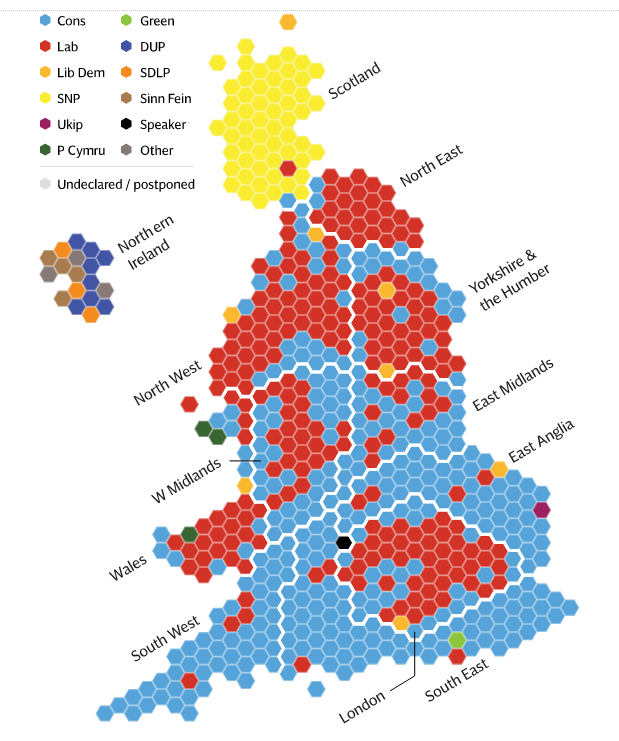
You may have seen all sorts of weird hexagon-based maps of the United Kingdom in the last week or so. Here’s one from the Telegraph but lots of other people from Sky to the Guardian have their own versions:
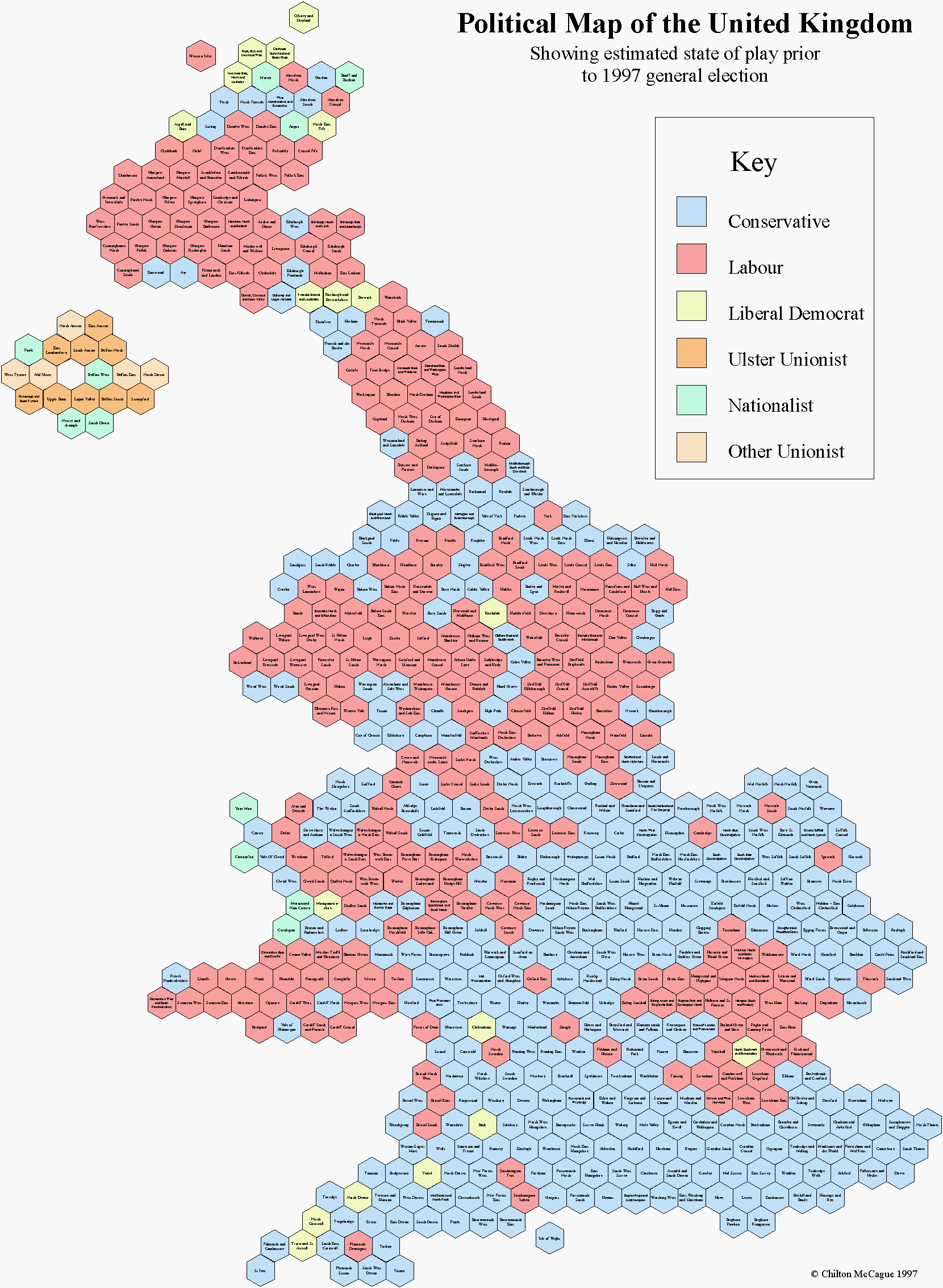
The BBC had one filling up the square at Broadcasting House. The reason for these maps is to do with the way people vote in the UK. People in rural areas vote Conservative (up until Thursay, that is) while people in urban areas vote Labour. When you take a geographically accurate map of the UK and colour it in according to who won what seat the map is almost entirely blue no matter what the overall result. If you make all constituencies the same size and carry out the same exercise hopefully you will get a much more accurate representation of what happened. Here’s another map:
From 1997. Drawn up by yours truly. I believe it was the very first. One of the oddities is that all the subsequent maps have included my design flaw. It should be squares not hexagons. May 11th, 2015 | 29 comments - (Comments are closed)
It is being claimed by the losers in this election that the winners campaigned on fear. Which they did. But what is wrong with fear? What is wrong with being scared? It is a very rational thing to feel, in the face of something scary. The experience of the British electorate is that when the Labour Party promises to do stupid things, it is very stupid and you shouldn’t vote for it. So far so adequate. But when Labour promises to do only sensible things, that is when it is truly dangerous, because then it is liable to win, and to wreck the finances of the country. It does this every time it gets into power. Who wouldn’t be scared of that? Who, when campaigning against this wrecking ball of a political party, wouldn’t appeal to the fear that so many entirely sensible voters feel about such a scary thing? Which is why, by the way, Ed Miliband is not the basic reason why Labour lost, this time around. The main reason was the recent bad experiences of the electorate. “New Labour” turned out even worse than Silly Old Labour, because New Labour actually did some serious damage. The more cunningly it (by which I mean Prime Minister Tony Blair) misled us about the damage it would do, and then flat out lied about the damage it was doing, the worse that damage became. So, what could Ed Miliband do? He floundered and waffled, not because he is by nature a flounderer and a waffler. Others, unable to separate what he was saying from how he said it, will disagree with me, but I think that had Ed Miliband had a persuasive case to put, he could and would have put it very well. Tony Blair recently said that Miliband had turned left, i.e. opted for Silly Old Labour, and that Miliband would consequently lose. But had Miliband presented himself as New Labour 2, he would have done little better, given the electorate’s recent experience of New Labour 1. Because of all those opinion pollsters, I was becoming very scared that Labour might win. Which was why, with all his and their faults, regularly explained here, I wanted Cameron and his Conservatives to win, and with as little help as possible from inevitably even more statist small party collaborators. Was I wrong to be scared? I don’t think so. Luckily, it seems that a decisive slice of my fellow-countrymen shared my fears. Maybe all those polls were right and this slice of Conservative support only made up its mind at the last possible moment, after all the pollsters had ceased their polling. No doubt quite a few baffled pollsters now think that, or at least want to. Or maybe David Cameron, in some nefarious Prime Ministerial way, arranged for the pollsters all to say that it was going to be a dead heat, to scare his more indolent and unwilling voters off their bums or away from UKIP. Whatever. My point is, all those frightened people were quite right to be frightened of the prospect of Labour government (especially one in league with the Scottish Nationalists), and the Conservatives were quite right to speak to those fears. It was their best argument. For many voters, it was their only argument. It was also a very good and persuasive argument. As for the supposed superiority of the politics of hope, well, if this means hoping that tax-and-spend-like-there’s-no-tomorrow statism will turn out better next time, then the less hope anyone can be persuaded to feel about all that, the better. May 10th, 2015 | 25 comments - (Comments are closed)
I saw a BBC article about JK Rowling getting abused by SNP Brownshirts on Twitter… and frankly my dear, I don’t give a damn. She is a champagne lefty who wrote some nice books with a libertarian message, even if she was not aware of that. She can cry Evian tears all the way to the bank. Whatever. Ok… in truth I do kinda like her. But the line that caught my eye was this:
Bzzzz. Wrong, or at the very least misleading. It is the third largest party in Parliament, not the the third largest party in the UK, having 56 MPs for their 1.5 million votes. UKIP, not the SNP, is the third largest party in the UK, having 1 MP for their 3.9 million votes. May 10th, 2015 | 15 comments - (Comments are closed)
There is a stunning article in City AM:
What? I mean… what? So the problem is not that he and his cohorts squandered the UK’s finances, but that he admitted it in a letter that was used to hold them to account? Really? He says he has “burnt with the shame of it”, but in truth he is utterly shameless. The lack of self-awareness is breathtaking. My loathing for these people is boundless. 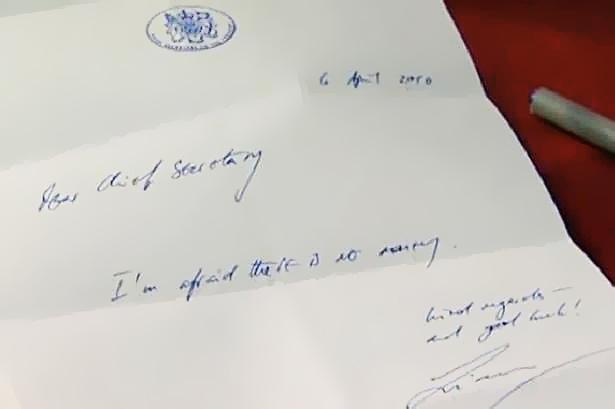 May 10th, 2015 | 27 comments - (Comments are closed)
A little over a year ago I asked the following question:
Betteridge’s law of headlines strikes again. That day had not come. The polls in the General Election of 2015 were wrong, wrong, wrongety-wrong, wrongbert, wrongble and wrong.* As was I, but least I had the nous to put in a question mark. So, elections just got interesting again. Goody! But none of the articles I have yet seen adequately explain why the Shy Tory effect was successfully allowed for by the pollsters in the UK General Elections between 1992 and 2015, only to burst forth again now, nor why political polling in the US has generally managed to factor in Shy Republicans just fine. Except for the 2014 midterms. The one place where the UK polling companies did fairly well this time round was Scotland, although they still underestimated the scale of the SNP’s triumph. Wishful thinking led me to suppose that the estimates being chucked around of 48 seats for the SNP were exaggerated; in the event they were too cautious. Going back to 2011, it is part of Scottish Nationalist mythology that the victory of the SNP in the Holyrood election of 2011 was completely unpredicted by the polls. However the very last polls were quite close to the actual result when it came to the constituency vote, but much less close when it came to the regional vote in the Scottish Parliament’s semi-proportional voting system. Probably the polls recorded a shift of opinion in the last few weeks of the campaign, which is all you can ask of them. When you think about it, polls cannot predict anything; the people who look at them do that. The final polls for the Scottish referendum were out by a not-bad 5% or so, in the usual direction of underestimating the small-c conservative side. All in all, a British or American polling company attempting to sell its wares to interested political parties or news organizations on May 6th 2015 could have made a fair case that they were on top of the Shy Tory problem. So what happened on May 7th? What will happen on November 8th 2016, and will we have any idea beforehand? *This is funny but nothing to do with this post. Americans and people under 50: don’t ask. May 9th, 2015 | 33 comments - (Comments are closed)
I agree with commenters on the piece I did early this morning, who said that the result of this election is a least worst outcome. All the political people whose opinions I most dislike are weeping and wailing and gnashing whatever remains of their teeth (what with the world-famed past deficiencies of British nationalised dental care). And that’s very good. But, like Rob Fisher, and despite having strong preferences concerning the national outcome, I personally ended up voting for nobody. Nobody will do much of what I want, and nobody will refrain from doing big things that I do not want, so nobody was who I voted for. I considered both the Conservative and the UKIPper, but, as the deadline got nearer and nearer, I could not bring myself to vote for either of them. I presume that the Conservative was and will remain ‘my’ MP. Yes. But the good news is that, having spent last night and the early hours of the morning watching the story of the election unfold on the telly, I can report that voting for nobody most definitely does send a message. Turnout matters. Does low turnout signify apathy? Maybe so, but apathy is still a message, and not a message that these fanatically political people like to be told. If not voting accomplished nothing, then why all the nagging, which happens before every election, from the sort of people whose political opinions I most dislike that I should be voting? Yes, refusal to select your least unappealing lizard does definitely irk the lizards. Most of the politicians I heard on the telly overnight just took it in turns to say that since we don’t yet know the result I won’t answer the question, and let’s just wait and see. But the now rather elderly Peter Hain bucked this conversational trend. Hain used to be an MP but is not one anymore. He wasn’t bothered about saying something interesting but off-message, and he actually did say some interesting things. This election result, Hain said, is an anti-Westminster result. In Scotland this expressed itself in the huge breakthrough success of the SNP. In England, it took the form of the impressive pile of votes amassed by UKIP, and everywhere in the relentlessly diminishing votes gained over the longer term by both Labour and the Conservatives, and by the way that the Lib Dem vote fell off a cliff at this election, following their actual participation in government. And, said Hain, this anti-Westminster animus took the form of lots of people just not voting at all, as it has done for quite a while now. We hate you bastards! That was the message, said Hain. In other words, apathy does send a message, and there it was being received loud and clear, on the telly, by a Talking Head. (Hain’s cure for all this protest and apathy is quite different from mine, but that’s a different argument.) May 8th, 2015 | 23 comments - (Comments are closed)
I think it is worth bearing in mind that this is no great vindication of Cameron. Against rubbish opposition he has a majority in single figures. In 1983, also against rubbish opposition Maggie got a majority of 144 (IIRC). – Patrick Crozier May 8th, 2015 | 25 comments - (Comments are closed)
|
   |
||||

All content on this website (including text, photographs, audio files, and any other original works), unless otherwise noted, is licensed under a Creative Commons License. |
|||||