We are developing the social individualist meta-context for the future. From the very serious to the extremely frivolous... lets see what is on the mind of the Samizdata people.
Samizdata, derived from Samizdat /n. - a system of clandestine publication of banned literature in the USSR [Russ.,= self-publishing house]
|
Michael, one of the Two Blowhards, has a great … well he calls it a “rant”, but all I take that to mean is that it took him only ten minutes to write it. Whatever it is, it’s very good and very true, and is about the inadequacy of envy as the explanation of leftism. Michael offers another:
I’m hoping you can explain to me why so many people on the right, libertarian or conservative, discount the question of attractiveness. Are they puzzled by it? Do they think it’s pussy stuff? Are they even aware of it?
As you and I, arty maniacs, both know, beauty and pleasure play big roles in people’s lives. People — and not just artsy-fartsies — make life decisions based on feelings and tastes. Aesthetic preference is a powerful engine that can affect which neighborhood you choose to live in, how you dress and feed yourself, where you shop and travel, and how you make a living.
Too bad the right refuses to wrestle with the question of aesthetic preference. In doing so, they risk alienating everyone who’s attracted to attractiveness. (And who isn’t?) Seductiveness, glamour, sensuality, entertainment, food: are righties really willing to let the left own all these potent issues and qualities?
…
I’d humbly suggest that resorting to “envy” as one’s only, or root, explanation for leftie-ism, is itself unattractive. It has its validity, of course. But it’ll never sell.
Michael is kind enough to exclude Natalie Solent and our good selves (“slyness, elegance and perversity”) from these critical generalisations. If they haven’t already the Blowhards should also have a read of the sly, elegant and perverse Alice Bachini.
By the way, thanks again to the 2Bs for making me read Peter Hall’s Cities in Civilization, which I took with me on my recent holiday that I promised not to keep going on about. It’s over a thousand pages long and weighs about four and a half tons but I didn’t regret taking it with me for a single second. Had I left it behind I would have pined dreadfully. I’ve already done (since we’re on the subject of aesthetics) Athens, Florence, Shakespeare’s London, Vienna (twice – at each end of the nineteenth century), Paris (also end of C19) and post WW1 Berlin. Then it was on to the techies: Manchester (cotton), Glasgow (ships), Berlin again (electronics), and I’m now in Detroit doing Ford and his Model T. Great stuff, and there’s twice as much again more great stuff to come, including Hollywood (Hollywood) and fifties Memphis (rock ‘n’ roll). I will surely be saying more about this fabulous book.
“Arts and Entertainment” doesn’t really do all this justice, but it was the best label I could find. There isn’t a samizdata subject category for “not pussy stuff”.
In response to a recent Bruce Bartlett column identifying the top forty “conservative” pop songs of all time, blogger Radley “The Agitator” Balko comes up with his own list in a column for TechCentralStation.
My first reaction to Bartlett’s column was: “Ugh! This list reads like Dave Barry’s ‘Book of Bad Songs’.” How can the list be so overwhelmingly dominated by soulless, ham-fisted schlock? Even the handful of great songs seem out of place — James Brown’s “It’s a Man’s, Man’s, Man’s World” is an all-time R&B masterpiece, but was the Godfather really proffering a conservative worldview, or is Bartlett reading way too much into it? Could it be that statists are just better rockers than us pro-market types? There have to be more hip tunes that carry a conservative message.
Radley Balko’s list is better and fresher, with songs by the Kinks, Vernon Reid and Bob Marley. He also acknowledges the Canadian rock trio Rush, which built an entire concept album around Ayn Rand’s “Anthem”. Good choices, Radley — but there are a handful of classics that both Bartlett and Balko have overlooked.
The finest “conservative” rock song of all time is “Trouble Every Day” by Frank Zappa and the Mothers of Invention. Now, Zappa wasn’t exactly a Goldwater / Reagan conservative, but remember — pro-democracy, pro-capitalism demonstrators in Czechoslovakia made Zappa’s “Plastic People” their anthem.
“Trouble Every Day” originally appeared on the Mothers’ double LP “Freak Out!” in 1965. Written in reaction to television coverage of the Watts riots in Los Angeles, this tune manages to savage the news media, ridicule the “root cause” mantra of left-liberals, and even take a timely swipe at LBJ’s Great Society. Over a bed of wailing harmonica and Frank’s own razor-sharp blues guitar, he ridicules local press coverage of the riot:
You know I watched that rotten box
until my head began to hurt
From checkin’ out the way
the newsmen say they get the dirt
Before the guys on channel so-and-so,
and further they are certain
That any show they’ll interrupt
to bring ya news if it comes up
If the place blows up,
they’ll be the first to tell
Because the boys they got downtown
are workin’ hard and doin’ swell
And if anybody gets the news
before it hits the street
They say that no one blabs it faster!
Their coverage can’t be beat!
Next, he captures the hypocrisy of the rioters (and their apologists) with startling conviction:
Well, I saw the market burning
and the local people turning
On the merchants and the shops
that used to sell their brooms and mops
And every other household item,
watched a mob just turn and bite ’em
And they say it serves ’em right,
because a few of them were white
And it’s the same across the nation,
black and white discrimination
Yelling “you can’t understand me”
and all that other jive they hand me
On the papers and TV,
and all that mass stupidity
That seems to grow more every day …
Finally, Zappa has a few choice words for would-be revolutionaries, three years before John Lennon excoriated those “minds that hate”:
You know we’ve got to sit around at home
and watch this thing begin
But I bet there won’t be many
who live to see it really end
Because a fire in the street
ain’t like a fire in the heart
And in the eyes of all these people,
don’t you know that this could start
On any street, in any town,
in any state, if any clown
Decides that now’s the time to fight
for some ideal he thinks is right
And if a million more agree,
there ain’t no Great Society
As it applies to you and me,
the country isn’t free
This is a conservative jam if ever there was one. Do I have more? Of course I do. How about Leonard Cohen’s “The Future,” a nightmare vision of totalitarianism and the destruction of western culture? How about Ben Harper’s “Oppression,” a stirring reminder that we all hold the power to overthrow tyranny? How about CCR’s “Keep on Chooglin'”? Okay, maybe not that last one.
Posted from Bratislava, Slovak Republic
Here at the only Internet cafe in Bratislava that I can find, I am struggling with a crazy Eastern European keyboard and what are for me the difficulties of using�yahoo. It’s an arkward combination, not made�anz easier bz the fact that whenever I tzpe z I get y and whenever I tzpe y I get z. So it comes out as zahoo unless I concentrate verz carefullz.
But enough of trivia. I got to Bratislava last Friday and leave next Monday, and so far it’s been great. I have lucked into a classical music festival, the initials for the Slovak title of which are BHS. So when I went to the concert on Saturday, I thought, oh no, they�ve done a truly tacky sponsorship deal. But all was well.
The concert however was dull, I thought.��The solo pianist, Ivan Moravec, is world-renowned, but frankly he made his two pieces, the Franck Variations for Piano and Orchestra and the Ravel Concerto, sound to me like run-throughs. Maybe it was me. Maybe it is that he looks like a waiter. Whatever, everyone else seemed happy.
But then on Sunday, there was Vladimir Ashkenazy conducting the Czech Philharmonic in Mahler’s Resurrection Symphony. It was sold out of course, but I went along anyway, and a Japanese gent sold me a ticket, for the Slovak equivalent of about £6 sterling ($9 US). Unbelievable. As was the performance. For once all the flim-flam of classical musical ovations – a loud a pretentious ‘bravo’ as soon as the last chord went silent, vast gobs of flowers for the lady solo singers and even for the gentleman conductor, constant returns to the platform for more applause, rhythmic applause – all seemed entirely appropriate. → Continue reading: Eastern European Idylls
Do ‘snuff’ movies actually exist or are they merely an urban legend? I use the term ‘snuff’ movie in its traditionally accepted sense i.e. an act of murder which is committed to film or videotape and then replayed in order to provide some warped sexual gratification for the viewer.
I have been prompted to raise this question by a showing of the film “8mm” on British terrestrial television this evening. According to the makes of the film, snuff movies do exist but you have to go to considerable trouble (and expense) to obtain them.
I have never seen a snuff movie but even if I had been shown such a movie how could I know for sure that the ‘grisly murder’ I was witnessing was not, in fact, a very convincing simulation? After all, realistic and gory murders are simulated in mainstream movies all the time so the expertise clearly exists.
Another thing that occurs to me is the problem of marketing such a thing. How (and to whom) do the producers sell their snuff videos when they can hardly be advertised even in the most questionable publications? Furthermore, I am not aware of any criminal convictions (in the UK at any rate) in respect of the making or distribution of snuff movies.
On the other hand, contract killing certainly does exist and if one can pay to have someone murdered surely one can pay a bit extra to have the execution filmed. In the “8mm” film, the snuff movie is made to order at the behest of an extremely wealthy magnate. If they do exist, then perhaps that’s how it works.
I am no nearer to an answer but I am not sure I want to be. I never want to see a snuff movie and I’d like to think they they are, indeed, nothing more than exotic urban fairytales. But sometimes, the world can be a very ugly place.
We’re based in London, and this is about London at one of its most glorious moments, the one that gave us William Shakespeare (1564-1616):
The London theaters represented a revolution in culture; they were apparently the first capitalist businesses in the world built entirely around entertainment. The heart of this cultural business model was the actors company, in which a group of actors invested money in a common stock of properties, costumes and plays. Each company of actors obtained finance from an impresario, who got a share (usually 50%) of the box office. Shakespeare was 10% owner not only of the Chamberlain’s Men but also of the Globe (that is, the building and real estate itself.)
Theaters were “big business” for the time. Costs included hundreds of very expensive costumes (velvet cost 1 pound a yard), plays (which if bought freelance were usually purchased outright for about 6 or 7 pounds), the salaries of “extras” and minor actors on stage and the salaries of about 30 paid hands (including musicians, actors, prompters, bookkeepers, stage keepers, and wardrobe keepers) behind the scenes. Hundreds of playbills, pasted up around the City, served as advertisements. The range of business affairs was so complex that each company had an administrator, usually called an actor-manager.
…
So just keep all this in mind next time you attend a Shakespearian play—what you are seeing was NOT created as “art for art’s sake.”
Friedrich of 2 Blowhards dot com wrote that after himself reading Peter Hall‘s book Cities in Civilization. I wonder if the people – scriptwriter Tom Stoppard in particular – who made the film Shakespeare in Love, the running joke of which is how similar Shakespearean London was to present-day Hollywood, had also read this book. I possess a copy myself. Friedrich’s piece reminds me that it’s about time I read it.
In general, 2 Blowhards looks really good and I’m going to be reading that some more also.
The other night around Perry’s house after a few cans of beer and the usual chit chat I said that I was thinking of making a “my favourite music CD”. Perry is always trying to get me to post things on Samizdata, so he suggested that I come up with my list, post it on the blog and ask others to do the same. In some way this may give us an insight into the types of people that read this blog. I am not sure what we will get out of this, but it’s worth a go. So please feel free to post your lists as comments to this post. If we get enough, maybe a super list of the favourite music can be compiled.
Now I have put together tapes of my favourite music before, but they have always consisted of music that I was into at the time. What I wanted to do this time was put together a list of songs/tunes that I would take with me to a desert island if I was given the choice (desert island disc’s style). Now I have started to think about it, it is actually harder than you initially think. I had to make one or two rules for my self just to make things easier. I limited the number of songs to 15 (thats about what you can fit on a CD) mainly because I didn’t want to calculate the lengths of the songs and add them together to see if they would fit and the second rule was that you can only take one piece of music by any particular person.
When I was thinking about what to put on it, three tracks came straight to mind. These have always been favourites of mine since first hearing them, and have always been near the top of the pile of CD’s or records that get played, now all I have to do is get another 12 songs and I’m finished. I have been ill for the last week, so I have had plenty of time to contemplate what I was going to choose. The hardest thing to do was to not choose a song because it was a ‘classic’ song, you know the ones that always get chosen even if you don’t particularly like them, they just make you feel comfortable when you hear them. What I was looking for were songs that I really, really liked and could listen to for the next 10 years (or so). Also I do listen to a lot of music, and I have chosen not to put any of the new music I am listening to at the moment into my list. This is purely because it hasn’t survived the test of time yet, I like it now but may not like it in a years time. Anyway, less of my ramblings, here is my list of my most favourite music. If you don’t like my choices, I don’t care because it’s my list. Make one up and post it as a comment.
Walking on Sunshine – Katrina and the waves
Golden Brown – the Stranglers
Norwegian Wood – The Beatles
This Woman’s Work – Kate Bush
Visions of You – Jah Wobble’s Invaders of the Heart with Sinead O’Connor
Mr E’s Beautiful Blues – Eels
Night Boat to Cairo – Madness
Jangle of a Dogs Collar – Butthole Surfers
Ghost Town – The Specials
Sul-E-Stomp – Astralasia & Suns of Arqa
The Rhythm Divine – Yello with Shirley Bassey
59th Street Bridge Song – Simon and Garfunkel
Danse Macabre – Saint-Saens
Stop the Car (12” version) – The Woodentops
Big Noise from Winnetka – Kenny Ball & His Jazzmen
Responding opportunistically, and there’s nothing wrong with that, to our last two slogans of the day, Radley Balko has emailed to tell us about this, this being, I kid you not, a Nietzschean analysis of The Simpsons. Well we can’t all be deciding what to do about Iraq.
The Simpsons bit that I often like best comes right at the beginning, when Bart is shown writing lines on a school blackboard, which allude to whatever he’s been doing that day that the school says he shouldn’t have been doing. My favourite: “Bart’s Bucks Are Not Legal Tender.”
A question for the USA, maybe for Balko himself, or maybe just for Brits with Sky TV (which is where The Simpsons were first shown here). The Simpsons is now on BBC2, but it often goes straight to the surreal TV sofa scene, and skips Bart’s blackboard lines. Is this because the show itself sometimes does this, or is this the BBC inflicting vicious cuts? The latter, I suspect, but maybe only so that they can cut it down to less than twenty minutes, for their own BBC reasons. Or, maybe they really do feel the need to cut out the most disturbingly anarcho-libertarian messages?!?! I await comments.
Balko, you say you want to train your dog to retrieve beer from your fridge. Stay tuned to Samizdata for some canine management advice, gleaned from my nice sister Daphne and her nice husband Denis (i.e. these two), which I will be posting Real Soon Now.
And while we’re on subject of dogs, don’t we all think that K19, now showing at London cinemas everywhere, sounds like a Silly Police Dog Movie, rather than a Serious Russian Submarine Movie? Yes we do.
Do I digress? But what could be more Simpsonian – nay Homeric – subjects than your dog getting beer for you from the fridge, and not-very-good-movies?
There’s a nice review by blogger Pejman Yousefzadeh of Ayn Rand’s 1940s classic The Fountainhead, and it got me thinking not so much about architecture, where I think Rand’s views were often an uncritical acceptance of Modernist ideology, as about the fact that she missed a key argument for free enterprise – it can be a lot of fun! Let’s face it, the main hero, Howard Roark, doesn’t come across as the kind of guy to let his red hair down at a blogger bash, does he?
I think one of the unacknowledged aspects of liberal capitalism is that it can tap into humans’ need to play and experiment. Paleo-conservatives like David Brooks, author of Bobos In Paradise, which is a mild send up of 1990s America, seems almost offended that geeky tech entrepreneurs of Silicon Valley and elsewhere liked to have fun even as they made – and later lost – their billions. But what’s the problem with that? In fact, one of the most potent memes we can inject into the culture is the idea that not only is collectivism morally and economically bankrupt, it is also bloody boring. For a good and more considered take on this point, Virginia Postrel’s excellent The Future and Its Enemies is highly recommended.
some graffiti: tblives!
Twenty-five years after his death people all over the world are gathering to celebrate the life of Elvis Presley. And when I say the world, I mean the world. Not just all over the USA but in Britain, Germany, Holland, Japan and even Malaysia.
Elvis Presley is bigger, more popular and more influential now than he was even when he was still alive. He is a global phenomenon that shows absolutely no signs of waning. His memory and his music continues to proselytize across borders and generations.
Elvis was so much more than a great rock ‘n’ roll singer. He was dirt-poor red-necked farm boy who earned fame and fabulous wealth by exploitation of his raging talent. He was all about looking good, living fast, having fun, driving gas-guzzling cars, eating hamburgers the size of cathedrals, wallowing in pretty girls and not letting anybody tread on his blue-suede shoes. His consumption was not merely conspicuous it was outrageous.
In a story linked to the one above, Chinese Elvis Impersonator Paul Hyu says:
He has gone down in Far East culture less as a rock star, and more as an icon of the West presented to them in a stage of their development.
For so many academics and ‘intellectuals’, Elvis represents everything that is crass and vulgar but for millions of other humbler folk he is the American Dream made flesh. It is a dream that are buying into as they gather together in every corner of the planet to shake, rattle, roll, jive and jitterbug.
Whether they realise it or not, Elvis fans are engaged in a glorious political act.
The King lives on.
When Janis Ian wrote her first article on the rather big shop of horrors the music industry has become, she expected it would be read by the usual few fans and industry friends who visit her web site.
Boy was she ever wrong!
Janis was not fully aware of the magnitude of the war raging across the Internet between “us” the consumers (and lowly creators) of music and “them” the parasitic entities of “Big Music”. At the very least she did not expect a huge organized opposition ready and willing to adopt her as a figurehead.
She should have known better and I mean that in a very positive way. Read her response to it all and you will see what I mean. This is one extremely intelligent woman, someone who is far more than a well known songwriter. She understands the business of music and how to make a living off it. She knows how to research, learn and synthesize technical issues in short order.
She’s also a very nice person who took the time and trouble to individually and personally respond to many strangers who contacted her. One of them was myself and she and I had a lovely email chat. We grew up only a few short miles apart in the Ohio River Valley in the same time period and we both started writing songs early on so there is a bit of commonality Of course the difference is her songs were great and she is justifiably famed for them, whereas mine were merely okay and I am perhaps justifiably unfamous.
What is important to those of us who have never reached her heights in the “biz” is her inside knowledge that the Majors are just as sleazy, just as crooked and just as intent on screwing the last possible dime out of the artist as any of us ever imagined we knew.
If you have any interest in music or in keeping culture open, read what she has to say.
Oh, and by the way… go buy some of her records. She’s a really nice lady and deserves your support.
I’ve just listened to Lawrence Lessig’s lecture on Free Culture and highly recommend it. Larry describes how much liberty we have lost in the last fifty years. A small number of giant media Corps have used their lobbying power to criminalize more and more of what was once unregulated behavior.
Government acting alone is not the only threat to liberty. The self interest of exceedingly greedy corporations in conjunction with exceedingly greedy lawmakers is a formula for the destruction of civil society. Think how close the world of William Gibson’s Corp ruled dystopia is. The combination of latent totalitarians such as Jack Valenti and outright crooked politicians – Sen Hollings (D Disney) comes to mind – is a deadly one for everything we as libertarians stand for. It is also an attack on the core of everything the Left and the Right believe in as well.
Therein lies our hope.
As Ben Franklin said: “We must indeed all hang together, or assuredly, we shall all hang separately.”
There are several companies that anti-capitalist protestors love to hate and two of them are Disney and MacDonalds. These companies are seen as the very embodiment of American ‘economic and cultural imperialism’. Samizdata contributor and blogger in her own right Natalie Solent once remarked on the Libertarian Alliance Forum (20 June 2002) that there is a near 1:1 correlation between people who slag off MacDonalds, using derisory terms like ‘MacJobs’, and people who are in reality advocating a nihilistic communistic reordering of society.
And yet whilst I think Natalie is generally correct on that point, in the right leaning Daily Telegraph, Andrew Gimson also writes a rather flaccid article about why he too does not like Disney and it has nothing to do with big business.
Like Andrew Gimson, I have nothing against big business and am an avid supporter of globalization. As a result I regard Disney and MacDonalds as remarkable examples of international commerce and I have no problem with them plying their toxic wares everywhere across the globe… hang on a minute…’toxic wares’?
Yes, the truth is, I detest both Disney and MacDonalds. 
Much in the same way as I support the right of looney toon Nazis and incoherent socialists to publicly advocate their idiotic views, so too do I support the right of Disney and MacDonalds to hawk their wares from Peoria to Petropavlovsk… and just as I support the right of people to shout abuse and pour scorn on Nazis and Socialists when they do air their views, so too do I support the right of people to vote with closed wallets in order to protect their children from near-fraudulent cultural hijacking by Disney and heart disease and obesity by garbage-like ‘food’ sold by MacDonalds.
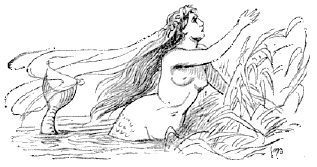
If Disney wants to create animated movies (that are in reality little more than an exercise in merchandising) from whole cloth, then I have no real objection. But when they produce something like ‘The Little Mermaid’, I find my blood boiling. The Little Mermaid is a story by Hans Christian Andersen, and was written not as Disney would have us believe, to convey the message ‘go for your dream, girl, and live happily ever after’. No, not at all.
Your tail will then disappear, and shrink up into what mankind calls legs, and you will feel great pain, as if a sword were passing through you. But all who see you will say that you are the prettiest little human being they ever saw. You will still have the same floating gracefulness of movement, and no dancer will ever tread so lightly; but at every step you take it will feel as if you were treading upon sharp knives, and that the blood must flow. If you will bear all this, I will help you.”
“Yes, I will,” said the little princess in a trembling voice, as she thought of the prince and the immortal soul.
This is far from the pallid castrated ‘culture’ that Disney’s marketing wonks would have you believe the story contains. Now I realise this sort of gritty prose might not sell so well in some places with sugar coated rose tinted views of what children should hear and read, but then why the hell call it ‘The Little Mermaid’ then? Call it ‘The Adventures of Ariel’ or ‘Fishgirl gets her Prince’ or anything that does not claim to have the slightest intellectual similarity to what Hans Christian Andersen was actually trying to say.
Feel free to purchase Disney’s drivel if you wish for your hamburger bloated offspring, but do not kid yourself that your children are hearing anything whatsoever from probably the most famous writer of children’s stories who ever lived.
|
Who Are We? The Samizdata people are a bunch of sinister and heavily armed globalist illuminati who seek to infect the entire world with the values of personal liberty and several property. Amongst our many crimes is a sense of humour and the intermittent use of British spelling.
We are also a varied group made up of social individualists, classical liberals, whigs, libertarians, extropians, futurists, ‘Porcupines’, Karl Popper fetishists, recovering neo-conservatives, crazed Ayn Rand worshipers, over-caffeinated Virginia Postrel devotees, witty Frédéric Bastiat wannabes, cypherpunks, minarchists, kritarchists and wild-eyed anarcho-capitalists from Britain, North America, Australia and Europe.
|





Recent Comments