We are developing the social individualist meta-context for the future. From the very serious to the extremely frivolous... lets see what is on the mind of the Samizdata people.
Samizdata, derived from Samizdat /n. - a system of clandestine publication of banned literature in the USSR [Russ.,= self-publishing house]
|
Musically inclined Samizdata readers will be familiar with the reportage we’ve had over the months, from Dale Amon especially, about what computers, the internet, etc., are doing to the orthodox music business. Basically, the orthodox music business is finding it harder to do business. I found this reportage strangely unsatisfying. Okay, this is the kind of music-making that computers, the internet, etc., are making more difficult to do, and more difficult to profit from. I didn’t doubt the truth of this, but something was missing from the story.
Then I read an article in NY Times by Kevin Kelly (to make this link work you have first to register with NYTimes.com, but this worked fine when I did it), which contained sentiments like this:
If this … power of the digital copy were to play out in full, the world would be full of people messing around with sound and music much as they dabble in taking snapshots and shaping Web pages. The typical skepticism toward a scenario of ubiquitous creation and recreation of music is that it is always easier to read than to write, to listen than to play, to see than to make. That is true. Yet 10 years ago, anyone claiming that ordinary people would flock to expensive computers to take time from watching TV in order to create three billion or more Web pages — well, that person would have been laughed out of the room as idealistic, utopian. People just aren’t that creative or willing to take time to create, went the argument. Yet, against all odds, three billion Web pages exist. The growth of the Web is probably the largest creative spell that civilization has witnessed. Music could experience a similarly exuberant, irrational flowering of the amateur spirit.
This was more like it. Dale and his ilk had been telling me what the music business would not be like any more. But Kelly was telling me what it would be like.
I mention this because Instapundit, which has always been strong with the “impact of technology on the music business” stuff, is now also onto this, the creative rather than the destructive side of the story. Glenn Reynolds, himself a musician, links to another musician/blogger, Eric Olsen, who makes a similar point to Kelly’s:
The parallels between music-creation software and blogging are unmistakable: both enable “ordinary people” to enter into areas of creativity and, equally important, distribution, that were only previously available to select professionals: those who were allowed to pass through the portals of either the press or the record labels by the guardians at the gates. By enabling a large number of people to engage in these activities, both technologies are democratizing their respective fields and battering the barriers between “creator” and “consumer” in both directions.
Maybe, Tom Burroughes, this is where the next bit of British popular musical excitement will come from.
Britpop now is as musically dead as it has ever been, at any time since the arrival of the Beatles. Mostly, it’s just an excuse to dress up and have a bop around, led from the stage by a lipsyncing group of formation dancers who have abandoned all pretence of being able to play any instruments. Does anybody remember an old TV show called “Come Dancing”. That’s what Top of the Pops is subsiding into: elaborately dressed young(er) people dancing about for the entertainment of dewy eyed oldies. Half the tunes in the hit parade now were written before the current performers of them were born. Kylie Minogue’s music is mostly just an excuse for us all to gaze at her cute smile and state-of-the-art bottom. Rap, which is often offered as the answer to where interesting pop music is going these days, is all about words and rhythms. It doesn’t actually need music to be attached to it at all.
There’s nothing wrong about any of this. There’s nothing wrong with boy and/or girl groups spending five hours rehearsing dance moves to every hour they give to rehearsing music. There’s nothing wrong with pre-teen girls caring what pop stars look like and move like, rather than what they sound like. There’s nothing wrong with black versifyers versifying, accompanied only by drum machines. Kylie Minogue’s smile is delightful and her bottom is one of the great glories of contemporary British culture. It’s all very entertaining. It just isn’t very fascinating musically.
Will a new generation of Britbloggers change all that, by putting the music back into music?
First the print media. Now music. For the next big-media green bottle to fall (when our computers have all got big enough to accommodate the results), see David Carr‘s Libertarian Alliance Cultural Notes No. 44. This is called “DIY Hollywood“!
I’d just like to say how impressed I was by the insightful piece on soap opera television by Patrick Sullivan the other day. It kind of chimes with an observation I made about the profoundly anti-business culture on television drama several months ago on Samizdata.
For me, what is so god-awful about Eastenders, and for that matter other soaps in the UK like Emmerdale Farm, Coronation Street and so on, is that they represent human beings as essentially victims of events, not as efficatious beings. If anyone is portrayed as strong, it is either a woman who is showing her strength by having to resist the charms of a dodgy man, or a crook or thug using his ‘strength’ to overpower or trick someone else. People in business rarely get presented in a positive light. Take Coronation Street. The shopkeepers and pubowners seem fairly wholesome types, if rather pathetic, put-upon folk who clearly are bored by the grind of their jobs. Any major businessman is a crook – period.
Another theme of British soaps is betrayal. Husbands and wives cheat on each other relentlessly. Indeed, infidelity, between married couples and long-term partners, is a constant theme. And lack of trust and loyalty is shown all the time in business.
In mitigation, all I can say is that the scripwriters feel that issues like betrayal and dishonesty add lots of spice to the stories, whereas wholesome behaviour is bound to be boring. I kind of understand that, but I think nevertheless that the genre in the UK is overwhelmingly skewed in one direction. Another problem is that soaps – with the odd glorious exception – rarely contain much deliberate humour. If you do laugh at a soap star it is usually at their expense for crummy acting or a silly voice.
If you watch a British soap for any length of time, you come away with one abiding message – Life Sucks. Which is pretty much why I loathe the whole lot of ’em.
Bring back Dallas…at least they were rich!
Someone called Patrick Sullivan visited me this afternoon, sent to me by Sean Gabb who has been teaching him. He is a promising young libertarian writer who showed me two pieces he had done. One was very long and rather dull-looking, full of sensible opinions about pension reform and the EU, of the sort that have been said many times before. But the other was about the British soap opera Eastenders, and was, I think, of real interest.
We don’t have nearly enough libertarians commenting about TV drama. We have lots with opinions about pension reform, but not so many who know what happened on The West Wing last night, or who is just about to be expelled from Big Brother. So here is Patrick’s piece about Eastenders. It’s called “Why Eastenders leads to Big Government”. Any month now Patrick will have blogs and websites charging off in all directions, but for now this is all there is, so no links, just a piece of writing.
Every week 13 to 17 million people across the nation tune into Eastenders. This programme is often derided as trash. I would not agree. Eastenders is very clever television. The production values of the show are high, and it skips very cleverly between story lines at least every 90 seconds, which means that the viewers are able to keep numerous plot threads in their minds at once. Eastenders also carries a message. This message is: “Your life is miserable. No matter what you do, it will go on being miserable. You are unable to look after yourself, therefore you need the state to look after you.” Eastenders creates a demand for an intrusive government.
In Eastenders a person in a suit is almost always a villain. This must cause many of those watching the show to distrust men in suits. Men in suits are often businessmen. Whenever a big corporation pops up in Eastenders it is more often than not to cause trouble for the cast. Big corporations never seem to offer jobs and opportunities for individuals in the fictional world of Albert Square.
The cast of Eastenders are always in a perpetual state of misery. They never seem able to surmount the obstacles in their way. Whenever a cast member seems to find a problem too overwhelming to deal with, the state is generally expected to solve the problem.
Eastenders also pushes the Blairite constituional agenda, and seeks to undermine the institutions of this country which protect liberty. New Labour has so far failed in its attempt to abolish trial by jury. In Eastenders, the character of “Little Mo” was found guilty of attempted murder even though she was innocent. “Little Mo” was found guilty by a jury of her peers. The message this gives out is that trial by jury doesn’t work and that a centralised judiciary would do a better job.
In Eastenders nobody seems to better themselves substantially. There appears to be little room for entrepreneurial vigour in the world of Albert Square. When a character leaves Eastenders, it is not to pursue opportunities elsewhere. It is due to death, going to prison or the desire to flee from some problem or person.
Compare Eastenders with the Australian soap Neighbours, which is also shown every week day on British TV. Neighbours offers viewers a positive message: “Life isn’t miserable. Hard work will get you somewhere. You don’t need the state to solve your problems. There are opportunities if you seek them out.” . In Neighbours, characters often leave due to opportunity elsewhere. The state rarely appears, and when it does it is usually a nuisance. Alas, the production values of Neighbours are lower than those of Eastenders, and Neighbours only attracts an audience of 7 to 8 million viewers per episode.
If you sat two children of identical background and mental health in front of a television set for a year, with one watching Neighbours and the other watching Eastenders, the child who watched Neighbours would be less dependent and happier than the child who watched Eastenders.
Patrick Sullivan
Seeing a reference to the marvellous children’s programme Thunderbirds over on the Brothers Judd sent me off on a rare bout of nostalgia.
Thunderbirds was far and away my favourite programme when I was young and this was long before I appreciated the shows astonishing libertarian political message… These guys were like the real world RNLI only with guns and spaceships!
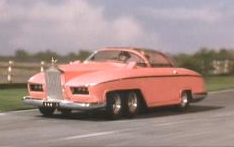
‘International Rescue’ were shown as a benevolent but armed covert high tech para-military search and rescue organisation, privately controlled and funded by a philanthropic American businessman’s multinational company (Tracy Construction and Aerospace Industries), run secretly by his family and loyal friends. IR was completely independent of any government! What is more, International Rescue’s ‘muscle’ was provided by British aristocrat Lady Penelope Creighton-Ward, cruising in a pink six-wheeled armoured Rolls Royce, capable of travelling at 200 mph complete with a hidden front grill mounted auto-cannon. No anti-capitalist or anti-private ownership of weapons vibe here!
Now that is a splendid role model for children rather than the usual dreary assortment of statist lawyers, severe cops and government spies who are trotted out to pass for heros!
Occasional Samizdata contributor and libertarian Andrew Dodge points out that for the British musical industry to carp about a lack of recent hits in the U.S. is silly because so much mainstream British pop music is rubbish. He seems to be right, judging from what I hear when I turn the radio dial around from time to time.
Of course, I have to be careful that my dislike of much modern stuff is not just a sign of my becoming an old git and is in fact a genuine response. The last CDs I bought were by Carlos Santana, Diana Krall and the complete works of Tom Lehrer (the guy who gave us the Dr Werner von Braun song). Not quite sure what Mr Dodge makes of that.
Anyway, what if anything can or should be done about our musical predicament? You cannot conjure artistic talent out of the trees. Maybe we are, for various reasons perhaps too complex to understand, going through an artistic dry patch. How are we going to make that dry patch sprout a million new flowers? I’d like to think that modern technology might have a part to play. Be interested to know what other folk think…
I’m listening at 1 am on Saturday morning to Brigitte Fassbaender‘s remarkable recording of the song cycle by Schubert called Winterreise (“Winter Journey”). This is extremely depressing music. The last song, for example, is called ‘The Hurdy-Gurdy Man’.
Barefoot on the ice he totters to and fro, and his little plate has no reward to show. No one wants to listen, no one looks at him and the dogs all growl around the old man. And he lets it happen, as it always will, …
Not surprisingly, for many decades these songs were among Schubert’s least performed. But now they are among his most performed songs. Why? I have a theory to offer.
People get used to what happens to them. When what happens changes, they find themselves dragged, as the Californian psycho-babblers say, out of their comfort zone. It is even a comfort zone if it’s misery and they get dragged away from misery into happiness. Misery is comfort because they have got used to it and know how to handle it. Happiness is discomfort because they don’t know how to deal with it.
Life in the West has been a lot better during the last half century than it was in the half century before that. All those creature comforts, package holidays, children all flourishing, television, hi-fi, and in general a standard of living for almost everyone that was beyond all earlier popular imaginings. But people weren’t prepared for all this happiness, all this pleasure, all this contentment. They didn’t know know to handle it, how to live with it. What was to be done with all that stoical acceptance of adversity that had been so painfully learned?
Art stepped in. Art now keeps the unprecedentedly affluent and happy West in a comfort zone of imagined misery, just as in the first half of the twentieth century art kept the West in a remembered and adapted-to comfort zone of late nineteenth century happiness, while all around them life was becoming the very definition of hell on earth. The people of the West hummed Viennese operetta and Broadway show tunes while the armies marched and the gas chambers immolated. Now, when the sun shines, the children are fed and the worst that happens is the occasional transport disaster or homicide or sporting accident, drab young men who never smile drone tuneless dirges on Top of the Pops, and our most admired stage directors alter King Lear, just as they did a hundred years earlier, but this time cutting out the nice bits.
Something else people got used to in the first half of the twentieth century was being deafened by repetitious machinery. So, just when the machines were finally being silenced and replaced by other machines that only hum quietly, what do the sons and grandsons of the toiling factory masses turn around and invent? Deafening and rhythmically repetitious, industrial strength rock and roll.
It is commonly said that art prophecies. But art also remembers and celebrates and immortalises and universalises the lost past, however terrible it may have been at the time. The horrors of the early twentieth century were certainly horrible, but at least they meant something. In those days people knew what they were fighting for. The din of the machines was nigh unbearable, but at least there was some energy flying around and banging away and serious minerals being manhandled, by real men. Art remembers these things, and, comfortingly, keeps them going for a few more decades.
Well, it makes a change from just talking about ID cards.
Old habits die hard – the Russian Culture Ministry is considering banning a new Ukrainian film ‘Pray for Mazepa’. The film is about the controversial 18th century Cossack leader, Ivan Mazepa, who joined forces with the Swedish King Charles XII against Peter The Great. It portrays the Cossack leader as a strong advocate of Ukrainian independence and an opponent of Peter’s the Great’s tyranny – in contrast with the Soviet depiction of him as a traitor to Slavic brotherhood.
The Russian culture minister, Mikhail Shvydkoi, said the film distorted the truth and could damage relations between Russia and Ukraine. Just as well the US film industry honours the facts and often demonstrates its firm grasp of ‘history’ in films like U-571, The Battle of the Bulge, In the name of the Father, The Patriot, Braveheart, Titanic, Pearl Harbour, just to mention a few. The ‘special relationship’ between the United Kingdom and the United State need not be strained further. I am sure Tony Blair is especially relieved… 
With a strange feeling of sadness I read in The Sun newspaper today that British pop musician and idiotarian George Michael has decided not to release his America-bashing single ‘Shoot the Dog’ in the U.S. He fears, so the Sun says, it could kill his career. A columnist in the Sun writes this:
“I don’t want a man who stuffed shuttlecocks down his shorts and sang about a Club Tropicana preaching about the War on Terror”.
The natural inclination of a libertarian nut like me, is I suppose, to gloat at the obvious demise of this clown, but maybe it is a fragment of decency within which makes this difficult. George Michael is a pretty talented musician and has a great soul voice it has to be said, but like all too many of his type, he looks at the world through some drearily predictible lenses. What is so sad about the man is that his lame effort to bash the U.S. and attack Britain for following America’s lead in the war on terror is entirely lacking in originality. How about writing a protest song attacking the ‘America is always in the wrong’ school of thought? Now that would be daring, and genuinely different. This is the problem with our self-styled ‘cool’ musicians of today. Many of even the more talented ones haven’t done anything genuinely challenging for years. And poor old George Michael looks like he is headed for a period of oblivion.
[Ed: and what is a high-brow like Tom doing reading ‘The Sun’ I wonder?]
In order to get to their respective Valhallas, Comedians are supposed to die on stage like Tommy Cooper, Mountaineers on the north face of K2, Racers behind the wheel at Le Mans, Warriors in battle and Rock Stars are supposed to die in a hotel room with a stripper.
Hoka Hey John, you were one of the great ones and nothing if not dependable.
I went back to my mother
I said “I’m crazy ma, help me.”
She said, “I know how it feels son,
cos it runs in the family.”
The Opinion Journal’s email letter tonight refers to an article about George Michael’s new song, “Shoot the Dog.” The bit I simply had to share was this quote:
I simply wanted to write a song that said to everybody, ‘People, let’s be aware of this situation and understand there are some very pissed off people out there, and that America–and us, for that matter–need to start to listen to them a little.’
He’s absolutely right on one point. There are indeed some really, really pissed off people out there. Quite a large number of them actually.
They’re called Americans.
British musician and now geopolitical sage George Michael has cooked up a memorable ditty bashing the British government for being the White House’s poodle.
Wow. How original. Can you imagine a musician lampooning “blame-America-firsters”? No. Neither can I. (If there is one out there, I’d love to know). Michael’s fearless effort, which will no doubt prove a real hit with some, comes in for a superb fisking (oops, a bit non-PC there) from blogger James Lileks. Read and enjoy as Lileks spells out a few basic truths.
Last night I found myself watching the BBC2 rerun of Pride and Prejudice, and was held. It was better than I remember it as having been the first time around, I suspect because this time I actually watched it instead of merely taping it and reading the reviews. It’s about a family with five daughters, and the agonies suffered while the daughters set about trying to find husbands.
In those pre-industrial days, the marital desirability of a woman seemed to involve singing and piano playing a lot. There’s a cruelly memorable moment when paterfamilias, a man fonder of being witty than of being kind, even to his own daughters, tells one of the less musically sparkling ones that she has “delighted us enough” with her music-making.
This emphasis on music as a man-getting asset used to puzzle me. Wasn’t looking good and cooking good sufficient? (Or at least supervising the people who did do the cooking.) But if you think of women as hi-fi sets for their husbands, before hi-fi sets actually existed, it all makes sense.
The idea that big white machines have replaced many of the domestic duties of women is a familiar one. That smaller blacker machines may also have had the same kind of effect only occurred to me more recently.
|
Who Are We? The Samizdata people are a bunch of sinister and heavily armed globalist illuminati who seek to infect the entire world with the values of personal liberty and several property. Amongst our many crimes is a sense of humour and the intermittent use of British spelling.
We are also a varied group made up of social individualists, classical liberals, whigs, libertarians, extropians, futurists, ‘Porcupines’, Karl Popper fetishists, recovering neo-conservatives, crazed Ayn Rand worshipers, over-caffeinated Virginia Postrel devotees, witty Frédéric Bastiat wannabes, cypherpunks, minarchists, kritarchists and wild-eyed anarcho-capitalists from Britain, North America, Australia and Europe.
|








Recent Comments