I have felt for some time the Internet is bringing the “Two Cultures” together, and this poetry reading (1 MB mp3) by British poet Fred Turner is a case in point.
A tree house to the stars! What a gloriously Carrollian idea!
|
|||||
|
I have felt for some time the Internet is bringing the “Two Cultures” together, and this poetry reading (1 MB mp3) by British poet Fred Turner is a case in point. A tree house to the stars! What a gloriously Carrollian idea! November 24th, 2002 | Comments are closed
 Alice Bachini has been out shopping, for her aunties:
If they wanted a normal sort of thing, they’d buy it themselves. Because so many people can now afford to get normal things, there are now special places called gift shops, and special mail order catalogues called gift catalogues, to enable you to buy abnormal things to give to people at Christmas. This is a recently encountered abnormal thing selling operation, the dead-tree catalogue for which came with the Sunday Times of about a fortnight ago. My favourite abnormality here is the hat you put on to catch incoming ping pong balls. Rich people used to love this kind of nonsense, when they were the only ones who could afford it. But now they are above such stuff, and live in places which are ostentatiously full of empty space. → Continue reading: Stuff November 24th, 2002 | 4 comments - (Comments are closed)
Michael Blowhard has been making movie lists again, this one being of New York movies that portray the “arts scene” there. Here’s one that a lot of Samizdata readers will know all about:
I always felt that Cooper was miscast in this. Cooper’s “manliness” seems to me to have been of the unnatural, aspirational kind. Fighting the good fight, facing down the bad guys, is not something that the Cooper character ever did because he enjoyed it, or because it came naturally to him. It’s the lips, I think. So female and “sensitive”. On the contrary, Cooper embodies heroism precisely because he is actually something of a girlie boy, who’d rather be indoors. It’s not that he lacks the physique to do the manly stuff, nor is he stupid. The problem is that his mind is not the heroic sort of mind. He’s not naturally quick and decisive. His natural metier would be something like academia, where he would have time merely to think about things, without scary deadlines. He wouldn’t win any Nobel Prizes, but he’d make a comfortably, unstressed living. But High Noon, or whatever, looms, and he must deal with it. And he doesn’t funk it, no matter how much he is tempted to. The Cooper character typically says little because he hasn’t yet worked out what on earth to say. Other more obviously manly stars – I’m thinking of someone like Clark Gable – say little because, although they could say a lot and occasionally do under pressure, what’s the point? Talk is cheap. Action is what counts, and Mr Real Man has already decided what he’ll do. Cooper spends The Fountainhead communicating to me not intellectual certainty, but bewilderment and confusion that any man could possible be this confident about anything. He says all the Howard Roark words and goes through all the Howard Roark motions not because he believes in it, but because he can’t think of anything else to say or do. That can’t be right. But then again, maybe it is. Maybe Howard Roark can’t think of anything else to say or do either. If so, that can’t be right either, but that’s a different argument. November 19th, 2002 | 6 comments - (Comments are closed)
It’s been a hard few years for a lot of friends of mine. Up until I left Pittsburgh in 1989 I was usually out at nights with the local Deadhead crowd. My room mate of many years was in Sandoz, one of the top local bands of the time. They were at the core of the Pittsburgh Deadhead scene. As a local folk-rocker I’d always been on the fringes of it. Year in and year out, the audiences which supported local writers like myself were largely part of that scene. It was saddening when I heard Gerry Garcia had passed away and the Dead would no longer tour. Their concerts were just undoubtedly the craziest, most fun, warmest and friendliest I can imagine ever to exist in this life. You simply had to experience the all day parking lot party followed by four hours of continuous music by the Dead. No warm up band: they played for the love of the music. No searches for hidden tape recorders: they reserved the center section for the TapeHeads. There was always a forest of microphones there. Every Dead concert that ever was can be had on a bootleg tape. The Dead even encourage fans to trade show tapes on the Internet. Just don’t trade their studio work… that’s all they ask. It is with great pleasure I read they are touring again albeit with out Gerry because he’s, well, dead, not just Dead… You known what I mean. I suggest you read the article. The changes since 1995 when they last toured should give you an indication of exactly how fast Liberty is being undermined in America. People go to Dead concerts to get high, dance naked, groove on the music, be nice to each other, party until dawn and in plain words have an incredibly good time. Times so good you savour them for the rest of your life. A State that blocks innocent pleasure is hardly worth fighting for except the enemy we face is far, far worse and stands against absolutely everything about a Dead concert or a Rainbow Gathering. If you want to know “Why We Fight”, join their tour and let yourself go. Saving this life style is something worth fighting for.  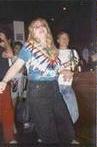 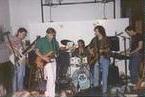 Photos: D.Amon November 18th, 2002 | 6 comments - (Comments are closed)
Steven den Beste points out something I missed entirely. With the change of Senate control, Senator Fritz “I whore for Hollywood” Hollings is no longer head of the Senate Commerce Committee. A very likely result is the DoubleSpeak titled “Consumer Broadband and Digital Television Promotion Act” is most likely DOA. In case you don’t know, this is the act which would mandate control of your personal computer by the US government and anyone who can buy it. November 9th, 2002 | 3 comments - (Comments are closed)
This from Friedrich Blowhard is right on the money. It’s a piece about the financing of “high” art in America, and identifies one of the the key facts: the tax laws.
November 8th, 2002 | 9 comments - (Comments are closed)
Anyone who has had the misfortune to have seen many examples of Modern ‘Art’ recently can only concur with the British politician who described this year’s Turner Prize exhibits as “bullshit”. Ok, not terribly polite, but a wonderfully lucid and accurate description of what is on display. Can we hope for similarly salty descriptions of the EU as a “crooked empire”, the British education system as a “Soviet disaster zone” from the UK’s political masters? November 2nd, 2002 | 4 comments - (Comments are closed)
It’s that time of the week when most of Samizdata’s readers and most of its writers like to creep away from their terminals and live a little. Time for another Brian screed with MORE in it. But how can I reconcile my refined tastes with Samizdata’s preferred subject matter just now of monsters and war and mayhem. I’ve been making no secret lately of my liking for the blog written by The Two Blowhards, and for their sustained determination to talk about “culture” and not just about such things as politicians, Islamofascists and the exact guns and bullets and training manuals being used by the USA’s latest mass murderer. So what can this screed be about? Well here’s a question that may connect these two camps: Why do so many of the villains of popular entertainment like classical music? Not all fictional villains love classical music. But if a character in a TV adventure show does love classical music, then the chances are, overwhelmingly, that he’s the bad guy. One need only hear the tinkling of a classically played harpsichord or the smooth sound of a classically played violin to know at once Who Did It. → Continue reading: Classical villainy November 2nd, 2002 | 13 comments - (Comments are closed)
If it got under J. Edgar Hoover’s skin it’s no wonder I loved it when I was a kid. Happy 50th Alfred! October 26th, 2002 | 2 comments - (Comments are closed)
Brian has commented on a left/right difference in art punditry. I differ with what he said only because I’m uncertain it matches what he does and why he does it. His High Arts (and low!) commentary has been been a breath of fresh air. Artists, artist wannabees and art students like to write about art because that is what they do. It’s their passion. What they think about when life isn’t messily intruding on those More Important Things. A few years ago a large part of my writing would have been in the music biz vein. I was playing as near to professionally as I could afford to. At the moment I’m spending all my time with technology and still trying – badly I might add – to make a living. At times I wonder if tech should be the hobby… but then I talk to a friend whose record label is failing and whose tour gigs are falling off and I realize it doesn’t work well either way. Although I write a lot on technology and policy, catch me at the bar while a Rock gig is on (well, during the break when you can talk anyway – I always stand near the speakers) and I’ll talk your ear off about “the biz”. I drive my business partner up the pub wall at times. I point out the features of the electronic kit the lead guitarist is using, what keyboards they have, the qualities of various amps and speakers and of course the pros and cons of why CF Martin makes the best acoustic guitar, whether a Strat or an SG is a better electric and for what, direct feed versus amp miking etc. etc… I would posit libertarians are more like the Left when it comes to the arts. It’s the socially liberal side of the equation which we don’t share with the Right. Some who once thought they were Conservative may disagree. I ask them: “Why do you think you were politically homeless before you found us?” It’s because you weren’t Left and you didn’t fit on the Right. The vice-versa thing heppened to me on the Left. Libertarians are neither Right nor Left: go find a Nolan chart. We’re, well… sort of, you know… UP1. We’re the new kid on the ideological block and most of the writers in our corner have been philosophers, policy wonks and political pundits. Samizdata is out to change all that. Libertarians have a life style as open as the philosophy itself. We’re here to show that. 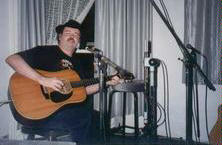 1 = Extra credit for those who recognize my literary misreference. October 25th, 2002 | 7 comments - (Comments are closed)
The buzz started by the Two Blowhards about whether righties like art or not, etc., rumbles on most entertainingly. I particularly liked this posting. Here’s a few more pennies-worth from me. If you are a lefty, you believe in actively shaping the details of the big wide world out there. You and your friends are going to plan it, shape it, sculpt it, collectively and democratically if you are being nice about it. Therefore your opinions about everything, including art, are a public issue. If you prefer abstract impressionism to neo-realism, then you have a positive duty to say so, because when you have finally become the Benevolent Despot of Everything of Behalf of Everyone, your opinion is going to make a big difference to all those favoured or thwarted artists and art fans out there. Ditto your opinions about history, geography, biology, nuclear physics, literary criticism, sport, car design or car abolition, Linux-v-Windows-v-Mac, gay marriage, tupperware, who should or should not get the Nobel Peace Prize and who should or should not be allowed to enter the Eurovision Song Contest. And when you finally realise that you aren’t going to be the Benevolent Despot of Everything on Behalf of Everyone, there remains the matter of badgering the person who is into giving political support to the art you approve of, and to everything else that you approve of, and dissing everything you want dissed. There are no boundaries to politics. Everything is political. Even the personal – in fact especially the personal, because that makes this quintessentially leftist point so strongly – is political. And then there’s the right, by which I mean me. Actually I don’t care for the word “right” to describe my noble and infinitely nuanced self, for all the usual libertarian reasons. Legalise drugs, hurrah for the international free migration of labour, blah blah blah. But the word refuses to detach itself from me. So yes, the Other Position I contrast with leftism is my own. → Continue reading: Art to the left – art to the right October 25th, 2002 | 7 comments - (Comments are closed)
Alice Bachini is now taking terrorism seriously. (The blogspotting link refuses to work. Scroll to Monday Oct 22: “Taking Terrorism Seriously”, if you aren’t already there.) So I will now pick up the torch of triviality (importance of) and ask: Madonna, crap actress or what? I’m going to argue for the or what position. At some length, I’m afraid, but what the hell? It’s been a rather slow Samizdata day so far. BBC 1 showed a Madonna movie last Sunday evening. My Radio Times makes no mention of it, but does mention the movie Black Sunday, which they didn’t show. This is the one where Bruce Dern hijacks the Goodyear Blimp in order to zap a Superbowl crowd with knitting needles, and presumably they cancelled it so as not to give those Arab terrorists any clever ideas, or maybe because, what with the bad guys in this movie actually being Arab terrorists, they didn’t want to show a work of fiction that had now become insufficiently fictional. It’s odd that, isn’t it? – although I’m not disagreeing. Odd also that I settle down to blog about triviality (importance of) and profundity has immediately barged its way back in. That’s terrorism for you. Anyway, Madonna. The movie BBC1 did show was Body of Evidence. The plot concerns a woman who picks on rich old guys with heart conditions and then shags them (very kinkily and dominatingly) to death, after first ensuring that the will gets changed in her favour. → Continue reading: Madonna: too scary to be a star October 22nd, 2002 | 16 comments - (Comments are closed)
|
   |
||||

All content on this website (including text, photographs, audio files, and any other original works), unless otherwise noted, is licensed under a Creative Commons License. |
|||||
Recent Comments