The year being 1913, of course.
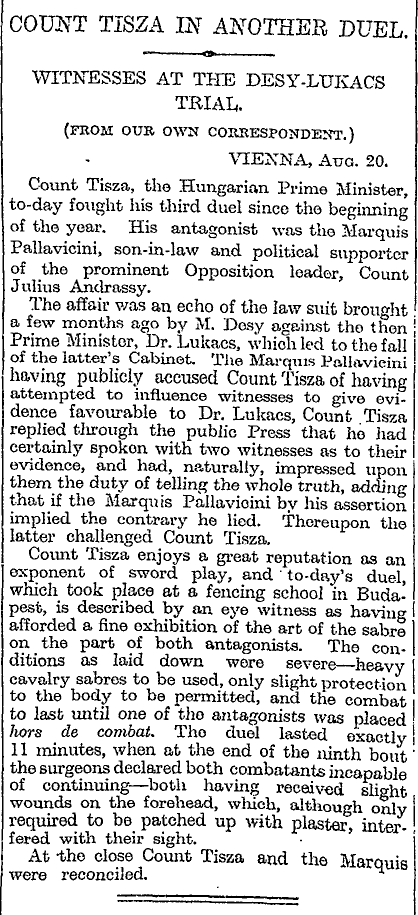
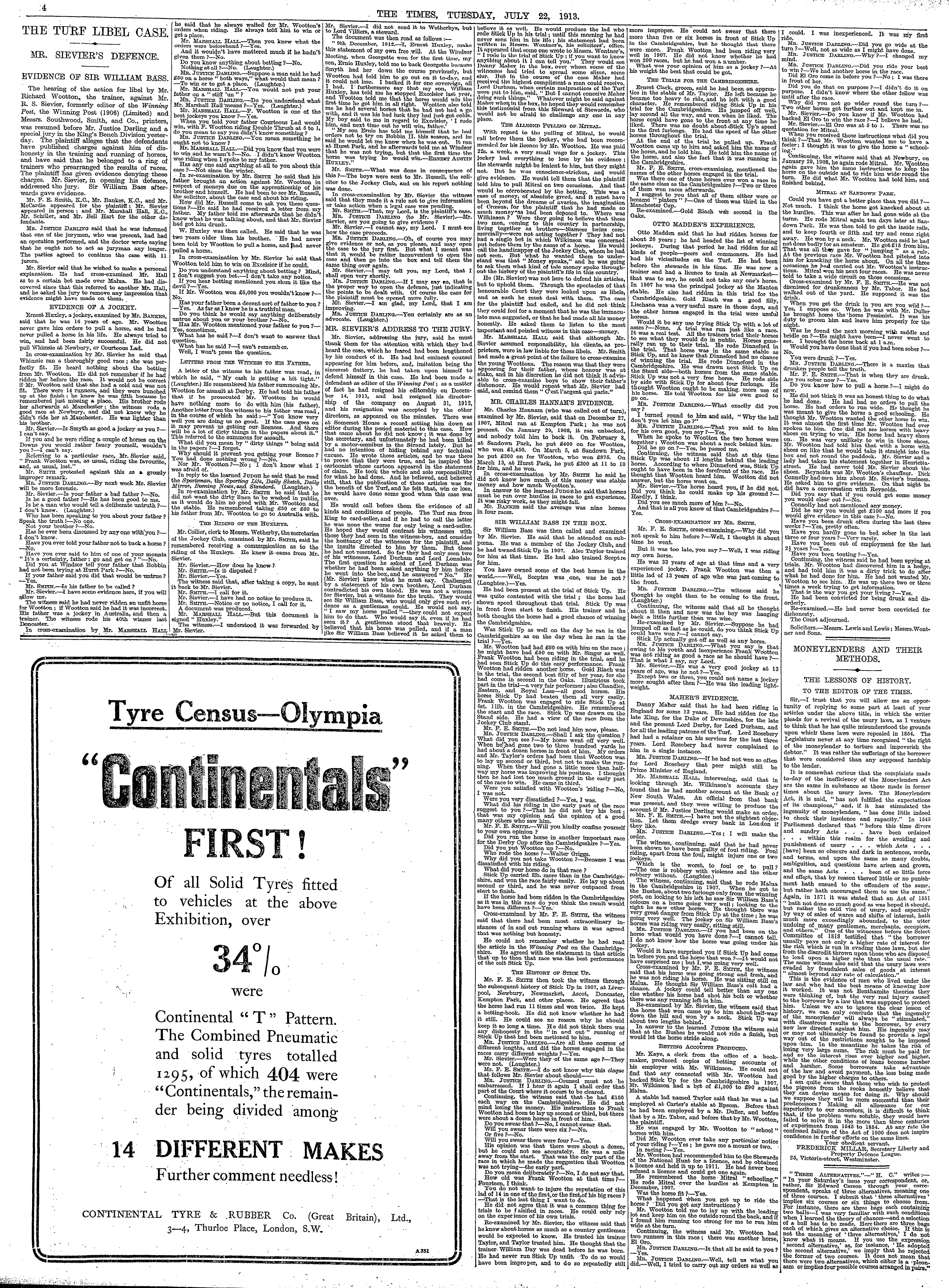
The Times, 21 August 1913 p4
The whole business seems to be a bit stylised although still dangerous.
|
|||||
|
The year being 1913, of course. The Times, 21 August 1913 p4 The whole business seems to be a bit stylised although still dangerous. August 21st, 2013 | 15 comments - (Comments are closed)
 Though he was ambassador in London from 1898 to 1920, Cambon spoke not a word of English. During his meetings with Edward Grey (who spoke no French), he insisted that every utterance be translated into French, including easily recognised words such as ‘yes’. He firmly believed – like many members of the French elite – that French was the only language capable of articulating rational thought and he objected to the foundation of French schools in Britain on the eccentric grounds that French people raised in Britain tended to end up mentally retarded. – Christopher Clark, The Sleepwalkers p193. While Sleepwalkers is clearly well-researched I am far from sure the research supports the conclusions i.e. that the First World War was all one big accident. I may blog more on this sometime but equally I may not. August 15th, 2013 | 18 comments - (Comments are closed)
August 14th, 2013 | 7 comments - (Comments are closed)
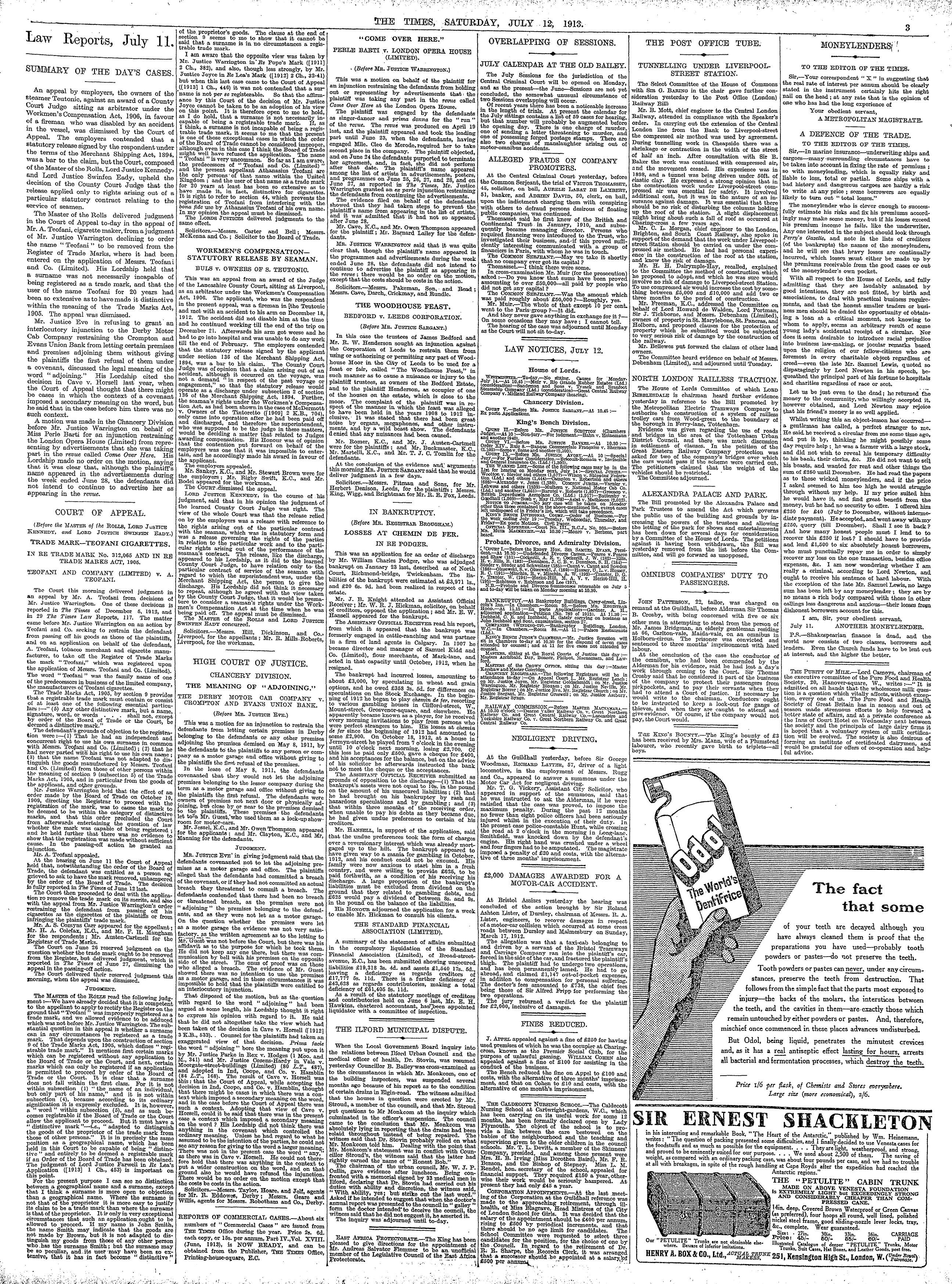
I see that the Church of England is about to go into the moneylending business. They appear to think that it is easy. If so, they might like to consider this moneylender’s words: 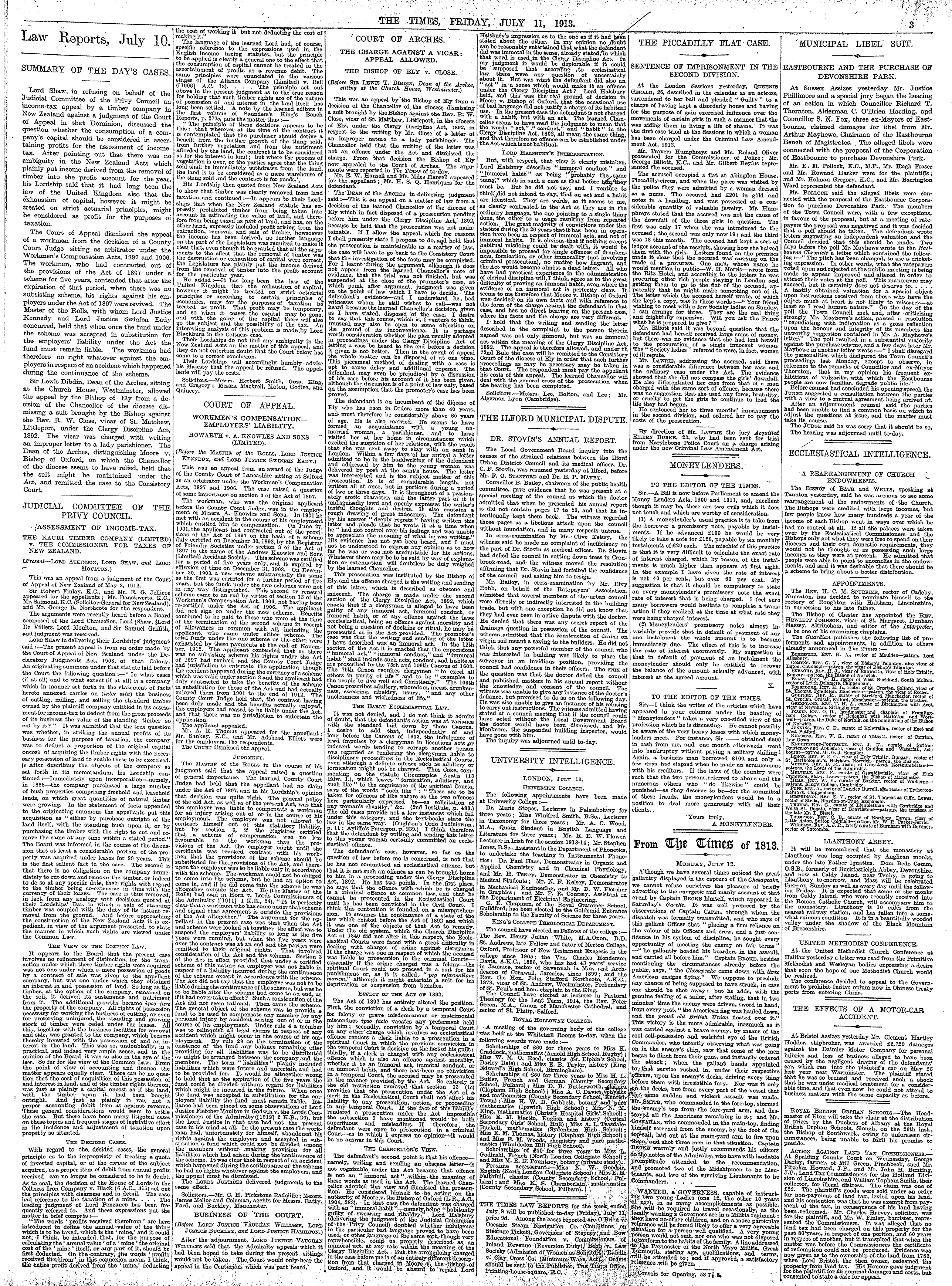 The Times, 11 July 1913 page 3. Or this one. (I liked the bit about even the Church having to lend out its money.) The Liberty and Property Defence League also has a few things to say. July 30th, 2013 | 19 comments - (Comments are closed)
Here’s the situation. It’s 1913 and the owners of the Crystal Palace need to sell it. Lord Plymouth has agreed to temporarily save it for the nation by ponying up the asking price (£230,000 in 1913 money – £46m in today’s if you convert to and from gold.) The deal is that if a fund can pay him back then the Palace will be “saved for the nation” and if not it will be saved for the builders. The City of London and the nearest councils to the Palace have agreed to pay for half of it. Now, it is up to the general public and The Times. And this is how they are going to get people to cough up: the subscription list. 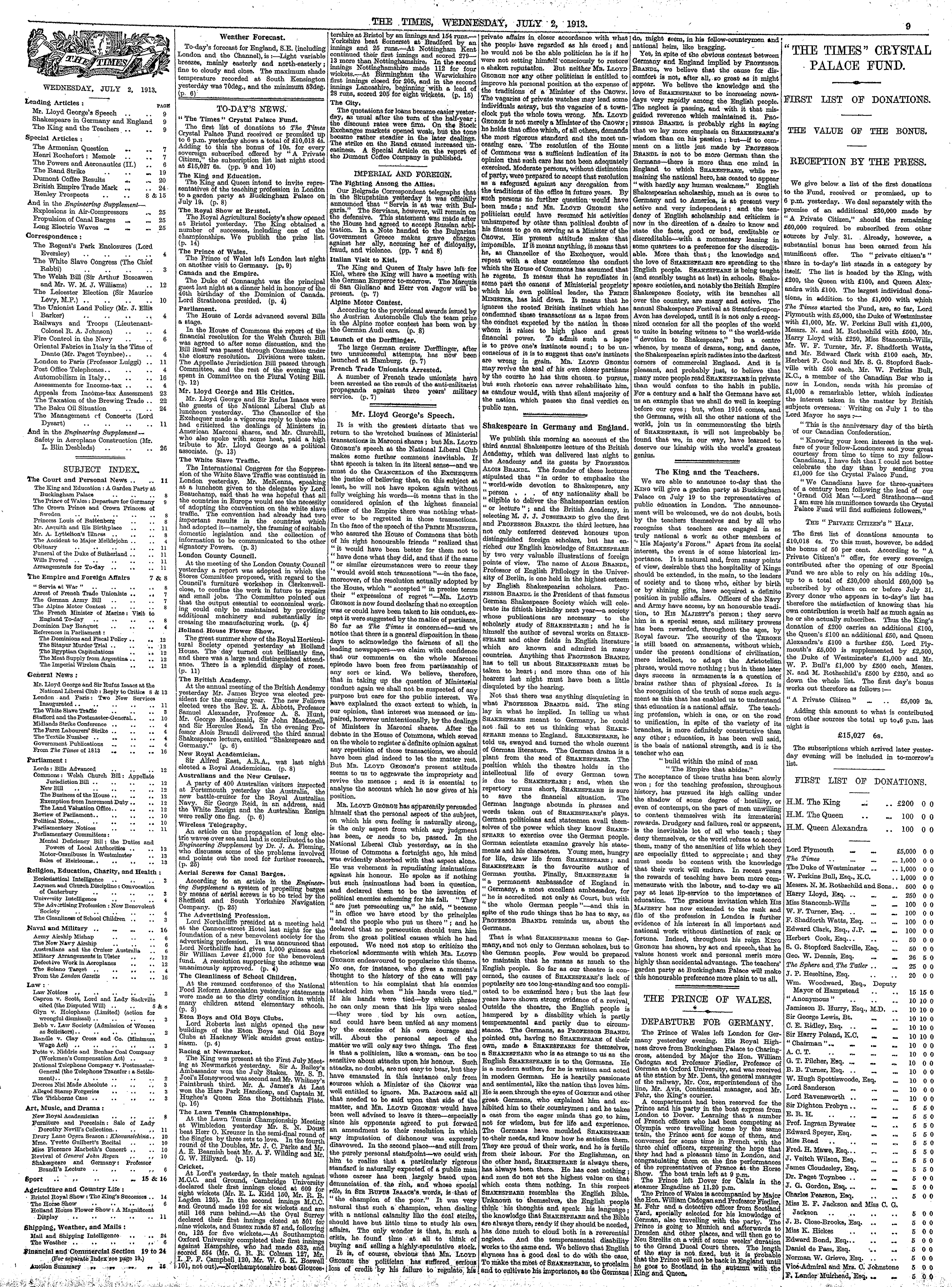 The Times, 2 July 1913 page9 It’s rather clever. Whether you think preserving the Crystal Palace is a good idea or not, if your peers do, you’d better pay something. And it had better be a reasonable amount or else they’ll think you’re a skinflint. This is a very common way of raising money. My mother tells me that this is how they used to raise money for her local church. One wonders why the technique fell into disuse. The necessary funds were secured in slightly less than a fortnight and the Crystal Palace continued to stand in Crystal Palace until it was wrecked by fire in 1936. July 26th, 2013 | 24 comments - (Comments are closed)
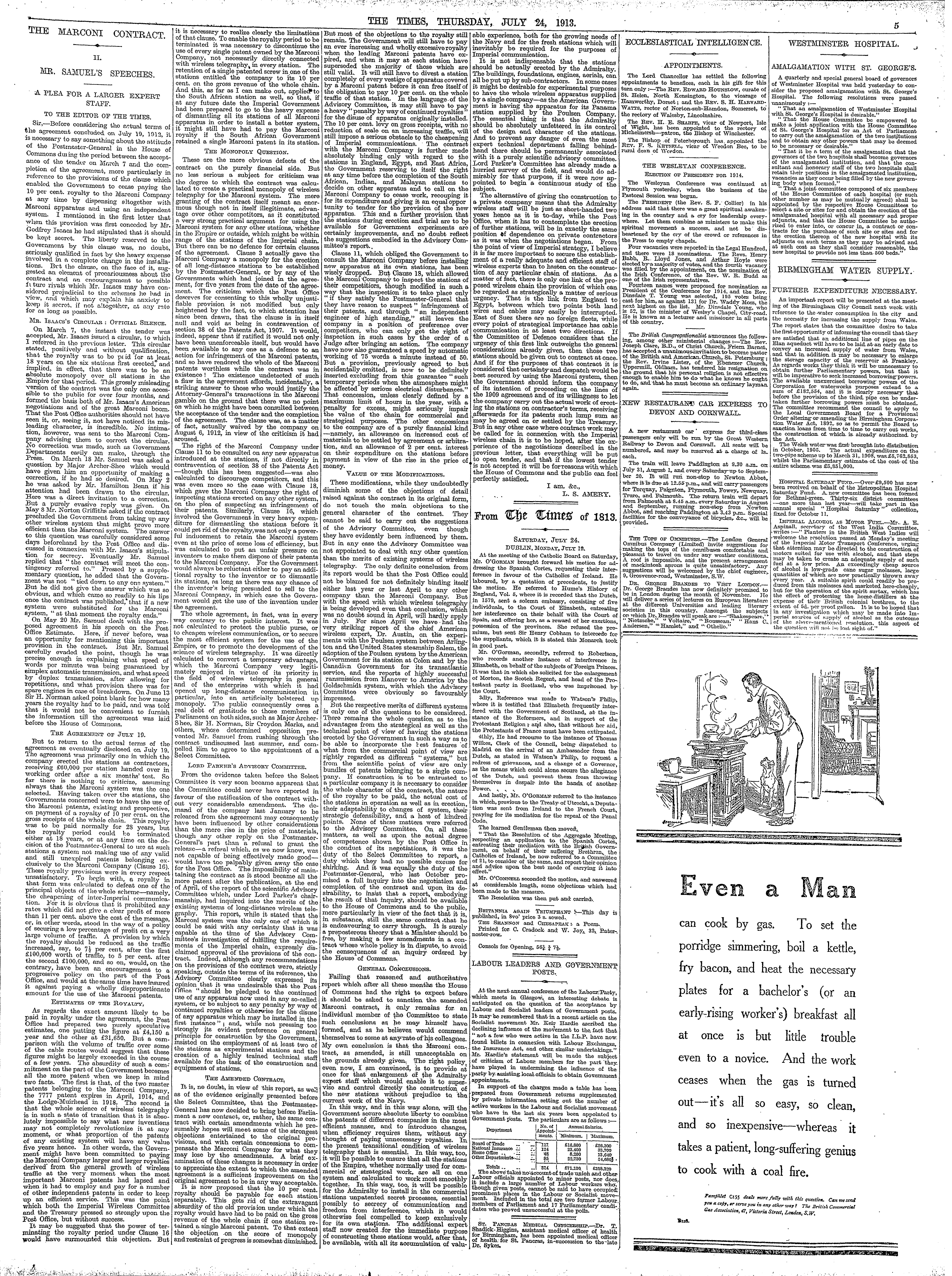
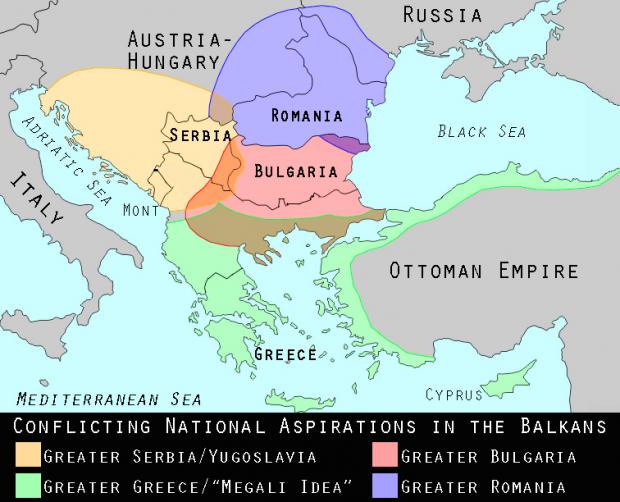
I do not claim to be an expert on the Balkan Wars which were fought in 1912 and 1913. If I understand correctly, in the First Balkan War Turkey was almost completely thrown out of Europe while in the second Bulgaria embarked upon a war of conquest and ended up with rather less than she’d started with. 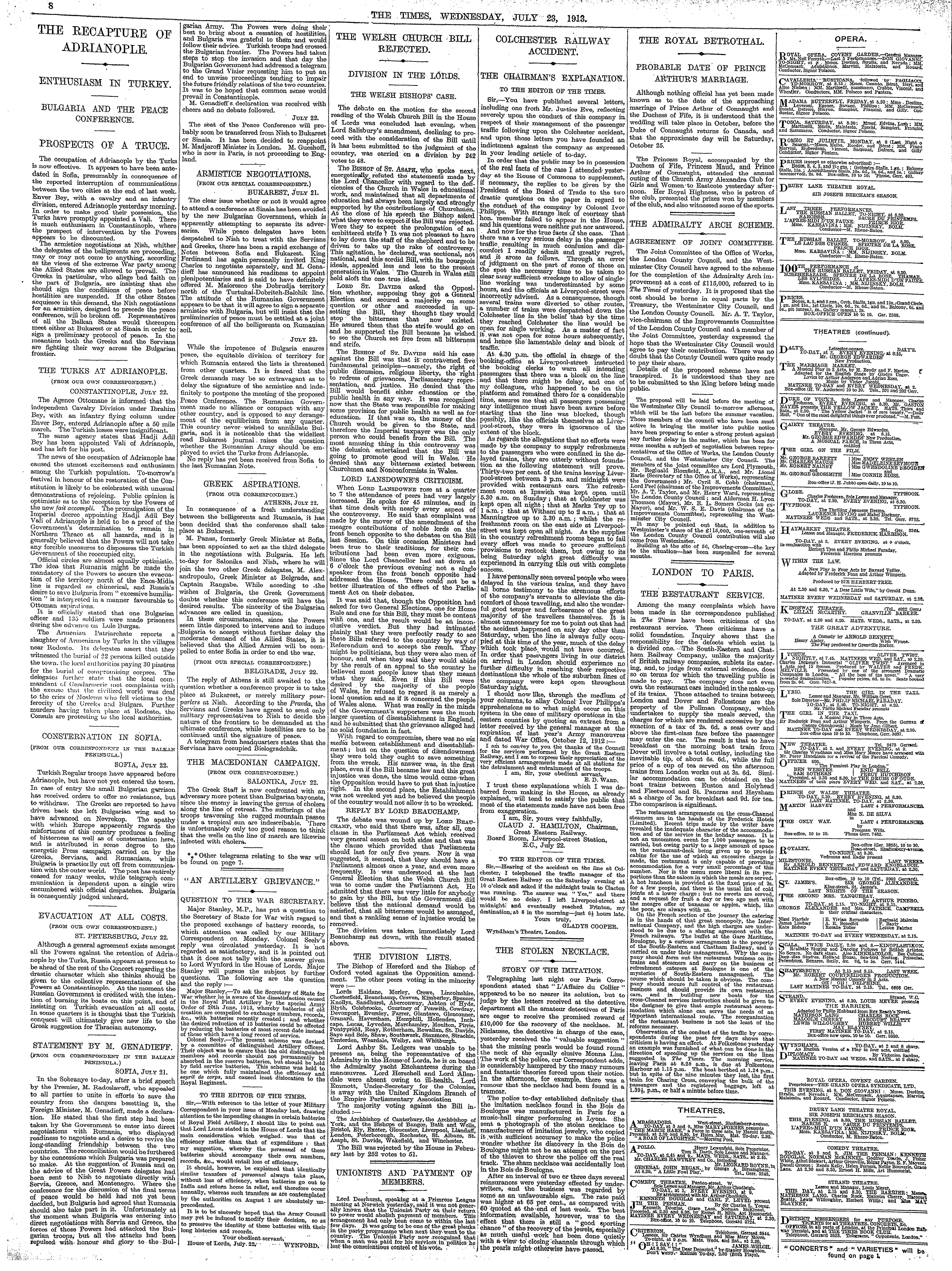 The Times 23 July 1913 p8 The significance of all this, as Eric Sass points out, lay in how it altered Russia’s relationship with Serbia. Russia, Serbia and Bulgaria were Slavic states. Russia, being the biggest, wanted to be the leader. Serbia and Bulgaria, being small wanted Russian protection. So, when a dispute rose over the borders between them the two small states submitted their dispute to the big one. When Bulgaria failed to get what she wanted she went to war. Defeat led to Bulgaria allying herself with Austria-Hungary while Russia responded by allying herself ever more closely with Serbia. Hence, perhaps, the robustness of Russia’s response to Austria’s declaration of war against Serbia in 1914.
Update For a while now I’ve been in the habit of linking to the whole page rather than just the article. This has been to give readers the chance to see what else was making the news at the time and, perhaps, to find something just as bloggable. Well, it appears Simon Gibbs has done just that. July 24th, 2013 | 10 comments - (Comments are closed)
George Bernard Shaw was a playwright. He was also a supporter of Stalin. Therefore, it’s always amusing to see people poking fun at him. Here is one Charles Mercier responding to Shaw shortly after Emily Davison was trampled to death at the Derby: 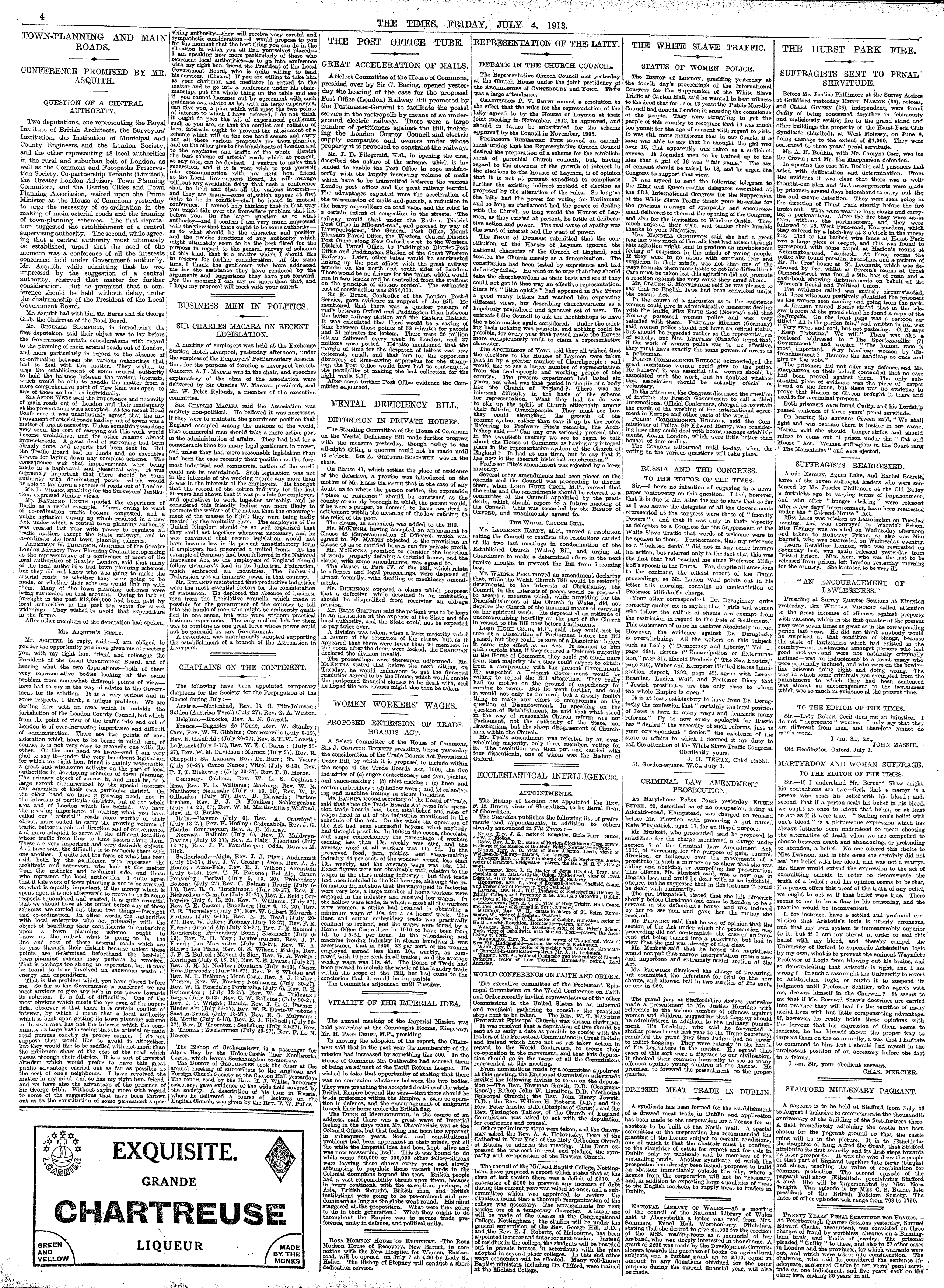 The Times, 4 July 1913 p4 (right click to see original)
In those days suicide was a crime. Much as this is amusing there is a flaw: George Bernard Shaw didn’t actually say it. July 16th, 2013 | 20 comments - (Comments are closed)
A hundred years ago, London was undergoing a transport revolution. Electric trams, electric underground trains, motor cars and motor buses had all entered the market while horse-drawn buses, trams and cabs were leaving it. I’m guessing here, but it seems to me that for centuries the big class distinction was whether you owned a horse or not. Now that horses were becoming uninimportant, class barriers were starting to come down. But that’s by the by. In a revolution there are winners and losers. And here, in the London County Council’s accounts, we see a loser, horse-drawn trams: 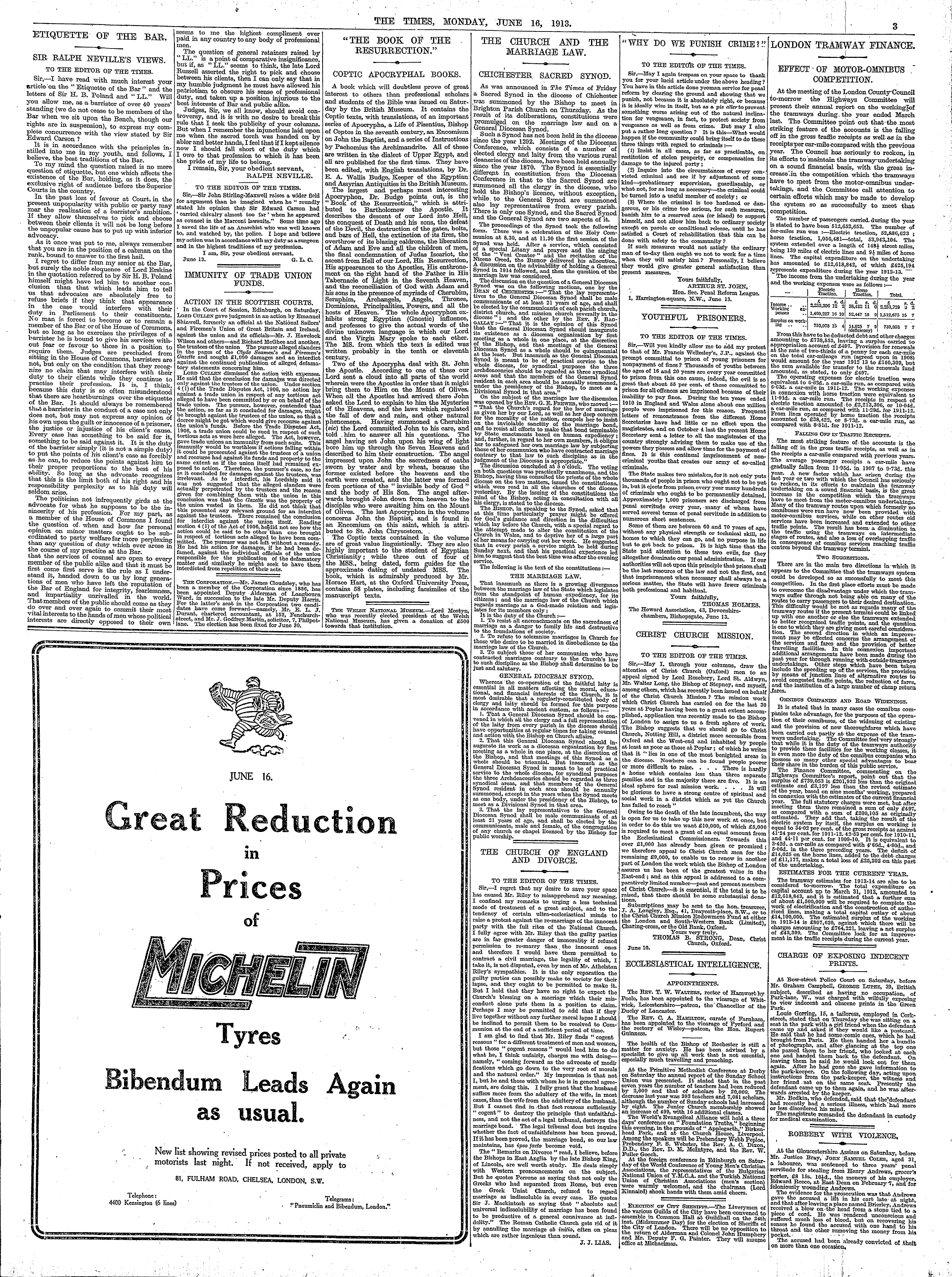 The Times 16 June 1913 page 3 But read a bit further and you see it’s not just horse-drawn trams that are losing out:
In other words buses are taking their market. I must admit I’m in two minds on this. On the one hand, it’s hard to feel sympathy for the government losing money. On the other, trams are nicer than buses: smoother, quieter, cleaner. And commercial tram operators (they do exist) will not find bus competition any easier to deal with. You have to feel some sympathy with operators that have, at great expense, set up electric tram systems only to find them superseded by the internally combusted upstart within a few years. But buses are where the action is. Still. In 1911, they bought up the lion’s share of London’s tube network. [Yes, private enterprise integrated transport.] They may be dirty, noisy and uncomfortable but they are cheap and flexible and go where people want them to go. Oh, and dangerous. Did I mention dangerous: 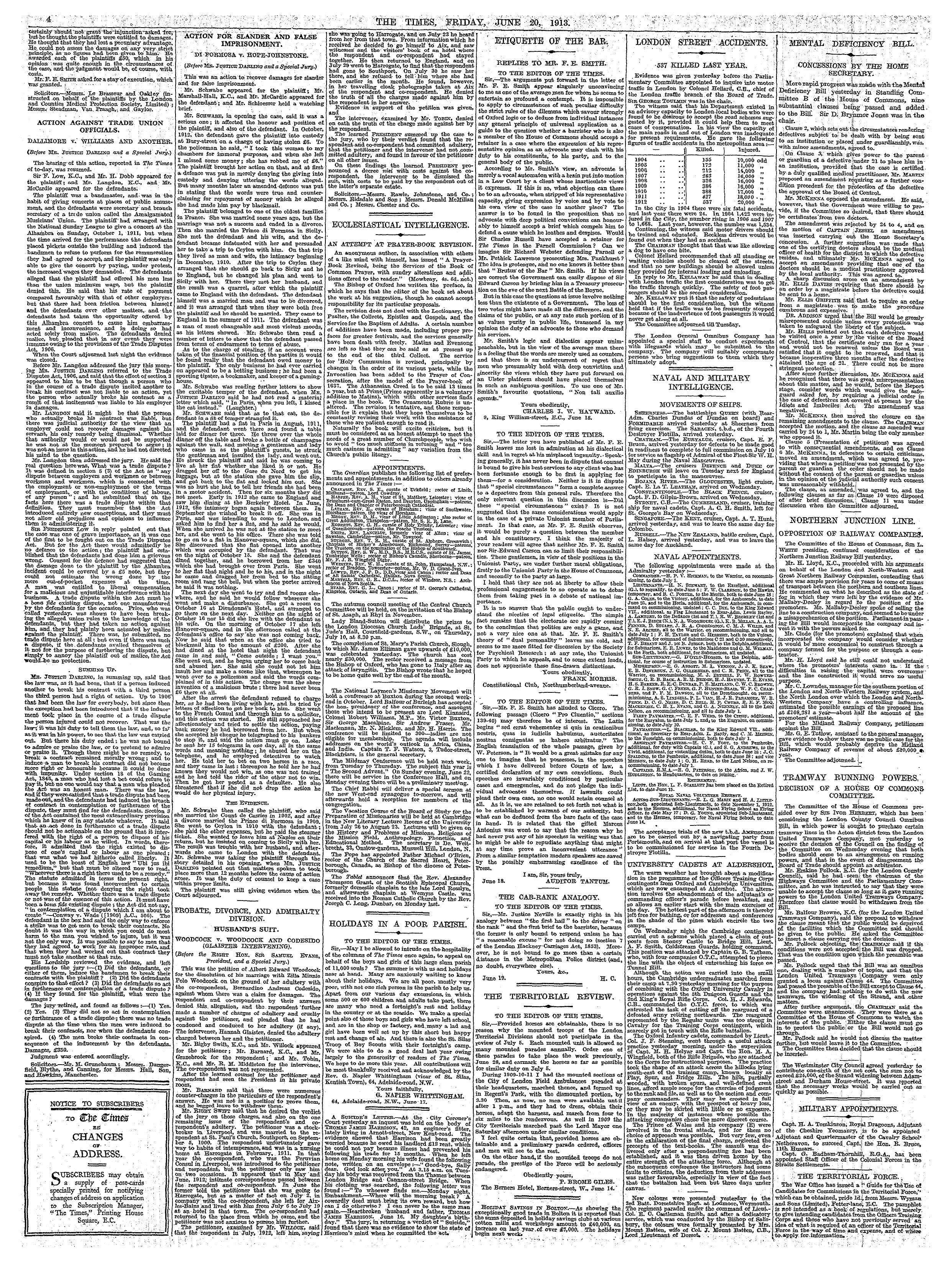 The Times 20 June 1913 page 4 July 1st, 2013 | 13 comments - (Comments are closed)
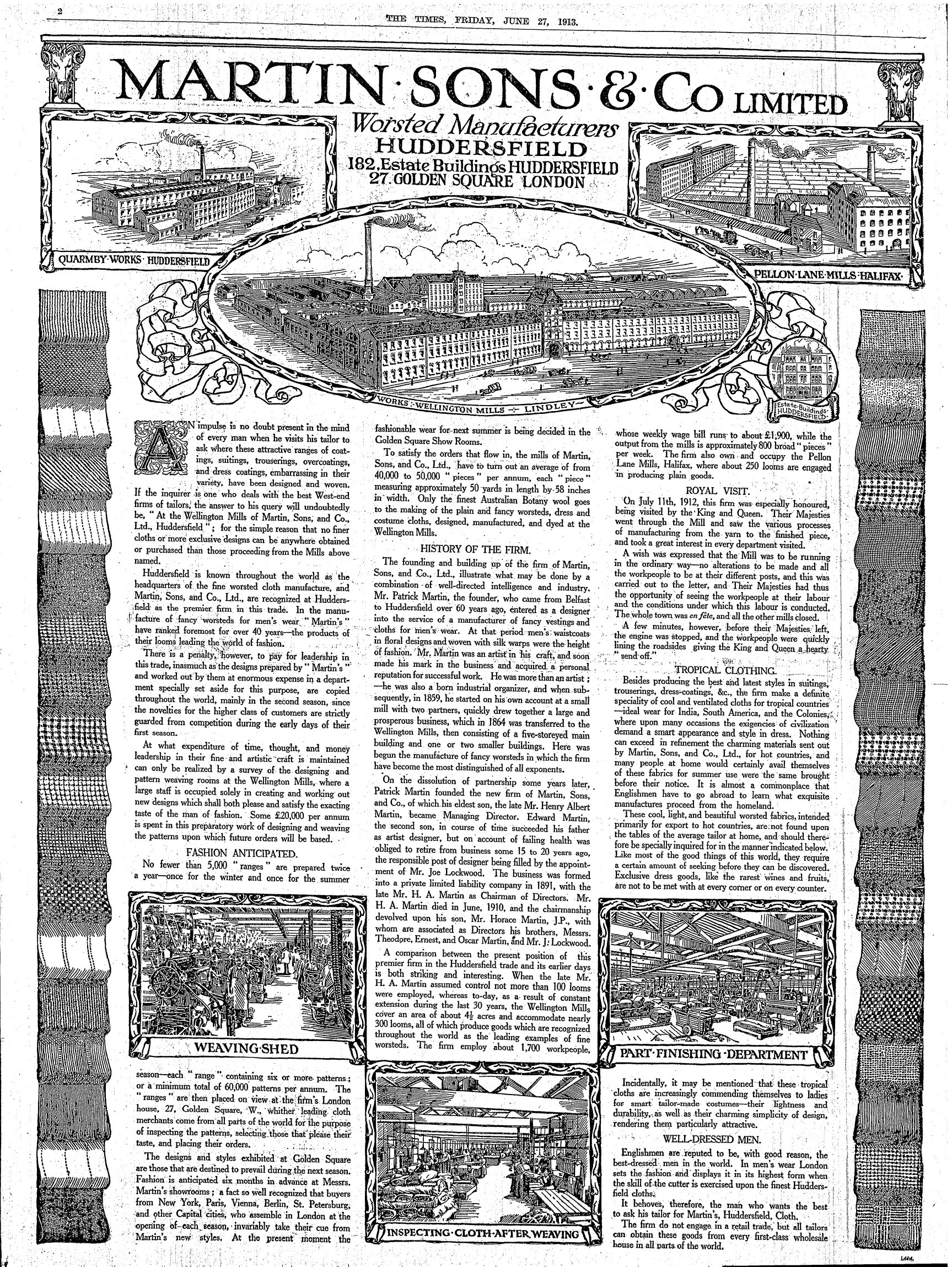
Back in 1913, the Times has just published a supplement on the textile industry. Just about every company that has advertised has included a picture of its factory. For example:
I think they look fantastic: big, modern, solid, clean even. But why are they used in adverts? Perhaps the question should be why companies don’t use them any more? What it does suggest is that at the time they were regarded as far from the dark, satanic mills of modern-day folklore. June 28th, 2013 | 25 comments - (Comments are closed)
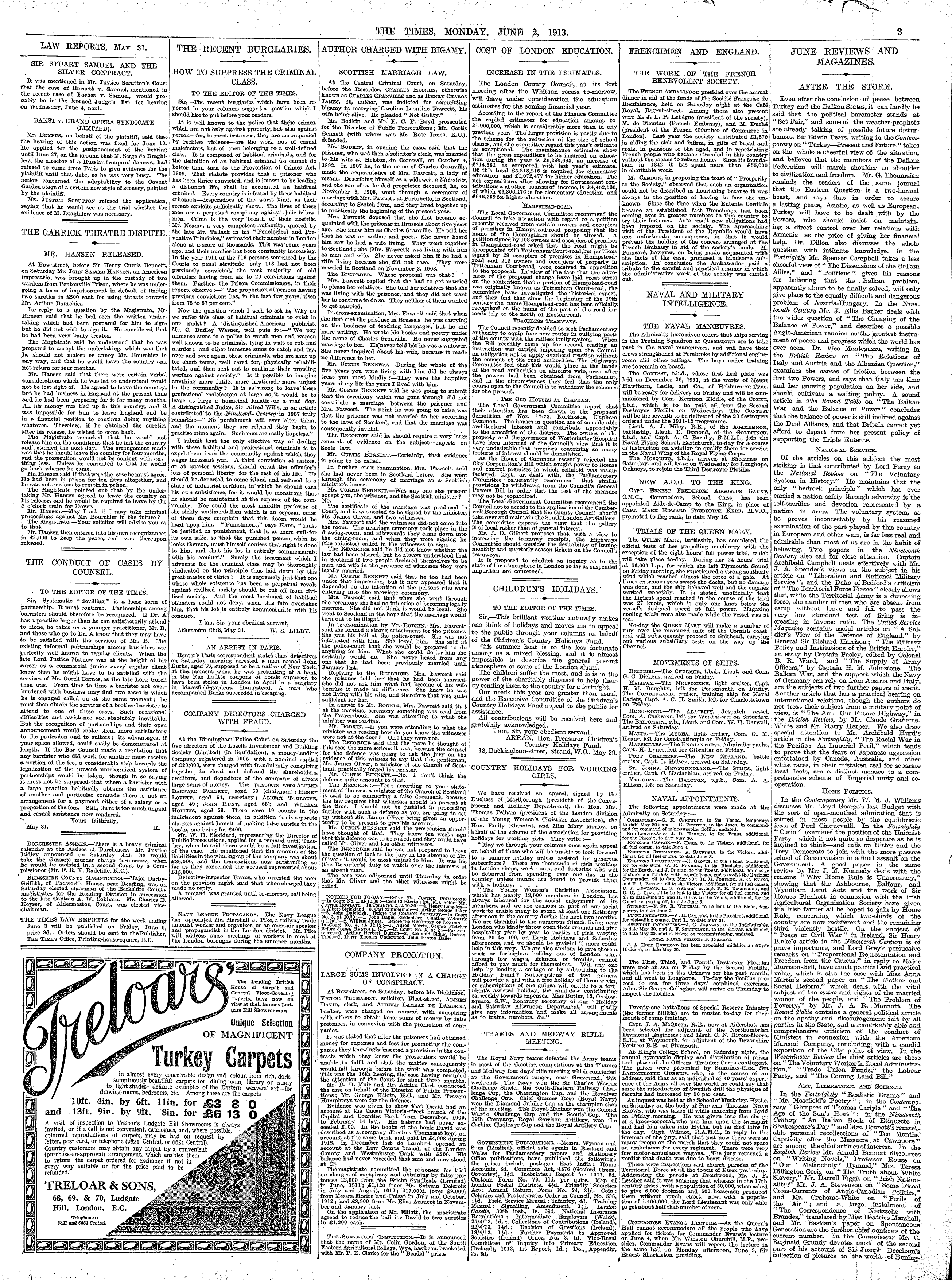
Take this letter to the Times from 2 June 1913:
To view the whole page it seems you have to click on the image, right click and select “Open image in new tab” and then zoom in. This is for Google Chrome. Other browsers may be different. June 2nd, 2013 | 17 comments - (Comments are closed)
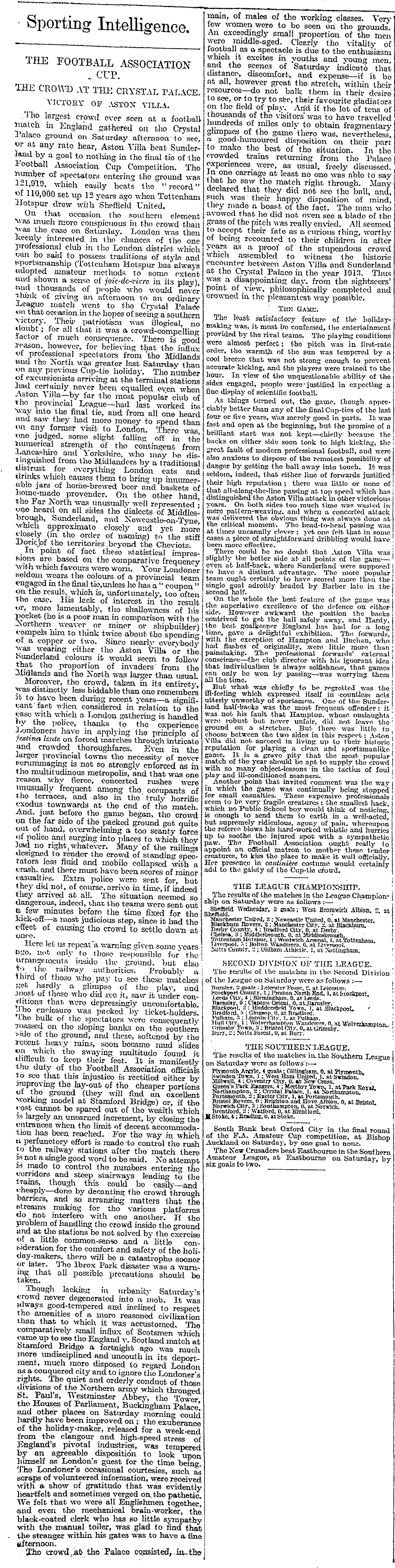
This made me laugh:
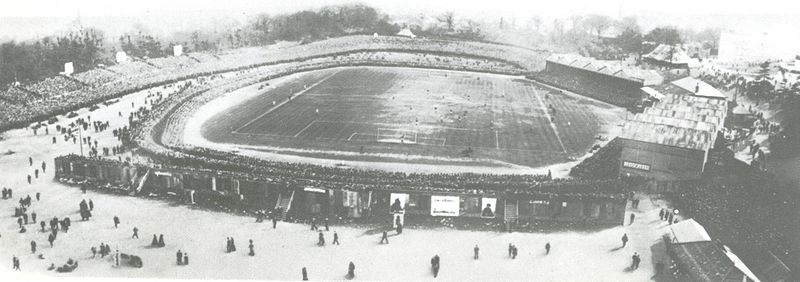
As you can probably tell from the language it’s from a while ago. 1913 to be exact and it’s from The Times’s report of that year’s FA Cup final. Yes, people then were making exactly the same complaints about footballers that they do now. At least they weren’t trying to eat one another. What is really astonishing is the size of the crowd. 120,000 (the second highest ever) at Crystal Palace, of all places. I googled and found this photo from 1905:
What a mess! But as the article I linked to points out most of the crowd had no idea what was going on. Not only that but it was clearly a dangerous place to be:
Read the whole thing as they used to say. April 22nd, 2013 | 8 comments - (Comments are closed)
Voting to leave Brussels will cause your wife to have bigger breasts and increase your chances of owning a BMW M3. – Boris Johnson, leader of the Conservative Party during the EU referendum of 2017 (as imagined by David Charter in Au Revoir, Europe: What if Britain left the EU?) March 25th, 2013 | 5 comments - (Comments are closed)
|
   |
||||

All content on this website (including text, photographs, audio files, and any other original works), unless otherwise noted, is licensed under a Creative Commons License. |
|||||