Sorry for the lack of blogging. Blame Tim Newman 😀
|
|||||
|
Noting the “unintended but disconcerting” link between nation-state activity and criminal activity, Smith adds that governments need “to consider the damage to civilians that comes from hoarding these vulnerabilities and the use of these exploits”. The “Digital Geneva Convention” Redmond recommends would therefore require governments “to report vulnerabilities to vendors, rather than stockpile, sell, or exploit them”. Unintended? Not so sure about that. May 15th, 2017 | 7 comments - (Comments are closed)
 Jacob Sullum writes about one of my pet peeves:
But make no mistake, this is not something limited to the political left. I have long observed that it was Republicans who set the stage for Obama’s drunken sailor splurge. Big-statist Republicans put that ball into play and Obama just picked it up and ran with it. This left me unsympathetic to former Bush apologists decrying the Obama years with a marked lack of introspection let alone repentance. And of course in the Trump era, the same thing is happening in spades. Indeed, every time Trump enforces an Obama era statute or regulation, it is being decried by Serious Academics™ as evidence Donald Trump is ‘literally Hitler‘, unlike nice Barack Obama. May 3rd, 2017 | 21 comments - (Comments are closed)
The moment I saw this headline: Macron vows to renegotiate Calais treaty with Britain, I felt a frisson of excitement, and no doubt Mary Tudor’s ghostly inscribed heart started beating once again! Perhaps for the first time since January 8th, 1558, that splendid little town will soon be back under its rightful rulers. April 28th, 2017 | 15 comments - (Comments are closed)
Too busy to blog substantively as it is St. George’s Day 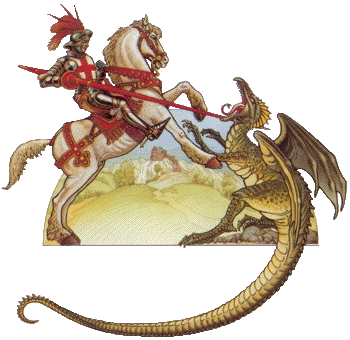
St. George, doing his best to rid the world of endangered species
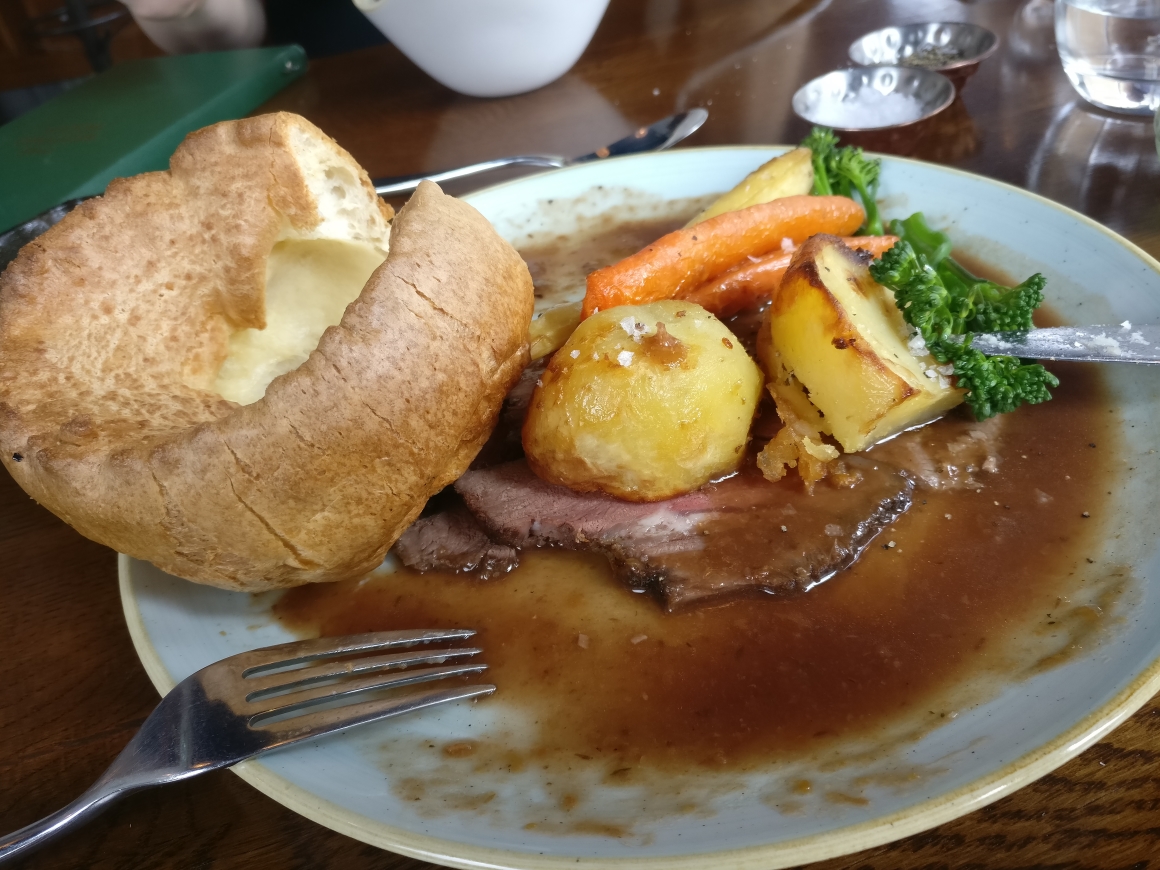
God’s Own Lunch
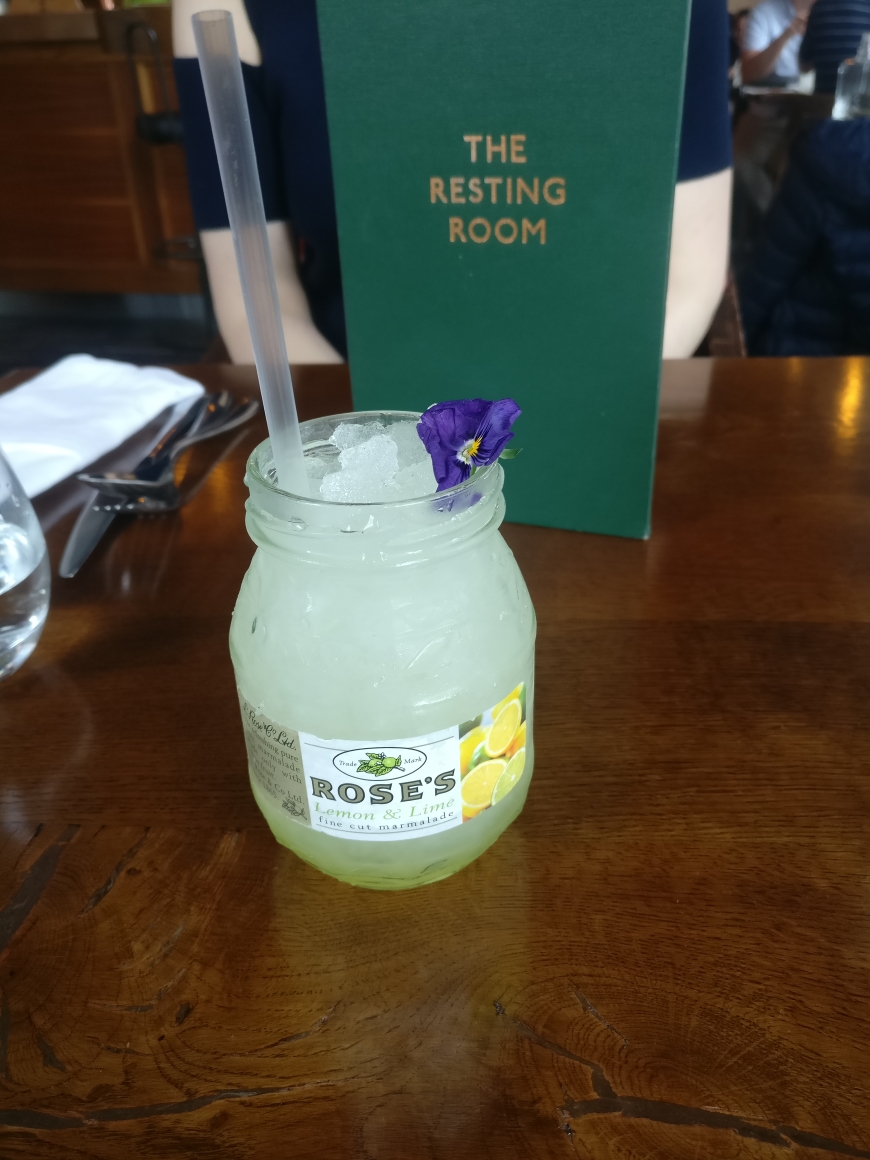
Gin and Marmalade cocktail (sort of a mutant Gimlet) April 23rd, 2017 | 32 comments - (Comments are closed)
Tim Newman does a fine job of fisking at length an article by Rachel Nuwer on the BBC (natch!) titled: How western civilisation could collapse. Spoiler alert: Tim is not impressed…
Read the whole thing. April 19th, 2017 | 23 comments - (Comments are closed)
In Justin Trudeau’s Canada, if I mention the Islamist ties of Akbardzhon Dzhalilov, the 22-year-old suspected of carrying out the subway bombing that killed 14 in St. Petersburg, Russia on Monday, am I guilty of Islamophobia? What if I also mention that Khalid Masood, the man who mowed down scores of pedestrians, killing three, and stabbed a police officer to death outside the British Parliament last week, was a convert to Islam? Am I guilty of a crime against Canada’s new politically correct speech codes? I admit, what constitutes a Muslim terror attack is not always black-and-white. Was London’s Masood driven by Islamist fervor or by his long, troubled criminal past? Or maybe a bit of both? Canada has been heading in this direction for a while now, part of a growing list of nation states denying one of the most most fundamental civil liberties: freedom of expression. April 17th, 2017 | 17 comments - (Comments are closed)
After reading an unrelentingly grim article by Suzy Hansen, describing the collapse of the rule of law in Turkey in the aftermath of the failed coup in July 2016, I noticed one problem with what had been written. I recalled a dinner in Istanbul with a couple bon vivant UN diplomats, less than a week before the abortive uprising. During our congenial discussions, fuelled by some excellent Turkish craft beer, the three of us realised that we were using terms like ‘right’, ‘left’, ‘nationalist’ and ‘conservative’ to mean rather different things as we were British, Turkish and Czech respectively. By Turkish definitions, as I was neither religious nor nationalist, I was automatically on the left, regardless of the fact I am a laissez faire free trader. The Turkish chap ‘assigned’ me to the centre-left, to differentiate me from socialists or communists… it seemed vastly amusing at the time (of course that might have been the beer laughing). Although Suzy Hansen’s linked article in the New York Times is not without merit, this made me realise how unwise she was to bandy about terms like ‘left’ and ‘right’ when describing Turkey to an American readership: the bad guys of the article are on the right, so perhaps some US readers might conclude Erdogan’s AKP are something like the Republicans? Er, not really. In fact not in the slightest. Given the radically different cultural, political and historical frames of reference between the USA and Turkey, there are simply no meaningful analogies to be made other than at the far fringes. It is rather hazy what ‘left’ and ‘right’ mean in Britain or America these days, let alone what they mean elsewhere. Comparing political labels in different countries is always fraught with risk and more likely to confuse than enlighten. Michael Jennings of this parish often becomes exasperated when folk in London try to compare UK and Australian political parties, as the attempt usually falls at the second fence… and this is between two countries with vastly more shared history. April 16th, 2017 | 33 comments - (Comments are closed)
Was Trump’s strike on Syria motivated by geopolitical considerations or… genuine concern about the use of chemical weapons by Syrian forces (and they have form for that)… or the need to demonstrate he is not in Putin’s pocket? Or something else? Discuss. April 8th, 2017 | 57 comments - (Comments are closed)
Now, of course, there are many hazards that either forestall or destroy the accumulation of capital – tornadoes, earthquakes, hurricanes, wildfires, plagues etc. but I sincerely doubt that there is any peril as destructive or as persistent to capital accumulation as government. – John W April 1st, 2017 | 43 comments - (Comments are closed)
Of course, England has been here before. The EU (that’s the Pope and the whole of Catholic Europe) excommunicated Queen Elizabeth and barred all trade with us; not even a WTO-terms deal, only a bit of state-sanctioned piracy and smuggling kept us going. In reaction we went further afield to find new trade partners and accidentally founded the British Empire, established dominance of the seas and oceans and led the world in trade and commerce. They did us a favour, really. – Raedwald, taking a few liberties but making a great point 😀 March 28th, 2017 | 16 comments - (Comments are closed)
It is possible to go through an entire education to PhD level in the very best schools and universities in the British system without any of your teachers or professors breathing the words “Friedrich Hayek”. This is a pity. Hayek died 25 years ago today, yet his ideas are very relevant to the 21st century. He was the person who saw most clearly that knowledge is held in the cloud, not the head, that human intelligence is a collective phenomenon. If Hayek is mentioned at all in academia, it is usually as an alias for Voldemort. To admire Hayek is to advocate selfishness and individualism. This could not be more wrong. What Hayek argued is that human collaboration is necessary for society to work; that the great feature of the market is that it enables us to work for each other, not just for ourselves; and that authoritarian, top-down rule is not the source of order or progress, but a hindrance. March 24th, 2017 | 46 comments - (Comments are closed)
|
   |
||||

All content on this website (including text, photographs, audio files, and any other original works), unless otherwise noted, is licensed under a Creative Commons License. |
|||||
 …
…