We are developing the social individualist meta-context for the future. From the very serious to the extremely frivolous... lets see what is on the mind of the Samizdata people.
Samizdata, derived from Samizdat /n. - a system of clandestine publication of banned literature in the USSR [Russ.,= self-publishing house]
|
Here is something very topical for today, Inaugaration Speech Generator:
A grassroots internet campaign helped Barack Obama get elected. Now he’s calling for the internet’s assistance one more time – to help him craft the best inauguration speech ever…
This is the result of my humble efforts to help out:
My fellow Americans, today is a psychadelic day. You have shown the world that “hope” is not just another word for “moon”, and that “change” is not only something we can believe in again, but something we can actually fly.
Today we celebrate, but let there be no mistake – America faces confusing and rigorous challenges like never before. Our economy is embarassing. Americans can barely afford their mortgages, let alone have enough money left over for spaghetti. Our healthcare system is lethal. If your nostril is sick and you don’t have insurance, you might as well call a dustman. And America’s image overseas is tarnished like a aubergine bullet. But cookin’ together we can right this ship, and set a course for Hebrides.
Finally, I must thank my excruciating family, my beautiful campaign volunteers, but most of all, I want to thank bankers for making this historic occasion possible. Of course, I must also thank you, President Bush, for years of shootin’ the American people. Without your rotting efforts, none of this would have been possible.
God Bless… the Internet!
Meanwhile, back in Britain, the markets are continuing to fret over the scale of the financial hole the country is in a day after the UK government stepped in and hosed the banks with yet further large amounts of public funds. According to the media pundit and investor, Jim Rogers, sterling is a sell and the country’s economy is headed for further trouble. Even though Rogers’ prediction of a 25-year commodity boom has not quite panned out – oil prices have crashed from $140+ to about $40 now in just four months – he did predict some of that boom and commodity investors who sold out at the right time would have made a killing in some of Rogers’ funds. His take on the economic situation is worth studying.
I see no reason to buy sterling on speculative grounds until Mr Brown is removed from office along with his re-heated Keynesian colleagues. Even then, the return to sound money will be hard and unpleasant. It almost makes me wonder if the Tories would want to regain power with such a poisonous inheritance.
Thanks to Guido Fawkes for the Rogers quote. Guido has been a bear of sterling for some time. To stay with the lingo of the markets, investors should be shorting Brown stocks, a heavily touted investment based on no underlying merits whatsover.
In the mind of the anti-free-marketeer, the government occupies the same kind of intellectual territory as the divine designer in the mind of an anti-Darwinian.
– Brian Micklethwait
Obama’s supporters should savour today, they really should. Even Obama’s detractors have at least something to be happy about. A black man has become President of the United States, The Leader of the Free-ish World, the Commander-in-Thief. And that at least is a fine thing.
But the mere fact it has happened shows it is much less important than it seems. A huge percentage of America’s blacks voted along racial lines, and thus presumably can have had no complaint if non-black people had likewise voted their race en-mass. Fortunately by and large even in race obsessed America most white people did not see it that way. Things have moved on, something obvious to anyone who has visited or worked in the US over the last few decades. Perhaps, just perhaps, the sheer folly of identity politics, the poison wellspring of all ethnic sectarianism, can be discarded once and for all. Yeah, as if. Well one can hope.
But today Obama does indeed become the very embodiment of a victory over an irrelevant thing which should never have divided people in the first place. And against that noble tableau, the calls for a New Hope and Bipartisan Unity will ring out strong and loud against a backdrop of Old Glory fluttering in the wind as Obama looks out at the horizon in all his Apollonian glory. Powerful stuff given how much Americans respond to appeals to the sentimental.
And the correct response to this is not to put your hand on your heart and get all misty eyed, it is to nod sagely at the agreeable symbolism of a clear triumph over America’s grotesquely racist past… and then, in answer to the calls for unity, raise your middle finger and make a loud raspberry sound. You will be drowned out by the cheering crowds but trust me when I say there will be millions of other people off-camera doing precisely that.
President Obama will only ever have one meaningful victory, and that is being a black man who was elected President. Cool. Seriously, very cool indeed. Celebrate that much in good faith. As for the rest, the things he actually wants to do, well that is the stuff that always should divide us and always will. Republicans and for that matter libertarians who cannot see that are, quite simply, political enemies who are part of the problem, not the solution.
So cheer the glorious apogee of the civil rights movement today because its significance ends the instant he takes the oath. Everything else that follows will be the start of a progressive and cumulative defeat for Obama. The One will get the laws he wants and his supporters will conclude that means he is winning, as if saying something is so makes it so. Let them do their worst because there is nothing anyone can do to stop them at this juncture in any case.
But Obama’s actual enemy is not the Republicans, who are prostrate at the moment and worthless as currently constituted. No, it is reality itself that is Obama’s utterly implacable opponent: that vast Ponzi scheme called ‘regulatory statism’ has reached the end of the cycle, as Ponzi schemes always do in the end. In previous times, economic growth has masked the pyramidal nature of what both parties did as they pushed the hard choices off into the future with the knowing connivance of millions of voters… but not this time. The future has arrived and the sainted American middle class, who acquiesced to it all and yet about whom no ill may be spoken, will find that future quite unsympathetic.
And when irksome reality stubbornly refuses to follow Hollywood’s script and accept the Triumph of the Will, more laws will follow. And then more. And more. The cannibalisation of the shrinking productive economy to ‘bail out’ the failing bits will become ever more intense. Much as John “I support the Bail Out” McCain would have done in fact. Pervasive political regulations trying to manipulate things back into health will become ever more pervasive, all to rapturous applause at first… and all to no avail. Obama’s progressive and spectacularly expensive defeat will be a defeat for the entire nation with implications that will be felt around the world. It will be a defeat that consumes much that is still gleaming and golden in the Republic and turns it into toxic waste.
So now is not the time for ‘unity’ and ‘bipartisanship’, which is just a genteel way of demanding surrender, it is the time for resistance and the renewal of purpose by those who see the liberty and prosperity that comes from constitutionally limited government as a prize worth any price to defend. This was never really about race other than as the final flourish of a very worthy battle that had already been won.
Life is always better when I have a book on the go which I can hardly wait to get back to. The Blind Watchmaker by Richard Dawkins is not quite going to be that for me. Too complicated. Not central enough to the things I happen now to be interested in, probably because I already agree with it far too completely for it to grab me by the throat. But, I have recently been dipping into this book, having finally got hold of a cheap second-hand copy of it, and yesterday I came across an argument in it which I found familiar, but in another context.
Dawkins criticises Bishop Hugh Montefiore (on page 38 of my 1991 Penguin paperback edition) for again and again resorting to the argument that he just cannot believe that this or that complex organ or organism could possibly have evolved. → Continue reading: Arguments from incredulity
I could not resist…
EIGHTEEN illegal immigrants attempted to smuggle themselves into the UK hidden in a lorry-load of lettuce heading for Merseyside.
UK Border Agency officers stopped the Spanish-registered lorry in the French port of Calais at 5.50am last Sunday.
A search revealed the eighteen men – fifteen Iraqis, two Afghanis and one Iranian – hidden in the load of lettuces.
Virginia Postrel has a nice item about WW2 aviator style and the Tuskegee airmen who broke racial barriers of their time in WW2. I must say that there is something deliciously satisfying at the thought that these guys helped shoot down the airforce of a racist German empire. And that they flew such glorious birds like the P-51 Mustang as they did so.
English taxpayers will see their Council Tax bills rise by 3.5% this year. The official line was predictable:
LGA chairman Margaret Eaton said that despite the difficulties, local authorities were doing their best to limit the rises in council tax. “Money is tight for everyone and nobody likes paying more council tax, but town halls are making enormous efforts to keep bills down,” she said. “Councils understand that people are suffering and they’re working flat out to keep council tax down, to keep local businesses afloat and help people deal with the impact of the recession. “More people are turning to councils to help them through the recession. Councils are responding by making services more efficient and they recognise that tax increases need to be kept to the absolute minimum.
The ‘money quote’ is of course: “More people are turning to councils to help them through the recession”… the idea that civil society revolves around the state is so deeply ingrained that the concept of less state and more civil society simply does not fit within their world view. Let me suggest that if a massive number of council employees in England were fired, very few of whom are net contributors of wealth to the ailing economy, that would do more to alleviate the recession than anything the state could do at the local level to ‘help people through the recession’. Less taxes, that would help.
The sheer arrogance is breathtaking. Expecting any increase in tax, when they should be shrinking themselves at the very least in step with the contracting economy, shows how rotten the system is. And of course the dependably useless Tory party, at their very best only a ‘lesser evil’, only want to ‘freeze’ local taxes for two years. They are not even contemplating actually rolling back the state even in line with the shrinking economy. Message to the vile Dave Cameron: if the economy is contracting, anything other than a reduction is an increase.
First financial, then economic, finally political. The smaller countries will be followed by the larger. In one of his op-eds, Ambrose Evans-Pritchard writes an overview of Europe in which he opines that the outer rim: the post-communist states and Club Med are entering a 30s style depression due to the unwillingness of the European Commission or Central Bank to alleviate their woes.
Romania, Bulgaria and the Baltic States are now facing a ‘spring of discontent’ as austerity measures result in rioting and instability. Evans-Pritchard has noted that the European institutions are compunding the problem:
Leaked documents reveal – despite a blizzard of lies by EU and Latvian officials – that the International Monetary Fund called for devaluation as part of a €7.5bn joint rescue for Latvia. Such adjustments are crucial in IMF deals. They allow countries to claw their way back to health without suffering perma-slump.
This was blocked by Brussels – purportedly because mortgage debt in euros and Swiss francs precluded that option. IMF documents dispute this. A society is being sacrificed on the altar of the EMU project.
The political consequences of the credit crunch are coming to the fore in the fragile periphery of the European Union: how long before we begin to see the political expression of this discontent respond to the monopoly of the European class, a challenge that will arise outside the mainstream from the extremes.
A Politico/Allstate poll at the end of last year suggested 79% of Americans support his stimulus plan and he has a 63% approval rating.
A year from now, when those who saved see the value of those saving buying a great deal less, and those who did not save see the empty shops and find themselves out of a job, will they see the sheer folly of expecting the state to manipulate the economy back to health? Perhaps they will.
Classical liberals and libertarians are often accused of being ‘utopian’ because of our reliance of the self correcting mechanism of markets. “That assumes people act rationally!” our critics say.
Nothing could be further from the truth. We know people do not act rationally, oh good grief you statists have no idea how profoundly we know that, and that is exactly why we do not trust the state to have so much power over the domestic life of its subjects. Amongst other things, a strong state, far from protecting us from mean old Big Business, actually entrenches Big Business and lets them limit competition.
People are not particularly rational, even less so in large groups… and that includes people with great political power. They make mistakes and then repeat those mistakes again and again and again. The true utopians are those who think it is wise to give demonstrably fallible people vast legal backed power over civil society.
But hey, if you clever and oh so rational statists do not get the results you expect from the ‘stimulus package’, just strap in and do it again… and again… and again. Have fun. This is indeed the end of an era, just not the one you think.
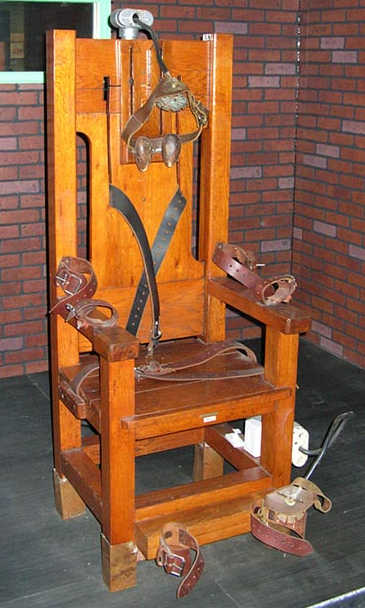
What 79% of Americans want apparently. Enjoy.
Gordon thinks that banks have been wicked and they need to confess:
Gordon Brown told banks to come clean over the extent of their bad assets on Friday, admitting the scale of the banking crisis could threaten the global economy with a new phenomenon: “financial isolationism”.
“Tell me how bad it really is,” is at best irrelevant, and, given we have a crisis of confidence, most likely damaging. But the quintessential moralitarian is not concerned about that. Nor about isolationism, merely because it means poverty and depression. The self-criticism of others must not stop, engagement with the global system must not stop, because otherwise there will be no one else left to blame. There is no chance of him confessing his faults. Our Great Helmsman will stand as a colossus of rectitude and the transparency he demands in others is not necessary for him, lest we be blinded by the light.
And yet mighty Oz, aware of his own illusion, thinks banking is a magic that will survive removal of the smoke and mirrors (he almost certainly believes in ‘fair’ prices too). The opposite is the truth. The obsession with stripping the mystery in case someone might be making money, has the predictable effect that making money is harder. Compliance and confession will crash the banks, not stabilise them. They are already doing so, as The Economist points out:
The Basel 2 international bank-capital regime and the global accounting standards known as IFRS—to say nothing of security analysts and rating agencies—are forcing banks to hoard more capital, anticipating that deepening recession will slash asset values further.
This is the modern equivalent of Keynes’s “cross of gold”. We are being wrecked by the rectitude of mark-to-market. But the governmentalist says the problem is not enough sinners have been whipped, and “orders” that they are.
‘Bail-out fears hit banking shares‘ howls the BBC… “We know of no justification for the fall in share price. We are fully aware of our regulatory obligations and we have not said anything,” said a Barclays spokesman in a statement.
Hehehe. Could it be that more and more people do not believe the shit that government and the mainstream media keep peddling any more? The ‘bail outs’ are consuming a larger and larger proportion of the world’s ailing economies, with no end of ‘bailing’ in sight. Frankly why not bail out the porn industry? Why not ‘bail out’ every damn industry! Just print more money!
The system is devouring itself and no amount of manipulation can change that… because manipulation is why the system is collapsing. When the correcting mechanisms of markets are not permitted to work, it is like never allowing forest fires to clear out dead wood. In the end all you do it store up problems for later. Guess what? Later is now.
Let it burn.
|
Who Are We? The Samizdata people are a bunch of sinister and heavily armed globalist illuminati who seek to infect the entire world with the values of personal liberty and several property. Amongst our many crimes is a sense of humour and the intermittent use of British spelling.
We are also a varied group made up of social individualists, classical liberals, whigs, libertarians, extropians, futurists, ‘Porcupines’, Karl Popper fetishists, recovering neo-conservatives, crazed Ayn Rand worshipers, over-caffeinated Virginia Postrel devotees, witty Frédéric Bastiat wannabes, cypherpunks, minarchists, kritarchists and wild-eyed anarcho-capitalists from Britain, North America, Australia and Europe.
|





Recent Comments