We are developing the social individualist meta-context for the future. From the very serious to the extremely frivolous... lets see what is on the mind of the Samizdata people.
Samizdata, derived from Samizdat /n. - a system of clandestine publication of banned literature in the USSR [Russ.,= self-publishing house]
|
I realise that the sums of money that get spent on “culture” are very small potatoes indeed when set beside other sorts of government extravagance.
Nevertheless, I can’t help thinking that there is a connection between this report about France’s “new wave of culture-focused building projects”:
A Napoleon III villa in a Parisian suburb, squatted by artists and musicians; a cathedral-like hangar, the vestige of Dunkirk’s naval industry that used to define the life cycle of the entire city; a new, 240m-long bridge in the French Alps. This is just a sample of France’s recent crop of architectural projects, and they have at least one thing in common: they are all cultural facilities that offer a draw both through their content and their site.
… and reports like this one from the BBC about French economic pessimism, or this one entitled Is France the new Italy?
Hollande’s Socialist administration faces protests over taxes and burdensome regulation not just from business leaders, as you might expect, but also from farmers, shopkeepers, teachers, truck drivers and soccer players. …
Leaning heavily on higher taxes, the government has been slow to get public spending under control. France’s ratio of public spending to gross domestic product is now 57 percent – the highest in the euro area.
As Instapundit likes to say, what can’t go on forever won’t.
What, I wonder, will those new culture palaces end up being used for?
A great deal longer ago than I now enjoy remembering, I rashly promised the authors of America 3.0: Rebooting American Prosperity in the 21st Century – Why America’s Greatest Days Are Yet to Come, James C. Bennett and Michael Lotus, that I would, very soon, write something here about this book. But this is not a regular book review. I have an agenda of my own to plug with regard to America 3.0, which is, in two words: Emmanuel Todd.
I have greatly admired Emmanuel Todd, the French anthropologist and historian, ever since, in a 1980s remainder shop, I first encountered English translations of two of his most important books, the English titles of which are The Explanation of Ideology and The Causes of Progress, my copies of these two books being among my most treasured possessions. America 3.0 is in no small measure the book that it is because Bennett and Lotus have also acquainted themselves with Emmanuel Todd’s style of thinking, and have applied it to America. And the most interesting fact about America 3.0, from where I sit, is that its publication may prove to be some sort of breakthrough for Emmanuel Todd in the place that James Bennett himself has dubbed the Anglosphere. My hope concerning America 3.0 is not so much that what it says about America will captivate lots of Americans, although I’d be very happy if it did, but that it may, because its authors based it partly on a foundation constructed for them by Emmanuel Todd, help to spark what I think is a long overdue debate throughout the Anglosphere, a far grander debate than a merely American discussion about America. This debate will encompass the entirety of Emmanuel Todd’s grand narrative, and will concern the entire world.
The historian Alan MacFarlane, author of, among other books, one called The Origins of English Individualism, whose work is aligned with that of Emmanuel Todd, is one of the few historians writing in English to have given Todd the time of day. The authors of America 3.0 tell me that in an email to them, MacFarlane said that Todd is “roughly right” in what he says. Which sounds like rather faint praise. But when you realise that what MacFarlane reckons Todd to be “roughly right” about is one of the most confidently reductionist, yet original and interesting, and above all persuasive explanations of the entire process of political and economic modernisation that has been accomplished and is still being accomplished by our relentlessly formidable and complicated and belligerent and inventive species, everywhere on earth during the last five centuries and more, and for at least the next several decades, then you begin to see where my admiration for Emmanuel Todd is coming from. Many very capable and admirable historians score eight, nine or even ten out of ten for their life’s work. Compared to them, I would give Todd about eight hundred out of a thousand and counting. The man is operating at a different level of explanatory reach to all other historians I have ever read, or have ever read about or heard of. Yes indeed, as MacFarlane’s comment illuminates, Todd has, over the years, got quite a few of the details of his grand narrative somewhat wrong, in fact he probably gets far more things wrong than most good historians ever get right. But what he does get right … well, it is an epic story, and furthermore, a story that I now believe, with MacFarlane, to be “roughly right”.
So, what has Emmanuel Todd been saying?
→ Continue reading: First thoughts on America 3.0 – the Emmanuel Todd connection
That’s the counterintuitive thing about totalitarian systems. They herd people into Borg-like collectives, yet every individual is savagely atomized.
I never felt so alone in my life.
– Michael Totten writes about the “total surveillance police state” that is Cuba.
It isn’t “counter-intuitive” to me, and probably not to Totten either, but I guess it still is to many. I worked out long ago that totally nationalising society totally destroys society, and that the greatest freedom of a free society is the freedom to choose what company you keep, both when you work and in your time off working.
I have only one thing to add to this Telegraph blog post by Daniel Hannan.
It is this: I am glad that Mr Hannan and other newspapers have not followed the usual timid practice when reporting stories of this type and obscured the name of the culprit. A storm of public anger is about the only weapon we have against the likes of Mrs L Small, head teacher of Littleton Green Community School, Colliers Way, Huntingdon, South Staffordshire WS12 4UD.
And if “our R.E. coordinator Mrs Edmonds”, she being the one with whom parents are invited to “discuss this further”, does not wish to join her boss in the stocks, she should direct her further discussion towards disassociating herself from the literally fascist tactics Mrs Small uses.
The L stands for “Lynn”, by the way. Lynn Small, head teacher of Littleton Green Community School, the one who coerces parents by threatening to harm their eight year old children.
At first I thought that Tim Blair’s account of the outrageous behaviour of the Australian delegates to the Warsaw UN climate conference was written for laughs. I duly laughed. Then I followed the links. It’s all true; the snacks … the T-shirts … the pyjamas. Then of course my laughter was replaced by profound sorrow at the disgrace brought upon a once-respected nation by its so-called representatives*.
*While acknowledging the limited validity of concerns about health and safety of delegates in late night negotiations.
The headline above Allister Heath’s latest over at City A.M. reads as follows:
America is slashing spending – but its economy is still growing
By “spending” Heath, or Heath’s headline writer in the event that it’s not Heath, means government spending.
We’ll know we’re really winning when headlines like that one replace the “but” with an “and”.
Although I am only posting this at midday, I wrote most of it at three o’clock this morning.
I did this because I am now suffering from severe Ashes Lag (The Horror! The Horror!), and also because it is in the spirit of the news I am passing on, which is that soon, London will be experiencing (no doubt some would prefer to make that “enduring”) all night underground train service at weekends:
For better or worse, London is on the way to becoming a city that never sleeps, leaving other British cities even further behind.
Not the District Line, though. That’s one of the lines I often use late at night, and I would have liked that one also to be going round the clock. The other line I use, but less often late at night, is the Victoria, which will be all round the clock at the weekend.
But this is only a start. And it is only at the weekend. What has long puzzled me is why London has not, for the last several decades, been a city that never sleeps, but is instead only groping slowly towards one day becoming such a city. London always comes near the top of those lists of the world’s greatest cities, yet for much of the time London is almost entirely asleep, unlike one, in particular, of its most famous rivals (immediate music warning – don’t click on that if you wish to go on listening to something else). All that frighteningly expensive office space, basically doing nothing for about a third to a half of every day, and nothing at all at the weekends, since for ever. Why? Modern electronics means that there is always someone wide awake to be doing business with, somewhere in the world. So, why no big night shift activity in the City? It can’t take all night just to keep those places clean.
Maybe there is lots of City of London night shifting going on already, and I merely haven’t been told about it. After all, night shifters mostly only need transport when they start and when they finish, which they already have. I can see why they are starting this at the weekend, for people for whom the difference between getting home at 4 am rather than at 8 am is all the difference.
Talking of London staying awake all night, there was a time, in about 1941, when a lot of it did just that, for quite a while. This was when London Pride got itself written. Take that, Sinatra. Someone (can’t find who – anyone know?) once said something like: there are many more tunes to be written in C major. I don’t know the key of London Pride, but it is one of my favourite tunes ever, and it always makes me think of that remark.
Jim Carver is a libertarian UKIP umbrella-maker from the West Midlands who aims to be elected to the European Parliament in 2014 and then to make himself redundant as soon as possible. ‘If you take liberties with a market trader, you can expect a fight,’ he says, ‘And these buggers aim to take all the liberties we’ve got.’
Nasty things are just nasty. You know where you are with a tetchy shark. It’s the nice ones which give me the heebie-jeebies. Dolls, wide-eyed children, psychopathic blondes and slavering kittens are far scarier than more obviously menacing monsters.
Let me introduce you to a tooth-achingly nice but totally terrifying new document entitled A European Framework National Statute for the Promotion of Tolerance.
It is intended to be enacted as law in every member state of the European Union. It will probably be enshrined in British law. Shudder at the thought. It is such a sweet document. Its purpose is to ‘Promote tolerance within society… condemn all manifestations of intolerance based on bias, bigotry and prejudice…’
So far, so missionary tract, but these are missionaries with power. They will ‘take concrete action to combat intolerance, in particular with a view to eliminating racism, colour bias, ethnic discrimination, religious intolerance, totalitarian ideologies, xenophobia, anti-Semitism, anti-feminism and homophobia.’
There is no attempt to define these enemies.
Feminism, just to take one example, can be the radical Dworkinesque wing, which considers sex-workers and the sexually active to be traitors (and victims), and all sexual allure to be demeaning. It can also be ‘riot grrrl’ or ‘lipstick’ feminism which reclaims traditional gender symbols and sexuality and respects the rights of women to win autonomy by these means.
The former – being nutters – are the more politically active. They consider the others to be ‘anti-feminist’. They abuse and deride them in a most intolerant manner, yet I warrant that it will be they who impose tolerance by force on their dissenting sisters once this statute has force of law.
Many nominalists doubt that homosexuality as a state of being rather than as an incidental preference actually exists. Many Britons oppose the open-door immigration policy forced upon them by Brussels. They are immediately therefore branded ‘xenophobes’. Will all such heretics find themselves debarred from expressing their views in the name of tolerance?
Here, however, comes good news: All groups will be guaranteed ‘freedom of expression, including freedom to seek, receive and impart information and ideas… to manifest… religion or belief in worship, observance, rituals, rites, practice and teaching…’
Does this mean, then, that devout Catholics who disapprove of homosexuality (and, more consistently, of all non-procreative sex) will be permitted to express their views?
Er, no. ‘There is no need to be tolerant to the intolerant. This is especially important as far as freedom of expression is concerned: that freedom must not be abused to defame other groups.’
→ Continue reading: Tolerance… or else!
In August, I spent some time in my native land of Australia visiting family and friends. One Sunday morning I found myself wandering around the inner west of Sydney. I used to live in the area. If certain things in my life had gone slightly differently, I might still live in the area.
That’s life, though. I don’t regret moving to London in 2002. For one thing, if I had not done so, I might not now be writing for this blog.
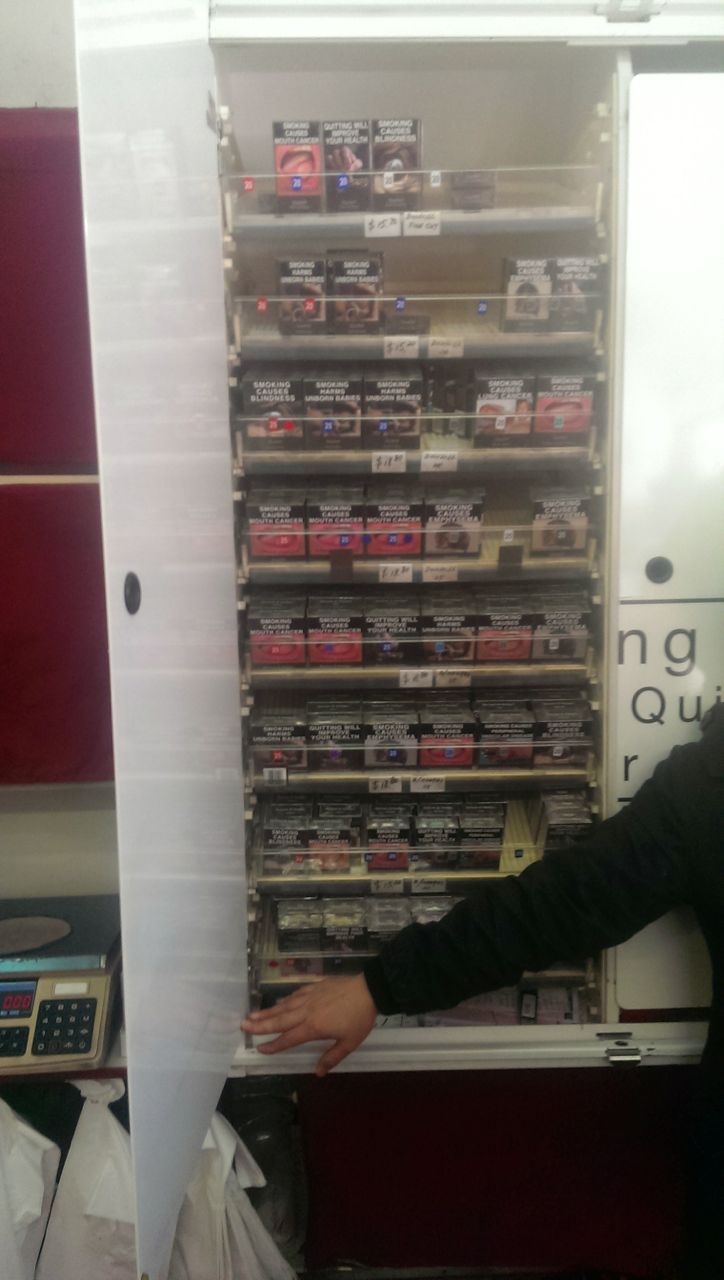
In any event, I was thirsty. I nipped into a convenience store to buy a Coke. Anyone who has ever lived in a city will know the type of store. A selection groceries for people who have not managed to get to the supermarket. Drinks. Snack foods. Possibly a few pots and pans and other household goods. Cigarettes. In cities full of immigrants such as London and Sydney, these stores are normally owned and run by first generation immigrants. In the UK, this often means south Asians. In Australia, the owners of such shops are more often Chinese people, in some sense. (Often this can mean ethnically Chinese immigrants from Malaysia, Vietnam, or various other places).
People reading carefully may thing I am being careless in leaving alcoholic drinks and newspapers out of the list of things that such stores sell. After all, in London these things would make up a large portion of the business of such a store. Surely this is the same in Australia?
Well, no, actually. Australian convenience stores do have vast amounts of shelf space devoted to sunscreen and insect repellant, but this hardly makes up for it.
Australia loves to regulate to protect vested interests. Laws vary according to state, but in Sydney an area will have a single newsagent, which will have a monopoly over the sale of newspapers in that area. This newsagent will be free to sub-licence other stores in the area to sell newspapers, but this normally only happens for Sunday papers, as the owner of the local monopoly will (or at least might) take the day off. In theory, the holder of the newsagent monopoly guarantees that he will provide local delivery of newspapers in the morning in return for being granted this monopoly. This may have once made sense, although I doubt it. Now though, most people who read newspapers at home do so over the internet. The monopoly remains, though. It’s about vested interests being protected from competition. This means, amongst other things, that convenience stores run by recent immigrants are not going to be allowed to sell newspapers.
→ Continue reading: Loving the Aussies slightly less
The King of Camelot was killed by a commie loser. The impossibility of processing that drove the left crazy, and they still can’t face it.
– Glenn Reynolds, who clearly enjoys annoying conspiracy theorists, as I do. Meanwhile, Janet Daley reflects on what it was like to be a Kennedy supporter back in the early 1960s.
It’s no coincidence the MPs found guilty of fiddling are all Labour, writes Peter Oborne.
The book can at last be closed on The Daily Telegraph investigation into the MPs’ expenses scandal. More than 300 Members of Parliament have paid back wrongly claimed expenses. Several of the worst offenders have stood down from Parliament. Now that the former minister Denis MacShane has at last pleaded guilty to fraud, no further prosecutions are planned, and all criminal investigation is reported to have ceased.
But one puzzling question remains. Why is it that only Labour MPs have been found guilty of expenses fraud as a result of the Telegraph revelations?
His argument that there is “only one chance in 64 that Labour’s score of 6/6 was a coincidence” should be saved as an Awful Example for the probability chapter in a GCSE mathematics textbook, with calculation of the precise odds that he has let the Tories off far too lightly left as an exercise for the student.
This part of his explanation, however, is accurate:
It is especially perplexing because the party in general strongly feels itself to be the embodiment of decency and morality. Indeed Labour has always insisted that the Conservatives are the party of venality, greed and selfishness. How baffling it is, then, that only Labour MPs have been sent to jail as a result of the Telegraph revelations.
Paradoxically, I believe that it is Labour’s belief in its own higher morality – what Bertrand Russell called the “superior virtue of the oppressed” – that has led to its downfall.
Many Labour people cannot believe that anything done by the oppressed classes or their champions can ever really be wrong, not when there are Bullingdon-educated toffs who were in the Eton club out there for comparison. The jailed MPs and their supporters know in their hearts that their very sentences are part of the oppression. They take comfort as the prison gates clang behind them from the thought that when they hear that sound they join the company of heroes.
Stanley Kurtz described a similar persecution envy burning in the breasts of greens and climate change activists in The Wannabe Oppressed:
What do America’s college students want? They want to be oppressed. More precisely, a surprising number of students at America’s finest colleges and universities wish to appear as victims — to themselves, as well as to others — without the discomfort of actually experiencing victimization. Here is where global warming comes in. The secret appeal of campus climate activism lies in its ability to turn otherwise happy, healthy, and prosperous young people into an oppressed class, at least in their own imaginings. Climate activists say to the world, “I’ll save you.” Yet deep down they’re thinking, “Oppress me.”
And deeper yet, “Oppress me a little bit so that I can resist you with visible heroism safe in the knowledge that you will not actually hurt me.”
An entertaining story from the Guardian:
Obamacare website developers rush to fix bug suggesting hacking methods
Flaw in Affordable Care Act site records hack attempts through its search box and re-presents code as autocomplete options
|
Who Are We? The Samizdata people are a bunch of sinister and heavily armed globalist illuminati who seek to infect the entire world with the values of personal liberty and several property. Amongst our many crimes is a sense of humour and the intermittent use of British spelling.
We are also a varied group made up of social individualists, classical liberals, whigs, libertarians, extropians, futurists, ‘Porcupines’, Karl Popper fetishists, recovering neo-conservatives, crazed Ayn Rand worshipers, over-caffeinated Virginia Postrel devotees, witty Frédéric Bastiat wannabes, cypherpunks, minarchists, kritarchists and wild-eyed anarcho-capitalists from Britain, North America, Australia and Europe.
|





Recent Comments