We are developing the social individualist meta-context for the future. From the very serious to the extremely frivolous... lets see what is on the mind of the Samizdata people.
Samizdata, derived from Samizdat /n. - a system of clandestine publication of banned literature in the USSR [Russ.,= self-publishing house]
|
Here’s a quick quiz for you… I’ll post the answers later on.
1) Whose idea was the Department of Homeland Security?
2) Who suggested the US use pre-emptive action against States harbouring WMD?
Answer: Well, one person got very close, Gary Hart was indeed involved with both of these.
These two items and a whole bunch of others are part of the final report “Road Map For National Security: Imperative For Change, PhaseIII”. This was a bipartisan two year commission which completed its’ draft final report (from which I am working) Jan 31, 2001. President Bush and his team had barely moved into their offices at the time.
The commission was co-chaired by Hart and Rudman and was tasked with a total systemic review of US National Security.
Supermarkets have begun trials on coordinating RFID tags and security cameras in order to reduce theft as the first step in converging logistical and surveillance technologies.
The first step has already been taken through trials at a supermarket in Cambridge, where RFID tags were used to identify a purchaser through a security camera. In this particular case, a second camera at the checkout was used to ensure that the item was purchased legally.
The technology is also utilised on the London Tube.
Transport for London is also using RFID-style chips in its new Oyster smart cards to allow users to travel around the tube network. The intention is that registered users will have information such as their names and addresses stored on the cards, which would eventually replace season tickets.
A spokesperson for TfL said that the entry and exit points of each journey made by Oyster users were recorded and that, technically, it would be possible to track people through the tube network. Nicole Carroll, marketing director for TranSys, the consortium responsible for implementing the system, told the Guardian that all the journeys made by a user would remain stored in a central computer for the lifetime of the card.
The article produced a link to one of the lesser known groups within civil liberties and demonstrates the diversity of organisation that these concerns attracts. The campaign, known as Consumers Against Supermarket Privacy and Invasion and Numbering, or CASPIAN, is opposed to loyalty cards as those who opt out of obtaining a card tend to pay higher prices as the cost of preserving their privacy.
They also provide the answer for that burning question…With all the pain and suffering in the world and people starving in [fill in location here], how can you justify spending your time on supermarket club cards?
The answer includes: My passion happens to be preserving personal freedom, staving off totalitarianism, and resisting Orwellian intrusions.
Sentiments we can all agree with.
Aristocracy [Late Latin aristocratia, government by the best, from Greek aristokrati : aristos, best; see ar- in Indo-European Roots + kratos, power; see -cracy.]. An aristocracy is a form of government in which rulership is in the hands of an “upper class” known as aristocrats. (The Greek origins of the word aristocracy imply the meaning of “rule by the best”.)
People like David Attenborough or almost anyone connected with Population Connection (a group which used to be rather more directly called ‘Zero Population Growth’), are technocrats at heart. Problems are identified, analyzed by experts and their solutions to those problems are imposed via political interaction. It is simply ‘rule by expert’ and there is quite literally no limit to the areas of life which is beyond the overarching gaze of the men and woman with letters after their names. When such people are given access to political power, no limits to what they can make you do or not do. The experts are, after all, the best and thus know best, and if people will not be swayed by their words spoken from the position of superior knowledge, then they must be forced to comply via the political system. They are the new would-be aristocracy in the literal Greek sense of the word.
In today’s Times of London (we do not link directly to The Times), David Attenborough, speaking for the Optimum Population Trust, demanded that the British state work to halve Britain’s population by establishing a ‘population policy’.
He said: “The human population can no longer be allowed to grow in the same old uncontrolled way. If we do not take charge of our population size, then nature will do it for us and it is the poor people of the world who will suffer most.”
[…]
[the Optimum Population Trust] believes that Britain should seek to reduce its population from its present 59m to about 30m by 2130 — about the same as the population in 1870. It wants economic incentives for women to stay childless, free contraception, a balanced approach to immigration and a government population reduction policy.
Indira Gandhi and Deng Xiaoping shared such views and enacted policies based on the realization that gentle prods will not stop people having children. Their views were based on crude pragmatism married with an honest understanding of the efficacy of coercive violence.
People like David Attenborough however take a rather more lyrical utopian view of nature and ‘sustainable economics’ (which in fact has nothing whatsoever to do with economics) and thus are rather more grandiose in their objectives. They seek to limit people’s right to have children or to travel the world or engage in ‘wasteful’ or ‘harmful’ economic activity generally that is not approved of by…well, them, of course. They wish to restore balance and harmony. This sort of idealized view of nature and man’s place in it (or lack thereof) was something that would have gained approving nods not just from idyllic ruralist 18th and 19th century poets but also Heinrich Himmler.
For these people there are no ‘market’ solutions caused by the social interaction of free people, because that would allow the possibility that free people may simply ignore the ‘wise words’ of The Best. In a political system, rather than a social system, there are only a few people who must be convinced and manipulated, and thus it through coercive collectivist politics that the new technocratic aristocracy seek to apply their ‘wisdom’.
At least the Voluntary Human Extinction Movement are not trying to use the violence of state to make people comply. The same cannot be said of Sir David Attenborough and his collectivist ilk.
Provoked by a couple of the comments on this, I’ve just posted a potentially rather boring blog posting about the problem of the potential boringness of blog postings, at my Culture Blog. But I don’t want to go on about it here.
Over wide areas of the urban first world, the Panopticon State is already very much a reality. Folks like us, the contributors to Samizdata.net, White Rose and the grizzled veterans over at Privacy International cry out warning pretty much daily alerting people not so much about the simple fact of surveillance per se but rather surveillance plus data-pooling.
Yet it is important to draw people attention to the basic facts and encourage them to notice the evidence right in front of their eyes, peering down at them like menacing mechanical crows perched on metal branches jutting from walls everywhere, that we are increasing under surveillance by the state directly…




…and by companies whose surveillance footage states are increasingly reserving themselves the right to gain access to on demand…



But the people who would like our every move recorded and subject to analysis are not fools. They would rather you did not actually notice what is before your very eyes and so we are seeing the second age of CCTV: more aesthetically pleasing and less intrusive cameras, rather than the stark utilitarian carrion crows which currently predominate…

…rounder, blending in with the background…
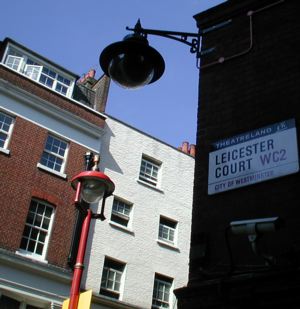
…looking more like the lighting fixtures than the all-seeing-eye.
The second age of security cameras is at hand…still quite literally staring you in the face, but increasingly hiding in plain sight, counting on a mixture of clever design and the fact that familiarity breeds contempt. But Big Brother is still watching, only with a little more style and taste now. That just makes it more dangerous.

(Cross-posted from White Rose)
Over wide areas of the urban first world, the Panopticon State is already very much a reality. Folks like us, the contributors to White Rose, Samizdata.net and the grizzled veterans over at Privacy International cry out warning pretty much daily alerting people not so much about the simple fact of surveillance per se but rather surveillance plus data-pooling.
Yet it is important to draw people attention to the basic facts and encourage them to notice the evidence right in front of their eyes, peering down at them like menacing mechanical crows perched on metal branches jutting from walls everywhere, that we are increasing under surveillance by the state directly…
…and by companies whose surveillance footage states are increasingly reserving themselves the right to gain access to on demand…
But the people who would like our every move recorded and subject to analysis are not fools. They would rather you did not actually notice what is before your very eyes and so we are seeing the second age of CCTV: more aesthetically pleasing and less intrusive cameras, rather than the stark utilitarian carrion crows which currently predominate…
…rounder, blending in with the background…
…looking more like the lighting fixtures than the all-seeing-eye.
The second age of security cameras is at hand…still quite literally staring you in the face, but increasingly hiding in plain sight, counting on a mixture of clever design and the fact that familiarity breeds contempt. But Big Brother is still watching, only with a little more style and taste now. That just makes it more dangerous.

From WorldNetDaily:
Congressional investigators say they can’t assure the public that individuals’ personal data is being adequately protected from unauthorized reading, alteration or disclosure.
In a survey of 25 federal agencies and departments, the General Accounting Office, the investigative arm of Congress, found a lack of compliance with the federal Privacy Act of 1974 significant enough to conclude “the government cannot assure the public that individual privacy rights are being protected.”
“Federal agencies are not following the law and, as a result, the personal data of citizens may be improperly collected and poorly protected,” Brase adds, “One system of records holds data on 290 million people. If that system happens to be one of the systems that’s out of compliance, the privacy rights of every citizen have already been violated, perhaps many times.”
This is from the ‘The Basra Rose’, the Iraq deployment section of the Red Rose, the newsletter of the 1st Battalion The Queen’s Lancashire Regiment:
WEATHER
Mon – HOT
Tue – VERY HOT
Wed – UNBELIEVABLY HOT
Thu – SO HOT YOU’LL CRY
Fri – AS HOT AS THE SUN
Sat – SO HOT LOCALS BURST INTO FLAMES
Sun – AS HOT AS THE DEVIL’S SCROTUM
In other words, it is a tad hot in Basra. Just so you know.

Adriana sez: “Statism is enough to drive a girl to drink”.

Granny sez: “Don’t you have some flavour other that ‘samizdata.net flavour’?”
But what do you think the captions be?
I am quite sure that I am not alone in having regrets about something I should have done but didn’t. There must be loads of people who once fancied a dabble on some dark-horse penny-share but decided not to take the risk and then watched it go stratospheric. Or perhaps they once thought of a great product -idea but couldn’t be bothered to pursue it only to see that same product in the shops five years and later selling like hot-cakes.
For me, it was the hit-stage play that I envisaged but never wrote. It was about a young couple who met at University in the sixties while they were both throwing themselves headlong into the counter-culture revolution as a means of rejecting the stuffy, conservative values of their staid, suburban parents.
Fast forward three decades and they are now both pillars of the Nulabour establishment. He is a journalist and she is a human rights lawyer. Their Islington home is a shrine to their innumerable cherished causes. Life is a series of earnest campaigns fuelled by a diet of polenta with rockett salad, washed down by ‘fairtrade’ Nicaraguan coffee. They are comfortable, happy cadres of the metropolitan elite blessed with an unshakeable moral certainty.
Until, that is, their teenage daughter returns home from University where she has discovered Ayn Rand and become a fiery devotee of free-market capitalism.
Then the comedy begins.
At the time I was jobbing as a scriptwriter churning out formulaic boilerplate for cable television and being quite handsomely rewarded for doing so. I had the basic characters and the outline plot but I suppose I was too addicted to the money stream to take the time off that actually writing the damn thing would have necessitated. So it never got written.
And now, it’s too late. What would have been groundbreaking comedy has been overtaken by reality: [From UK Times so no link]
Seventeen years after Huey Lewis and The News sang Hip to be Square, young people are joining the Tory party as a way of rebelling against their Labour-voting parents.
The Times interviewed new recruits and found many from a staunch Labour or Liberal Democrat background who relished the fact that being a Tory marked them out from the rest of their family and sometimes from the area they grew up in, too.
Looks like I was ahead of the curve.
One new recruit to the Tories, Caroline Hunt, 18, said: “In a way the role of opposition is to be the rebel, so yes it is a bit rebellious. Our lecturers at college are very left wing and they couldn’t believe how many of us were Tories all of a sudden. Out of a small class, eight of us put our hands up and said we were strong Conservatives”.
The ’68 generation may just be about to learn that what goes around, comes around.
And, by the way, a note to all readers: if you have a good idea, act on it immediately. The world will not wait for you.
It certainly is. Says Michael Blowhard:
The time has finally come for traditional artists to give up the fight. To just lay down those clunky old analog tools. What’s the point in carrying on a battle that’s already lost?
Go here and do what Michael says.
This one is my favourite. Mouse click on one of the row of dots at the bottom, and enjoy.
Michael again:
Whew: interactivity, beauty, wit, play, moods. And more art ‘n’ talent ‘n’ creativity on display here than in —
OK, I am raving. Still: pretty darn cool.
Indeed.
Anyone here know of other stuff like this?
And I agree with most of what he says!
Norman Geras, who I had not previously encountered until he recently fired up his blog , has an interesting take on things from what appears to be pretty well left of center. I was particularly taken with his thoughts on the war, which echoed some of my own but were much better put (less spluttering and profanity, for the most part).
But opposition to the war – the marching, the petition-signing, the oh-so-knowing derision of George Bush and so forth – meant one thing very clearly. Had this campaign succeeded in its goal and actually prevented the war it was opposed to, the life of the Baathist regime would have been prolonged, with all that that entailed: years more (how many years more?) of the rape rooms, the torture chambers, the children’s jails, and the mass graves recently uncovered.
This was the result which hundreds of thousands of people marched to secure. Well, speaking for myself, comrades, there I draw the line. Not one step.
A spot of googling reveals that Mr. Geras is Professor in the Department of Government at the University of Manchester. His books include Marx and Human Nature: Refutation of a Legend, Solidarity in the Conversation of Humankind: The Ungroundable Liberalism of Richard Rorty, and Men of Waugh: Ashes 2001, and he shows up in rags like Imprints: A Journal of Analytical Socialism (I confess to Windexing my computer screen after that web page opened up). One is always searching for sane lefties to try to gain some insight into the cult of the state, and Norm looks like he may be worth keeping an eye on.
|
Who Are We? The Samizdata people are a bunch of sinister and heavily armed globalist illuminati who seek to infect the entire world with the values of personal liberty and several property. Amongst our many crimes is a sense of humour and the intermittent use of British spelling.
We are also a varied group made up of social individualists, classical liberals, whigs, libertarians, extropians, futurists, ‘Porcupines’, Karl Popper fetishists, recovering neo-conservatives, crazed Ayn Rand worshipers, over-caffeinated Virginia Postrel devotees, witty Frédéric Bastiat wannabes, cypherpunks, minarchists, kritarchists and wild-eyed anarcho-capitalists from Britain, North America, Australia and Europe.
|





Recent Comments