We are developing the social individualist meta-context for the future. From the very serious to the extremely frivolous... lets see what is on the mind of the Samizdata people.
Samizdata, derived from Samizdat /n. - a system of clandestine publication of banned literature in the USSR [Russ.,= self-publishing house]
|
By every standard that can be measured, participation and interest in electoral politics in this country is in precipitous decline. With every year that passes the figures for voter turnout, party membership and financial donations drop a few more points down the graph.
The process is slow but apparently inexorable and (for obvious reasons) it is sending an adenalin-rush of panic coursing through the veins of the political classes:
Democracy needs strong political parties. And for them to be representative and effective, they need to be properly funded. In the past 50 years, parties have seen their income and membership decline dramatically while expectations of what they should do have increased.
Says Leader of the Commons and Secretary of State for Wales, Peter Hain, who appears to be far less concerned with political bankruptcy than with the very real threat of financial bankruptcy:
In return for public funding, parties should be obliged to direct a certain amount of their work to community organisation and to educational material for voters. We might, for example, borrow the idea from Germany of creating party-linked, publicly funded foundations which could take on this education and policy formation work.
This relates to the third principle: extending public funding will create a more bottom-up style of politics, with political parties better embedded in local communities, for example by financing youth organisers in major towns or population centres, so reaching young people disturbingly turned off politics.
Public funds could be earmarked for salaries to employ general party organisers at national, regional and local level, as happens in Sweden, Germany and other European countries. Public funds could also pay for training and political education schemes and international contacts between parties.
So Mr. Hain is proposing that the funding that he and his colleagues have signally failed to amass through voluntary donation should now be taken by force. In return for this ‘generosity’, civil society will be merged with ‘the party’ to become a single living, breathing, sweating, symbiotic creature of state.
More public funding could help all parties extend their work beyond the world of political activists, creating a politics that serves the people and not just politicians.
Some people will believe that. But then some people will believe anything.
Mentioned en passant in another alarming article in which David Blunkett threatens yet further abridgements of civil liberties under the guise of ‘fighting terrorism’, it is noted he and the European Commission advocated the idea of…
Joining forces with the Commission, Mr Blunkett backed proposals for a fingerprint data base of all EU citizens and tougher measures to tackle terrorist funding.
Oh wonderful.
Far be it from me to find anything hopeful about the PSOE election victory in Spain last weekend. After two election terms of relative fiscal sanity and an end to the grotesque corruption of the Felipe Gonzalez era, a return to PSOE government is bad news for Spain. It is also extremely bad news for the rest of the European Union, as this represents a shift away from pragmatism towards an (even more) collectivist EU agenda.
It is not however, necessarily good news for terrorism. Among the multitude of scandals faced down by the previous Spanish Socialist government the ‘GAL affair’ looms large.
GAL was the name assumed by a anti-ETA terror group in the 1980s that entered France and murdered ETA members and supporters. I no longer have the details but there was a spate of terrorist attacks on Basques living in the Bordeaux area, as well as closer to the Spanish border.
Following the arrest of several GAL members it transpired that they were all either members of law-enforcement agencies and the armed forces, or recently had been. It later emerged that the money to finance GAL came from the Ministry of the Interior and was signed off ultimately by the Minister. Whilst the Prime Minister Felipe Gonzalez himself was never proven by documentary evidence to have sanctioned the GAL death squad, let me just say that if he ever wins a libel action on the issue, I will be amazed.
Two things are worth noting, firstly that both the French and Spanish governments were under Socialist control at the time, second that Spanish public opinion was firmly on the side of the death squads: the only non-Basque critics of the policy tended to shut up because it was their own party that was doing the dirty deeds.
In France the President from 1981 to 1995 was François Mitterrand, the former far-right youth organisation member turned founder of the modern French Socialist Party. It is worth noting his record as an Interior Minister in the 1950s.
In 2001, one of the big political scandals was the publication of Services Spéciaux: Algérie 1955-1957, by the retired General Paul Aussaresses. The French Left went beserk and managed to get the retired former leader of the Action Service to have his Légion d’honneur withdrawn. They also tried to get his pension removed. The ostensible reason was that General Aussaresses had exposed and admitted the use of torture against Algerian terrorists during the Battle of Algiers.
In my copy of this extremely interesting book I find on page 12:
De son côté, François Mitterrand, le ministre de l’Intérieur chargé des départements français de l’Algérie, considérant que la police était impuissante à maintenir l’ordre républicain, envoya son directeur de cabinet au ministère de la Défense nationale pour y requérir la troupe et déclara sans ambiguité ce même 12 novembre, devant les députés: “Je n’admets pas de négotiations avec les enemis de la Patrie. La seule négotiation, c’est la guerre!”
My translation: For his part, François Mitterrand, the Minister of the Interior responsible for the French administrative districts of Algeria, believing that the police was powerless to maintain the Republic’s peace, sent his chief advisor to the Ministry of National Defense to resquest the use of troops [including the 11th Shock Paras, better known as the Action Service]. He also declared without ambiguity on the 12th November, before the Chamber of Deputies [French House of Representatives]: “I will not tolerate negotiations with the enemies of the Fatherland. The only negotiation, is war!”
It took the removal of the French Socialists and the introduction of the General de Gaulle to bring about appeasement of the Algerian terrorists. There is a strand of Western Socialist thought that takes the secular State seriously. I seriously doubt if there will be any safe-haven for Islamist terrorists in Spain for the forseeable future. Jacobins ain’t soft on Terror.
If you were to read a book a week, between the ages of 10 and 70, taking two weeks off a year for Christmas, give or take, this would give you an achievable target of about 3000 books to read in an average lifetime, before you would have to take that train to meet your Maker. Assuming fifteen hundred of these are strictly entertainment by Tom Clancy, Stephen King, Ian Fleming, Douglas Adams, Terry Pratchett, Frank Herbert, Ernest Hemingway, John Steinbeck, and Isaac Asimov et al, to get you through the night, and five hundred are by Robert Heinlein, Ayn Rand, and Alexander Solzhenitsyn et al, to blend some serious education with some palatable fiction, this leaves you with about a thousand strictly educational books to educate yourself with, about life, the universe, and everything.
Not many.
Now we could discuss what nine hundred and ninety nine of these books could be, in a must-be-read anti-statist canon. Books by Von Mises perhaps, or Rothbard, or Pinker, or Popper, or Hitler, or Marx, or even Hans-Hermann Hoppe. But there is one book which should come ahead of all these others, in my humble opinion, particularly for those who wish to understand the origins of the modern state and its calamitous works. And that book is The Prince, by Niccolo Machiavelli.
A major Florentine diplomat and part-time militia general around the turn of the sixteenth century, Machiavelli lived in an age of turbulence and Renaissance-inspired change, and astonished the world of international politics with his study of classical, mediaeval, and from his point of view, modern government, which he formulated in ‘The Prince’. Its tenets became the substrate in which all of our own subsequent politicians have been swimming ever since, with its mixture of candour, violence, treachery, and skulduggery, a world in which a modern government can both mouth its belief in the rule of law and licence its agents to kill its enemies at will, wherever they may be, and however innocent they may be before this sanctified rule of law.
The book is simply astonishing. → Continue reading: Niccolo Machiavelli: The Prince
Yesterday evening I was channel hopping by way of relaxation and chanced upon a UKTV History programme about the Cold War, and in particular about the doings and sayings of the rocket scientists. (Here is the UKTV History home page, but I can find no internet reference to this particular programme.)
The programme seemed fairly good, on the whole, but towards the end of it there was one glaring – not to say outrageous – non sequitur. → Continue reading: The UKTV History channel – underestimating Ronald Reagan and his rocket men
No doubt many readers of this site are of the libertarian persuasion after reading scholarly tomes by Ayn Rand, or Karl Popper.
Not me, though. I simply observed governments in action, and compared them to the workings of the free market.
One interesting thing I have observed over the years is that even governments who present themselves as ‘friends’ of the free market get the political urge to regulate, with the purest of motives, to ‘help’ the market along.
Markets aren’t like that, though. Even the best intentioned meddling by governments have consequences that are undesirable. Consider the Australian government’s well intentioned meddling in the Australian property market… → Continue reading: The Road to Hell is paved with good intentions.
Trafalgar Square is located at the geographical centre of London and, next to ‘Big Ben’ and the Houses of Parliament, it is probably this country’s most famous landmark.
Named after the 1805 battle, the Square is dominated by a 200 foot column on top of which is perched a bust of the Horatio Nelson, the Admiral who let the Royal Navy to victory over the French and thereby saved Britain from Napoleonic invasion. The column that bears his name and image was built from donations offered up in tribute by a grateful nation.
In the four corners of the Square there are four plinths. Three of them are occupied by statues of King George IV, General Charles Napier and Major General Sir Henry Havelock. The fourth plinth is empty and has been since around the middle of the 19th Century.
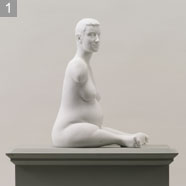
A few years ago I became vaguely aware that there was something of a campaign to find an appropriate monument to place on the fourth plinth. I say ‘vaguely’ because I paid little attention to this campaign, partly because I have better things to do with my time and partly because I learned that the process was to be decided by means of a competition under the auspices of the Mayor of London, Ken Livingstone. I anticipated that I would most likely disapprove of the outcome.
My instincts proved trustworthy yet again for, this last week, the winner was unveiled.
As you may already have guessed from the image, Ms. Lapper has never led anyone into battle nor has she ruled a kingdom. Instead, she has managed to bear a child despite being quite severely disabled. → Continue reading: We are the masters now
Paul Staines points out a splendid example of the French state doing its bit to support the world’s largest tyranny
As Taiwan’s democrats get bullets before ballots, France demonstrates its exceptionalism once again. This week the French navy began joint exercises with the Chinese navy. No, really.
Not content with just lobbying other EU countries to lift the arms embargo on China imposed in the wake of the Tiannamen Square massacre in 1989 (who says the French are always against free trade?), they are training with the Chinese navy. The official Chinese news agency, Xinhua, said they would be China’s biggest ever joint military exercises with a foreign power. (Note to Beijing, it took Churchill a single day to sink almost the entire French navy, but maybe you have not got many seafaring friends to learn from.)
Taiwan obviously is anxious about the situation – which they describe as a threatening show of force. The French not content with cruising the seas with Taiwan’s mortal enemy recently condemned President Chen Shui-bian’s plan to hold a referendum on missile defense as part of this coming Saturday’s election, prompting Taipei to suspend top-level ties with Paris.
I suppose with reduced opportunities for arms sales to Iraq the prospect of equipping the Chinese military appeals.
Paul Staines
Spotted at Samizdata.net HQ, a well known Samizdatista demonstrates multi-tasking…
… he may well have also been touch-typing on a laptop under the table using his toes.
The drivers of Britain’s famous black cabs, especially those widely used in London, are renowed for the robust independence of mind they bring to their job. Enterprising, hardworking and usually full of sharp intelligence, the drivers of our black cabs are a welcome reminder that parts of the British economy are in fine fettle. (My only beef is that they all seem to be West Ham soccer fans).
The same holds true north of the border, I am glad to say. This week I was up in Scotland for a business conference and on my way from Edinburgh Airport, the driver immediately felt free to tell me what he thought of British finance minister Gordon Brown (also a Scot) and his budget. (Brown delivered his budget speech to the House of Commons on Wednesday).
It is fair to say that this obviously hardworking driver despised the whole tax-and-spend culture of the present Labour government. The driver waxed lyrical in his hatred of Scotland’s new spendthrift and recently devolved parliament, wasteful public spending across the board, and of course, the ludicrously bloated costs of the new Scottish parliament building. The latter subject, in particular, is a scandal of monstrous proportions. The people of Scotland are truly steamed up on this issue.
My driver was true to the bracing laissez faire values of that great Scot, Adam Smith. My only problem, though, was that I understood only about a third of what the chap said.
Another election, another outrage, this time in Taiwan, where the President and his Vice President have been shot while out campaigning.
The injuries were not life threatening:
An unknown gunman fired at least one shot at Mr Chen’s campaign jeep as he rode in its open back alongside Vice-President Annette Lu, holding onto the vehicle’s roll bar and waving to adoring home-town crowds in the southern city of Tainan.
Mrs Lu felt a sharp pain near her right knee, then Mr Chen felt a blow to his lower abdomen, presidential chief of staff Chiou I-Jen said.
Mr Chen initially did not realise what had happened but realised he was injured when he felt blood seeping through his clothes. He ordered his motorcade to speed up and head for a hospital.
The Christian Science Monitor ponders what this might mean for the election. There is currently no word on the attacker, and what motives might be behind the attack. However, tensions in the area have been high, as President Chen is seen as a proponent of formally declaring Taiwan independent, a move that would infuriate China and possibly trigger a military confrontation.
The BBC reports that the European Parliament’s civil liberties committee has rejected the EU Commission’s agreement to automatically pass personal information about transatlantic passengers to US authorities. The committee concluded that:
“The agreement with the United States is not on a level that… gives enough protection to EU citizens”
Unfortunately, as the BBC article points out, the infamous EU democratic deficit means that “The parliament’s opinion has no legal force”.
|
Who Are We? The Samizdata people are a bunch of sinister and heavily armed globalist illuminati who seek to infect the entire world with the values of personal liberty and several property. Amongst our many crimes is a sense of humour and the intermittent use of British spelling.
We are also a varied group made up of social individualists, classical liberals, whigs, libertarians, extropians, futurists, ‘Porcupines’, Karl Popper fetishists, recovering neo-conservatives, crazed Ayn Rand worshipers, over-caffeinated Virginia Postrel devotees, witty Frédéric Bastiat wannabes, cypherpunks, minarchists, kritarchists and wild-eyed anarcho-capitalists from Britain, North America, Australia and Europe.
|






Recent Comments