We are developing the social individualist meta-context for the future. From the very serious to the extremely frivolous... lets see what is on the mind of the Samizdata people.
Samizdata, derived from Samizdat /n. - a system of clandestine publication of banned literature in the USSR [Russ.,= self-publishing house]
|
They need some stickers which say: “Warning: heading up Hamas can seriously damage your health“:
The head of the Hamas militant Islamic movement in Gaza, Abdel Aziz al-Rantissi, has been killed in a targeted Israeli missile strike on his car.
Mr Rantissi’s death came 26 days after the founder of Hamas, Sheikh Ahmed Yassin, was killed in another “targeted killing” by the Israeli military.
Next candidate, please.
Some months ago, David Carr and I had a quick and long forgotten conversation over the subject of withdrawal from the European Union. It is a hardy perennial that fades in and out of debate. This time, I was interested in the ‘Greenland option’ where a region had stayed loyal to the crown of Denmark but had exited the EEC. Similar constitutional anomalies bind the Channel Islands and the Isle of Man to the Crown. The option was not considered realistic because we concluded that the EU would never countenance losing larger portions of their members.
Think again! Labour MEP, Eluned Morgan, tabled a question to Romano Prodi, President of the European Commission, asking if Wales would remain a member of the European Union if it declared independence. Prodi appeared to indicate that any region declaring independence would have to reapply for membership.
Asked if a newly independent region would have to leave the EU and apply for accession afresh, Mr Prodi said: “When a part of the territory of a member state ceases to be a part of that state, eg because that territory becomes an independent state, the treaties will no longer apply to that state.
In other words, a newly independent region would, by the fact of its independence, become a third country with respect to the union and the treaties would, from the day of its independence, not apply any more on its territory.”
His answer, written on March 1, also said any application for EU membership would require negotiation and consent of other member states.
Plaid Cymru, the Welsh nationalist party, viewed the eruption as a spoiler for their spring conference and noted the constitutional implications:
But Plaid Cymru last night rubbished the claims. Jill Evans MEP described it as “nothing more than a spoiling attempt by New Labour on the eve of our Spring Conference”.
She said: “The United Kingdom is constituted as a state through the respective acts of Union in 1536 and 1707. If either act is repealed, the UK as a nation state will no longer exist. On the basis of Romano Prodi’s letter, if Wales and Scotland were to become independent, all component members of the UK including England would have to reapply for EU membership. These ridiculous claims should be treated with contempt and are pure nonsensical.”
If Prodi’s reading of European law is correct, then declarations of independence by the constituent parts of the United Kingdom, followed by the dissolution of the Union, would be sufficient for withdrawal from the European Union. This provides food for thought since the campaign for an English parliament and for English independence now has another virtuous outcome.
Good news so near St. Georges Day!
If imitation is the sincerest form of flattery then surely accreditation must run it a very close second. There may well be pundits and scribblers who do not experience the frisson of pride when their work is quoted in other media but, if so, then I have never met them.
Speaking for myself, I simply love it when other people link to my articles or quote from them. Nor is my satisfaction diminished by even the smallest degree who link to my articles as evidence that I am mad, bad and dangerous to know. It’s the recognition, stupid. Even if my attributors despise every single sentiment I ever express, at least they consider me significant enough to be worth drawing to the attention of others.
However, some people take quite the contrary view. In this case, a certain Mr. Greg Truscott of the South London Press.
It seems that Mr.Truscott has been filing reports about the nasty violent crimes which occur with disturbing regularity in and around South London and which are published on-line at the South London Press website (above). → Continue reading: “Quote me and I’ll sue”
As Antoine is fond of pointing out here, the French are not totally supine in the face of radical Islamism:
Yahia Cherif, who preached in Brest, on the coast of Brittany, was deported to Algiers after being found guilty of “proselytism in favour of radical Islam” and “active relations with a national or international Islamic movement linked to organisations promoting terrorist acts”.
He was also found to have incited violence and hatred against people due to their origin. During the hearing, a lawyer representing the interior ministry cited evidence supplied by French intelligence to accuse Cherif of calling for a jihad during a sermon on March 19. The call represented a threat to national security, he said.
Cherif had also asked his followers for active support of Jamal Zougam, the prime suspect held in connection with the Madrid bombings, in which 191 people died.
Here is the case against deporting Cherif:
His lawyer argued that he did not promote terrorism but had been a victim of it, since he had witnessed his own father’s murder in Algeria. He said he feared for Cherif’s safety at the hands of Algeria’s military authorities.
I know that there is an argument that people like this just, you know, giving sermons, is just them exercising their right to free speech, but meanwhile, this man was clearly breaking French law as it actually is, and from the sound of it he certainly intended his words to give rise to actions. So my immediate reaction to this story is, in the words of the Sergeant Major with the moustache played by Windsor Davies in It Ain’t Half Hot Mum: “Oh dear. How tragic.”
As was this. Not.
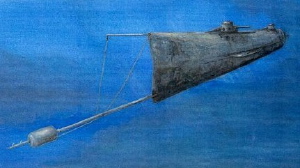
The Confederate crew of world’s first submarine (or more correctly ‘submersible’) use effectively used in combat, were buried with military honours yesterday in Charleston, South Carolina. Their boat, the CSS Hunley, was discovered in 1995 and raised in 2000 from where it sank in Charleston harbour in 1864. The Hunley went down shortly after having sunk a blockading US Navy armed sloop, the USS Housatonic.
This is an interesting end to a fascinating chapter in military history
Some readers who enjoy British history may recall that period in the 18th Century when highway robbers like Dick Turpin acquired a certain notoriety as they held travellers at gunpoint and stole valuables while simultaneously charming their female victims. Like most such ‘legends’, the truth was usually rather grubbier and more unpleasant.
Well, I had an example of being charmed into surrendering a large chunk of my wealth by force the other morning. As in the USA, where working-age citizens are currently going through the chores of filing their IRS forms, the British Inland Revenue is busy getting us all ready to pay our taxes. I received a form which said, “You have been chosen to receive this new short tax return.” Golly, how grateful am I supposed to feel? I have been ‘chosen’, apparently. It is made to sound as if I have been invited on board a millionaire’s yacht off St. Tropez for a spot of weekend sailing.
Even worse, the form ends with the little motto, no doubt dreamed up by some clever chap, “Tax doesn’t have to be taxing.” Aahhhh! You see, the Inland Revenue can make the experience of telling us how much wealth we must pay out an easy, even pleasurable experience.
Why do I go on about this? Well, in a subliminal way, forms like this encourage the citizen to accept the tax burden as a natural, and even wholly benign part of the human order. It is another way of wearing us down. And that is a bad thing. Personally, I am actually glad that the Americans have a nasty time filing their tax returns because once a year it reminds the citizens of Jefferson’s Republic of just how far they have gone from the modest government ambitions of the Founding Fathers. The easier we Brits can pay our taxes, the less angry we might be about the taxes in the first place.
Of course, this all leaves aside the issue of whether, even in a minarchist or anarcho-capitalist order, we could get by without some form of collective funding for stuff like external defence and internal courts and so on. I have a few thoughts but it is too big a topic for a single blog item. I’ll have to return to this point another time. Of course that’s no reason why others cannot have a go. Comments welcome as always.
Nigel Meek draws the attention of readers of the Libertarian Alliance Forum to this leader in yesterday’s Guardian. He is right to do so. It is short enough and good enough to be worth reproducing in full, which he does for LAF, and which I do for Samizdata now:
It is difficult to find anything in the European Union more perverse than its continuing subsidy of sugar. It fails every test miserably. It is economic madness since the EU is shelling out hundreds of millions of taxpayers’ money – that could be used to reduce its growing budget deficit – to grow crops at a loss that could be better grown elsewhere. It is immoral because subsidies prevent poor countries from growing sugar that would create hundreds of thousands of jobs. It is also unhealthy because it is encouraging the subsidised output of a product that the World Health Organisation, courageously – in view of the vested interests attacking it – says we should be cutting back on.
If the figures – published in a new Oxfam report, Dumping on the World, this week – were applied to any other industry, they would be laughed out of court. Oxfam claims the EU is spending €3.30 to export sugar worth €1, an almost unbelievable support of more than 300% – and that is only part of the elaborate welfare package bestowed on the industry. These hugely subsidised exports are dumped on developing countries, snuffing out potential economic growth that could enable them to work their way out of poverty. All they want is a level playing field. Is that too much to ask for? Oxfam – quoting World Bank figures – also claims that sugar costs 25 cents per pound weight to produce in the EU compared with 8 cents in India, 5.5 cents in Malawi and 4 cents in Brazil. The world price for raw sugar is 6 cents a pound. It is bizarre that European governments reconciled, albeit reluctantly, to call centres being subcontracted elsewhere will not let go of sugar output which, left to market forces, would long ago have migrated to the third world. Sugar producers, with twisted logic, use Brazil’s low cost of output as a reason for retaining subsidies on the grounds that it will not be really poor countries benefiting, only the medium poor.
The simplest solution would be to abolish all agriculture subsidies, even though it would, in the short term, hurt a minority of poor countries that might lose out to the likes of Brazil. Once exceptions are granted, then everything is up for grabs, and trade and talks would be dragged down by interminable bargaining. If complete abolition is deemed impracticable in the short term, then at the very least Europe should commit itself at once to the complete abolition of all export subsidies, direct and indirect. Apart from the huge relief it would bring to poor countries, it would also restore Europe’s long-lost moral leadership.
It would take more than one measure of this sort to “restore Europe’s long-lost moral leadership”, but if such an unattractive delusion is what it takes to get rid of these vile and murderous subsidies – yes murderous, because economic failure is a matter of life and death, especially when inflicted upon the very poor, then so be it. Apart from that, I see nothing here to disagree with.
I posted here last summer about this blog. It is still going strong, and the ideas embodied in it still seem to be having an impact.
A cynical attempt to reach out to the pro-free-trade blogosphere, which has to get a nod from the real operation, the Guardian itself, otherwise it just looks ridiculous? Maybe, but who cares? And I am sure that Mr kick-AAS means every word of it. Ancient proverb say: window dressing often take over shop. What matters is that this kind of thing is being said, right across the political spectrum.
Wired has a follow-up reporting on the controversy surrounding the airline companies hand-over passanger data to government contractors (TSA)designing and testing CAPPSII in 2002.
Two senators on Wednesday asked the Transportation Security Administration whether the agency violated federal rules by helping its contractors acquire passenger data, and why the agency told government investigators it didn’t have such data.
The senators also pressed the TSA for an explanation of why it hadn’t revealed the transfer of millions of passenger records to government contractors. Senate members had asked TSA officials directly whether they had done so, but the answer was no.
Two TSA agency spokesmen also denied to Wired News that any data transfer had taken place, saying that the project did not need data at the time.
But this week, American Airlines became the third airline to reveal that it turned over millions of passenger records to the government without informing the passengers. JetBlue and Northwest Airlines had earlier revealed that they too had transferred passenger records to government contractors. For the past eight months, TSA officials and spokesmen have repeatedly denied that any data transfer occurred. Two senators, Susan Collins (R-Maine) and Joe Lieberman (D-Connecticut) wrote:
We are concerned by potential Privacy Act and other implications of this reported incident. Moreover, TSA told the press, the General Accounting Office and Congress that it had not used any real-world data to test CAPPS II.
American Airlines has now indicated that it provided over 1 million passenger itineraries at TSA’s request, which raises the question of why agency officials told GAO that it did not have access to such data.
And there was much fudging as you can read in the article…
Much as I respect the analytical abilities of the CIA, surely I am not the only one who thinks the audio tape of ‘Osama bin Laden’ offering the hand of peace to Europe, provided Europe withdraws its troops from Muslim lands, is completely bogus.
Are we to believe that the head of that nasty global franchise called Al Qaeda cannot afford to purchase a cheap camcorder in a medina somewhere in Pakistan to reproduce the distressingly effective spectacle of Osama waving his finger at the USA and going “Nah nah, you can’t get me”? The notion he is hiding what he looks like after radical plastic surgery is, I suspect, the product of watching too many Hollywood movies.
Sorry, but I do not buy it. If I was a betting man, I would wager that Osama bin Laden died in Afghanistan years ago either when that group of people was attacked by US aircraft and ‘an unusually tall man was with them’ (can anyone point me at a link to that story?) or he was buried in a collapsed tunnel after one of a number of heavy US air attacks.
Only time will tell for sure but although Al Qaeda lives, I very much doubt Osama bin Laden does.
 
Both still dead
One of the great things about blogging is that you can make a very small and modest point about a very large and immodest matter. Maybe X has something to do with Y, possibly. Maybe a large truth could be found by combining P and Q. I don’t know what that something is, nor what that large truth might be. I’m just saying: maybe something, maybe some truth.
In that spirit, and provoked by this article about the rights and wrongs of genetic cloning, may I offer the thought here that the elaborate and highly developed tradition of thinking associated with the notion that the central planning of a national or even a global economy is not such a good idea as it once seemed to intelligent people, because of … all the usual reasons that readers and writers here are familiar with, might have something to say about the wisdom, and in particular the unwisdom, of genetic engineering.
Michael J. Sandel senses that there is something dodgy about going beyond the elimination of specific genetically inherited badnesses, that is to say illnesses, and into the territory of genetically programmed goodnesses, in the form of such things as greatly enhanced musical ability or much stronger muscles. I think he may well be right. Genetic goodness may turn out to be a lot more tricky – a lot more problematic, as modern parlance has it, to induce than many perhaps now assume.
I have always thought that genetic engineering will enable us to learn a lot. I now suspect however, that much of what we learn will of the sort that goes: “Well, that we should not have done!”
This distinction between genetically induced badness and angenetically induced goodness reminds me strongly of the distinction, familiar to most of us here, between the idea that government is okay when it sticks to removing or restraining obvious badnesses from society, such as crimes or foreign aggressions, but a lot less okay when it moves into the territory of encouraging goodnesses, in the form of such things as economic success, and (the big one now) health (by which I mean “public” health, a general disposition to be healthy in the whole population). Encouraging goodness in individual human bodies and minds by genetic means seems to me likely to be a process which will turn out to be illuminated by rather similar intellectual categories.
In short, our books about political philosophy may turn out to be great not just on the subject of political philosophy, but also to have a great and rather unexpected future in the area of “genetic philosophy”.
Please do not misunderstand this as the claim that individuals do not have the right to genetically engineer their own genes. It is not that sort of statement. What I am getting at is that certain sorts of genetic alteration may prove to be extremely unwise, in the same kind of way that ‘positive’ planning of the economy has proved unwise. Economies are too complicated to be planned. Individual human bodies (and minds), I surmise, might, for genetic engineering purposes, prove similarly complex and intractable.
(As far as individual rights are concerned, one of the reasons I favour the right to genetically engineer is precisely to enable the world to discover the dangers of genetic engineering on a small scale, rather than on the kind of scale that might result from centralised government control of the process. Positive government planning, of societal goodness, plus genetic engineering done in a similarly optimistic spirit, strikes me as a uniquely toxic combination of policies, and “toxic” might not even be a metaphor there. The usual argument nowadays is that genetic engineering is too dangerous to be left to individuals. I say it may be too dangerous not to be.)
In my head, this is not even a half-baked idea. Insofar as it has merit, I am sure that others have had the same sort of idea. Insofar as it does not, I say in my defence: it was just a thought.
So says local MP Robert Brokenshire. It is a moot point, actually. I am not convinced the social fabric in Adelaide is really under that much pressure. There is nothing wrong with Australia that making us responsible for ourselves again will not fix.
That is by the by. Mr Brokenshire is a local MP who is angered by this website, which is a sperm donor registry. The problem with the site is that it is run by, and aimed at, lesbian couples.
Mr Brokenshire has introduced a private Member’s bill in the South Australian Parliament to prohibit such websites.
At present, homosexual couples are not permitted to use publicly funded fertility centres in SA.
The Australian Sperm Donor Registry bypasses these laws because it only connects the donors with recipients – forcing potential mothers to arrange insemination themselves.
Ms Thompson, who started the registry with Ms Ryan almost a year ago, said they had ‘matched up’ about 70 recipients.
My first instinct is to ask why the State is funding any fertility clinics- but the notion that the taxpayer should pay for all health in Australia is one of those assumptions that is just not questioned out here.
Be that as it may, if the State decides to discriminate against certain people on the grounds of their sexuality, people, being free, try to work around such restrictions, in the way Ms Thompson and Ms Ryan have. But you cannot keep a good Statist down, and Mr Brokenshire and his Parliamentry thugs, who know what is best for this couple, and me as well, are on the case.
After all, there is a social fabric to protect.
I have not seen The Passion of The Christ, and don’t plan to. A friend of mine told me that after a while The Passion just became boring, and I think that is probably how it would be for me. It is not so much that I am opposed to Christianity (although I am), more that I do not like horror movies, although of course part of the reason I am opposed to Christianity is that the crucifixion parts of it are to me a lot like a horror movie already.
But as a movie phenomenon, The Passion is fascinating. Mel Gibson has made a fortune with this movie not because he was trying to make a fortune, but because he was trying not to. He wanted other people to invest in it. But everyone else thought it would be money down the drain, so they refused. So Gibson invested great gobs of his own money, and now he gets this Niagara of profit. From a film about Jesus Christ. The ironies just pile up.
Hollywood also disapproved of the The Passion on ideological grounds, because an accurate presentation of the Gospels version of the crucifixion sets the Jews up, yet again, as the villains of Western Civilisation. The Gospels, as far as Hollywood is concerned, are anti-Semitic. I agree with Hollywood about this. This is yet another reason why I am not a Christian. But none of that stopped Mel Gibson from doing The Passion. The great thing about the free market is that anyone can join in.
Changing the subject only somewhat, I note that James Lileks today ruminates about why there has not been much in the way of movie making about or around the subject of the 9/11 attacks. Basically, he says, the reason is that Hollywood disapproves of what such movies would have to say. Arabs bad. America good. George W. Bush good. Israel not part of the story. And Hollywood does not believe any of that. So, no 9/11. → Continue reading: Could someone do with 9/11 what Mel Gibson did with the crucifixion?
|
Who Are We? The Samizdata people are a bunch of sinister and heavily armed globalist illuminati who seek to infect the entire world with the values of personal liberty and several property. Amongst our many crimes is a sense of humour and the intermittent use of British spelling.
We are also a varied group made up of social individualists, classical liberals, whigs, libertarians, extropians, futurists, ‘Porcupines’, Karl Popper fetishists, recovering neo-conservatives, crazed Ayn Rand worshipers, over-caffeinated Virginia Postrel devotees, witty Frédéric Bastiat wannabes, cypherpunks, minarchists, kritarchists and wild-eyed anarcho-capitalists from Britain, North America, Australia and Europe.
|





Recent Comments