We are developing the social individualist meta-context for the future. From the very serious to the extremely frivolous... lets see what is on the mind of the Samizdata people.
Samizdata, derived from Samizdat /n. - a system of clandestine publication of banned literature in the USSR [Russ.,= self-publishing house]
|
One of my favourite jokes – and if you are any kind of friend of mine you have probably heard it several times already – concerns a man who goes, on his own, to the seaside. He swims around, having a good time. Then, two strong hands descend upon his shoulders and force him beneath the waves, and keep him under until he thinks that he is about to die, without even knowing why. Finally, the two strange hands allow him to the surface again, and it turns out that they are the hands of a total stranger, who excuses his strange and aggressive conduct by saying: “I’m sorry, I thought you were a friend of mine.”
Well, now, as David Carr is fond of noting whenever he sees it happening, reality seems to have gone one stage further than mere humour:
A teenager was hacked to death by three friends who attacked him with large scythes, a court heard.
What are friends for?
The Countryside Alliance continues its quixotic fight to use the approved levers of power to overturn the ban on hunting with hounds. Somehow the realisation that there is nothing at all ‘undemocratic’ about the fact they are being oppressed by the state has still not percolated through those worthy but rather thick country skulls.
Mr Jackson said the Countryside Alliance believed that the House of Commons acted unlawfully in forcing through the Parliament Act in 1949, without the consent of the House of Lords. Mr Jackson stressed that he was not challenging the supremacy of Parliament.
But why not? If Mr. Jackson believes that what is being done to him by Parliament is unjust, then why not challenge the supremacy of Parliament? There is nothing sacred about a bunch of lawmakers and a law is only as good as its enforcement. If the Countryside Alliance actually have the courage of their convictions, they must start challenging the right of the state to do whatever it wishes just because its ruling party has a majority in Parliament. Maybe if they realised that they are a minority and will always be a minority they would be less inclined to trust the old way of doing things. There is a long history of civil disobedience to duly constituted authority in the defence of what is right. That matters far more that what is or is not legal.
Hubris and self-absorption are almost pre-requisites for a career as a professional politician, but I suppose it is always possible to have ‘too much of a good thing’ in any line of work.
When Robert Kilroy-Silk joined the UKIP in a blaze of messianic self-publicity, I suppose those good folks at head office should have realised that his arrival was going to be a very mixed blessing. And of course no sooner did he arrive than he launched a bid to take over the leadership of the party from Roger Knapman.
I suppose the Knapman/Kilroy-Silk relationship never had particularly good auguries as Kilroy-Silk’s core political beliefs have always struck me as rather hazy for the most part and when actually glimpsed, of rather variable geometry. Knapman on the other hand is that rarest of rare things in British politics, an ideological man of conviction who often says what he really thinks whilst actually making sense. Upon hearing that Kilroy-Silk was flouncing off in a huff because the UKIP proved somehow inexplicably immune to his charms, Knapman is quoted as saying “break open the champagne”, and “It was nice knowing him, now ‘goodbye’. I would love to hear what he said in private.
But Kilroy-Silk has said he will start up a new political party called Veritas, so the best prankster in British politics since the late lamented Lord Sutch will still be around to entertain us. No doubt if the Kilroy-Silk Party does emerge, it will quickly be known by many as the ‘In Vino’ Party.
The Labour government is planning to introduce ceremonies for ‘citizenship’ and ‘coming of age’ to add the imprimatur of The State to being ‘British’. Yet surely one of the things that has always made the British so different from many of the people’s of Continental Europe who live with the legacy of Napoleon is that we have not really needed the state to tell us via ceremonies and ID cards that we are British… or that we are in reality ‘subjects’, a far more honest term that ‘citizen’. Even the United States has its strange hand-on-heart ceremonies in some schools in which they pledge of allegiance not just to the principles of constitutional governance but also to a bit of coloured cloth. Yet in Britain such notions of social identity have generally been, well, social and not some propagandising artifice of the state.
This is yet another part of moving Britain into the more Napoleonic traditional in which the state is the core around which everything rotates in a politicised fashion and the highest virtue is political engagement (not a view I share, to put it mildly, given my view of politics). Such things are alien in this country and yet another sign that our political masters are obsessed with the fetishizing democracy as a way to make as many aspects of life as possible political in nature and requiring the intermediation of the state for ever more things. Such ‘ceremonies’ may be banal but what they represent is far from trivial.
The Conservatives are promising tax cuts. Good for them.
Tax cuts are always more popular than political chatterers think they ought to be, and tax increases are always more unpopular than political chatterers think they ought to be. The chatterers talk a lot and persuade themselves that their opinion about these things is shared, but come election time, provided there are any politicians who have remained unbullied by them, the chatterers are always baffled and disappointed.
Promised tax cuts are appealing to voters, because they have a quite good chance of materialising, and once they do, the voters get to keep the money and spend it how they want.
But when it comes to tax increases, and the accompanying promises of better public services, the picture is very different. From time to time, surveys of the sort that political chatterers take very seriously ask voters a question along the following lines: Would you be willing to accept increased taxes in exchange for better public services? And often the answer comes back: Yes, we would.
However, reality does not ask voters this question. What the promise of increased taxes in exchange for promised better public services actually means is the certainty of increased taxes, but the mere possibility that public services will actually get any better in exchange. The voters’ money might be spent better, but it is at least as likely to be spent on idiotic make-work schemes and political pay-offs. Faced with that question, voters tend to vote: No.
So I say that this is a smart Conservative move. They do not look like they can win any time soon, but this may soften the next blow quite a bit. On the other hand, if the government steals this policy the way it has stolen so many other Conservative policies, that will plunge the Conservatives into further confusion. But I would be quite pleased.
If such tax cuts occur, public services will be no better and no worse than they would have been otherwise. This is because tax cuts are actually a cut in the rate of taxation, rather than in the total amount of tax collected. If tax rates are reduced, the economy cheers up a bit, and the total tax take, from all taxes combined, is as big as ever. On the other hand, if tax rates are increased, as the Liberal Democrats are threatening, the economy stalls, and although the yield from the increased taxes increases, the yield from all the other unchanged taxes declines, and the total tax take remains stagnant. Which is yet another reason why the tax-increases-in-xchange-for-better-public-services idea is so foolish, and why voters are so right to shun it.
I have always endured a distinctly uncomfortable ambivolence on the subject of the physical chastisement of children. My rational inclinations are to disapprove of it as a whole. The law protects adults from being physically assaulted by other adults and I find the arguments that seek to exempt youngsters from this law to be flawed and unpersuasive.
That said, I know that there are many good and loving parents who sometimes smack their children out of frustration or a temporary flare of temper. It may not be beneficial thing but, rarely does this cause any real harm. Consequently, I view the engagement of the machinery of law enforcement with family life with the utmost trepidation:
Parents in England and Wales who smack children so hard it leaves a mark will face up to five years in jail under new laws in force from Saturday.
Mild smacking is allowed under a “reasonable chastisement” defence against common assault.
The purported distinction is not one in which I have any degree of confidence. Law enforcement in this country is often patchy, capricious and incompetent. I expect that truly serious abusers will slip the net while normally conscientious parents who lash out once in a moment of uncustomary anger will find themselves facing a custodial sentence and ruination.
Even if that were not the case (and it is very much the case) the new laws will result in an entrenchment of a culture of fear and suspicion. Children contrive to harm themselves all the time by flying off of their bikes, falling out of trees and sticking themselves with sharp implements. I have already heard far too many plausible accounts of parents who are scared of taking their wounded charges to a hospital in case they are accused of abusing them
In another age and in different political and legal circumstances, I would not be too concerned about these new laws. I may even (cautiously) approve. But it is not possible to see these developments as anything other than another step in the process of the gradual nationalisation of the family.
Nor will anyone’s life be improved by this legislation. It is enacted, in part, because it serves the interests of the professional welfare classes whose wealth and status is entirely dependent on this kind of state activism and partly because of the unfortunately fashionable view that people cannot be trusted to arrange their own affairs in a satisfactory manner without the external discipline of regulatory control.
None of this means that I necessarily approve of parents who smack their children. Generally, I do not. But just leaving matters be is probably the least worst solution. Over the coming years, that object lesson will be driven home.
Al-Muhajiroun was the extremist organisation that recruited or converted young Muslims and British men to their political goal of a worldwide Islamic state, starting with the Emirate of Great Britain. It was never clear whether they would recognise England, Scotland and Wales but the overall objective was clear. A troublesome development was the disbandment of this organisation which appeared to portend greater underground activity on the part of the radicals.
Hannah Strange, UK correspondent for UPI, was attending a women’s conference where Sheikh Omar, the former head of Al-Muhajiroun, was setting out his philosophy: Since Britain had invaded Iraq, the covenant of security that protected these islands from Islam was now broken, and as a consequence, war was declared. No doubt these sentiments weighed heavily on his heart since his patriotism was not in doubt:
Either withdraw your own forces or don’t expect Muslims not to support the Muslims abroad,” said Sheikh Omar, adding that the West supports dictators abroad when they see fit.
If the government met those conditions, Muslims could continue to live peacefully in Britain, he said.
“After that there will be no need to fight anybody, we’ve been living in peace here for years, and we can continue to live in peace,” he said. “We love Britain.”
However, the usual epithets on 9/11, killing all non-Muslims and blaming the Jews outweighed his love of bully beef and the Queen. It was the story that they always tell themselves. They are not to blame. They were invaded. They are merely defending themselves against the hand that is raised against them. Indeed, their pathology is a puzzling outpouring of delusional bombast reinforced by the blood of innocents. → Continue reading: Who will rid us of these turbulent kuffaar?
I find this all too persuasive. George Trefgarne sketches out how Tony Blair could win not only the next election by a mile, but then the Euro-referendum by enough to settle the matter for ever.
Key towards-the-end paragraph:
As the polls start to switch, other arguments are deployed by the pro-constitution lobby, of which the most potent is that the real choice is between ratifying the constitution, with all its disadvantages, or being reduced to a colonial outpost of George W Bush’s America. Scare stories are spread that withdrawing would also mean the end to cheap flights to France and Spain. Then, in March 2006, a referendum results in a Yes vote, by 52 per cent to 48 per cent – and Teflon Tony will have done it again.
At the heart of Trefgarne’s view of Britain now is the utter and continuing hopelessness of the Conservatives.
I confess that once upon a time I expected that America would be an issue to unite the Conservatives while still dividing Labour. But for many months now the Conservatives have been as split about America as they are about everything else. This means that they will remain a shambles for the foreseeable future, and that they will be in no state to argue persuasively against all that “colonial outpost of Bush’s America” stuff, as and when it comes on stream. Even more than now, I mean.
Severe irony has swept the northern parts of Britain over this weekend. Samizdata readers may be interested to know that Britain, the north of it especially, has been afflicted with flooding caused by the old fashioned method: a lot of water dropping out of the sky, all of it trying to use the same rivers.
It has also been extremely windy. It has been fairly breezy down here in London.
The city of Carlisle, the most northerly habitation in England, has been especially hard hit. Last night, the place with without any power, and tonight I heard a TV weather person predicting more rain for the area. There have been casualties, but the deaths so far are in single figures and look like they will stay that way.
[Correction!! Carlisle is NOT the most northern place in England. See comments 3, with a link to a map, and 4. I had at the top right of the Anglo-Scottish border but it is at the bottom left. Apologies.)
Under the circumstances, this report, dated last Friday just as the city was filling up with water, is particularly ironic. It is about Carlisle’s efforts to collect money for the Asian Tsunami victims:
THE DEVASTATION wrought by the tsunami disaster was brought close to home this week as one Carlisle woman waits for news of her missing brother, another family recovers from the trauma they suffered, and thousands contribute to fundraising.
Disaster caused by un welcome water was about to be brought a little closer to home even than that.
Musicians and singers Will Harris, James Formby, Martin Lee, Ben Gates and Tony Mason will perform in The Source tomorrow night at 8pm.
I do not think that this event was able to proceed as planned, and if anything similar is rearranged in the near future, I suspect that at least some of the proceeds will be distributed nearer home.
If you live in Britain and you do not think crime, casual violence and the background of anti-social behaviour is mounting problems based on the evidence of your own eyes, then stop reading now and keep taking the NHS prescribed Prozac. For all the rest of you, take a look at this report by Civitas.
Of course the government and police claim the truth lies elesewhere. No prize for guessing who I am inclined to believe.
If we can have an ‘absurdity of lawmakers’, I suppose we can have a ‘stupidity of doctors’. In the face of attempts to deregulate drinking in Britain, a nation which is unusually restrictive when it comes alcohol compared to most western nations, we have Prof Ian Gilmore, a spokesman for the Royal College of Physicians (an extreme statist professional organisation and political lobby) saying:
“We are facing an epidemic of alcohol-related harm in this country, and to extend the licensing hours flies in the face of common sense as well as the evidence we have got.”
Prof Gilmore said plans to stagger the times people left pubs were an attempt to manage drunkenness rather than prevent it.
He added that the key to tackling the problem was reducing the availability of alcohol and increasing the price.
“I think it is fanciful to think we can turn ourselves into a French-style wine-tippling culture merely by licensing regulations,” he told BBC Radio 4’s Today programme.
However he does not explain why digging the same hole deeper will make things better, given that Britain is already far more regulated than France and also has more serious alcohol related problems. Like most regulatory authoritarians, Gilmore and the RCP simply do not have either the imagination to think that perhaps the over-regulation caused the problem, nor do they have the socialisation to have the notion occur to them that imposing their views on others is immoral.
If people get drunk and commit crimes, punish the criminals, not those who drink and do not commit crimes. And in any case, the true criminals are those who added times limits to drinking hours which more or less institutionalised binge drinking.
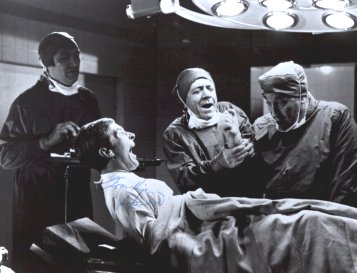
The political class at work
The call centre, known as the Casualty Bureau Appeal Centre, that the FCO established to take calls from concerned relatives or friends, has taken flak as many have found that they were unable to get through to the operators.
But Sri Lankan national Ivan Corea, chief executive of the Dream Harvest Group, in Stratford, east London, said he had called repeatedly on Sunday without success.
“We have been trying to contact relatives in Sri Lanka, all lines are engaged,” he said.
Kevin Tunbridge, of Bury St Edmunds, in Suffolk, said he has had no contact with his son Luke, 20, or his son’s girlfriend Laura Blackman, 20, who are a coastal resort in south Thailand.
“I have tried to contact the Foreign Office and the Bangkok Embassy all day, but all I have reached is a recorded BT message. All we want is some information,” he said.
There is no doubt that FCO civil servants have been working in an emergency situation to provide those who do succeed in contacting them with the necessary information. However, accusations of understaffing and inadequate capacity have been levelled against the Foreign Office by the Conservative MP for Aldershot, Gerald Howarth, who has received complaints from his constituents.
The FCO has replied to criticisms by stating that they have had to field an unprecedented number of telephone calls including inappropriate inquiries concerning flights and travel advice. The unfriendly structure of their website may have contributed to this state of affairs.
Commander Ronald McPherson, who is in charge of the Hendon operation, said the volume of calls was among the highest levels they had experienced for a mass casualty incident, including September 11.
He said: “Since we opened, the lines have permanently been at capacity.”
Mr McPherson said staff were taking calls from people from anywhere in the world concerned about relatives or loved ones who were UK nationals.
A Foreign Office spokesman also stressed the system had been taking an unprecedented volume of calls, and said consular staff in Thailand were working through the night to answer inquiries.
Although this is an unprecedented situation, emergency call centres are supposed to deal with emergencies and it is noteworthy that McPherson stated that the Appeal Centre was “at capacity” rather than promising to “increase capacity”. Does this mean Buggins turn for those who have to wait on the line until they obtain an operator?
It is the FCO’s role to deal with situations such as this catastrophe. They have dropped the ball.
|
Who Are We? The Samizdata people are a bunch of sinister and heavily armed globalist illuminati who seek to infect the entire world with the values of personal liberty and several property. Amongst our many crimes is a sense of humour and the intermittent use of British spelling.
We are also a varied group made up of social individualists, classical liberals, whigs, libertarians, extropians, futurists, ‘Porcupines’, Karl Popper fetishists, recovering neo-conservatives, crazed Ayn Rand worshipers, over-caffeinated Virginia Postrel devotees, witty Frédéric Bastiat wannabes, cypherpunks, minarchists, kritarchists and wild-eyed anarcho-capitalists from Britain, North America, Australia and Europe.
|




