We are developing the social individualist meta-context for the future. From the very serious to the extremely frivolous... lets see what is on the mind of the Samizdata people.
Samizdata, derived from Samizdat /n. - a system of clandestine publication of banned literature in the USSR [Russ.,= self-publishing house]
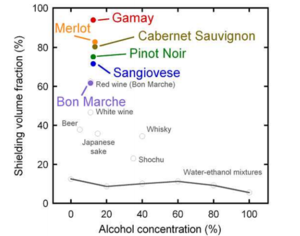
Last year, physicists discovered that red wine can turn certain materials into superconductors. Now they’ve found that Beaujolais works best and think they know why.
“To the nearest whole number, the percentage of the world’s energy that comes from wind turbines today is: zero. Despite the regressive subsidy (pushing pensioners into fuel poverty while improving the wine cellars of grand estates), despite tearing rural communities apart, killing jobs, despoiling views, erecting pylons, felling forests, killing bats and eagles, causing industrial accidents, clogging motorways, polluting lakes in Inner Mongolia with the toxic and radioactive tailings from refining neodymium, a ton of which is in the average turbine – despite all this, the total energy generated each day by wind has yet to reach half a per cent worldwide.”
A couple of months ago now, I went ahead and bought that new camera that I had for quite a while been thinking about buying. The circumstance that provoked me into making a decision earlier than I otherwise would have done was a trip, early in February, to Paris. Yes, it was cold:
That’s a water feature, somewhat frozen when I photoed it, in La Défense, the big clump of modern architecture in the west of Paris.
The thing that clinched it for it, in favour of the Panasonic Lumix FZ150, was how reviewer after reviewer used phrases like “an all round winner” and “all round best”, as in best for the sort of camera that I wanted, when writing about it. Such talk suggested to me: excellence in what I knew I wanted (zoom, picture quality, good video recording) together with excellence in other areas that I would only learn about after I had started using the thing. So it is proving.
The other camera I was considering buying was the Canon SX40 HS. I can’t compare my new Lumix with that, and will presumably never know for sure if I made the exact right choice. But I can compare my new Lumix with all the previous cameras I have ever owned, and in particular with my most recent previous camera, a Canon S5 IS. And I can now tell you that I am a very happy snapper. Could I have chosen even better? Perhaps. Have I meanwhile chosen well? It certainly feels that way now.
The x24 zoom supplied by the new Lumix is wonderful, just as I expected it would be. The Canon SX40 HS has x35 zoom, but I reckoned that x24 would suffice for my purposes and so it is proving:
That’s a snap taken last week from Primrose Hill. On a typical London day, the limits of how far your camera can see with clarity are set not by its lens but by the clarity of the air, which is mostly set at: not very. So I am very happy with my new zoom superpower.
According to a news brief from a Janes newsletter, the move into the realm of what was once science fiction weaponry continues apace:
US Navy receives EM railgun prototype.
The US Navy (USN) has taken delivery and started testing a prototype electromagnetic (EM) railgun from BAE Systems as the service continues to develop a surface ship gun that can fire a projectile 50-100 n miles (93-185 km) without using propellants. General Atomics is due to deliver its competing prototype to the USN’s Office of Naval Research (ONR) in April
Charlie Stross writes great science fiction and a blog which usually leaves me wondering how I can enjoy so much the novels of a man with whom I agree so little. In a recent post he linked to an article by UCSD associate professor of physics Tom Murphy to explain why space colonisation will not happen. Since the site is called “Do the Math” I was expecting some numerical analysis of space colonisation. Instead the article contains lots of reasons why space travel is hard and slow and requires lots of energy and is not likely to be done much more by NASA, but nothing that suggests it violates the laws of physics.
I like physicists. They do real science that gets answers from proper observations. So I was a bit disappointed by the space article and went in search of goodness. There must be some good insight that a physicist like Murphy can offer.
He analyses the growth of energy consumption. Since 1650, total energy usage of the United States has increased by about a factor of 10 every 100 years. If energy production continues to accelerate at this rate, we’ll heat the atmosphere to 100C in 450 years. Murphy is not saying this will happen, he is saying that there is a limit to how much energy we will want to produce. So far so good. But how much energy can a person use? Why does it matter?
Once we appreciate that physical growth must one day cease (or reverse), we can come to realize that all economic growth must similarly end. This last point may be hard to swallow, given our ability to innovate, improve efficiency, etc. But this topic will be put off for another post.
So this is to be a Limits To Growth argument. In this other post Murphy talks a lot about the limits to how energy efficient things can be. He is right that it will always take a certain amount of energy to heat food, for example, and that there are processes that can not be improved beyond physical limits. But he seems unable to imagine economic growth without growing use of energy. Doing the same task with half the energy, something that is a routine advance in computing technology, is economic growth. Murphy admits this, but gets hung up on the fact that these other things can not improve. This is a problem, because
As long as these physically-bounded activities comprise a finite portion of our portfolio, no amount of gadget refinement will allow indefinite economic growth. If it did, eventually economic activity would be wholly dominated by us “servicing” each other, and not the physical “stuff.”
To which I say: what is wrong with that? Here is what Murphy thinks is wrong with that, and here we get to what may be his fundamental error:
The important result is that trying to maintain a growth economy in a world of tapering raw energy growth (perhaps accompanied by leveling population) and diminishing gains from efficiency improvements would require the “other” category of activity to eventually dominate the economy. This would mean that an increasingly small fraction of economic activity would depend heavily on energy, so that food production, manufacturing, transportation, etc. would be relegated to economic insignificance. Activities like selling and buying existing houses, financial transactions, innovations (including new ways to move money around), fashion, and psychotherapy will be effectively all that’s left. Consequently, the price of food, energy, and manufacturing would drop to negligible levels relative to the fluffy stuff. And is this realistic—that a vital resource at its physical limit gets arbitrarily cheap? Bizarre.
This scenario has many problems. For instance, if food production shrinks to 1% of our economy, while staying at a comparable absolute scale as it is today (we must eat, after all), then food is effectively very cheap relative to the paychecks that let us enjoy the fruits of the broader economy. This would mean that farmers’ wages would sink far lower than they are today relative to other members of society, so they could not enjoy the innovations and improvements the rest of us can pay for.
The first paragraph simply lacks imagination, but the second one is almost unforgivable. Food production has already gone from being nearly 100% of the economy to a much smaller proportion of it. Are farmers poorer as a result? Of course not. There are fewer of them and each one produces food for more people. This is how food has got cheaper in the first place. A human body needs 100 Watts to work. We could completely automate food production using some multiple of 100 Watts per person which is only a small proportion of each person’s energy budget, and there is your almost free food. With this kind of material abundance economic activity can be completely intellectual, no problem at all.
Can growth continue forever after that? It is possible that we will hit some limit of how much computation, and therefore intellectual activity, can be done with the available energy. Ray Kurzweil has tried to calculate the physical limits of computation and his answers are in units of how many entire civilisations can be simulated per second. So the limits are quite high.
This is Murphy’s other error. He writes, “I am unsettled by my growing concerns about the viability of our future”. In response to these concerns he proposes abandoning growth, not having kids and not eating meat. But he has gone the wrong way. He calculates that there are limits and is afraid of attempting to reach them. If you flip the argument around, what physics tells us is just how much wealth is possible. I have already described how material abundance can be had for very little energy. There is plenty of energy for a much larger population to live a much longer life with no material concerns and as much entertainment and intellectual stimulation as a person could want. Perhaps Murphy knows this, and it is the source of his cognitive dissonance when he writes, “such worrying is not consistent with who I am.”
The Padfone is supposedly going to be available in April and now has a keyboard attachment too. There’s a good chance I will buy one.
The point of the Padfone is that it is a mobile phone, a tablet, and a regular computer with a regular keyboard, all in one big clutch of stuff. It has just the one “brain” so to speak, and it is all in the phone. When you want the tablet or the computer to power up, you stick the phone inside the tablet, and the phone does everything from in there.
This is what it all now consists of:
And this is how the phone goes into the back of the screen:
And here is video of the(se) thing(s), being demonstrated by someone who knows his way around it/them.
Also prompted by Rob Fisher, I did a posting here about this same gadget last July, when it was merely due Real Soon Now. I am especially proud of this bit of commenting on that from me (which follows on from a bit about how Apple kit (such as my Apple keyboard which I use with my otherwise totally PC PC – which still works absolutely fine) just works more nicely:
And I am starting to love Asus in a similar, and yet also completely opposite, way. They too are now setting new standards. Not in the sense that their stuff works, the way Apple stuff works. It doesn’t. But, it does work, as a specification. Their stuff says to everyone else: this is what you now have to make work, and this is what you have to charge for it. Look at all the people blogging about this, and even pre-ordering it, poor fools. This is the next Thing, people. Just do it.
Not every commenter agreed that this Padfone idea was a runner. Many thought the demand just would not be there for this new set of toys, and some who did think the idea a good one doubted whether the Asus version would be a success. We shall soon be finding out who was right.
Personally I love the idea, but have my doubts about Asus making it work well (based on bad experiences with the Asus Eee-PC). If I am wrong, and this spec doesn’t catch on, it will be Asus and their immitators who lose money, not me. If only the world’s financial system could work this well.
If this set of toys, or some set very like it, does catch on, my non-geek sense is that this will maybe represent a huge breakthrough for Google and their Android operating system, because Android was all along designed with this kind of integrated all-in-one system in mind? Yes? Maybe: no. What do I know? But, comments on that last point in particular would be much appreciated.
The other day I wrote a slightly lighthearted short item about the use of drones (in this case, by civilians). But it is clear that the use of these things, such as by the Coalition forces in the Middle East, for example, or by other agencies of states and private entities, raises a number of important ethical, military and related points. Over at the Cato Institute, there is an interesting collection of articles on this matter, which I recommend if you have the time to go through them.
An issue that bothers me, although it is not clear what the solution is, is when terrorist forces get their hands on such things and put WMDs in them. We cannot just assume that this is the stuff of Hollywood movies – the threat must be plausible in the not-so-distant future and I imagine and hope that our own defence forces are thinking about what to do about it. Another serious worry is that if we can send thousands of remotely controlled aircraft or sea vessels and destroy targets without putting our own humans in danger, that might encourage governments to get increasingly arrogant and reckless in the projection of force. (Think of how British forces thought they could easily control most of Africa via the Maxim gun, only to find how this technology would eventually be thrown at them in the First World War).
And this book, Wired For War, is an eye-popping tour around the use of modern technology and how it will effect warfare, including issues surrounding non-state actors. But remember, before getting nightmares, that the impact of this new tech will not, in terms of its impact, be necessarily any more severe than say the development of the muzzle-loading gun, the ironclad warship or the helicopter. And principles of self defence and the need to stand up to bullies while having the humility to realise the limits of state action, are unchanged.
“By now many will have seen the news stories reporting how an animal rights group sent up a small drone with cameras attached to take video of a group of hunters out on a pigeon shoot. The hunters responded to the drone by shooting it down.”
Classic. The author of this item, Kenneth Anderson, goes on to consider some of the legal issues posed by the use of drones not just by the military and law enforcement bodies, but private civilians.
I want one. And you can buy them on the internet. One such drone gets checked out by Technology Review.
“The late Douglas Adams once said that any technology that exists when you are born is a normal part of the world; anything invented before you turn 35 is exciting and creative; and anything invented after you turn 35 is against the natural order of things . It’s not a new development: Socrates warned against learning to write, saying it would “create forgetfulness in the learners’ souls, because they will not use their memories”.
– Tom Chivers, knocking down some lazy assumptions about video games, an issue that sometimes comes up as a target by today’s puritans.
The subject gives me an excuse to re-recommend this book by Gerard Jones, now a few years’ old, that argues that a lot of video games, including violent ones, are a healthy thing for children to play.
“Each example of information technology starts out with early-adoption versions that do not work very well and that are unaffordable except by the elite. Subsequently the technology works a bit better and becomes merely expensive. Then it works quite well and becomes inexpensive. Finally it works extremely well and is almost free. The cell phone, for example, is somewhere between the last two stages. Consider that a decade ago if a character in a movie took out a portable telephone, this was an indication that this person must be very wealthy, powerful, or both. Yet there are societies around the world in which the majority of the population were farming with their hands two decades ago and now have thriving information-based economies with widespread use of cell phones (for example, Asian societies, including rural areas of China).”
I like this point about agriculture at the end. A few years ago, my father, a retired farmer, showed me a satellite photograph that had been taken of our family farm, and provided by his agronomist consultant, showing which parts of a field needed more fertiliser, had better soil conditions and drainage, and so on. In two generations, the Suffolk farm had gone from a process where it took the whole of late July to late September, with 20 people, to get in the harvest, to just two guys using a massive John Deere combine harvester, some big trucks to carry the grain, and a state-of-the-art grain store with drying, filtering and cleaning equipment. And we just take it for granted that this level of technological change has happened, and is possible. So we should perhaps not be so despondent about the future.
There are all kinds of useful links on the Web to such satellite links of farmland, as well as other categories for business and scientific use. Here is the ResMap site, for instance. The Economist has a short item on the agricultural uses of space technology.
The Samizdata people are a bunch of sinister and heavily armed globalist illuminati who seek to infect the entire world with the values of personal liberty and several property. Amongst our many crimes is a sense of humour and the intermittent use of British spelling.
We are also a varied group made up of social individualists, classical liberals, whigs, libertarians, extropians, futurists, ‘Porcupines’, Karl Popper fetishists, recovering neo-conservatives, crazed Ayn Rand worshipers, over-caffeinated Virginia Postrel devotees, witty Frédéric Bastiat wannabes, cypherpunks, minarchists, kritarchists and wild-eyed anarcho-capitalists from Britain, North America, Australia and Europe.
All content on this website (including text, photographs, audio files, and any other original works), unless otherwise noted, is licensed under a Creative Commons License. Powered by WordPress & Atahualpa










Recent Comments