We are developing the social individualist meta-context for the future. From the very serious to the extremely frivolous... lets see what is on the mind of the Samizdata people.
Samizdata, derived from Samizdat /n. - a system of clandestine publication of banned literature in the USSR [Russ.,= self-publishing house]
|
The new unified identification system with its associated up-to-the-minute database will streamline government, reduce fraud and tax evasion, make it easier to stop people “falling between the cracks” of different government departments, provide a convenient single means for citizens to prove their identity, and protect us all from terrorism. If you have nothing to hide you have nothing to fear.
What will bring about all these benefits? It sounds very like the UK Identity Cards Act 2006, but that cannot be since various malcontents forced the Act’s repeal in 2010. While it is true that for the British Civil Servant no setback is ever permanent, for now the torch has passed to Japan, where the latest version of the Eternal Scheme is called “My Number”.
Even in such a cooperative and law-abiding culture as Japan there are the inevitable troublemakers:
More Japan citizens sue gov’t over My Number system
Around 30 citizens in central and southwestern Japan filed lawsuits Thursday with regional courts, demanding the government suspend the use of identification numbers under the newly launched My Number social security and tax number system.
The lawsuits are the latest in a string of cases in which residents and lawyers argue that the right to privacy is endangered by the system, which allocates a 12-digit identification number to every resident of Japan, including foreign nationals, to simplify administrative procedures for taxation and social security.
…
Mitsuhiro Kato, who heads the lawyers’ group in the lawsuit with the Nagoya District Court, said at a press conference, “There were cases in which personal information was (illegally) sold and bought. Once the use of My Number expands, the state would come to control individual activities.”
According to the lawsuit, the action to collect citizens’ personal information without their consent infringes on their right to manage their own personal information. The plaintiffs are also worried about the risk of their personal information being leaked given the insufficient security measures currently in place.
My Number legislation has been enacted to make it easier for tax and other authorities to discover cases of tax evasion and wrongful receipt of welfare benefits.
But public concerns have grown over the government’s handling of personal information under the My Number system following massive data leaks from the Japan Pension Service in the wake of cyberattacks in May.
Here is a little more about that massive data leak from, or rather hack of, the Japanese pension system: 1.25 million affected by Japan Pension Service hack.
But fear not:
The hacked computers were not connected online to the fund’s core computer system, which keeps financial details of the pension system’s members, officials said. No illicit access to the core system, which contains the most sensitive information, such as the amount of premiums paid by and the amount of benefits paid to each individual, has been detected, they said, adding that they are still investigating the incident.
It is remarkable how when we read about these government data security breaches in any country, the most alarming possibilities always seem to have been avoided. Some special providence must protect government databases.
The public face of My Number is provided by popular actress Aya Ueto and a rabbit-like mascot with numbers in place of eyes called “Maina-chan”.
The Daily Mail reports:
April Fools is no laughing matter, China’s official news service intoned Friday, saying the Western tradition of opening spring with a gag is un-Chinese. The official news agency Xinhua’s stiffly worded post on micro-blog Weibo declared: “Today is the West’s so-called ‘April Fools'”. The occasion “does not conform with our nation’s cultural traditions, nor does it conform with the core values of socialism“, it added.
“Don’t believe rumours, don’t create rumours and don’t spread rumours,” it said, capping off the note with a smiley emoticon. A cartoon accompanying the post showed two phones “spreading rumours.” A finger pointing at them is accompanied by a word bubble that says “breaking the law”. Spreading rumours online can be a violation of Chinese law.
But the country’s Internet users met the reminder with a collective guffaw, suggesting that in China, every day is April Fools. “You speak lies every day, use government policy, data, to trick the people in every way. What’s up, what’s down? What’s wrong? What’s right? We’re on to you,” one Weibo commenter said. Other users likened the post to the satirical American newspaper The Onion. “The most amusing ‘April Fools’ news is that Xinhua is seriously saying ‘don’t believe rumours’,” said one.
One has to admire Xinhua’s deadpan delivery, but didn’t including the smiley rather give the game away?
Today’s Sisyphus is China. More particularly, the Chinese authorities. They are determined to roll that boulder uphill. The path of least resistance for the boulder, however, is downward. Gravity, after all, is a bitch. The Chinese stock market is still comparatively young, and as stable as any toddler overwhelmed by parental expectations. With their boulder beset by the giant suck of gravity, China’s Sisyphus first cut rates, and trimmed banks’ reserve ratios.
The boulder continued to roll downhill.
– Tim Price
…here’s a theory:
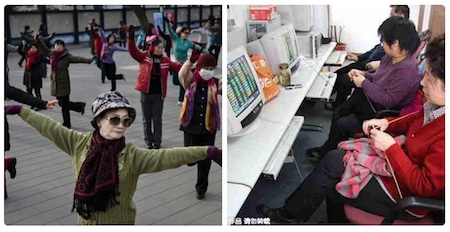
I apologise for the non-Twitterish look of this but it seems Samizdata’s all-knowing editing software doesn’t like scripts and I don’t have the patience to select, save and edit each tweet individually.
Update
It occurs to me there’s a bit missing from the tale. And just to prove that this really was on Twitter:
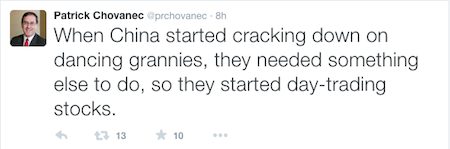
Apple’s removal of a American Civil War game from its app store due to it showing a Confederate flag (yeah I know 😀 ) prompted such widespread derision across the internet from such a wide range of the political spectrum that lo and behold, the app has been reinstated. One might assume a multi-gazillion dollar company would have sufficient checks and balances to stop Le Grand Fromage from making a complete pilchard of himself and his company in the first place, but at least common sense has eventually prevailed.
And as for a certain flag maker declining to manufacture Confederate flags any more, well one company’s boycott is another company’s business opportunity.
The G7 has agreed that the Chinese yuan should be part of an international basket of reference currencies. Does this technically make the Yuan a basket case? 😉
Yeah I know, slow day.
Chinese government cyber division accused of hacking Google is a very self explanatory headline and I hope this vulnerability will be addressed swiftly.
But of course the NSA would never do that. They do not need to when they have FISA courts to rubber stamp any fishing expeditions they wish to carry out. No need to break in when you have a spare set of keys under the doormat any time you want to look around.
Via a mailing from Jews for the Preservation of Firearms Ownership, I was directed to this interesting development:
Vladimir Putin’s Russia Adopts Concealed Carry
Russia, which according to official figures has the fifth highest murder rate in the world, has relaxed its gun ownership laws.
Yep. The land of Vladimir Putin, run by an oligarchical collection of cronies and criminals, is about to relax their gun laws… And not by just a little. After the reforms, they’ll make some US jurisdictions look positively Soviet. While places like New York and Washington DC continue to make it (almost) impossible to get a permit for carrying a handgun, Putin’s Russia is about to make it easier.
Previously, Russians were only permitted to own firearms (subject to approval) for hunting or sporting. But under the new law they will soon be allowed to carry guns, open or concealed, for the purposes of self-defense. (Yeah… A background check and training will be a prerequisite.)
And let’s face it, having a gun for self-defense is probably not the worst idea in Russia. While America saw its share of homicides in 2011 (roughly 13,600), Putin’s homeland saw far more… Despite having a population that is almost half of the US, Russia recorded over 21,000 homicides in the same year. (Wow… So much for believing that gun control works, right Chicago?) The new laws aim to curb that trend, and add to Russia’s homeland defense against outside threats.
The report above is by Michael Schaus and links in turn to this report by Tom Porter in the International Business Times.
There is a good article on TechRaptor about alleged Chinese intrusions into iCloud.
Greatfire.org, a website dedicated to monitoring and combating online censorship in China, has provided technical evidence to substantiate these allegations. Apple was already facing some heat after pulling anti-censorship apps from it’s iStore and also it’s recent decision to move iCloud storage of Chinese user data to centers within mainland china.
And just in case you think China is the only Bad Guys we need to worry about…
Of course, no one should pretend that this kind of spying only goes on in repressive countries like China. In comparison to the NSA use of ‘fiber-optic splitters’ to copy and filter data directly from the telecommunications backbone, a MITM attack seems rather quaint. Furthermore, it was reported earlier this year that the NSA had capitalized on the Heartbleed bug to steal passwords and other sensitive information.
Big Brother has many guises.
We in the West proclaimed that what set us apart were free speech, free movement, free(ish) markets,rule of law and democratic elections; and while not the whole truth it’s still mostly true.
I say mostly in this context because rich, prosperous, flourishing Hong Hong had all those attributes except the last: democratic elections.
Yep, it turns out no elections were necessary in a society based on the sound principles of low taxes, low regulation, free movement, and rule of law – it made them rich extraordinarily quickly. Who’d want to vote that away? Well quite a few folk if elections around the world are any indication.
So what are we to make of the Hong Kong ‘democracy’ protests? On one hand I find myself saying, ‘go get ‘em tiger,’ in support of the protesters. On the other, I’m wondering if they should be careful what they wish for.
– the delightfully pseudonymous ‘Suzuki Samurai‘
I found this interesting:
Apple Inc has begun storing personal data for some Chinese users on servers provided by China Telecom, marking the first time that the company has stored user data on mainland Chinese soil. Apple attributed the move to an effort to improve the speed and reliability of its service. It also represents a departure from the policies of some technology companies, notably Google Inc, which has long refused to build data centres in China due to censorship and privacy concerns.
Now I can certainly see why making it easy for the ghastly Chinese authorities to spy on people would be undesirable, but I wonder… where to locate the data centres then? Presumably not in the USA or UK if state access to people’s data is the big problem right, right? 😉
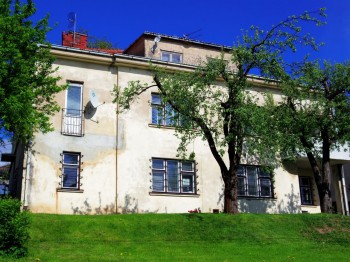
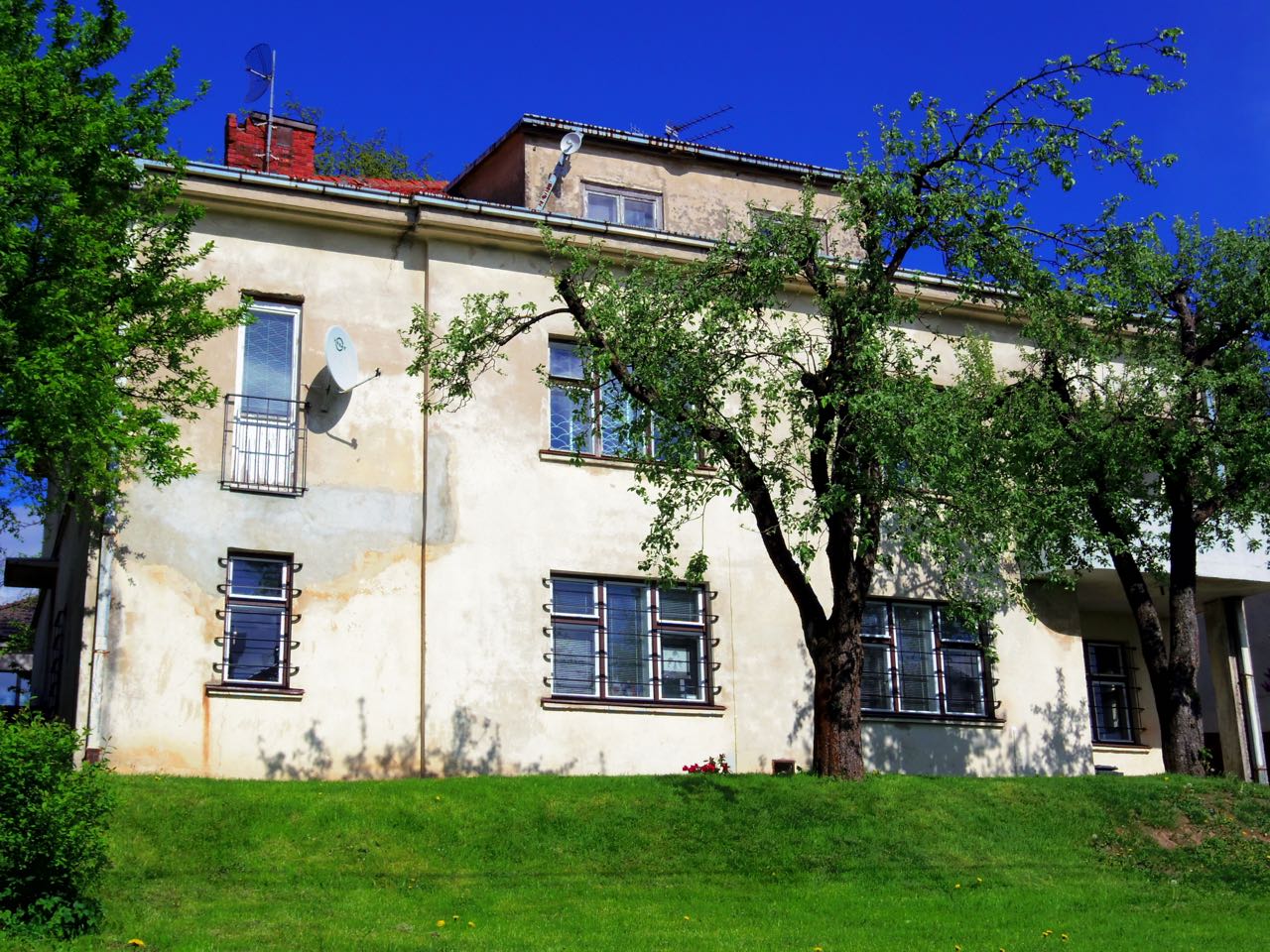
I visited the above house in Kaunas, Lithuania last month. In 1940, this house was the Japanese consulate. Kaunas functioned as the capital city of Lithuania prior to the Second World War. The Lithuanians considered Vilnius to be their rightful capital, but it was masquerading as the Polish city of Wilno at the time. Upon the German occupation of Western Poland and the Soviet occupation of Eastern Poland in late 1939, many (both Polish and Lithuanian) Jews were trapped in Lithuania and clearly in great danger, but were unable to gain exit visas to leave the Soviet Union (or travel across it by the Trans-Siberian railway) unless they had visas to go somewhere else. There were Japanese government rules stating that transit visas could be issued to Japan, but only if the applicant had plans to go somewhere else after Japan, and also that he had adequate financial resources.
Seeing the desperation of the situation, and against orders, Japanese consul Chiune Sugihara issued Japanese transit visas to anyone who asked. (In the book Bloodlands historian Timothy Snyder – who clearly finds Sugihara as fascinating a figure as I do – makes it clear that Sugihara was a Japanese spy as well as a Japanese consul, and his job was to keep track of Soviet troop movements for the Japanese government). During September 1940 he spent something like 20 hours a day writing out visas. When the consulate was closed and he had to leave, he was followed by a crowd to the railway station. As his train left, he was still throwing blank visas with his seal and signature on them to a crowd of desperate people. In total, he wrote something like 3000 visas, and as dependent family members could travel on the same visa as the principal person it was written for, those visas covered several times that number of people.
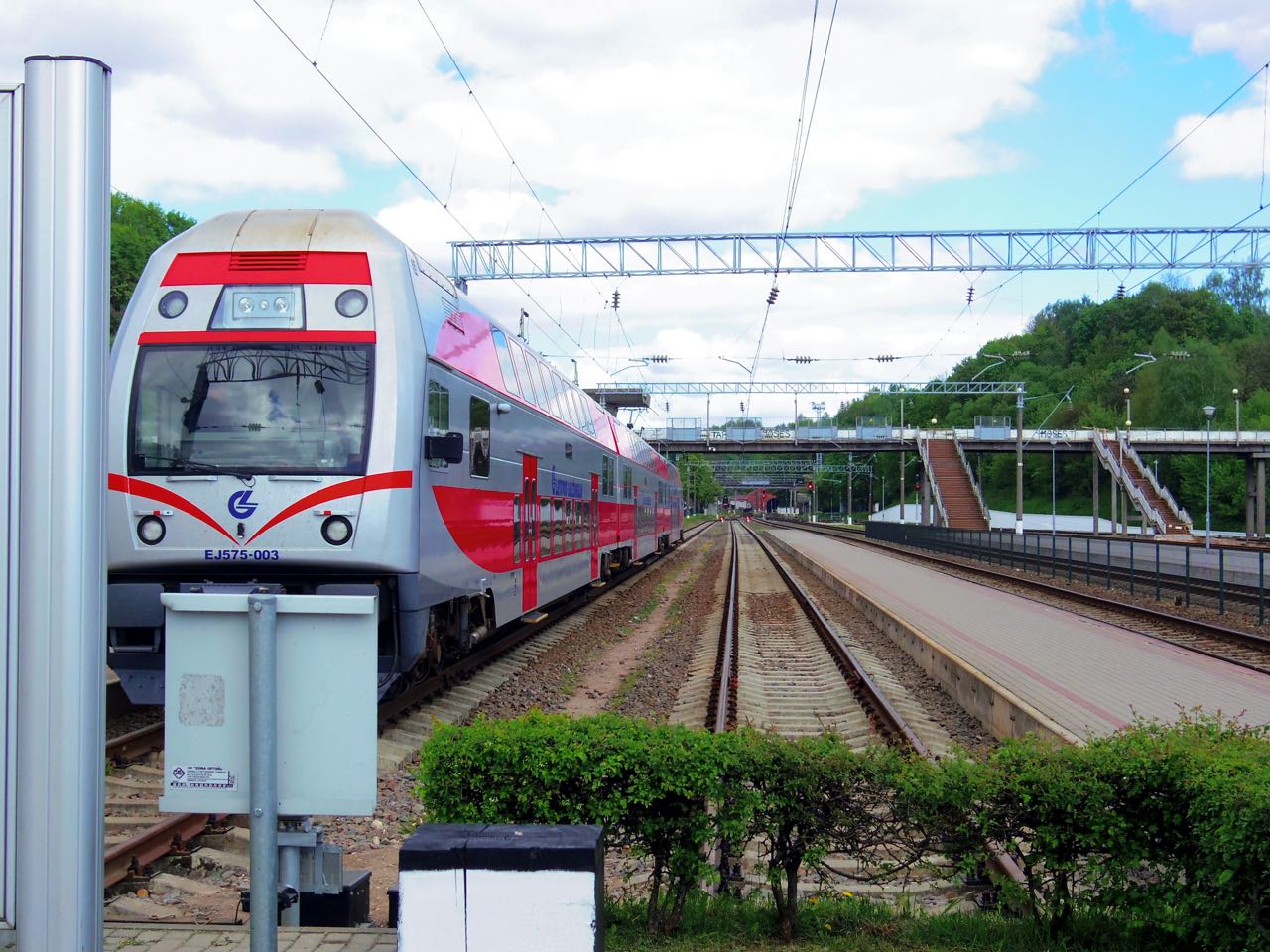
 Kaunas railway station today. Kaunas railway station today.
Upon receiving these visas, Jews were able to travel on the Trans-Siberian railway to Vladivostok and then go by ship to Japan. They then dispersed to various places, but many were deported to Shanghai when the tripartite pact with Germany was signed shortly afterwards. Shanghai was also under Japanese occupation, and there these people spent time in the Shanghai ghetto – Restricted Sector for Stateless Refugees – where they stayed until Shanghai was liberated by the Americans in 1945. I visited the remnants of the Shanghai ghetto in 2006, and wrote about it at the time. Although this was crowded and at times squalid, it was a place of relative safety. The Japanese behaved monstrously towards certain other groups, but they had nothing against Jews, and did not turn the Jews in Shanghai over to the Germans despite German requests. Rather cleverly, Jewish leaders in Shanghai played upon Japanese mistrust of their German allies. Upon being asked by a Japanese governor why the Germans hated the Jews so much, rabbi Shimon Sholom Kalish replied “They hate us because we are short and dark haired”.
Most Jews who got to Shanghai survived, and then emigrated to Israel, Australia, the US and other places after 1945. Estimates of the number of lives saved by Sugihara go as high as 10,000, although estimates of about 6,000 seem more common.
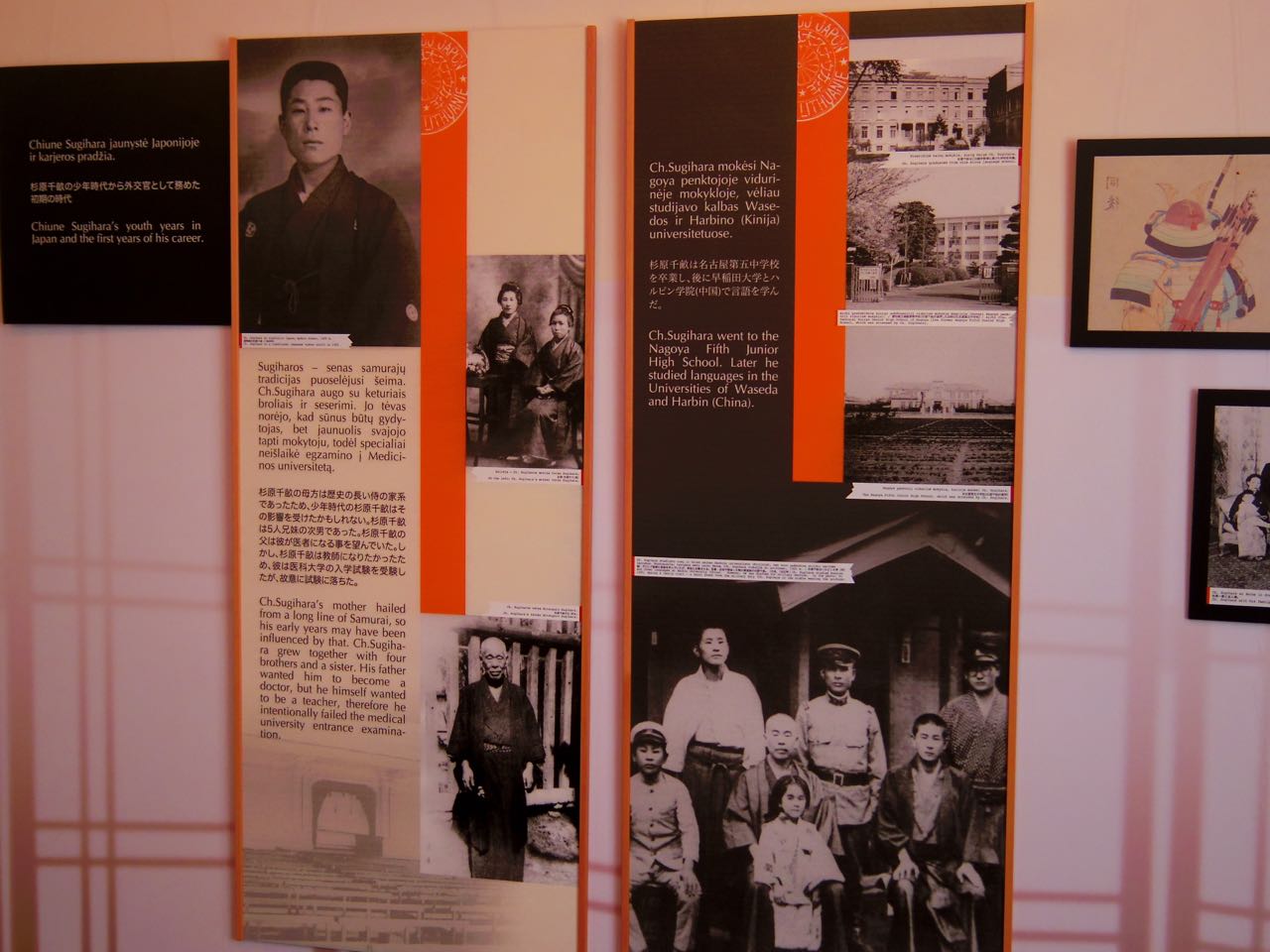
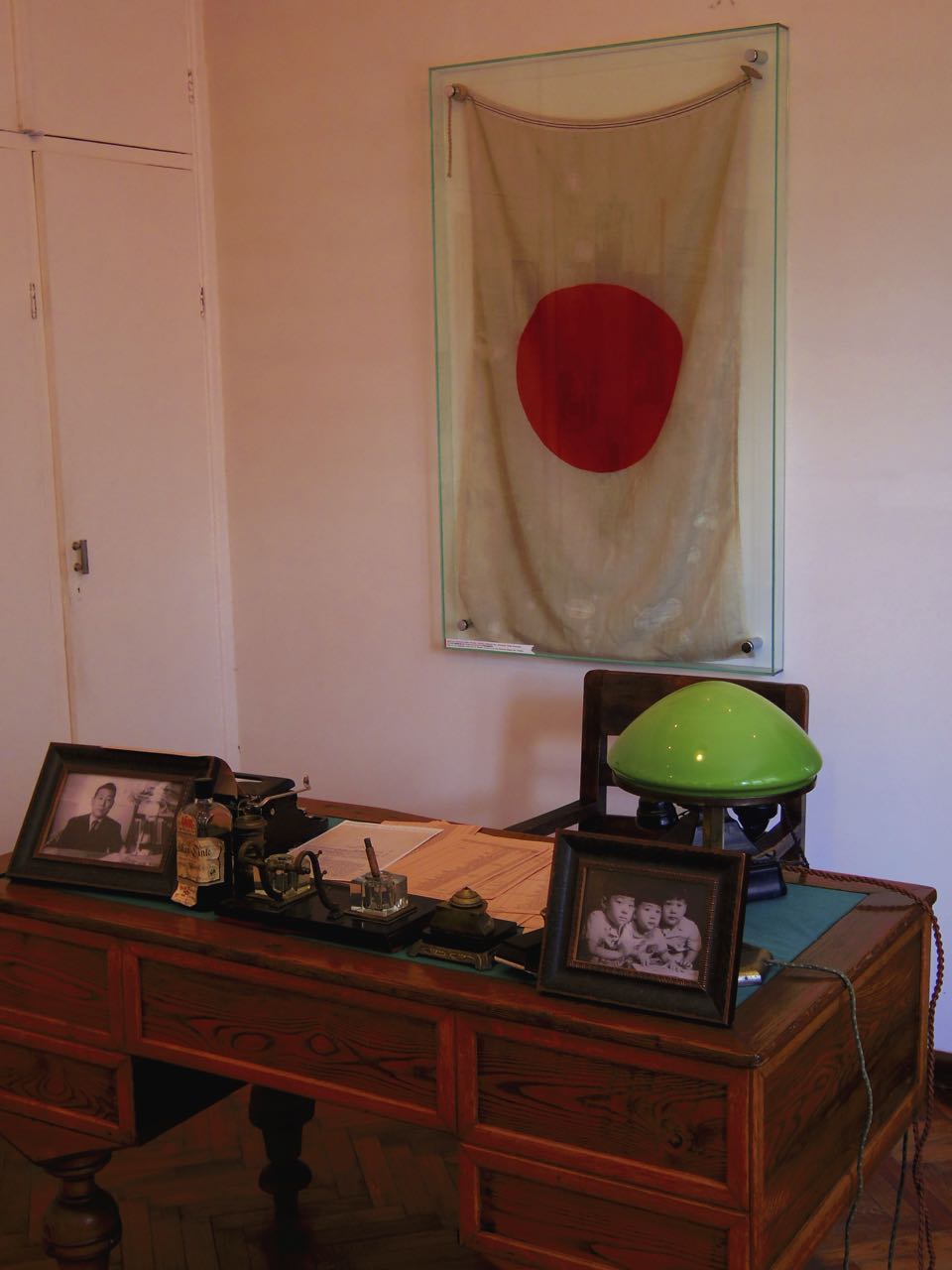
Half of the building in Kaunas is now a museum to Sugihara. I wanted to see this – it was why I went to Kaunas. The other people in the museum when I went there were a busload of Japanese tourists. Almost everyone who had signed the guest book had done so in Japanese, too. I didn’t see any Lithuanians or many other Europeans, which is a shame given this extraordinary story.
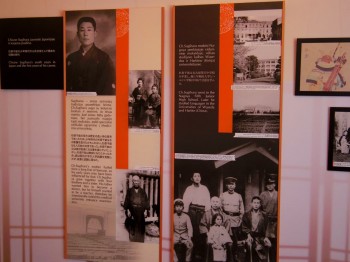
It’s an exceptionally good thing that the museum is there, but I did find the tone of the museum to be slightly curious. The museum did seem to be going out of its way to present the Japanese in general in the best possible light overall, rather than simply telling the story of Sugihara. That Sugihara was acting against orders was mentioned but not emphasised, and much was made of Jews who reached Japan being treated well, but not much was said about where they went after the Japanese alliance with Germany intensified and they were deported from Japan. The truth – the Shanghai ghetto mentioned above – doesn’t actually reflect too badly on the Japanese, but it is rather unfortunately connected to other things that do reflect badly on the Japanese. It is impossible to praise Sugihara himself too much – the man saved the lives of 6,000 or more people just out of basic human decency – but does this reflect well on Japan as a whole? That is harder to say. As is the case with other various people who did similar things, his story remained obscure for many years. His career with the Japanese foreign service ended after the war for reasons that may or may not have had to do with disobeying orders in Lithuania.
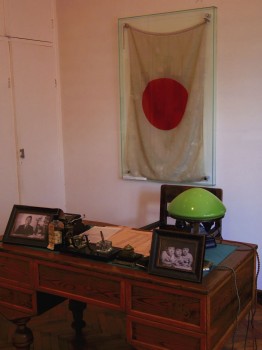
Eventually, Sugihara’s story became widely known, and he was later honoured by Yad Vashem, the state of Israel, the state of Japan and the state of Lithuania, but this took a long time. As it did with Paul Grüninger, Oskar Schindler, and others.
|
Who Are We? The Samizdata people are a bunch of sinister and heavily armed globalist illuminati who seek to infect the entire world with the values of personal liberty and several property. Amongst our many crimes is a sense of humour and the intermittent use of British spelling.
We are also a varied group made up of social individualists, classical liberals, whigs, libertarians, extropians, futurists, ‘Porcupines’, Karl Popper fetishists, recovering neo-conservatives, crazed Ayn Rand worshipers, over-caffeinated Virginia Postrel devotees, witty Frédéric Bastiat wannabes, cypherpunks, minarchists, kritarchists and wild-eyed anarcho-capitalists from Britain, North America, Australia and Europe.
|