We are developing the social individualist meta-context for the future. From the very serious to the extremely frivolous... lets see what is on the mind of the Samizdata people.
Samizdata, derived from Samizdat /n. - a system of clandestine publication of banned literature in the USSR [Russ.,= self-publishing house]
|
“Economists from across the political spectrum agree that if we don’t act swiftly and boldly, we could see a much deeper economic downturn that could lead to double-digit unemployment and the American dream slipping further and further out of reach,” Mr Obama said.
Across the political spectrum eh? And which spectrum would that be? Let me guess… the spectrum that runs from Democrat regulatory statist to Republican regulatory statist? There is no ‘spectrum‘ in front bench congressional politics in the USA (or the UK), just a groups of people who are arguing over how much deeper the same hole they are standing in should be dug in order to get out of said hole.
That is why the USA needs vastly less bipartisanship and a whole lot more disunity. The truth is that NOTHING the US government will do is going to prevent double digit unemployment and economic depression. Both parties were the authors of this situation and every time some jackanapes in Washington DC uses the term ‘bipartisanship’, it is worth pointing out the discreditable Republican role creating a vast edifice of state controls that prevent markets from actually working.
Outside the USA, explicit attacks on capitalism are perfectly acceptable by leading politicos, so it is unsurprising to see Britain’s dismal prime minister Gordon Brown petulantly blaming ‘unbridled capitalism’ when Britain’s regulation smothered and very much ‘bridled’ economy refuses to respond to his ever more pointless orders. But in truth politicians in the USA, the ones in both parties who have done equally absurd things to bury the US economy, in practice share much the same views about ‘capitalism’ as Gordon Brown does. The reasons for that are not hard to figure out.
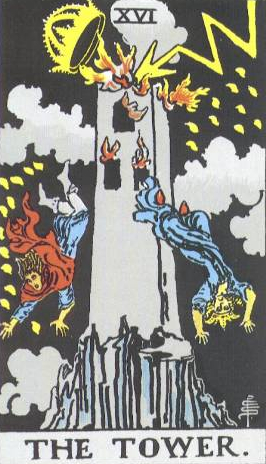
They are trying to blame everyone other than the predatory political class and its army of tax funded clients and instead point at those pesky people who actually create wealth rather than destroy it as the problem. It is not so much that they are consciously lying about the nature of reality but rather their underpinning axioms within which they see everything simply cannot cope with a world view that does not place politics and regulation at the heart of absolutely everything and as the solution to everything. And if vast reams of regulations are a given then problems cannot be regulation per se but rather that the wrong regulation was tried this time and so ‘we’ need to try different ones. The notion that there is something systemically wrong with creating a massive impenetrably complex tower of (often contradictory) laws simply does not compute. Most politicians, and indeed most people generally, do not even see the teetering structure in totality, just the changes compared to the last time they looked. The tower of regulations simply is… the only ‘sensible’ discussion they will even entertain is how much more should ‘we’ pile on this year.
But then that is one of the major upsides of the massive global crash that is coming down upon us all… the tower that has been created has been struck by lightning and yet they want to save it by piling the structure higher even as it is tipping over… whereas the correct course of action is to get out from underneath it.
Now let us make sure that the people responsible from the largely interchangeable statist ‘right’ and ‘left’ are the ones who get the blame because the smarter ones are already trying to shift it to anyone else but themselves. Our job in the non-mainstream media is to make sure the political life gets crushed out of them as they so richly deserve.
The ‘Crisis of Regulatory Statism’ meme needs to spread.
I loved Liar’s Poker, and Michael Lewis returns to his old stamping ground of Wall Street to write one of the best summations, in my view, of what happened in the markets leading up to the current woes. I do not buy into all of his analysis but as an entertaining version of events, it is pretty good.
Another good, if flawed account of the problems of the debt-driven economy came recently from Niall Ferguson, the historian. He has good things to say on how the understandable desire for home-ownership – encouraged by political leaders such as Margaret Thatcher in the 1980s – tipped into an attitude which stated that owning a home is almost some sort of “right”. If you think about it, paying a mortgage where you own only, say, 10 per cent of the equity is not really ownership, but a form of lease agreement. But I think Ferguson under-plays the role of central banks in the 1990s and ‘Noughties in getting complacent over the warning signs coming out of the housing and asset markets, such as gold. He had a recent television series on Channel 4 on this whole process – sponsored, I could not help noticing, by the Cayman Islands – and I was impressed by how Ferguson explained the often eye-watering complexities of derivatives and asset-backed products in simple ways without dumbing it down. Doing good-quality television shows on economics, where so much has to be conveyed by mood and picture, is hard. And Mr Ferguson’s modulated Scottish accent is a damn sight easier on the ear than the bizarre inflections of Robert Peston.
Yesterday was the fifth anniversary of the arrival on Mars of the Mars Exploration Rover Spirit. Despite a few problems to do with their age, both this rover and its identical twin Opportunity are in good working order and are still wandering around the surface of Mars and sending back interesting findings.
The obvious first thing to do is to congratulate everyone who had anything to do with these missions for a truly magnificent achievement. During my life, watching NASA’s manned space program has been intensely frustrating. Huge amounts of money have been spent on overly expensive boondogles that achieve less than was achieved in the years around the time I was born, despite there being no shortage of new and exciting things that could be achieved. At the same time, though, and on vastly smaller budgets, the unmanned probes produced by and with NASA/JPL to explore the planets and the solar system have managed magnificent achievement after magnificent achievement. Since I was a child we have learned so much about the planets and the solar system, and I have found it hugely inspiring. Seeing high resolution photographs of the moons of Saturn, or the surface of Mars, or the Great Dark Spot of Neptune – who would have imagined such things.
And yet, one thing that amazes me even more is the strange way in which NASA planetary probes stretch and warp time. For instance, the two Mars rovers were sent to Mars on missions that were supposed to last for 90 days. Both missions are now at five years, which is a little over 20 times the original length of the mission. This is an extreme example, but these missions often dramatically outlast their stated lifetimes. A four year Mars Global Surveyor mission turns into nine years. The Cassini mission to Saturn has been there for the planned four years, has had its funding extended for another two, and may manage more than that.
One reason why missions are able to be extended for long periods is of course the extraordinary ingenuity of the people who run them. That software is being upgraded and hardware used in unplanned ways to fix all manner of problems with stuck robotic arms, failed high-gain antennas, wheels getting a little sticky, rovers stuck in sand-dunes, and that these things so often seem to work is another thing that amazes me.
Yet, I wonder further. Clearly, when these missions are launched the hope is that they will keep going a lot longer than stated in the “mission objectives”. Clearly, also, in many cases the principal scientific goals will be achieved in the first few days or months after arriving at the destination, so what decides success is what happens shortly after arrival. Arguing that “everything else is a bonus” after the core objectives are achieved is probably fair.
How much of it is politics, though? I am sure it is easier to get funding for a five year old mission on the basis that “We have a rover on Mars that is still working and it would be a horrible shame to end the mission now” than asking for six years of funding at the beginning. I am sure also that when scientists are told that “You can’t have funding for A, B, C, and D, but we will give you funding for A and B”, they will find a way to include C and D while pretending that A and B is all they are doing, particularly if A and B are Jupiter and Saturn, and C and D are Uranus and Neptune.
And yet, when a 90 day mission is still going after five years, I cannot help but think that someone, somewhere, is taking the piss out of someone. All I can ask is that they please keep doing it.
Being charitable to my fellow motorists, I guess a lot of them were in a hurry to get home last night and start off the first full working week nice and early, judging by the amount of tailgaters I encountered while driving down from East Anglia to London. At least half a dozen motorists drove very close behind me, full headlight beams on, doing probably about 90mph, forcing me to get out of the way and then watch as these idiots drove at up to 100mph or more. Odd, really, since as Samizdata readers are only too well aware, the UK has become the land of the speed camera. For whatever reason, a lot of motorists seemed not to give a damn about getting a speeding fine last night. But maybe this was nothing unusual and I was just a bit unlucky.
I actually enjoy driving fast along a motorway although I find the strain on the eyes of driving at night, with lots of drivers’ lights shining in my eyes via the reflection off a rear-view mirror, to be pretty difficult after a couple of hours. I can understand the frustration of motorists with a very slow driver who, frankly, should not be on a motorway at all, but tailgating is bloody dangerous particularly when road conditions are less than perfect. In this case at least, I am on the side of the police taking a firm line.
Anyway, after a splendid break spent in the contrasting locations of Malta and Northumberland, I am back at the blogging coalface. A belated Happy New Year from me.
A half-remembered phrase from a short story by C S Forester is lodged in my mind. The story is set in World War II. Some sort of British warship has to approach very near an enemy-occupied coast, do something or other heroic, and then get away before the German artillery can do its work. The ship, under the guidance of its iron-nerved captain, does so, and then – futzed if I can remember the details – stops or delays to do something else, to serve some side order of military misery to go with the main dish, the captain having calculated that it will take a certain amount of time for the defenders to wake up, realise this is for real, get orders and crank up the guns or whatever. Everyone else on the bridge makes their estimate of how long all this will take erring on the side that one does generally err on when the penalty for error on the other side is to be shot at by artillery, but the captain makes his estimate the way he would from his armchair at home. His bold guess is right, and the ship gets away. And then comes the phrase that shows clear among the fog of my other memories of this story: those watching on the bridge were awed by his sheer will to do the enemy harm.
I dare say in WWII there were many people, ordinary people, who really did spend a substantial fraction of their time thinking up ways to hurt the Axis. No doubt most of them ended up bombarding the War Office with absurd plans and inventions that came to nothing, but some of them found ways that worked. It must be rather interesting to live in a time and a place where it is good to let the will to harm the enemy run free.
We in Greater Europe do live in such a time and place. Don’t get excited. I am not advocating violence. In fact I get a little disturbed when Tim Worstall, the blogger whom I am about to quote, makes his customary appeal for a hempen rope and a strong beam. But when I read on his blog about this latest measure from the EU, all I could think was harm them. Bring them down. Please, I would be grateful.
How can we bring down the European Union?
The UK Libertarian party is celebrating its first year of operations.
May 2009 see them grow and prosper and may they do much to undermine the foundations of the limited right-Statist and left-Statist UK political scene.
As of today, the Czech President Václav Klaus takes control of the largely symbolic but quite high profile office of President of the EU. Given his stridently pro-free market and highly Euro-sceptic utterances in the past, the sense of dread in Brussels is palpable. He is a brusquely outspoken man and I cannot wait to see how he uses the bully pulpit that the EU Presidency provides.
2009 is going to be an interesting year, particularly in the USA. Big State Democrat Barack “The One” Obama crushed Big State Republican John “I Support the Bail Outs” McCain and this means the country is going to have a new president whose politics make him the most committed statist since LBJ. The country was given a choice between statism and statism and it voted for… statism.
Well to quote Mencken, the American electorate are going to get what they voted for good and hard, because this is also the year the global economy is truly going to crash, big time, plunging us into a recession and indeed a depression that will last longer and be driven deeper by the policies being implemented by governments on both sides of the Atlantic.
And this presents friends of liberty with a great many opportunities.
Never has there been a better time for cleaning house. The usual excuses given for pragmatic ‘broad church’ politics no longer apply on the so-called ‘right’… no amount of unity will change the fact that regulatory tax-and-spend politicians will be in charge for the next few years regardless of what people of a classical liberal disposition do. And so I would strongly urge such people to get into politics like never before, not primarily to fight the statist left just yet, but to create opposition parties that are actually worth voting for.
In short, I am calling on anyone who believes in liberty and limited government to reject all thoughts of party unity and work tirelessly to drive the statist right from their parties.
I am not calling for the ‘libertarianisation’ of the Republican party along the lines I would actually like, just for the party’s rationalisation. I am in essence calling for a nominally conservative party to become… conservative. The simple fact is that people can be fellow travellers on a path that leads to liberty without all marching in ideological lock-step. It just boils down to asking the question “do you want the state to have less control over people’s lives or more control?” If a person can honestly answer that they think the state is too powerful and needs to be reduced, that is a fellow traveller. → Continue reading: An appeal for disunity
Getting my sleep patterns into sync with UK daylight is for me, now, a constant struggle, especially now, when there is very little in the way of daylight in my part of the globe, and especially when there are such good international cricket matches going on elsewhere in the world, together with, now, the means to follow them, ball by ball. The latest such disruption to my daily clock took the form of a terrific game between Australia and South Africa in Melbourne.
I found day three especially hard to ignore. At the beginning of it, South Africa looked odds on to lose the 1-0 advantage they had gained with their amazing fourth innings run chase in the first test at Perth. With only three first innings wickets left, they were looking at a massive first innings deficit, but they ended with their noses actually in front, an advantage they pressed home the next morning by taking three quick second innings wickets before the Aussies had even got their noses back in front. I was still checking the score on that third day at tea time, which was at about 4 a.m. my time. JP Duminy got a big first test century in only his second test, having also done well at the end of the Perth run chase, and fast bowler Dale Steyn, who also took ten wickets in the match, gave Duminy massive support with the bat.
In its way, this third day was a bit of cricket history, because it marked the moment of Australia’s definite, absolute, unarguable fall from grace as the definitely best international cricket team in the world. They recently lost to India in India, but that can happen to anyone. But then to go back home and immediately to lose to South Africa in Australia, well, that was something else again. → Continue reading: Australia without Warne
“Politics is all very well in its place, that place being very much on the periphery of life.”
– Tim Worstall, who has had an impressive year on his own blog, and seems to have quite marvellously upset one of the main figures of the Guardian’s columnists.
Excellent.

Gold Coast, Australia. January 2008.
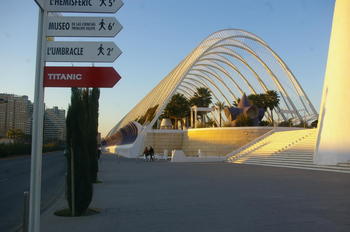
Valencia, Spain. January 2008.
Gdansk, Poland. February 2008.

Les Baux-de-Provence, France. March 2008.

Munich, Germany. April 2008.

Buenos Aires, Argentina. April 2008.

Colonia del Sacramento, Uruguay. May 2008.

Santiago de Chile. May 2008.

Cataratas do Iguaçu, Brazil, May 2008.
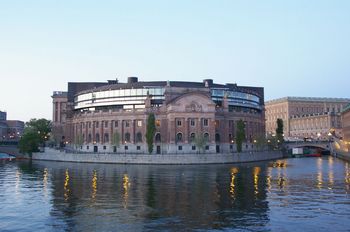
Stockholm, Sweden. May 2008.

Prora, Germany. June 2008.

Warsaw, Poland. June 2008.

Sofia, Bulgaria. August 2008.

Ben Lawers, Scotland. September 2008.

Taipa, Macau. October 2008.

Yantian, China. October 2008.
Hong Kong, October 2008.

Seville, Spain. November 2008.

Gibraltar. November 2008.

Lille, France. December 2008.
|
Who Are We? The Samizdata people are a bunch of sinister and heavily armed globalist illuminati who seek to infect the entire world with the values of personal liberty and several property. Amongst our many crimes is a sense of humour and the intermittent use of British spelling.
We are also a varied group made up of social individualists, classical liberals, whigs, libertarians, extropians, futurists, ‘Porcupines’, Karl Popper fetishists, recovering neo-conservatives, crazed Ayn Rand worshipers, over-caffeinated Virginia Postrel devotees, witty Frédéric Bastiat wannabes, cypherpunks, minarchists, kritarchists and wild-eyed anarcho-capitalists from Britain, North America, Australia and Europe.
|






Recent Comments