If Russian govt. endorses Crimean referendum, will they also allow/endorse similar votes in republics in Russian Federation?
– Michael McFaul, former US ambassador to Russia
|
|||||
|
If Russian govt. endorses Crimean referendum, will they also allow/endorse similar votes in republics in Russian Federation? – Michael McFaul, former US ambassador to Russia March 6th, 2014 | 61 comments - (Comments are closed)
 I attended Dominic Frisby’s talk at Brian’s, and Brian asked me to write about what I learned. The talk did not get far into the technicalities of Bitcoin, which was good for me as I already think I know most of it. Until recently I knew some of it, and two articles by Ken Shirriff completed that picture. But Dominic is not the quiet, contemplative, theoretical person that I am. When he wants to find something out, he goes out and talks to people. This means he has lots of stories. And so I learnt of his experiences attending a Bitcoin auction under a marquee in a London back-street (the most culturally diverse gathering he has ever attended), talking to wealthy Bitcoin owners who live in squats and are part of the Occupy movement, and exploring the myriad Darknet marketplaces that have sprung up after the demise of Silk Road. He compared Bitcoin now to Rock and Roll in the 50s. People are doing it for fun, with irreverence, but also a sense that it is something big and uncontrollable, and with the same pattern of reaction from authorities: horror gradually giving way to acceptance. This irreverence is particularly on display with the alternative crypto-currency (or altcoin) Dogecoin, which I think should be pronounced doggy-coin because there is a picture of a dog on its logo, but everyone else pronounced it with the o from go and a soft j. Dogecoin was spun off from Bitcoin as a joke, but is finding uses in micropayments because you can pay tiny amounts with big, psychologically pleasing numbers. I actually mined some Dogecoin the evening before the talk, because I wanted to try out mining and it turns out you can’t mine Bitcoins without specialised hardware, but you can mine altcoins. I currently have 600 Dogecoins worth 40p. A developer of a Dogecoin smartphone app was in attendance, and he told the story of a Dogecoin fundraiser that managed to send the Jamaican bobsleigh team and Luger Shiva Keshavan from India (who became known as the Underdoge) to the Winter Olympics. We all discussed the usefulness of microtransactions for tipping the authors of interesting blog posts. They might need this when all the newspapers run out of money. Here is my Dogecoin address, by the way, hint hint, I have no shame:
Before the talk I was confused about altcoins, wondering why anyone would make yet another crypto-currency, but now I understand. There was discussion about how Bitcoin might fall, be replaced by something else, and eventually there will be a winner. But the other view in the room, and the one I favour, is of all these currencies co-existing. Partly they will compete, and partly they will serve different functions. For example, there will only ever be 21 million Bitcoins but there will be 5 million new Dogecoins every year forever. It is possible that Bitcoin will be used as a store of value and other currencies will be used for daily spending. Whatever inconvenience this causes can be solved with good software: whoever solves it first will be the new Paypal. There are lots of problems impeding the mainstream acceptance of Bitcoin, and a sense that people are working on solving all of them. The demise of the exchange Mt.Gox will lead to better security practices such as distributed signatures, ways of auditing banks, and peer to peer exchanges. People who want more safety will get deposit insurance and wallets pegged to fiat currencies. And there is no shortage of convenient payment methods. There is even a Bitcoin vending machine in London. The other cool thing I did that evening was buy a signed copy of Dominic Frisby’s book Life After The State for 0.03 BTC (he would have accepted less, but the novelty of the transaction made me generous). I’ll be sure to read his Bitcoin book, too. March 5th, 2014 | 17 comments - (Comments are closed)
“Natural gas was the origin of the crisis in Ukraine. It is in Russia’s interest to keep Ukraine and Europe hooked on Russian gas at prices just low enough to quash incentives to drill and frack for shale gas. Russia’s state-run news and propaganda outlets have for years disseminated articles critical of fracking and supported opponents of the technique. Now with Yanukovich gone it’s as if Putin has taken the Crimea as a kind of hostage — collateral to hold against what Ukraine owes Russia for gas. The desperation of Putin’s actions underscore the threat that shale gas development really does pose to Russia’s gas-fueled diplomacy.” Christopher Helman, Forbes. A new book, called The Frackers, has come out on the issue of the shale-gas engineers and how they have succeeded despite, and not because of, state involvement. Al Gore or whoever might try and lay claim to have invented the internet but they certainly cannot do so with fracking. About the best that can be said of the role of government is that it sometimes upholds property rights necessary for said activity to go ahead.
March 5th, 2014 | 8 comments - (Comments are closed)
Sam Bowman’s talk tomorrow at the Rose and Crown has been causing worries for Libertarian Home organiser Simon Gibbs, on account of Meetup not working properly. Simon has become unsure about how many people are going to show up, but urges us all to come anyway. (I definitely intend to.) He ends his report on all this by saying that …:
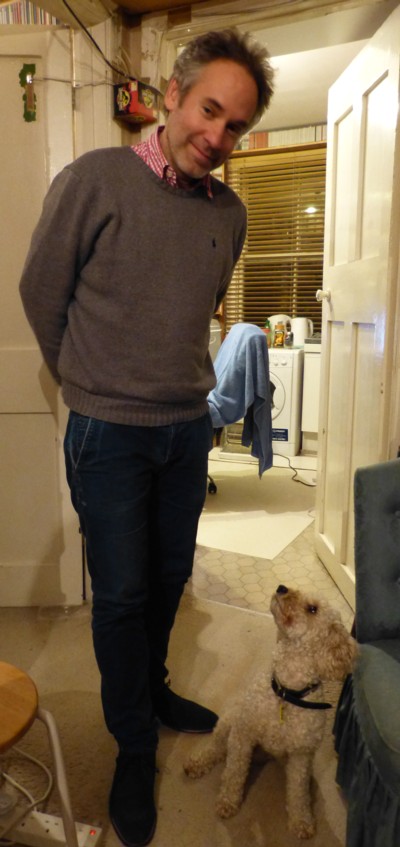
My experience, with my last Friday of the month meetings, which take place in a living room which is only about half the size of the room upstairs at the Rose and Crown, is that it is almost mystical how exactly the number of attenders seems always to suit the space available for them. It’s a kind of benign spacial variant of the original Parkinson’s Law. Last Friday, for instance, Dominic Frisby looked like he might be stretching my infrastructure beyond its limits. But then I emailed people to that effect, and there was a bug going round, and the weather turned nasty, the upshot of all that was that the number who showed was just right to fill the room in comfort, and just not enough to cause any discomfort. Amazing. It’s like we really do not need to be planned or coerced by a central authority, but can just sort things out for ourselves. Mine was a fairly Bitcoin-savvy gathering, and several of the Bitcoin-savants present have said that they were surprised at how much more they learned, both from Frisby and from each other. I was not one of those experts; I was merely there. For me, the main message I took away from the evening was that Bitcoin, in the opinion of many people, does have real value, because it makes electronic economic transactions far easier. Although some doubts were expressed, nobody present dismissed Bitcoin as a complete fraud and a bubble waiting to just burst and vanish. In general the mood about Bitcoin was very positive, more so than I had expected, and of course even better about the general principle of encrypted currencies generally. The big news item was that Frisby reckons he has cracked the identity of the founding genius of Bitcoin, a mysterious figure who is currently only known by a Japanese alias. Who is he? Read my Bitcoin book, said Frisby. This will be available some time around late spring or early summer, and I will keep Samizdata posted. The other thing I will remember about last Friday was that, for complicated reasons involving an NHS kidney operation that suddenly became available (after a huge wait) to his usual back-up canine custodian, Frisby asked if he could bring his dog with him. You don’t want mere attenders bringing dogs. But since the speaker would be the main victim if a dog attended and spoke out of turn, I figured that Frisby’s dog almost certainly would behave exactly as well as promised, and so it proved. Frodo, despite being rather obviously hungry and eager to make friends with potential food providers, behaved impeccably throughout the entire evening. Not a single bark, not one. Again: amazing. Picture of Frisby and Frodo:
Sam Bowman’s talk tomorrow will be about the idea of a legally fixed minimum wage. The libertarian orthodoxy is that, just as we don’t want or need the government to be organising our social lives or our healthcare, a government-ordained minimum wage is a really bad idea. When I met Sam earlier in the week, this orthodoxy is what he told me he would be reinforcing in his talk, citing some recent evidence. We also discussed the idea of Sam addressing one of my last Friday of the month meetings later in the year, on the far more contentious subject of “Bleeding Heart Libertarianism”. He is, or such is my understanding, and no doubt with various reservations and qualifications, for it. I am not now totally against Bleeding Heart Libertarianism but am strongly inclined that way. I am far less inclined to leave the definition of Bleeding Heart Libertarianism as the sole property of those now calling themselves its supporters. I also have a very high opinion of Sam Bowman. That should be another good gathering, as and when it happens. March 5th, 2014 | 26 comments - (Comments are closed)
Our currency in the U.S. (often known in the black community as “Dead Presidents”) honors people who won wars. Andrew Jackson killed a lot of Indians. General Grant killed a lot of Confederates. Franklin Roosevelt killed the economy. March 3rd, 2014 | 131 comments - (Comments are closed)
I saw this in a very affluent part of London, scrawled on the hoarding of a building site. One of the people working there saw me taking this picture and laughed. Me: “I wonder who wrote that?” Builder bloke, foreign accent: “Many guys here are Polish.” Me: “One of them wrote this?” Builder bloke, shrugging: “I guess.” Me: “Is this because of what is happening in Ukraine?” Builder bloke: “Yeah, Ukraine. And because it’s true. People forget, then something like this makes you remember what it is to live close to Russia. My son is in Army. Shit like this is why.” Me: “Polish army?” Builder bloke: “Latvian army.” March 2nd, 2014 | 52 comments - (Comments are closed)
A Russian communist-era movie played on the TV. I couldn’t understand the dialogue, but it was at least passively propagandistic. The main characters, scientists in white lab coats, worked in a sparkling clean high-tech facility, the kind of place science fiction writers of the 1950s imagined were in our future. The movie portrayed an entirely staged idealized version of an advanced communist utopia without gulags, without long lines for potatoes, and without the NKVD. Ukrainians don’t need communist-produced re-runs. They, like the rest of us, need a serious film about Stalinism for a mass audience, a Schindler’s List of the Soviet Union. March 1st, 2014 | 18 comments - (Comments are closed)
What are the odds that the NSA, GCHQ, etc. do not spy on the elected officials that oversee them? What prevents subsequent blackmail of said officials by said agencies, other than policies that would be utterly trivial for agency officials to violate at whim? February 28th, 2014 | 31 comments - (Comments are closed)
Incoming from Detlev Schlichter. He is back blogging. His second recent posting, the one after the one that just says he’s back, is about Bitcoin. He thinks that the Bitcoin principle, so to speak, even if maybe not Bitcoin itself, has a future:
My own sense is that, just as Schlichter says, the world’s rulers are now stuck in a monetary prison of their own making, from which they cannot now extricate themselves. Quite a few of them understand approximately what is wrong with their current policies, even as many others of these people have no clue. Many others favour the current state of the banking system, because it enriches them even as it impoverishes most others. But even those banker/politicians who do understand what harm they are now inflicting upon the world and would like to stop, don’t know how to. It is one thing to be in a prison and to know that you are in a prison, quite another to escape from the prison. To switch metaphors from the prison to the hospital, the world’s banking system is now alive rather than dead, but not in the sense that the patient is up and about, playing beach volleyball with its children like a tampon advert woman. It is alive merely in the sense that a terminally ill patient, lying in a hospital bed after a horribly intrusive death-postponing operation, sinking slowly rather than fast, is also alive rather than dead. Only outside monetary influences, such as Bitcoin or such as variations on the Bitcoin theme, will bring back a world of true money. The fact that, if you put some of your wealth into Bitcoin, you just might lose damn near the lot is a feature not a bug. Government guarantees that you won’t lose out no matter how unwise your decisions may prove to be are the problem, not the solution. Schlichter spends quite a lot of his piece denouncing a certain Mark T. Williams, a finance professor at Boston University’s School of Management, but he ends his piece by quoting him again…
… and agreeing with him! That’s a feature rather than a bug. Welcome back to the blogosphere, Herr Schlichter. LATER: And as I should have added, I am hosting a talk tomorrow evening about Bitcoin etc., given by Dominic Frisby (that’s Dominic’s thoughts on the recent Bitcoin disaster/price plummet (which Bruce Hoult explained here)). There is not a lot of room left for more would-be attenders, but there is, as of now, some. February 27th, 2014 | 11 comments - (Comments are closed)
The truth is that the NCCL was right both to have PIE as an affiliate and to defend its members against charges of ‘corrupting public morals’. Why? Because a key role of any civil liberties group worth its name is to defend the rights of association of the most loathed sections of society, to ensure that even the profoundly unpopular enjoy the same liberties, most importantly freedom of speech, as the respectable and the right-on. February 27th, 2014 | 26 comments - (Comments are closed)
So much misinformation! What has happened is that people who bought Bitcoins on MtGox thought they owned them. They did not, according to the Bitcoin system. MtGox did. MtGox kept their own records of who ‘owned’ what. And MtGox were incompetent. Which should have been apparent from the start: MtGox learns Bitcoin The proper way to use Bitcoin is to keep your wallet of Bitcoins on your own computer. And back it up. Several times. Print it on paper if you want — it will likely fit on one side of A4 in not very small print. Keep it secret. Keep it safe. It is a bearer certificates. If you lose your wallet or forget the password then those Bitcoins are gone out of circulation forever. That is not what happened with MtGox. They gave Bitcoins that people thought they owned (but did not) to other unauthorised people. It is theft. Just like a bank robbery. Those Bitcoins still exist, just in other hands. This has absolutely no effect on people who keep their Bitcoins on their own computer (or phone). There are the same number in circulation as before. Bitcoins still can’t be counterfeited or inflated. If you want/need to use a place similar to MtGox to turn normal money into Bitcoins then DO NOT LEAVE THEM IN YOUR ONLINE WALLET THERE. Make yourself an identity and wallet on your own computer and make a payment from your account on the Bitcoin exchange to your own identity. Then you are perfectly safe. Well, you are if you do your backups diligently. Or, if you want to turn normal cash into Bitcoins, find someone who has Bitcoins and wants cash, agree a price, have them do a transfer of Bitcoins from their wallet to yours (using the actual Bitcoin system, not an exchange), and hand them the cash. The recent problems are not with the Bitcoin system, they are with finding trustworthy and competent ‘bank’ or ‘escrow’ services who will not lose or steal what they hold in trust for you. To amplify on the previous. Assume you want to use Bitcoins to buy a used TV, and both you and the seller have Bitcoin software and wallets on your own computers: You make a transfer from your Bitcoin wallet to theirs, using the Bitcoin software. You wait about 10 minutes for the next block of world-wide transactions to be created (mined). If you are paranoid, you wait for another block to be created, pointing to the one with your transaction. At this point the transaction is recorded on thousand of computers all over the world. They all agree that Bitcoins have been transferred from you to the seller. The transaction is irrevocable. Now you ask the seller to send you the TV. There is a risk that they will not send you the TV, even though they have the money. This is exactly the same situation as any on-line auction site, or newspaper classifieds or whatever. The solutions are the same. You can not get your money back, but you can damage their reputation in whatever venue you used to arrange the deal. Or you can meet them in person and do both sides of the swap in person. Or you can use a trusted third party as escrow — you give them the money, and the seller gives them the goods, and when they have both they pass them on. The problem is to find a competent and trustworthy escrow service. February 26th, 2014 | 56 comments - (Comments are closed)
It looks as if a large Bitcoin exchange, Mt.Gox, has disappeared, along with large numbers of customers’ Bitcoins. The sequence of events is described in one Reddit post, and the media reaction is predicted in another, along with some advice:
In general, Reddit seems to be the best source of information. There are people predicting that this is the end of Bitcoin, and others pointing out that Mt.Gox is just an exchange, and not a very well run one at that, so good riddance because Mt.Gox has been blamed for price fluctuations in the past. Of course, there will be no state bailout. We might be about to learn what happens to a free market currency in a big crisis. February 25th, 2014 | 43 comments - (Comments are closed)
|
   |
||||

All content on this website (including text, photographs, audio files, and any other original works), unless otherwise noted, is licensed under a Creative Commons License. |
|||||


Recent Comments