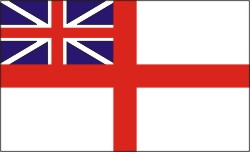
Just to remind everyone that today is a rather special Trafalgar Day.
Nicely done, Horatio.
|
|||||
|
October 21st, 2005 | 38 comments - (Comments are closed)
 This story seems to be making the rounds…
…and my response is why oh why is this news? Just to state the obvious, the Taliban bodies in question were dead prior to being burned, so who cares? I guess is that if they had not burned those bodies, the same people making a big deal of this would be penning articles with the title:
As for this being an ‘affront to Islam’, if the object was to ‘smoke out’ the enemy by enraging them, again… so what? The job of US forces is to KILL members of the Taliban and I fail to see why it is unacceptable to outrage their sensibilities and perhaps even hurt their feeling prior to punching them full of 5.56mm holes. October 20th, 2005 | 125 comments - (Comments are closed)
It is arguable that securing energy supplies is the most important single challenge within the international security agenda. Entire foreign policies are based around this aim, and nations are constantly jostling to cut deals – in all sorts of ways and often at the expense of others – with energy suppliers, private and governmental. It is hardly surprising, for energy drives our modern economies and is an indivisible component of economic and social growth. The recent war in Iraq and the continuing upheaval in that country is a prime example of an attempt to secure energy supplies. Certainly, stating that Iraq was a “war for oil” is a gross simplification. However, the Middle East is strategic primarily for its energy reserves, and thus it is certainly in the world’s interest to promote a stable Middle East. Such an aim has been a central plank of the foreign policy of every major world power for decades. Of late, however, the developed world has become increasingly engaged in the Middle East – with the overarching aim of securing energy supplies. This has inflamed cultural and often geopolitical tensions, arguably culminating in the current “War on Terror” scenario. I will examine some of the forces at play in the Middle East relevant to global energy supply, and attempt to provide a solution to the energy supply challenges faced today. The West must play the leading role in this envisaged solution, not just because it is most able to; it has the most to gain by determining the solution to the world’s energy supply problems. It can secure its comfortable, energy-reliant way of life into the distant future, as well as making for more peaceful global relations. Western involvement in the Middle East stretches back long before the existence of the concept of “The West” itself. Obviously, this history impacts on events today, however plenty has been written about that and I don’t want to dwell on it here. In the place of historical analysis, I will state the obvious and highlight the Middle East’s current strategic importance. At the end of 2003, it contained well over half of the world’s known reserves of crude oil. Crude oil is humankind’s most important, widely used and versatile energy source, and it is the largest selling commodity in the world by value of sales. Saudi Arabia, the nation with the largest reserves of crude oil in the world, sits on approximately a quarter of known reserves. Following Saudi Arabia (in descending order of size of reserves) is Iran, Iraq, the United Arab Emirates and Kuwait. These four nations contain approximately 40% of the world’s known reserves of crude oil between them. → Continue reading: Reducing the opportunity cost of energy October 20th, 2005 | 63 comments - (Comments are closed)
It never takes more than a week or two to have my dislike for the political class resoundingly reinforced yet again. In particular, those who wish to see a Tory government rescue our civil liberties from the predations of New Labour would do well to read this and this and then ask themselves why they think voting for these people is going to make the slightest bit of difference when push comes to shove. October 20th, 2005 | 11 comments - (Comments are closed)
Not content to rest on their laurels after defending the British people from the menace of pedestrians, our political masters have ensured that this “Freedom of Information” nonsense will not be allowed to stand in the way of confronting that most implacable threat to our way of life… this will put the cat amongst the pigeons! (sorry) October 20th, 2005 | 6 comments - (Comments are closed)
The UK government is making it possible — ahhhhh! – to let new fathers take three months’ paid leave off work. How nice. How generous. How could the heartless, flinty Gradgrinds like we libertarian free-marketeers oppose such a fine and dandy state of affairs? You know the answer. The answer of course is that the cost of paying fathers paternity leave will be born by the employers, and hit small businesses disproportionately hard, as well as those employees who either through personal choice or circumstance do not, or choose not, to have children. And of course the whole issue ignores those subversive capitalist types who happen to be self-employed. What are they supposed to do, exactly? My father (ex-RAF and farmer for 40+ years) would be chortling out loud at being told, just as the wheat harvest was about to start, that my birth would let him take three months off, far away from the combine harvester, plough and cattle shed. Perhaps we should start compiling a list of which Labour Party MPs have ever run a business from scratch and had to meet a payroll? I bet the list is short. If our political masters were really wise on this issue, they would cut the overall burden of tax, so that parents could have a higher post-tax income with which to make decisions about family life that suit their own circumstances. Why is such a simple approach so difficult? (And by the way, I expectantly await what the Tory leadership candidates say about this). October 19th, 2005 | 43 comments - (Comments are closed)
Sorry about the title, a tad misleading… There was an interesting article on the Adam Smith Institute blog yesterday highlighting the results of a YouGov poll which was examining people’s attitudes to wealth, wealth creators and business generally. Whilst I tend not to put too much stock in polls, this does makes quite encouraging reading. October 19th, 2005 | 6 comments - (Comments are closed)
“On sighting an elephant Selous would instantly remove his trousers as he found it easier to pursue them in his underpants.” As one does. The quote is from Tom Quinn, Shooting’s Strangest Days. October 19th, 2005 | 8 comments - (Comments are closed)
CNET News.com reports what we have knowns for some time…
It is frustrating that after months of debate, it is still news. I guess the real news is that it is Microsoft saying that. I particularly like this bit:
So what are the 30 coins worth to a technology supplier, I wonder? But before we rejoice too much, Mr Fishenden is not on concerned about the issue of ID cards and biometrics in the first place, just about a more secure and efficient way of gathering and storing the data:
October 19th, 2005 | One comment - (Comments are closed)
A friend of mine alerted me today to this story, of 34-year-old property developer Sally Cameron:
My friend was trying to imply that the police were somehow overdoing it here. But this seems like a perfectly reasonable set of circumstances to me. After all, you do not want swarthy looking young men in anoraks hanging around harbour installations. But, you cannot pass a law called the Anti-Swarthy-Looking-Young-Men-In-Anoraks Act. It has to be anyone doing anything suspicious, like, you know, walking about. But, cyclists are obviously not a problem. Cyclists are good. This is a well known fact. So, whereas public footpaths in the vicinity of harbours are an obvious problem and need to be shut down, there is clearly no need to involve cyclists in this prohibition. Cyclists are, I repeat, good. So, these footpaths can simply stay as they are, but be cycle tracks. But, that means that pedestrians must now be told to steer clear of these ex-footpaths, despite the fact that they still exist. At which point, since this is the Anti-Terrorism Act that is being imposed here rather than merely some exercise in traffic control, any insubordinate pedestrian who causes trouble, by – I don’t know – laughing when you tell him, or her, about the new arrangements, must clearly be treated as the terrorist that he, or she, may well be. I mean, better safe than sorry. This is the survival of our very way of life that we are talking about, the preservation of our ancient liberties against the forces of barbarism. I cannot see why the Times Online is making such a fuss about this utterly routine matter. October 18th, 2005 | 53 comments - (Comments are closed)
I went from Instapundit to this this presumably not-so-instant pundidtry by Glenn Reynolds called The old industrial state, and from there, via an eBay reference, to another Glenn Reynolds piece called Is small the new big?. The idea here is that that new big businesses – eBay, Amazon – are getting big by helping the small guy to do his thing, unlike the old big business, which was an economically deluded tyrant. But did not the big, bad old industrial system – which only became a “state” in the years of its dotage – also empower people? For as long as it was properly run, it did. The Model T and the Sears Roebuck Catalogue empowered the little guy, just like eBay and Amazon now. The Model T was the basis of many a small business. Sears Roebuck made it possible for smaller operators outside the big cities to function on level terms with the city folks by letting them buy the same stuff and get their money back if not satisfied, just as if they were buying it from a big city store. Most of the USA still lives in small towns, I am constantly told. The old industrial “state” is what enabled them to do so, comfortably. More recently, the personal computer industry – now dominated by big, bad, old Intel and Microsoft – has empowered millions of individuals, and made possible the growth of enterprises like eBay and Amazon. Empowering the little guy is not a new idea. I can still remember the thrill of empowerment that I felt from my first computer, an Osborne 1. There are two quite distinct ideas rubbing together here. One is bigness, and its alleged badness. The other is the genuinely bad idea that it is both smart to try to – and actually possible to – insulate huge numbers of people from market pressures, indefinitely. J. K. Galbraith, quoted by Reynolds, thought that this could happen, and his big idea, if you can call it that, was that business bigness meant being above and beyond market realities. The truth is that a big business that ignores market realities is heading for a big fall. But the little guy is just as prone to economic delusion as the big guy. That is often why he is so little. Like the guy making a small fortune in sport, he started out with a large fortune. The ultimate embodiment of the Galbraith delusion was of course the USSR, which copied the bigness of US business without copying any of the market responsiveness that brought the USA’s business bigness into being in the first place. The USSR just stole bigness from others, and eventually the loot ran out. What is true is that formerly successful and still established ways of doing things can get into serious trouble, and because they once were so successful, they can last way beyond their days of success. There is a lot of ruin in them. Big and successful businesses become Galbraithian. They become, on a tiny scale, economically speaking, the USSR. But they cannot last, any longer than the USSR could. Not being able to murder all their rivals and critics, they last a lot less long. Business bigness is the consequence of a new business idea becoming thoroughly understood by a few exceptional people, who proceed to organise it, and then to triumph over almost all of their rivals. Then, times change, and that kind of bigness needs to change too, but by then millions have got used to it and cling to it. That is the problem of the old “industrial state”. What we are living through is neither the end of bigness nor the beginning of individual empowerment by bigness. It is a transitional period, between one lot of bignesses and other sorts of bigness. And these new bignesses will be just as like to give rise to new Galbraithian delusions as the earlier ones were. And let us also give credit where credit is still due. Those big old businesses got big in the first place by doing lots of empowering of the little guy. To put it in Reynolds-ese: the old big also did small. October 18th, 2005 | One comment - (Comments are closed)
Kenneth Clarke, the former British finance minister of the 1990s and most pro-EU Tory candidate in that party’s race for the leadership, has dropped out of the race. That leaves David Davis marginally ahead of the centrish David Cameron and Liam Fox. My money, for what it is worth, is on Davis to win, but I cannot find much enthusiasm for any of the candidates, to be honest. Tory leadership contests seem to occur with all the frequency of signal failures on the Tube during the rush-hour. There is a sort of wearying regularity about them. I share the sentiments of this article about the lack of policy content from the candidates thus far. The only positive thing about the Tories, it seems, is their ability to keep the numerous global floods, earthquakes and bird-borne plagues off the front pages of parts of the media. In a way, the feat is quite incredible. October 18th, 2005 | 41 comments - (Comments are closed)
|
   |
||||

All content on this website (including text, photographs, audio files, and any other original works), unless otherwise noted, is licensed under a Creative Commons License. |
|||||
Recent Comments