We are developing the social individualist meta-context for the future. From the very serious to the extremely frivolous... lets see what is on the mind of the Samizdata people.
Samizdata, derived from Samizdat /n. - a system of clandestine publication of banned literature in the USSR [Russ.,= self-publishing house]
|
He has gone. As I said a few days ago, Pope John Paul II was one of the great figures of our age. However controversial a figure he may have been for his views on issues like abortion, birth control and capitalism, the late Pope was, in my eyes, a hero for playing a part in giving people in Eastern Europe the confidence to bring the Soviet Empire down.
In the days and weeks to come, people far more qualified than me will want to draw out the implications of the life of a very great Pole. At this point, all this lapsed Christian-can can say, is, “Thank You.”
It is often said that, in polite company, one should not discuss politics and religion. Samizdata does not pay heed to the first one and Brian and Jonathan have blown the second one, so I should be on safe ground.
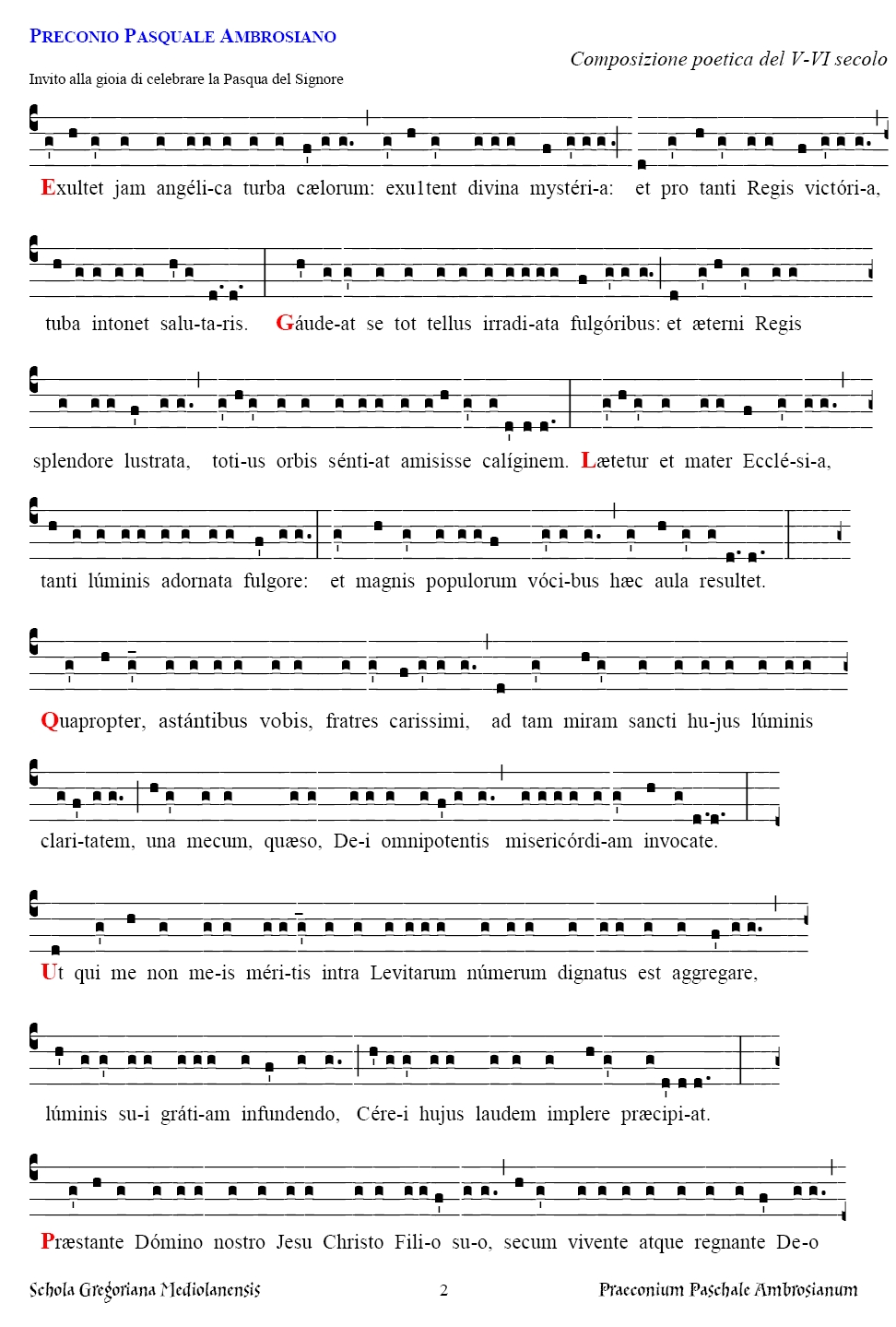
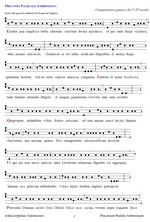
Every year, at the Easter Vigil, a most spell-binding melody is sung during the liturgy. Last night, as every year, I listened to Exsultet chanted, this time at the church of Our Most Holy Redeemer and St Thomas Moore, in the darkness with only candles illuminating the entire church. Its purpose is to rejoice in the resurrection and marks the begining of Easter Celebrations. (Let’s hear it for the barbaric Christian rituals.)
Exsultet of Easter Vigil is certainly my favourite piece of both poetry and music, with Allegri’s Miserere coming close second. The orignal text, going back as far as St. Ambrose (4th century), entered the Roman tradition around the 9th-century as part of Gregorian chant tradition. It is a masterpiece of the liturgical tradition.
It is said to be the sublimest expression of joyful sound that has ever come from the human heart and mind. Mozart once said that it is the most beautiful music ever written and that he would have given all his works to be able to say that he had written the first line of the Exsultet.
I could not find a decent audio file that conveys its full beauty and impact, but I found the text and the music score.
Update: Here is an audio recording of the Latin version.
I am watching the televised appearance of Pope John Paul at the Vatican at the moment. The old fella has only been able to say a few words for his regular Easter message to the masses thronging below in St Peter’s Square. It cannot surely be very long before he steps off this mortal coil.
How should yours truly, a lapsed Anglican, think about what this man represents? Well, I am going to put any reflections on his contribution to the Catholic church, or his views about abortion, etc, to one side and focus on a more worldly fact about his extraordinary life and career. The Pope was, in my view, one of the three or four great men (and one great woman) who helped bring the Soviet Union, that evil and decrepit empire, crashing to its knees. Along with Ronald Reagan, Margaret Thatcher, Gorbachev and arguably, the power of cheap television advertising, the Pope helped bring about communism’s demise.
I do not share the Pope’s faith, but in reflecting on his life on this Easter Sunday, it was hard not to suppress a lump in the throat. In my book, he is one of the giants of our age.
I will start this posting, having written the rest of it already and therefore possessing foreknowledge of what it contains, with a warning to easily offended Christians. This posting contains ideas that may offend easily offended Christians. So, if you are an easily offended Christian and sincerely do not wish to be offended yet again, best to stop reading now.
Christians are perfectly free to be offended by my anti-Christianity, just so long as they realise that I am likewise disgusted by many of the things they keep on proclaiming, mostly with no objections from me, both for its barbarity and for its contempt for normal standards of truth-seeking or logical argument. The offence is mutual.
Okay. Today being Good Friday, I have taken it upon myself to give the talk at my last Friday of the month meeting. Getting another speaker at such a time, and then perhaps having to soothe him or her because only three other people showed up, is more bother than the looks-bad factor of me doing the talk myself. (I did the same on the last Friday of December 2004, which happened also to be New Year’s Eve. That went okay.)
And since it is Good Friday, I will be talking about Pain: its history; how that history might explain why Christianity, and in particular the crucifixion story, has done so well down the centuries; the fact that recently pain has abated for lots of lucky people in lucky countries like mine, and the fact that this might do something to explain the recent decline of Christianity in lucky countries. Christianity thrives in adversity, but wilts in comfort, not least physical comfort, which is why completely wiping out Christianity has proved so hard. Communism tried, but the more you torment Christians the more like Christ they feel. Meanwhile Communism, lacking a story that makes any sense for those unfortunates caught up in its numerous failures, is itself rapidly crumbling, not least at the hands of Christians.
Most histories of pain seem to be histories of pain relief, which is understandable. But what effect on life generally did the prevalence of pain have, in all the centuries when pain was prevalent? And what has been the effect of the recent and remarkable abatement of the pain, for millions upon millions of fortunate people, like me, and very probably, you too, for decade after decade? → Continue reading: Some Good Friday thoughts from an atheist about pain and its history
While media attention is still on the Schiavo case, another legislature has been passing laws for specific individuals. In this case, the Icelandic Parliament has voted to grant citizenship to Bobby Fischer, the bizzare and deranged former Chess champion.
This act was done at the behest of supporters of Fischer, who has been imprisoned by Japanese immigration officials since July 2004 for trying to leave Japan without a valid passport. Since then, the US has been trying to extradite Fischer over his 1992 match with Boris Spassky, which, by being held in Yugoslavia, violated US sanctions.
I suspect that even if this new move is successful, the Icelandic authorities will come to regret their generosity. Fischer has a long habit of biting the hand that feeds, and Iceland may come to realise that there really is such a thing as bad publicity.
I am not the world’s leading authority on what Young People Are Getting Up To These Days. Nevertheless, today I spotted what looked to me like a new hairstyle, in Charing Cross Road in central London. And, on the off chance that it really is rather new, I photographed it from the top deck of the London bus I was in at the time, for Samizdata readers to wonder or sneer at. They were a group of five Asian boys, of whom three had their hair done thus:
At least two things may be wrong with this post. First, this hairstyle may already be old hat, and Asian boys have been swanning around for years with their hair done thus. Second, so what anyway? As to the first, well, I will take that chance. But re the second question, I think that human inventiveness and individuality is always worth a respectful nod. And yes, I daresay these were indeed juvenile delinquents, but that is always where these things seem to start.
How soon before David Beckham is to be seen thus adorned? Or maybe he has already sported such a hairdo and I missed that also.
In one of his recent entries, Brian Micklethwait referred to that small but intruiging part of historical scholarship, the “what-if” variety, in which writers conjecture what might have happened if a particular event, such as a political assassination or piece of intelligence, had not taken place. What interested me was that one or two comments suggested that this was a pure “parlour game” of no significance and that grown-ups should not bother themselves with such playful nonsense.
Ah, play. The idea that history, philosophy or art could involve play and other frivolous activity is offensive to a certain type of person. I happen to think quite differently. Playfulness is in fact often very useful in the realm of ideas. When a good writer wants to illustrate a point or an argument, he or she can often do so highly effectively through such gambits as a “thought-experiment”, or through borrowing from supposedly unrelated branches of knowledge.
A good example of this was the late libertarian author, Robert Nozick, who shamelessly borrowed from game theory, science and much else to make his arguments. He famously crushed egalitarian arguments for coercively redistributing wealth in his “Wilt Chamberlain” case by showing the injustice of taking wealth from a man who had earned it from the volutantary exchanges of people starting from a completely egalitarian starting point.
Maybe it is a product of puritanical Christianity, but our culture still revolts against the idea that ideas could, and should, be fun. I find that rather odd.
This is the year that Denys Watkins-Pritchard was born, one hundred years ago, a minor children’s author who bought joy to many schoolboys lurking around public libraries. Although Tolkien was the pre-eminent fantasy author, there were others to delve into on rainy afternoons, and under the pseudonym of ‘BB’, Watkins-Pritchard produced his own elegies to the passing of a pre-industrial England.
The most famous books were The Little Grey Men and The Little Grey Men Go Down The Bright Stream. The adventures of the four last gnomes in England, with the fantastical names of Cloudberry, Dodder, Sneezewort and Baldmoney, and their escape to a rural Ireland remind me of the ‘rural retreat’ that pervaded English literature from the beginning of the industrial age. As with the Cottingley Fairies, that famous fraud perpetrated on the gullible, BB recounted seeing a gnome:
The seeds of the idea for The Little Grey Men were sown when, as a small child, BB saw ‘a diminutive being.3 It had a round, very red, bearded face about the size of a small crab apple. It wasn’t a dream I can still see the little red astonished face.’
When myths and fairie-tales wove a stronger spell on the populace, brought up on rural tales of an idyllic past, the ring of authenticity provided that extra magical effect for the young audience, an extension of Peter Pan into real life.
There is a strand of merging reality and fantasy in British children’s books and plays that can be traced to J.M. Barrie and probably precedes his Neverland. This proved a strong influence throughout the twentieth century and ‘BB’ tapped into the long retreat of magic that was to pervade the work of Alan Garner as well. Some may explain this as the workings of modernity or industrialism or empire but these authors wished to infuse their own pasts with a magical glow and pass it on to new audiences as part of their long summer childhood.
Sometimes, as I take the Bluebell Light Railway, I can imagine that it is passing through the Forest of Boland.
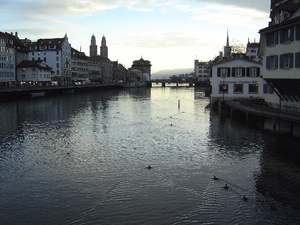
Just imagine a country with a low crime rate yet loads of people own guns and finding a fully automatic rifle in someone’s house is not at all unusual. Imagine that this country does not even have a single unifying language, has a weak central government and strong regional government, yet is politically stable. It has few natural resources compared to many other parts of Europe yet has low unemployment, a diverse economy and one of the highest per capita incomes in the world (about the same as the USA). Of course like everywhere it has its problems and it is not a paradise on earth, but it is a pretty nice place to be and an even nicer place to do business. It is also a place that has been praised on this blog before.
Yes, I just got back from Switzerland.
… no, not really, but that is scarcely less daft than the statement by the Archbishop of Canterbury that the calamitous tsunami made him doubt the existence of God. As a ‘shoulder shrugging agnostic’ well on his way to just calling myself an atheist, I have serious doubt about the existence of God myself but surely re-evaluating a belief in God every time someone, or 130,000 someones, die does rather suggest a lack of having thought things through in the first place.
Unless we are nothing more that meat puppets dancing to a pre-ordained celestial script (which is certainly not Anglican doctrine), the fact we make use of our free will and thereby make decisions that result in us dying in a certain manner (such as, for example, deciding that we will live in a coastal community in southern Asia) neither proves nor disproves anything about the existence of God.
Now I have no doubt that the Archbishop is well aware of those arguments and is just indulging in the usual Anglican tradition of fogging issues whilst sounding concerned and looking earnest as an alternative to clearly articulating easy to understand (and thereby easy to attack) positions based on long established doctrines.
But then the current Archbishop is a strange bird and the things in which he has ‘faith’ suggests to me that placing too much stock in his judgement is faith misplaced. He says that he, like Tony Blair, has faith in the UN but thinks it should be reformed and improved by giving religious groups (naturally!) and nations not on the security council more power (such paragons of civil rights as Myanmar, Libya, Syria, Zaire and Iran perhaps?)…yes, he wants to have some official say over how the UN’s tax funded patronage gets doled out. And presumably in the spirit of ecumenicist tolerance would also extend that to other religious leaders as well. It is a marvel how the UN gets held up as even a potential source of moral authority by people like Rowan Williams who are supposedly in the ‘moral authority business’, when by design the UN is a club of national leaders that admits mass murderers, fascists, communists, rabid nationalists and kleptocrats of every strip into its rank.
There is an interesting article about the decline of religious belief in Britian that got me thinking. I am also one of those ‘shoulder shrugging agnostics’ yet it is not that I do not have ‘beliefs’, just not religious ones.
I often wonder though if the decline of religious belief across great swathes of western society is a product of the growth of rationalism… or is it a decline in the ability to think about abstractions by millions of folks who think ‘Reality TV’ has something to do with reality?
If you don’t like what the label on your clothes says – the size or the brand name – cut it off.
(From a beauty book or a women’s magazine, I forget which. Sublime wisdom, whatever the source.)
|
Who Are We? The Samizdata people are a bunch of sinister and heavily armed globalist illuminati who seek to infect the entire world with the values of personal liberty and several property. Amongst our many crimes is a sense of humour and the intermittent use of British spelling.
We are also a varied group made up of social individualists, classical liberals, whigs, libertarians, extropians, futurists, ‘Porcupines’, Karl Popper fetishists, recovering neo-conservatives, crazed Ayn Rand worshipers, over-caffeinated Virginia Postrel devotees, witty Frédéric Bastiat wannabes, cypherpunks, minarchists, kritarchists and wild-eyed anarcho-capitalists from Britain, North America, Australia and Europe.
|