We are developing the social individualist meta-context for the future. From the very serious to the extremely frivolous... lets see what is on the mind of the Samizdata people.
Samizdata, derived from Samizdat /n. - a system of clandestine publication of banned literature in the USSR [Russ.,= self-publishing house]
|
Just got an e-mail from someone I met in Beijing in late 2005. I enjoyed his company especially because we shared a similarly self-deprecating, absurdist sense of humour. A good bloke – the sort that makes you understand why Aussies and Brits get along so well in spite of the silly state of sporting rivalry that exists between us. Craig was a thirty-something English teacher who had been on the Asia circuit for some time. Stories of his doomed-in-hindsight relationship forays amused me. When we were hanging out in 2005, his current romantic interest spoke no English and they (barely) communicated via the ridiculously inadequate translator installed on their respective mobile phones – think sub-2000 Alta Vista Babelfish – painfully erroneous. They had been out to dinner a couple of times. Boggles the mind, yes. Anyway, today I received an e-mail from him:
hey james….hows sunny australia these days? i got this email from kanjing, the girl with the very cute smile at the jade youth hostel. haha, this poor guys trying to chat her up and she goes and forwards the reply to every westerner she knows. ahhh, chinese girls.
He is right – she did have an awfully cute smile and was really quite lovely – in an untouchable sort of way. And he is also right about her forwarding said correspondence to a bunch of vague acquaintances – that is exactly the sort of thing a Chinese girl would do! Gotta love ’em. It is all one big English lesson.
What our amorous charge wrote to his fair damsel – and her response – is somewhat beside the point, but I could not help but note that the English proficiency he demonstrated was not enormously superior to that of our (slightly coherent) Chinese heroine. If I was feeling sympathetic, I would mark it down to the less rigorous standards demanded of e-mail communication. But still… awww… I had such a great time in China! I want to be there now. I laughed a lot. The glorious clash of customs taking place can be quite hilarious.
I would like to draw your attention to what’s happened to The Times’s Law section in the noughties. Once upon a time this was a lively mini-newspaper on a Tuesday, aimed at lawyers, with two or three substantial comment pieces, news, Law Reports and lots of job ads. Now it is a single sheet of newsprint, and found buried inside a growing section entitled Public Agenda.
From an advertisement in last week’s Economist:
Devolution Trust for Community Empowerment (DTCE), a Pakistan based non-governmental organisation funded by a consortium of donors through UNDP, is plannning to undertake a social audit in 110 districts across the country compatible with baseline social audit established in 2001/02 and first annual follow-up application undertaken in 2004/05. The objective of the exercise is to obtain policy feedback on citizens’ views and experience in relation to key public services sectors like health, education, water and sanitation, police, access to justice and engagement in local governance arrangements. The study design should consider the comparison overtime [sic] with the baseline and follow-up applicaions in citizens’ views, use and experience of public services under the devolved local government system in Pakistan with a strong element of institutionalization of the social audit process.
Meanwhile, working the other way round, a flyer reaches me from De Havilland information services [no relation] for a conference on “Embedding the Third Sector in Public Services”:
Third Sector public service delivery is a new, effective and exciting avenue to further revolutionise and modernise service provision as we know it. However, this is no longer an innovation, it is a reality and public money already funds multiple public services through third sector organisations. It is acknowledged that the opportunities, expertise and fresh, grass-roots approach the third sector brings will bring improvement and better value to public services.
Major efforts to reinforce this through building an infrastructure and action planning to rationalize and embed this are underway in te Third Sector Review, recently conducted by the Office of the Third Sector. The final report is due in March [and?] will culminate in summarising the sector’s contribution and propose how this will work in a better, stronger, more resilient infrastructure.
[all sic]
The Office of the Third Sector is very pleased with what has happened to the role of charities, and will be colonising more of British civil society presently..
“Metaphors furnish clues to transformation, but they are not the powers that resist or engender such new realities,” a literary theorist once wrote.
I know a lot of Samizdata contributors and readers are cricket buffs. So, what do you all think about the Twenty20 limited overs format now that it has had some more exposure since last being discussed here?
Why am I so uninspired when it comes to blogging these days? Is it the alcohol? I could cut down – come the new year, I have cut down. Weekends only (except when I am drinking during the week). Or the caffeine? I only drink coffee when I am asked out ‘for coffee’ or if I have had a particularly satisfying meal that cannot be denied a ristretto chaser – I do not drink coffee as a coping mechanism for human interaction in the ‘am’ hours any more. Perhaps these recent lifestyle adjustments will cause the shingles to fall from my mind and thus bloggable considerations will gush forth as readily as, well, the clichés did when I was constructing this sentence. That would be nice.
As an entirely unrelated aside, I recently had a sort-of bigwig in the large organisation I work for sit me down and tell me what a credit I could be to said organisation if I got into its graduate programme. His schtick was familiar 21st Centurese motivationary-speak – casually, genially, avuncularly domineering – “Here’s what I want you to do by the end of next week…” Despite an arguably unhealthy self-belief in my critical faculties, I found myself drawn to this man (who barely knows me) and his vision for my future; a spell that only lapsed after he had breezed out the door to no doubt galvanise some other vessel with the company mettle. Not a bad trick – identify the promising juniors and intimidate/flatter them into the arms of the company via the personal attention and counsel of vastly senior colleagues. I must remember that one when I have my own business. I did not sign anything.
The point is that up until the early months of 2006 I have always written, argued and thought voraciously. Inspiration was never a problem, an elegant turn-of-phrase never hard to deploy. It is now – I feel barren. And it is not the booze or caffeine or any other drug; I need to leave Perth. Perth is too easy. Having left Perth for more exotic destinations in the past, I now realise that not being in Perth piques my intellectual curiosity like no other. Okay, not being on Easy Street piques my intellectual curiosity like no other, but that is practically the same thing. Perth is a marvellous city to live in, especially if you want an uncomplicated life, but I need to struggle. I need to challenge myself beyond the stultifying rigours of a weekend team-building exercise conducted at some five star hobby farm resort. Yes, I trust you will catch me if I fall back ramrod-straight into your arms, but how will I fare on the Ropes Course with only my team members to spot me? What a load of wank! I’ve been offered a promising career path in one of Australia’s biggest and most successful companies. But to be honest, the very thought bores the absolute tits off of me. I am going to leave Australia and try to make my own way in the New World – Asia.
Ta-ra.
(TBC)
Given that the papers are full of the most appalling socialist commentators sharpening their knives to butcher Britain’s remaining economic freedoms, when ‘right-wing’ (in their terms, God help us) Tony Blair leaves office, it is nice to be able to point out a ray of sunshine.
I like Nick Cohen. He is often wrong, but he does have the sense to follow his own mind rather than retailing the received wisdom . And he is intellectually honest and self-aware, which is more than can be said for most commentators on the left. This is an impressive example:
Too many on the liberal-left, including me, don’t feel in our bones that it is as wrong for the state to take billions of pounds from taxpayers and waste them on, say, the fatally overambitious National Health Service IT project as it is for the owners of Farepak to take the Christmas savings of thousands of poor families and throw them away.
Leave aside for the moment that no one was compelled to take the appalling bargain offered by Farepak in the first place, and that no one, including the same poor families, has an option about the taxes going to the mad NPfIT or the destruction of their privacy that it entails. Leave aside that, even if one counts as robbery in the same way as the other, the NPfIT is more than 120 times as bad. (Though one couldn’t pass that topic without noting Gordon Brown took out of the nation’s pension funds in one early budget, what it would have taken 300 Robert Maxwells to steal.)
Cohen has recognised (1) that there is something not quite right about the disproportionate outrage lavished by the left on the Farepak disaster, when government spending takes money from people who need it and gives them nothing; and (2) that some other people do not share the reflex. He offers the insight as a matter of electoral strategy for Labour, so insight (1) may be a bit weak. But it looks to me like progress. Cohen can not quite see what is wrong with his viewpoint clearly enough to shift his ingrained value-judgements, but he can see that it might be wrong.
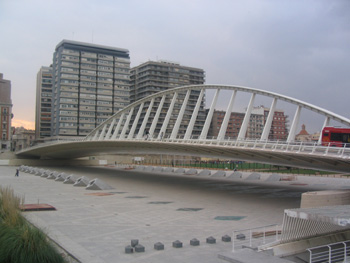
Valencia, Spain. January 2006
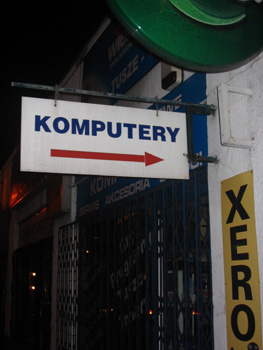
Warsaw, Poland. February 2006
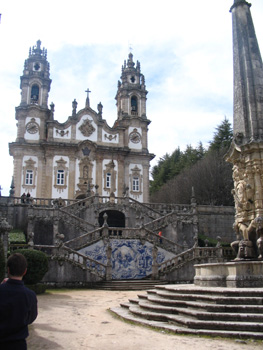
Lamego, Portugal. March 2006
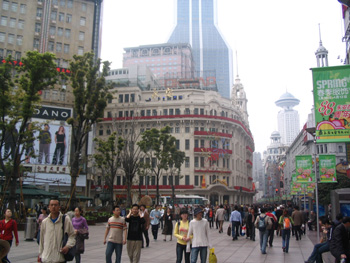
Shanghai, China. March 2006
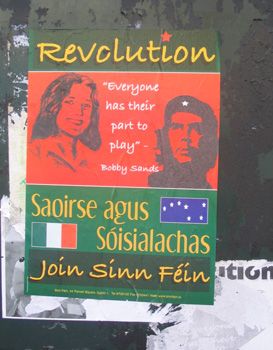
Belfast, Northern Ireland. April 2006
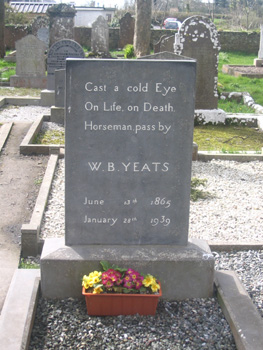
Sligo, Ireland. April 2006
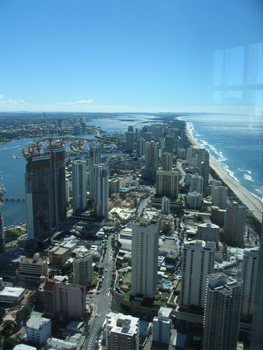
Gold Coast, Australia. May 2006

Singapore, May 2006
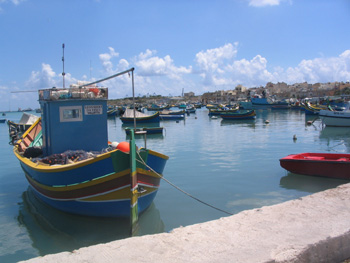
Marsaxlokk, Malta. June 2006
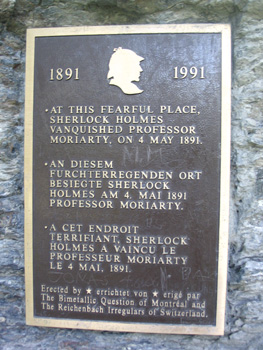
Meringen, Switzerland. June 2006
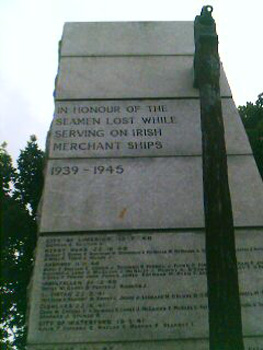
Dublin, Ireland. July 2006
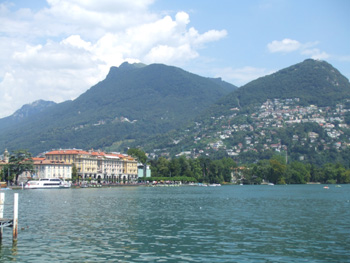
Lugano, Switzerland. August 2006
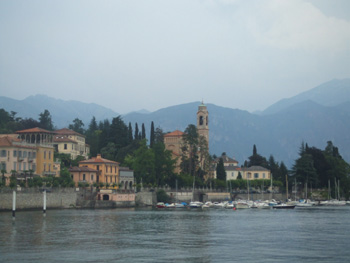
Lake Como, Italy. August 2006
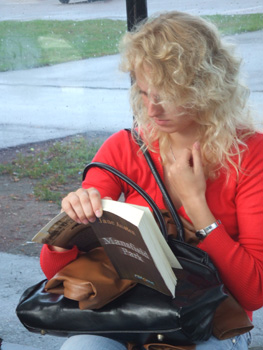
Tallinn, Estonia. August 2006
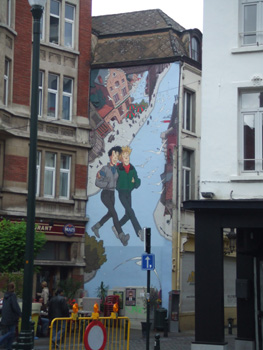
Brussels, Belgium. September 2006
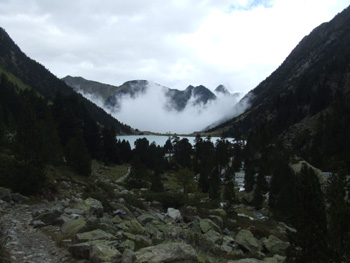
Cauterets, France. September 2006

Porto, Portugal. October 2006
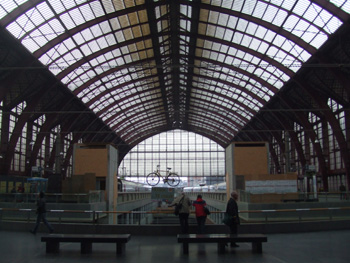
Antwerp, Belgium. November 2006

Rotterdam, Netherlands. November 2006

Aarhus, Denmark. November 2006

Prague, Czech Republic. November 2006

Barcelona, Spain. December 2006

Seoul, South Korea. December 2006

Panmunjom, Demilitarized Zone. December 2006
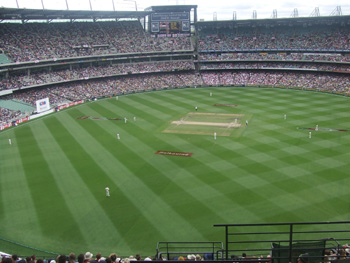
Melbourne, Australia. December 2006
To my complete lack of surprise, the latest inquest into Princess Diana’s death in 1997 is expected to state that she died because her chauffeur was drunk and lost control of the car whilst evading paparazzi. Sad but it happens all the time.
Why is it that people have such need to concoct weird conspiracy theories to explain so many events when recourse to good ol’ William of Ockham usually provides a far simpler explanation for why things happen? In particular, government conspiracies are either obvious (revealed by ineptitude or crassness) or non-existent due to the extraordinary difficulty of any group of more than three people have in keeping anything secret for more than a short period of time. It is not that conspiracies do not happen, it is just that they cannot stay secret for very long.
Other people will debate whether Augusto Pinochet, who died yesterday, was a wicked man who led a regime that killed three thousand people, or whether he should have killed rather more than three thousand as his communists foes have never had much of a moral problem with killing their enemies. My own opinion is that one should never kill an unarmed enemy – no matter what he or she might have been planning to do.
In the interests of honesty I should note that was not my opinion at the time. Many other communists regarded the independent Marxist President Allende as too rash and it is worth noting he was never a member of the official Communist party of Chile. Indeed when I heard the story about a group of communists mostly from outside Chile had been building forces from all over Latin America and beyond, had been told that President was about to deliver a speech and that they should come (leaving their firearms behind) and, when they got to the place the speech was supposed to take place, they were greeted with 50 calibre machine guns – well I laughed. But I was a child when I heard that story and children tend to be cruel.
Everyone has different levels of being shocked. For example, Pinochet either did not care (or did not want to know) about torture and summary execution. But when he got to hear of a rape of a prisoner he went through the roof (I heard this story from the prisoner via a BBC radio interview years ago) – the ‘holy army’ of Chile, based on the army of pre World War I Prussia – with joining up to the officer corps at the age of 15 and a monk like existence to one’s early 20’s, must not behave like ‘Argentines’, the prisoner must be released – and whoever was responsible must be…
On the democracy issue: It is true that Allende got more votes than any other candidate for President in the 1970 election (he got about a third of the vote), but he had violated the Constitution so much since then that the Congress had voted to outlaw him. Of course Pinochet did not turn over power to the Congress – he dissolved it (whatever it thought of Allende, the Congress with its majority of socialists and Christian Democrats would not have favoured someone who had just killed a lot of people – that it a problem with picking up a gun and doing some killing, how do you put it down again and not get punished?). By the way it was not, as is often claimed, the “first military coup in the history of Chile” as there was the coup of 1924 (but perhaps that does not count, as it was a leftist coup). → Continue reading: Augusto Pinochet
Steve Edwards has administered a particularly welcome hatchet job on critical aspects of the ostensibly benevolent, world government-loving Bahá’í religion. Check the comments – the Bahá’í faithful have piled in.
A while back I had not read my email for a day or so and found several waiting in my ‘IN’ box. Two were from Perry. Oh no. What have I done now? In the halls of debate, I am not very house broken. Fearing a ‘please cease and desist’ is in store, I open one. To my startled surprise, Perry is offering me a byline and contributing privileges! Startled is an understatement. Apparently I am doing something that Perry actually wants to continue. But what?
I have one all encompassing principle. ‘Reality.’ This is a more complicated choice than it may first seem, but still an easy one..
There are very few guidelines for contributors to Samizdata. Basically, the content guidelines are simple. The key position statement is “liberty – good, big government – bad”. Surprisingly, this is the one I will need to be careful with. For it is possible within my principles, to hold a collectivist position that is both philosophically consistent and morally sound. But while I am acknowledging that a collectivist can be morally sound and philosophically consistent, I am also mustering my defences and preparing for a ‘debate’ that can only be resolved by physical contest. I have made my choice and there is no middle ground. → Continue reading: How did I get to this page?
After many months of work, travel and no play, I went to a cinema to see Pan’s Labyrinth. A friend of mine thought it was my kind of film and he was right – it is dark, surreal and based on a fairy tale. It is set against the backdrop of the aftermath of the Spanish civil war. The story blurs the distinction between fantasy and reality but only to those who are not familiar with the stark realism of fairy tales. I know on which side of reality I stand.
Visually, the film is reminiscent of Mirrormask, which by comparison is light-hearted and flippant. Almost everything about Pan’s Labyrinth is dreamlike – imagery, acting, music. Except the violence and pain. This is no Disney movie.
It is a stark reminder of brutality of situations in which the warped and the sadistic have the upper hand. There are no heroes or winners. Just those who manage to preserve a shred of humanity by escaping to an alternative reality and by finding courage to act against the overwhelming evil.
It is also a reminder of the deep-seated morality of fairy tales. Tasks, rules, forbidden ‘fruit’ with dire consequences that follow any mis-behaviour. Monsters can be released by seemingly trivial acts of misdemeanour and can only be bound again at enormous cost. So just like the real life.
cross-posted from Media Influencer
On Saturday I went to the annual conference of the Bruges Group – an organization that has moved from a critical attitude to the European Union to an understanding that the United Kingdom should get out of the of the E.U.
One of the speakers was Mr Booker of the Sunday Telegraph a man who has specialized in detailing the exact harm done to business after business (normally small business enterprises) by EU inspired regulations after the Single European Act of 1986 allowed E.U. directives to be applied to most areas of British life. Small damage at first (just a few people’s lives destroyed) but over the last two decades more and more enterprises (and the people who go with them) destroyed. Although, of course, much of the damage of the EU (such as the CAP and the CFP) go back to when we joined back in 1973.
I will not go into the mistakes of some British politicians (such as Mrs Thatcher) who were tricked by the EU people and their British supporters, or the actions of other British politicians (such as Sir Edward Heath or Lord Howe) who deliberately acted for this hostile power against their own country. Other than to say that I do not accept the Benedict Arnold defence – i.e. that brave service in war means that a man should still be considered a patriot if he later changes his coat.
I am more concerned with a minor matter here. As I heard Mr Booker’s speech I thought “it is a long time since I bought the Sunday Telegraph – I will buy it tomorrow”.
And so I did buy it – and was reminded why I do not buy it any more. → Continue reading: Why buy the Sunday Telegraph?
|
Who Are We? The Samizdata people are a bunch of sinister and heavily armed globalist illuminati who seek to infect the entire world with the values of personal liberty and several property. Amongst our many crimes is a sense of humour and the intermittent use of British spelling.
We are also a varied group made up of social individualists, classical liberals, whigs, libertarians, extropians, futurists, ‘Porcupines’, Karl Popper fetishists, recovering neo-conservatives, crazed Ayn Rand worshipers, over-caffeinated Virginia Postrel devotees, witty Frédéric Bastiat wannabes, cypherpunks, minarchists, kritarchists and wild-eyed anarcho-capitalists from Britain, North America, Australia and Europe.
|

