We are developing the social individualist meta-context for the future. From the very serious to the extremely frivolous... lets see what is on the mind of the Samizdata people.
Samizdata, derived from Samizdat /n. - a system of clandestine publication of banned literature in the USSR [Russ.,= self-publishing house]
|
Samizdata quote of the day – when the state starts saying the quiet bit out loud “When I was in justice, my ultimate vision for that part of the criminal justice system was to achieve, by means of AI and technology, what Jeremy Bentham tried to do with his Panopticon. That is that the eyes of the state can be on you at all times.
“Similarly, in the world of policing, in particular, we’ve already been rolling out live facial recognition technology, but I think there’s big space here for being able to harness the power of AI and tech to get ahead of the criminals, frankly, which is what we’re trying to do.”
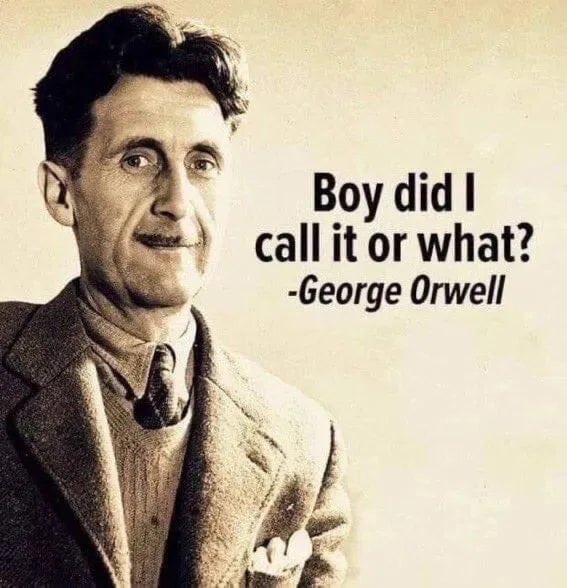
– Shabana Mahmood (£), Britain’s Home Secretary, explicitly states she wants to turn the country into a panopticon, quite literally a prison.
Jeremy Bentham, an 18th-century philosopher and social theorist, promoted the Panopticon as a circular prison with a central inspection tower from which a single guard could observe all inmates all the time while unseen.
|
Who Are We? The Samizdata people are a bunch of sinister and heavily armed globalist illuminati who seek to infect the entire world with the values of personal liberty and several property. Amongst our many crimes is a sense of humour and the intermittent use of British spelling.
We are also a varied group made up of social individualists, classical liberals, whigs, libertarians, extropians, futurists, ‘Porcupines’, Karl Popper fetishists, recovering neo-conservatives, crazed Ayn Rand worshipers, over-caffeinated Virginia Postrel devotees, witty Frédéric Bastiat wannabes, cypherpunks, minarchists, kritarchists and wild-eyed anarcho-capitalists from Britain, North America, Australia and Europe.
|





As you say. Saying the quiet bit out loud. Everything inside the state, nothing outside the state, nothing against the state.
It seems to me that a fair question is: does all this snooping reduce crime or improve crime clearance rates in the UK?
* Total recorded crime: 2013 4 million, 2023 6.7 million.
* Violence “increased substantially over the last decade”
* Fraud, up 34% over past decade
* Total crime clearance rates 6.4%
* Sexual offence clearance rates 3.7%
* Theft clearance rate 6%
* Murder clearance rate 61% (which is to say you have about an even chance of getting away with murder)
And so forth (source is all from Gemini).
It almost makes you think that Benjamin Franklin was on to something:
Jeremy Bentham was a wrong ‘un, but at least the panopticon was for surveiling convicted felons not the unconvicted populace at large.
The modern version seems to be aimed solely at keeping the plebs under continuous observation by Big Brother in case they get ideas about rapid undiversifying of the newly arrived with pointy objects.
Advantage would be, it would free up more cops for tracking down your non-crime hate thingies.
The ghost of Felix Dzerzhinsky is envious of the ideological conformity and submission of modern britain. It is probably too late by now for any free people to leave.
Subotai Bahadur
She’s one of these “blue Labour” types: socialism with a bit of tough-on-crime and an overlay of “sensible Mum” do-what-your told bossiness.
The sad thing is, it’s going to appeal to a lot of people. Remember, back in 2020, lockdowns had overwhelming public support.
Across the political spectrum, support for ordered liberty, restraint on government power, etc, is weakening.
Western society is becoming more feminine. A more feminine society looks for more security blankets. This is one of those. “Watch over me, please.”
Just an aside, there’s a victorian panopticon in Lincoln Castle. It’s a bit grim.
Nothing whatsoever to do with crime, of course. She wants to spy on people planning to resist the government. If surveillance prevented actual crime London would be one of the safest cities in the world.
As Jonathan says, a disturbingly large proportion of the public appears to believe that the government will protect them from … the government.
We do not need any greater surveillance since the existing blanket of cameras has delivered no startling decrease in crime.
But really the panopticon argument is just trying to hide the slide of ‘fighting crime’ into ‘fighting wrongthink’. Something far more attractive to politicians. We are already partway there with ‘hate crimes’.
And – I’m surprised this hasn’t shown-up here already – the latest fabulous black-eye for the guvmint is one they fashioned themselves, that’s being mercilessly turned against them. It gives me great pleasure to introduce Amelia =D
The story of Amelia is that in 2023 the U.K. Government introduced a pretty dumb video game, free-to-play-for-teens, called Pathways. You played through “What-would-I-do” situations on avoiding the Extreme Right Wing Extremists, with peril at every turn – you might be tempted into rightwing extremism by – Amelia! The two major problems with the game being, 1) it lent itself readily to trolls, and 2) Amelia is a cute goth girl and all the proles fell in love with her. She’s taking teh interwebz by storm!
The problem here is lack of discrimination.
People hear a statement like
differently, especially when it hasn’t been stripped of the context in which she said it.
Many people assume that will never happen to them. They’re positively delighted at the prospect of the State keeping its eye constantly on known sex offenders, even after they’ve been released from jail, or even if they’ve been under heavy suspicion but there was never enough evidence to convict them. They assume this power will never be turned on them, or shrug it off as being of no consequence because “I’m not a criminal”.
Other people, including libertarians, react with horror because they perceive a dystopian future model with the State as jailor and the entire populace as nothing more than inmates. And so loudly denounce the whole idea.
Personally, I am slightly more equivocal. Using this as a general deterrence against wrong-doing strikes me as repulsive. But I am quite comfortable with the idea that one of the consequences of being convicted of a sex offence is that for a long period after release from jail – perhaps forever – you’re under this kind of surveillance. I would want super-strong assurance that it’s not going to be turned on ordinary law-abiding citizens. And if it were ever used on mere suspects, well the suspicion must be very well founded (probably, enough to arrest them) and the surveillance withdrawn promptly when a decision is made not to charge – which should itself be made promptly.
Yet these conditions will realistically never be accepted by the State. On the contrary, it would consider that imposing such surveillance only on criminals would breach their Human Rights. It’s only acceptable to the State if it’s applied “without discrimination”, on all of us. So for all practical purposes, I must join the libertarian camp.
If you think I’m mistaken on the Human Rights angle, you should know that this was precisely the reasoning of the European Commission recently when it proposed reviving the Data Retention Directive.
“The surveillance state is part of the state. Where surveillance is a priority – say, when political enemies are concerned – it’ll be ruthlessly efficient. The rest of the time, like when it involves protecting Americans from terrorists, it’s just another government job.”
April 27, 2013, by Glenn Reynolds, on Instapundit.
And the Left here in the US looks at the UK, and is admiring and envious.
It is astonishing how open the lady is – the open embrace of tyranny.
As for Jeremy Bentham – with his proposed 13 Departments of State controlling most aspects of life.
Mr Bentham was the first great corrupter of British liberalism – for many liberals, to a greater or lesser extent, were influenced by him (including John Stuart Mill – although he was not so close to Jeremy Bentham as his father, James mill, was).
Both Bentham’s statist politics (which still used such words as “freedom” and “liberty” but radically changed their meaning), and his philosophical conception of what a human is – to Mr Bentham a human is not a human being, we have no soul (in either the religious or the Aristotelian sense) – there is no “I” no human agency.
A dead-end philosophy leading to dead-end politics.
There was a massive divide between the Whigs of the 17th and 18th centuries and the “Philosophical Radicals” and “Westminster Review” (basically the same people) faction of early 19th century liberalism. Although, it must be stressed, that this was a MINORITY faction of 19th century liberalism.
A central political principle of the Whigs (perhaps THE central political principle) was private property in LAND, the rights of private landholders against the state – but the early 19th century radicals (influenced both by Jeremy Bentham’s denial of rights – “rights are nonsense, natural rights are nonsense on stilts”, and by the false economics on land of David Ricardo) undermined this – under the false banner of “free trade in land” (eventually they dropped the false packaging and openly come out against private land ownership – including some liberals in my home town of Kettering in the 19th century, and Kettering was typical).
I used to think (back when I was young) that their philosophy (for example the denial of the human mind, denial of the human person, that J.S. Mill bizarrely calls “the light of Hume”) contradicted their politics – after all all my school and university text books told me that they supported “laissez faire”.
But they did NOT – not really. The redefined laissez faire to just mean “free trade” meaning free international trade. the least important part of laissez faire – thus enabling them to support endlessly more government spending and government regulations (Jeremy Bentham’s 13 Departments?) – we are told by J.S. Mill (in his Principles of Political Economy 1848 – the same work clings to the doctrine of the Labour Theory of Value, ignoring the refutation of it by Richard Whately, Samuel Bailey and man others) that “everyone agrees” that government should take over the provision of XYZ – clearly this is a very narrowly defined “everyone”. And in “On Liberty” we are told that regulations that impact the producer or seller are fundamentally different from regulations that are directed at the buyer – but they are NOT fundamentally different (they just are not).
In philosophy where the radicals stood can be seen by what books they wanted to put into libraries.
The works of Thomas Hobbes, David Hume and Jeremy Bentham – none of these people were Whigs, indeed their writings were detested by Whigs – partly because of their support of state power, but, more fundamentally, because of their undermining of the human person – the human being.
Nor is this a matter of being open and tolerant of opposing points of view – the radicals did not regard these writers as opposing points of view, they AGREED with their soulless (human person denying) philosophy – and they did NOT insist that works by, say, Ralph Cudworth or Thomas Reid (Cudworth being the great opponent, in philosophy, of Hobbes – and Thomas Reid being the contemporary philosopher most cited by the American Founding Fathers) were in the libraries.
So much for encouraging people to read and think about opposing points of view.
To be fair it should be noted that some of the opponents of the philosophical radicals also had bizarre political ideas.
For example, Sir William Hamilton (against whom J.S. Mill directed his “Examination of the Philosophy of Sir William Hamilton” – only, in turn, for James McCosh to publish is attack on Mill “An Examination of the Philosophy of Mr John Stuart Mill”) defines a “university” as something endowed by-the-state with….
Why the state? Most universities were historically created by the church – and there were universities in the United States in the time of Sir William Hamilton that had nothing to do with the state.
As with so many (but not certainly all) 19th century writers there is a sort of smell-of-burning-incense whenever the term “the state” (after all a corrupt gang of bandits – who feed off others by the threat of violence) is mentioned – and this comes from German philosophy – from the the Cameralists of the very late 1600s and the 1700s.
This culminated in the rule of Frederick “the Great”.
There was a cult of Frederick the Great among some people in Britain (Edmund Burke was a leading opponent of this cult) – and it should be remembered that Frederick was an arch statist – serfdom (enforced by the state), endless taxes and spending, endless regulations – an utterly demented Legal Code and-so-on.
Even if you charitably read her statements as applying to convicted criminals, that doesn’t do anything to address the problem.
Which is, the state already knows who the repeat offenders are, but won’t do anything about them.
How many times do I have to read, “50 arrests”, “six convictions”, etc? No, it’s opposite world, where armed home invader George Floyd (and I’m SURE that was his only felony ever, uh-huh) is not only out on the street, but becomes a saint of the New Religion.