We are developing the social individualist meta-context for the future. From the very serious to the extremely frivolous... lets see what is on the mind of the Samizdata people.
Samizdata, derived from Samizdat /n. - a system of clandestine publication of banned literature in the USSR [Russ.,= self-publishing house]
|
I do not believe that the solution to our problem is simply to elect the right people. The important thing is to establish a political climate of opinion which will make it politically profitable for the wrong people to do the right thing.
– wise words from Milton Friedman much quoted of late, e.g. here.
Not that I am recommending such behaviour as this to any Samizdata reader, of course.
What developments favourable to liberty will happen during 2011?
… and a happy new year to all.
As has already recently been noted here by Michael Jennings, Australia is just now doing rather badly at cricket. The first day of the recently concluded Melbourne game was, for Australia, particularly calamitous. Australia all out 98, England 157 for no wicket. That, trust me, was very bad indeed for Australia. Bear in mind that this was not just any old bad day; this was Boxing Day at the MCG, against England, one of the great days of the Australian sporting calendar, like Derby Day or Grand National day in England or Superbowl Sunday in the USA. After that first day disaster, there looked to be no way back in this particular game for the Australians, and so it proved. England, having won the Ashes back in 2009 in England, will now keep them. If I am optimistic about England’s chances of avoiding a deeply disappointing 2-2 draw in the series in the forthcoming final test at Sydney, it is because I believe that the leaders of the England team agree with me that if they lose in Sydney that will seriously take the shine off their entire campaign.
Okay, sport hurrah! Blah blah blah. But last night, as I settled down to watch the televised highlights of the final spasms of that Melbourne game on ITV4, I realised something else that was, for me, new and different, besides England thrashing Australia in Australia at cricket. Someone else was suffering, if my behaviour was anything to go by, besides Aussie cricketers and cricket fans.
In the past, when a major sports team that I am fond of (usually either the England cricket team or the England rugby team) has done really well, I go out and buy an armful of newspapers and have a good wallow, with newspaper pages spread out all over my living room floor. I know, I know, the internet has been with us for at least a decade. But the habit of newspaper buying has been a hard one for me entirely to break, especially at times like these. Well, now, finally, I seem to be cured of it. I made no conscious “decision”. I simply, I now realise, didn’t buy any newspapers. Never even thought about it.
It seems that I have learned enough about surfing the internet to no longer want newspapers even for sporting excitements, even when I would actually enjoy reading about a quarter of what is in them, and might learn all kinds of other things if I at least glanced through the rest of them. Recent newspaper purchases, made for this or that forgotten reason, have only resulted in them being almost totally unread.
It also helped that, this time around, I now have a brand spanking new computer, with several tons more RAM than before, and quick as lightning compared to anything I’ve ever had until now.
It seems that I am not the only one now thinking like this about newspapers, and more to the point buying (as in not buying) like this. (My thanks for that link to Guido Fawkes.)
If one newspaper puts itself behind a paywall, well, there are plenty of others who have yet to do this. If they all, sometime soonish, go behind a paywall, well, I’ll deal with that problem when it happens. Meanwhile, plenty of verbiage is now given away on big sports dramas, and I can now find all I want about England cricket successes for nothing, and in a paperlessly calm manner. Personally, I don’t believe that there ever will be any great lack of good free-to-read stuff about cricket, even if the “professional” journalists do all end up requiring payment to be read (as well they might). The amateurs will happily step forward, I say, in fact I’m pretty sure that they already have. It’s just that for as long as the old school media mostly give their cricket stuff away, I haven’t bothered to find out which new websites and blogs I could go to. I’d welcome suggestions as to where else I might be reading about cricket, besides Cricinfo and the big newspaper websites of the cricketing world.
Part of my point here is: although these kinds of changes are absolute in nature, and very abrupt in historic time, at the time they happen they are often experienced as oddly gradual, and even preventable should you happen to want them prevented. What is later clear to have been a total wipe-out happens at the time as single figure percentage drops. This particular bit of writing has long been on the wall, but it often takes a bit of a while for sufficient numbers to read such writing and to make the long-prophesied on-off switch actually do its switch. For one thing, the hardware often needs to evolve, speed up, get easier and nicer, and so on. In this case, gradually, they (we) are, and it is. And in this case, the phrase “writing on the wall” seems peculiarly apt, even if the wall in question is virtual and electronic rather than literal.
What seems to be happening is that many are now willing to pay pennies to read professional media stuff, on their iPads and iPhones and Google-Android equivalents. How much of a real business this will turn into remains to be seen. Very big but very different from the recent past would be my current guess. I don’t believe that Rupert Murdoch has necessarily made a big mistake with his Times paywall decision, by the way. His old regime couldn’t last, and had to be changed. He has merely decided which bit of the new internet business he wants the Times to be in. The Times now faces turmoil as it adjusts to its new reality, but that doesn’t mean that it won’t adjust.
Meanwhile, all those who, like me, want also to write about it (whatever it might be) and to link to other writings about it will continue to want free stuff. It’s absolutely not – or not only – that we amateurs are cheap. The key is linkage. If we can’t say to everyone reading our own free stuff: hey, have a read of this (no link there because that is my exact point), there is, for us amateur writers, no point in us reading it either.
Another way of putting all this is to say that whereas it used to be that the Mainstream Media were … the mainstream media, while us internetters all lived in our dusty little caves of off-message opinion, gibbering and cursing with only our closest friends, now it is the pay-as-you-read ex-mainstream media who will be the ones living, if not in caves, then at least indoors, so to speak, and hence ever more cut off from “public” opinion. Think: Palace of Versailles. That this switch is already happening explains a lot about the current state of politics, worldwide.
It has been good to get out of the UK this Christmas. As one or two Samizdata regulars will know, I had a crap December as my dear mother, at the relatively young age of 69, died of cancer on 9 Dec. I just needed to get away and decompress and gather my thoughts.
Fortunately, I have wonderful relations via my wife who work with the US military in Southeast Germany, about 20 km from the Czech border. They are a great group of folk who know how to put on a good Christmas. Bavaria has been spectacular due to all the heavy snowfall. It has seen temperatures as low as -18 Degrees.
One of the places I visited was a museum all about a huge US army base near the small German town of Grafenwoehr. The place dates back to the start of the 20th Century, when the then German government built it up and it remained in German hands until the Allied armies, with Patton’s 3rd Army to the fore, captured it at the end of WW2. During WW2, for example, the place was used by the various groups within Hitler’s armies for training purposes. Himmler gave a speech there. During WW1, it was used, among other things, as a PoW camp. Many soldiers are buried there. Later, during the Cold War, even the likes of a young Elvis Presley did some army training on the base.
Going on the base with a relation of mine, the place seems so pristine and businesslike with lots of US servicemen and women getting ready for deployments to the MidEast. I wonder what they think about the uses to which this huge training area has been put in the past. It is, so I am told, the biggest US army training facility outside of the US. Of course, a lot of bases have been closed down since the early 1990s, but the presence of NATO forces is still evident, judging by the various North American accents I hear in the local shops and restaurants.
I can strongly recommend this part of Southern Germany as a place to visit. The locals are very friendly and the economy is, judging by a massive shopping mall in Regensburg, buzzing. And the local beer is awesome. What more excuse do you need?
In 1985, the Australian cricket team was so bad that it lost two test series to New Zealand in the same season. Appalled by this, the powers running Australian cricket set up a comprehensive set of reforms to the way the game and the national team was run. One of these reforms was the establishment in Adelaide of a “Cricket Academy” in which promising, potential future test players could receive coaching and training to complete their development as international cricketers. Good coaches and staff were hired, and the academy was one of the explanations given for the rise of the world beating Australian team of the 1980s and 1990s.
Shortly after this, the local tourist board in Adelaide discovered a curious phenomenon. Visitors to Adelaide would state that they wanted to see “The Cricket Academy”. Apparently they expected to see buildings, pitches, nets, and a sign at the gate saying “Australian Institute of Sport: Cricket Academy” or some such. As it happened, there were no such premises. The cricket academy used rented and borrowed nets, grounds, and other facilities. The emphasis was on the training.
However, in 2004, the academy relocated to Brisbane, was renamed as the “Cricket Australia Centre of Excellence”, and a new, $26 million dollar headquarters was commissioned: a “state-of-the-art athlete development centre that will integrate science, technology and coaching to enhance both development of athletes and the understanding of skill development and performance in the sport”.
All is explained.
Just before Christmas, I spent a few days in Belgrade and Budapest. It was extremely cold, and I had quite a bad cough and sore throat. As a consequence, beautiful as these cities are when covered with snow, I was inclined to stay inside.
No real problem there. The Central Europeans almost invented the cafe, and the options varied from little places that you enter by stumbling down a set of stone steps that lead to a cozy basement, to huge, spacious places that have ceiling murals that appear to have gotten a little lost after being originally planned to decorate the Sistine Chapel. (These specific ones tend to be more in Budapest than Belgrade, The Austrian Empire persists).
In any event, in both cities, cafes, bars, restaurants and taverns seem to invariably be filled with smoke. I am not a smoker, and although I generally prefer a venue without tobacco smoke, I am capable of putting up with it. However, with my sore throat, being in a room full of smoke led to quite a bit of discomfort. It would have been nice to find a cafe which was not full of smoke.
Of course, home in London, there is a complete smoking ban in bars, cafes, and restaurants. I would have been fine, but a smoker looking for a place to smoke that was not his home and was not indoors would have been out of luck. One cannot smoke even in premises specifically designed for the benefit of smokers: smoking clubs and cigar clubs are essentially illegal. Proponents of anti-smoking laws who claim that an exception for smoking clubs would be taken advantage of to allow smoking in other venues are correct of course. In places (eg Bavaria) where there is a smoking ban and an exception for smoking clubs, paying what you think is a cover charge when entering a jazz club, and discovering later that you are now a fully paid up member of a smoking club is not an unknown experience. On the other hand, I am hard pressed to see how this matters. There is no shortage of genuinely non-smoking venues in Bavaria.
When I go to Spain, I find what appears to be a far more satisfactory experience. Spanish law does not impose a complete smoking ban in bars, restaurants etc. The law there states that large venues shall be non-smoking, but there may be a smoking room. With respect to small venues, the owner of the property may decide whether smoking is permitted or not, and there shall be a clear sign near the door stating whether it is.
I find this a very satisfactory outcome. If I want a non-smoking venue, I have little difficulty finding one. I doubt smokers have much difficulty finding a venue that allows smoking, either. If I am in a large party of people that contains both smokers and non-smokers, then I can be away from smoke and smokers are free to go off and have a smoke in the smoking room. If I am in a small party of people that contains both smokers and non-smokers, then we can choose our venue between us. The non-smokers can choose to put up with some smoke, or the smokers can decide to refrain from smoking indoors for the evening. Non-smokers can freely associate with smokers, or not, as they choose.
However, there is still a slight problem. The Spanish legislation is far less heavy-handed than the British legislation. Requiring cafe owners to put up signs indicating whether smoking is allowed is far less objectionable than forcing a non-smoking policy on everyone, willing or not. Allowing smoking rooms is less heavy handed than insisting that entire venues are non-smoking. However, there is still coercion. The owners of private property are not entirely free to run their businesses on that private property as they please.
My gut feeling is that a genuinely free market would result in a situation similar to that existing in Spain, without any coercion at all. Some venues will allow smoking, and some will not. Different customers will choose to patronise venues with different policies, and different venues will cater for these different customers. In short, greater freedom will lead to greater choice.
And yet, in places like Belgrade and Budapest, this is not what seems to happen. Virtually all venues allow smoking, and as a customer I have little choice. Do cultural factors overwhelm freedom? I certainly hope not. Or are there some other regulatory or legal factors that lead to uniformity rather than freedom. I would be interested in people’s opinions on the matter.
Where Tony Blair had no reverse gear, and Lady T was not for turning, Mr Cameron has a full gearbox and power steering that allow him to execute swerves and three point turns.
– Benedict Brogan
… yet again I find myself pondering adding a “No shit Sherlock” category… maybe more decorously listed as “I told you so” or some such.
George Osborne was recently in New York, soaking up plaudits for boldly leading Britain into fiscal austerity at a time when, apparently in contrast, America’s feckless political elite has allowed the national debt to balloon. The problem is that UK austerity, so far at least, is a myth.
November’s national accounts, released last week, were shocking. Government spending last month was sharply up on the same month in 2009 – yes, up! British state borrowing is still escalating, with the national debt rising very quickly.
– Liam Halligan.
However I do rather roll my eyes at the word ‘shocking’ as it has been screamingly obvious what was happening for quite some time. Sometimes I think Samizdata needs a category called ‘No shit, Sherlock’. How anyone could have thought Cameron’s dismal followers were ever serious about actually cutting back the state is hard to fathom.
Second, you seem to think that we might censor a student’s thesis, which is lawful and already in the public domain, simply because a powerful interest finds it inconvenient. This shows a deep misconception of what universities are and how we work. Cambridge is the University of Erasmus, of Newton, and of Darwin; censoring writings that offend the powerful is offensive to our deepest values. Thus even though the decision to put the thesis online was Omar’s, we have no choice but to back him. That would hold even if we did not agree with the material! Accordingly I have authorised the thesis to be issued as a Computer Laboratory Technical Report. This will make it easier for people to find and to cite, and will ensure that its presence on our web site is permanent…
– Ross Anderson, of the Cambridge University Computer Laboratory, defending academic freedom. This makes me proud.
I’m against the rise in student fees… ‘cos it ain’t fuckin’ high enough
– Thaddeus Tremayne
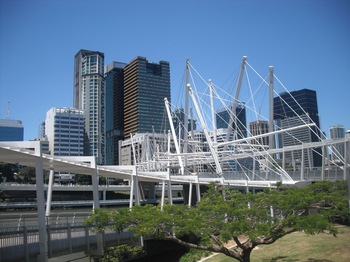
Brisbane, Australia. January 2010. 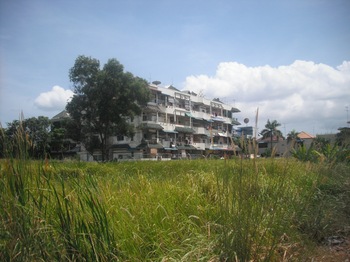
Batam, Indonesia. January 2010.
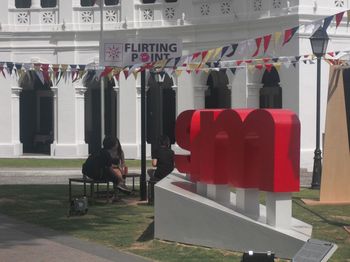
Singapore. January 2010.
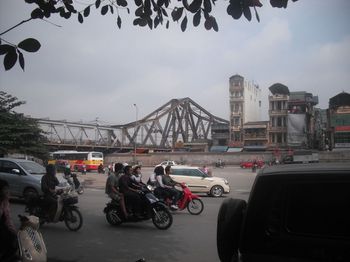
Hanoi, Vietnam. February 2010.

Malacca, Malaysia. February 2010.
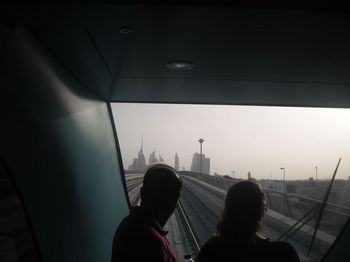
Dubai, United Arab Emirates. February 2010.
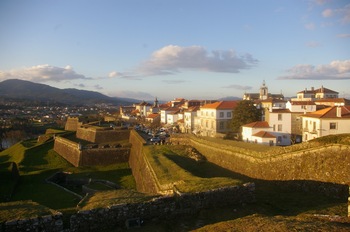
Valença do Minho, Portugal, March 2010.
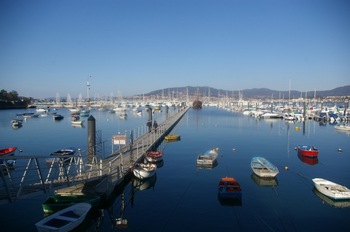
Baiona, Spain. March 2010.
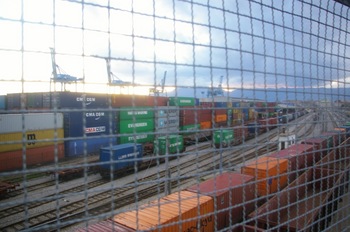
Rijeka, Croatia. March 2010.
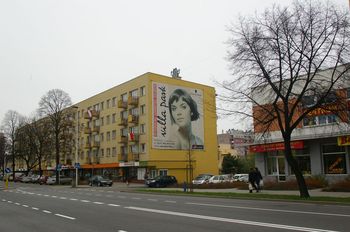
Rzeszów, Poland. April 2010.

Lviv, Ukraine. April 2010.
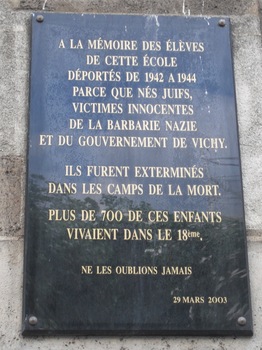
Paris, France. May 2010.
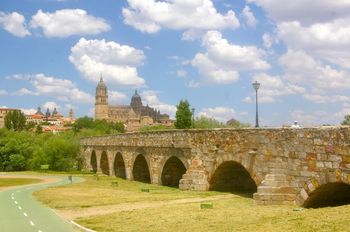
Salamanca, Spain. May 2010.
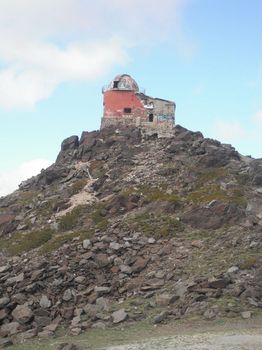
Sierra Nevada, Spain. June 2010.
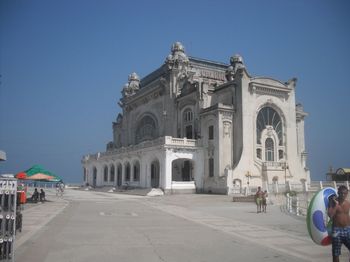
Constanta, Romania. July 2010.
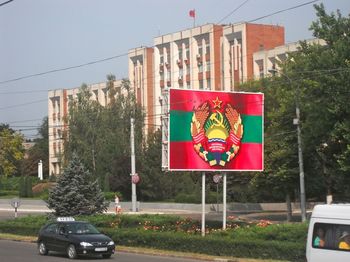
Tiraspol, Transnistria. August 2010.
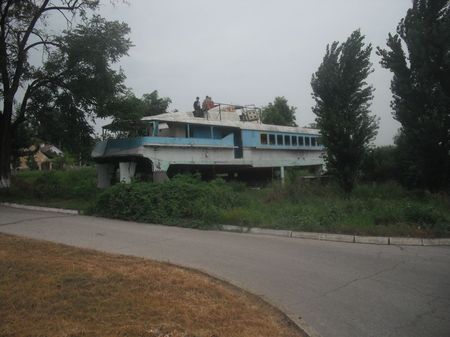
Bender, Dniester Valley security zone. August 2010.
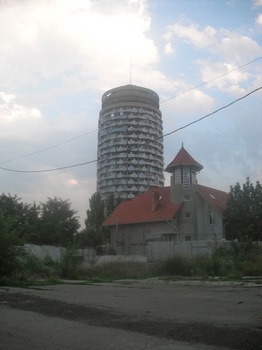
Chisinau, Moldova. August 2010.
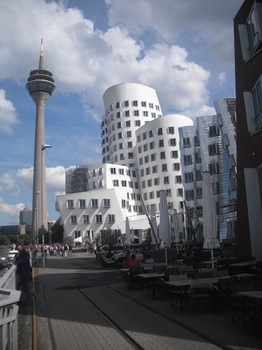
Düsseldorf, Germany. September 2010.
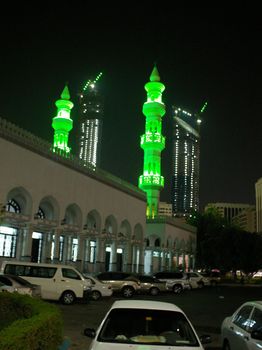
Abu Dhabi, United Arab Emirates. October 2010.
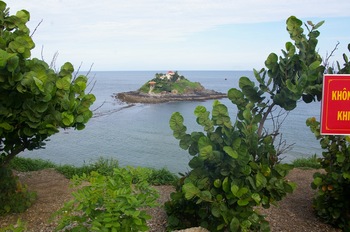
Vung Tau, Vietnam. October 2010.
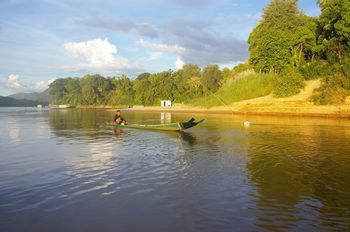
Luang Prabang, Laos. October 2010.
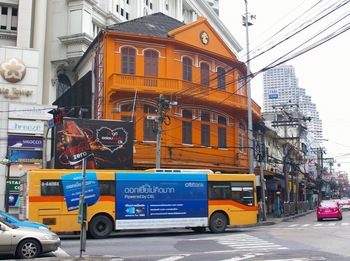
Bangkok, Thailand. October 2010.
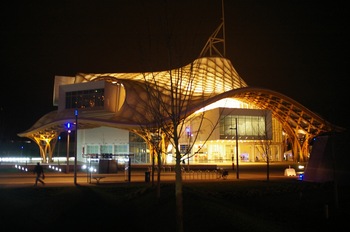
Metz, France. November 2010.
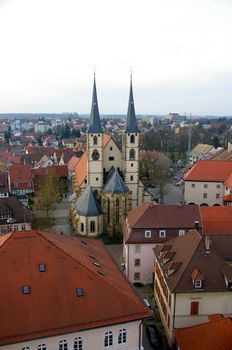
Bad Wimpfen, Germany. November 2010.
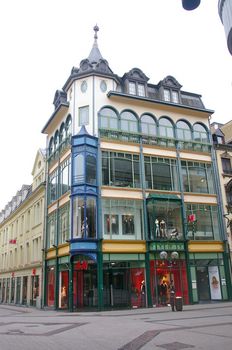
Luxembourg City. November 2010.
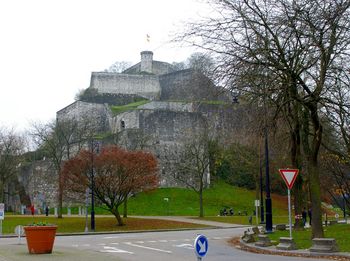
Namur, Belgium. November 2010.
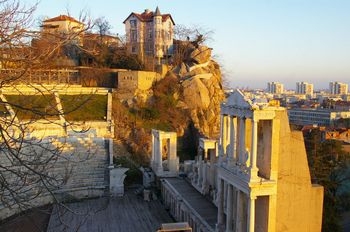
Plovdiv, Bulgaria. December 2010.
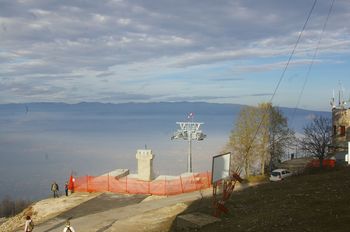
Skopje, Macedonia. December 2010.
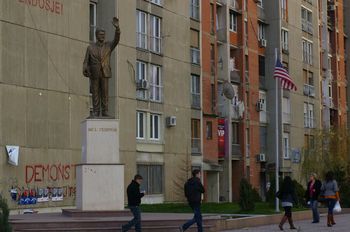
Pristina, Kosovo. December 2010.
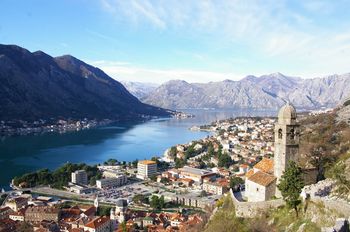
Kotor, Montenegro. December 2010.
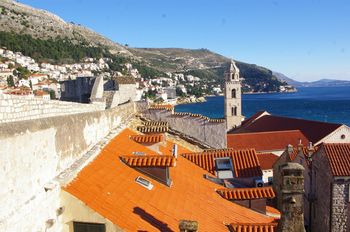
Dubrovnik, Croatia. December 2010.
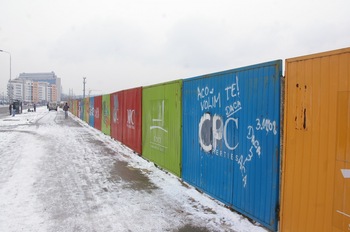
Belgrade, Serbia. December 2010.
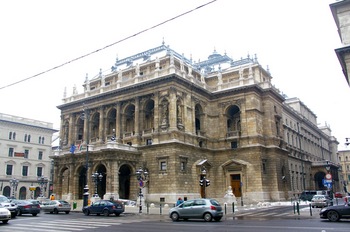
Budapest, Hungary. December 2010.
|
Who Are We? The Samizdata people are a bunch of sinister and heavily armed globalist illuminati who seek to infect the entire world with the values of personal liberty and several property. Amongst our many crimes is a sense of humour and the intermittent use of British spelling.
We are also a varied group made up of social individualists, classical liberals, whigs, libertarians, extropians, futurists, ‘Porcupines’, Karl Popper fetishists, recovering neo-conservatives, crazed Ayn Rand worshipers, over-caffeinated Virginia Postrel devotees, witty Frédéric Bastiat wannabes, cypherpunks, minarchists, kritarchists and wild-eyed anarcho-capitalists from Britain, North America, Australia and Europe.
|






Recent Comments