We are developing the social individualist meta-context for the future. From the very serious to the extremely frivolous... lets see what is on the mind of the Samizdata people.

Samizdata, derived from Samizdat /n. - a system of clandestine publication of banned literature in the USSR [Russ.,= self-publishing house]

Hypoallergenic cats

I was trawling through an ancient b3ta.com newsletter, as you do, earlier in the week, and came across these profundities. But since the profundities concern cats, I saved them until today, Friday being catblogging day, or so I seem to recall reading somewhere. Anyway, this is what b3ta.com says, so profoundly:

We can’t imagine anything worse than being allergic to cats – it’d be like having an allergy to life itself. However, help is at hand for sufferers. Boffins are busy meddling with nature to create a moggy that won’t provoke an allergic reaction, and the first kittens are due in 2007. A snip at just $3500. BTW: When people claim they’re allergic to cat fur, what they mean is that they’re allergic to cat urine, cat skin or cat saliva that’s become airborne by being secreted on the fur.

And b3ta.com then supply this link to allerca. Says allerca at the top of its website:

WELCOME TO ALLERCA. ALLERCA is working to produce the world’s first hypoallergenic cats. These cats will allow some of the millions of people allergic to cats to enjoy the love and companionship of a household pet without suffering from allergy symptoms.

If you obsess only about the doings of politicians, you are liable to miss good news stories like that. Name me one politician who ever did anything as splendid as inventing a non-allergic-type cat. Actually, do not name any such politicians, because there may have been one or two. But you get my point.

Boffins meddling with nature, enough to make you purr, eh? Remind me to return to this topic in 2007, because strictly speaking it has not yet been done.

My apologies to all those readers of samizdata.net who are allergic to catblogging. Also, it seems that I am about six weeks late with this happy announcement. But, it is the kind of thing you can miss, so never mind about that.

Buzz

Instapundit supplies two interesting (at first I thought that was about bloggers deep under the earth) recent links (among the usual zillion other interesting links), which in their different ways both illustrate how difficult it is being a Big Business person these days.

The first is to this Wall Street Journal piece, about how big business is now using the buzz on the Internet, blogs, etc., to find out what people really thing of their latest products.

People who rave online about their favorite new gadget – or gripe about the products they hate – are turning heads in the business world.

The growing popularity of blogs and other online forums has prompted companies to pay more attention to what is being said about them on the Internet, and has given rise to a new kind of market research aimed at finding useful information in the sea of online chatter.

For more than a year, car-maker Volkswagen AG has used a service by Techdirt, Foster City, Calif., to find out which new technologies are generating the most buzz online, with the aim of integrating some of them in new automobiles. “I think [Web sites] are very important as a source of unfiltered information, but there’s too much information out there already. Frankly, we don’t have time to keep track of all these things,” says Daniel Rosario, a senior engineer in Volkswagen’s electronics research lab in Silicon Valley.

There is no link to Techdirt in the piece, but presumably they mean these guys. → Continue reading: Buzz

Spammers spammed (but too successfully)

I am confused (as Americans often say when they are about to be nasty in a very unconfused way – but I really am rather confused) by this BBC report about a scheme to make spammers wish that their parents had been further into birth control than they were, at about the time when they, the spammers, were actually born.

Here is the first paragraph:

A plan to bump up the bandwidth bills of spammers seems to be getting out of control.

But from what I can grasp of the rest of the article, what the BBC calls “getting out of control” is what the rest of use would describe as “working extremely well”.

Earlier this week Lycos Europe released a screensaver that bombards spam websites with data to try to increase the cost of running such sites.

But…

…which seems an odd word to use here. I would have gone with “And”…

…analysis shows that, in some cases, spam websites are being completely overwhelmed by the traffic being directed their way.

As that Sergeant Major (played by Windsor Davies) in It Ain’t Half Hot Mum used to say; “Oh dear. How tragic.”

But monitoring firm Netcraft has analysed response times for three of the sites the screensaver targets and has found that the campaign is being too successful.

What was that? Too successful?

Two of the sites being bombarded by data have been completely knocked offline. One other site has been responding to requests only intermittently as it struggles to cope with the traffic the screensaver is pointing its way.

Too successful. Too successful!!! Sounds like for once the punishment has fitted the crime perfectly.

But yes.

The campaign has come under fire from some corners of the web.

Many discussion groups have said that it set a dangerous precedent and could incite vigilantism.

“If you do manage to swamp the spammers then you set yourself up for more attacks in return,” said Graham Cluley, senior technology consultant at anti-virus firm Sophos.

Which, I suppose, would make this Cluley man a Sophist, twice over. This is like saying that if you use force against a burglar, he might get angry and burgle you even more ferociously in the future. As he might, I suppose. Best roll over and surrender. But I reckon that Cluley does not understand economics. I mean, if you were a spamster, would you make a point of picking a fight with people clever enough to have swamped your entire site?

This corner of the web (the corner that consists of me) is extremely attracted by the whole idea of what Lycos is doing here, and wonders what the downside of it is, if any. This corner of the web is in favour of what other corners of the web call “vigilantism”. To this corner of the web, this all sounds absolutely splendid.

But is this corner of the web missing something? What does this discussion group think?

The only real problem in what Lycos is doing seems, to this corner of the web, to be that the state, in all its various geographical manifestations, is minded to make it illegal. What is that thing that Perry keeps saying?

But so what? Even if this process is declared illegal, something resembling it could still proceed, could it not? If enough people wanted that? No? But at this point I really am rather confused.

A camera that takes line drawings

Time for some good news, in the form of a classic piece of techno-ingenuity that looks like turning a classic problem into a classic solution.

You know how, when you take photos with your cheap digital camera (everyone has cheap digital cameras nowadays), and when you use flash (everyone uses flash), you get that horrible dark shadow behind and to one side (depending on exactly where the flash thingy is situated next to the camera lens). A problem, right? I think so. When I take digital photos, I am prepared to endure agonies of bad lighting and blurriness rather than resort to flash and its pictorial indignities.

But this guy has turned this problem into a solution. Solid shapes give you annoying little black lines do they? So why not, he said to himself, have four flash guns, all around the lens, not just one, and that way, get yourself black lines everywhere, wherever anything sticks out?

The multi-flash camera captures real life images and renders them in a non-photorealistic line-form. …

So what use is that? A lot, it turns out.

The multi-flash camera’s non-photorealistic images look like line drawings, but have an advantage over hand made line drawings for they are able [to] depict real-world scenes with precision and, most importanly, speed impossible for the human eye/hand. …

Think of all those instructions manuals where, in order to explain things properly, they cannot use photos, because photos are not clear enough, and must instead resort to laboriously created line drawings. Well, this gadget creates line drawings like that automatically.

Multi-flash imaging promises to facilitate and pioneer complicated rendering of mechanical objects, plants, or internal anatomical parts. Because of its ability to detect depth discontinuities, it may render shapes that would otherwise be difficult to perceive. For instance, a car engine could easily be captured in a non-photorealistic image and then superimposed over an actual photograph of the engine resulting in a superior manual illustration (see example below). Alternatively, a skeleton with complex network of white bones could be efficiently reproduced for instructional medical visualization. Additionally, an endoscopic camera enhanced with the multi-flash technology promises to enhance internal anatomical visualization for researchers and medical doctors.

I wonder if the kind of cheap digital cameras you can now buy for $200 will soon have this kind of facility. Personally, I look forward to a time when cheap digital cameras have far more, and more flexible, flash devices on them than they have now. My first digital camera had only one flash device of course, but it was such that I could take pictures from one direction and point the flash at the object of my attentions from a quite different direction. Too bad it never worked properly. You can get flash devices for a digital camera like this now, but they cost far more than I care to pay. If this new device draws attention to the good things that digital flash can do, that might change.

Which is all rather incidental. My main point here is: what a brilliant idea.

UPDATE: By the way, as a commenter reminded me by asking about this, I should have said that this camera is a whole lot better than anything Photoshop can do along these … lines! (Ha!) Follow the second link above, scroll down a bit, and you come to a set of six pictures. These show this difference very clearly, and it is all the difference.

The Olympic Games and London crime – I propose a deal

What she said.

What she (the Telegraph‘s Janet Daley) started by saying was what they did in New York to bash the crime numbers down to a state bordering on civilisation from a state not bordering on barbarism. And then she turns her attention to the very contrasting state of affairs that still pertains in London, as we here hardly need reminding.

You will have noticed that this is precisely the opposite of what is happening here. Try ringing the police to tell them about an act of vandalism that is going on before your eyes and you will be treated with scarcely concealed ridicule: we’ve got more important things to worry about than some kids smashing up a building site. Never mind that the kids who have got away with that are likely to conclude that they can get away with pretty much anything.

Now New Yorkers have their city back and we are losing ours. …

I have a suggestion.

The politicos are cranking up this London Olympic bid. Well, all those of us who care more about people getting murdered than we do about people running marathons should offer the Olympiacs a deal. You can have your damned games if, by the time they come here, you have got on top of London’s crime numbers. If, on the other hand, you obsess about the Olympics and regard harping on about murder as a mere distraction, then we should all flood the internet with “London: World Capital of Crime – Olympians Do Not Come Here – You Will All Be Murdered” propaganda. “London Welcomes The Olympians” – “Now Hand Over Your Wallet Or Die”, etc.

Could some computer graphics genius perhaps do something with those Olympic ring things to turn them into a piece of anti-crime anti-the-political-causes-of-crime propaganda? Slosh some blood on them, perhaps, or make a couple of the rings into the front end of a double-barrelled shotgun.

The good thing about this arrangement is that I believe that it would work spontaneously. No one would have to be in charge of anything. But, if any of the people who do think that they are in charge of the Olympic bid tell us that we are being unpatriotic if we go on about crime in London instead of ignoring it and suffering in silence, they will be spontaneously attacked, and in a way that will really hurt them, with globally circulated (especially in Paris of course) bad news about what an appallingly unsuitable city London would be to hold these stupid games. Shut up, they will say. And the reply will be: no. Either you help us, or we screw you. That will be our message to them. And I think, after they have had a taste of it, that it might prove rather persuasive.

Which means that it is possible is that the Olympiacs might actually be recruited as allies in the campaign sketched out so vigorously by Janet Daley. Which means that something along the lines she says might – quite soon actually – start being done.

If London did do a New York with its criminal arrangements, as a result of the Olympics coming here, I for one could easily put up with a few weeks of Olympiac madness.

Praise for the BBC

Like many libertarians I often attack the BBC. I doubt that it is actually more statist in the opinions it supports than ITV and C4, or, perhaps, than ABC, CBS, NBC and CNN in the United States – but with the licence fee (the tax on television owners that goes to the BBC) it hurts more to experience the endless blather about Welfare State spending being the ultimate good and the solution to every problem being another government regulation.

However, the BBC does sometimes get things right. Yesterday, when reporting yet another Chinese coal mine accident, the BBC reporter said “and this makes 7,000 deaths over the last year in the state owned Chinese coal mining industry” and pointed out that there were claims that the Chinese government had cut corners on safety in order to boost production (shades of Stalin’s “war on the limiters”).

In reporting the large numbers of deaths (i.e. that the accident was not an isolated incident) and that the industry was state owned (i.e. that the deaths were not caused by wicked businessmen), the BBC showed a depth of reporting and a fairness that should be praised.

Top of the Pops admits defeat

I feel the fluttering of the wings of history in this decision. Cultural history, anyway.

Top of the Pops is being relegated to BBC2 after 40 years as BBC1’s bastion of chart music, the broadcaster announced yesterday.

Once required viewing for generations of teenagers, a slump in viewing figures has pushed the pop music chart programme on to the second channel. In the 1970s the show had audiences of 14 million but last week it pulled in just 3.1 million viewers.

The first episode, broadcast on Jan 1, 1964, was presented by Jimmy Savile and the first act to perform were the Rolling Stones with I Wanna Be Your Man.

Since then, the theme music and presenters have changed but the formula remained the same, with artists considering an appearance on the show a sign that they had officially “made it” in the British pop world.

Although a relaunched edition was watched by 5.5 million viewers last November, nearly three million had deserted the show by the summer.

Now the BBC hopes that it can win back audiences with a new version which is to go out next spring on Sunday evenings.

Historic? Yes, I do truly think so. For I think what this is a symptom of is the end of the Age of Pop Music. Internet downloads, computer games, and the fact that half the tunes were composed when your granny was in her teens mean that Youth, as it has been for some time now, is wandering off into different directions altogether, of a nature that I, and the kind of people who run Top of the Pops, cannot possibly divine. Taste is fragmenting, and what is now Number One is no longer a matter for the BBC to decide on behalf of the Youth of the Nation. We each decide for ourselves. It no longer matters to each of us what anyone else likes.

Personally, I have just lately been listening to a terrific little country and western tune called “Tell Me About It”, with great c&w guitar and drums backing by who knows what instrumental combination of musicians, and in which the vocals are shared by the glorious Tanya Tucker and one Delbert McClinton, of whom I had not previously heard. It is track number 13 on The Very Best of Tanya Tucker (“Another European compilation – I don’t think there’s anything unusual here” – Amazon.com). This is my current favourite pop tune, but you will not hear it any time soon on Top of the Pops, because none of us any longer need Top of the Pops to find out about our current favourites.

Not French after all

Dave Barry, of all people, links to this delightful news report of a surprising French legal judgement to the effect that a very French film indeed, called A Very Long Engagement, is not actually French.

The film was made with the help of state funds from France’s National Centre for Cinematography. In its decision, the court said that 2003 Productions was a Trojan horse, a company founded by Warner Bros. “to benefit from financial help even though [the fund] is reserved for the European cinematographic industry.”

So, a Trojan film. Sneaky people, those Trojans.

Jeunet is known in North America as the filmmaker behind 1997’s Alien Resurrection and 2001’s Amélie.

A man with previous, perpetrating popular movies.

French actress Audrey Tautou, who played the title role in Amélie, also stars in A Very Long Engagement.

And we all know that Amélie was so good it is not even put in the foreign language racks at Blockbuster. That was not a French film either. It was a film.

“This film, which tells a French story, adapted from a French novel, filmed entirely in France, in French, with the participation of more than 2,000 French people, over thirty French actors and actresses and about 500 French technicians for 18 months, is suddenly no longer considered a French film!” 2003 Productions said in a press release.

The good news is that, assuming I understand this petit contretemps (if contretemps is a girl that should be petite) correctly, this means that this movie will not be getting French government money. Which is nice. This being the case, I feel sure that I speak for us all here at samizdata.net when I say that there ought not to be any French films at all.

Yes, that assumption is correct. Here is confirmation of that, from comingsoon.net, which they got from Variety:

A Paris court has ruled that director Jean-Pierre Jeunet’s A Very Long Engagement is really a Hollywood movie, and therefore not sufficiently French to qualify for public subsidies …

If foreigners, British foreigners especially, continue buying up French real estate maybe it will eventually be decided that France is not French either.

Quote of the day

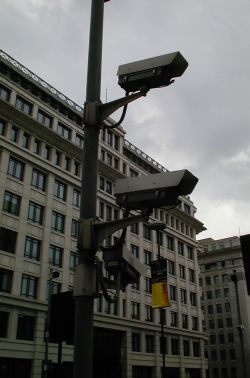
Sensible blog Spyblog, does an excellent job of pointing out how the state likes to keep an eye on us via CCTV systems, ID cards and by collecting our DNA. As a servant of the state it worries me, and if it worries me then it really ought to worry you.
Dave of The Policeman’s blog

The state does not protect us and we may not effectively protect ourselves

Last night I had some friends and business associates around for dinner here in Chelsea. It was an agreeable evening at which some interesting conversations were had, some good food was enjoyed and some nice wine drunk.

And at around 7:00pm while all that was happening in my home, some 50 yards away my neighbour John Monckton was stabbed to death and his wife seriously injured by a pair of young vermin who broke into their house.

Of course the state forbids people like the Moncktons from owning the means to defend themselves. And the CCTV cameras on our street? I cannot tell you how much better they must make everyone around here feel. The police who have closed off my street are festooned with all manner of weapons and body armour but given that their actual role in modern Britain is little more than clearing up the mess after another disarmed householder has been butchered, perhaps waterproof coveralls and mops would be more suitable equipment for our tax funded ‘guardians’.

Bitter? You bet. The world is full of predators and we are required to face them disarmed and as much in fear of the law as the criminal who attack us.

The state is not your friend.

Public life, private life and public trust – reflections on two consecutive TV programmes

It was a peculiar juxtaposition of programmes. First I watched the latest episode of Spooks, on BBC1 TV, and then I watched the BBC Ten O’Clock News, without pushing any buttons on the TV because that was on BBC1 TV also.

The News was dominated by David Blunkett‘s difficulties, largely self-inflicted, it would appear. There will be an independent inquiry into whether Blunkett fast-tracked a visa application for his ex-lover’s nanny, and the Prime Minister announced that he was confident of the outcome, which was an odd combination of circumstances. If the Prime Minister is so sure, why the independent inquiry? Why can he simply not say why he is so sure of the impeccability of his Home Secretary? And as another talking head opined, it would now take a brave independent inquirer to fly so completely in the face of Blair’s clear statement of what he wants the answer to be. Which means that if the independent inquiry does endorse the Prime Minister’s view, the suspicion will remain that this was because of the Prime Minister publicly demanding that answer instead of because the answer is true. So whichever way the independent inquiry goes, the stink will either be strong, or strong.

Spooks (a programme I have had cause to mention here before) was a even more lurid soap opera than usual – of junior Ministerial wrongdoing (he murders a girl, then resigns to spend more time with his family (sound familiar?)), of a famed rock and roll couple (she has her baby kidnapped to keep them in the news, but it goes wrong, the baby dies, and he finally murders her in a rage and then shoots himself). Downing Street was presented throughout as relentlessly manipulating a deranged state of public sentimentality (not least in calling in the Spooks to sort the matter in the first place, instead of leaving it to the Police), as in the grip of electoral desperation, as total hypocritical, and generally as a huge cover-up machine. If this show is any clue as to the state of public opinion, out there in Middle England, we have our answer to that question about why the Prime Minister does not want to explain why he believes his Home Secretary to be innocent of all wrongdoing. Middle England would not trust such pronouncements further than it could spit them. The Prime Minister is not trusted. → Continue reading: Public life, private life and public trust – reflections on two consecutive TV programmes

Blunkett’s fall will mean far less that it seems

If David Blunkett falls from office because of his shenanigans between the sheets, I do hope that civil rights activists will not see this as a sign from God (be it Cthuhlu or whoever) that the truly perilous state in which British liberty stands is about to take a turn for the better.

Nothing Blunkett has ever done was done under his authority alone. The accelerating rate at which common law is set aside and ancient liberties debased have been the product of decades of antipathy to non-collectivist rights and individual liberty, a process which was well under way when David Blunkett’s Tory predecessor was in power: would-be future Prime Minister Michael ‘a touch of the night’ Howard.

The fall of a ringwraith might be cause for some brief rejoicing (I will certainly be raising a glass or two that day!) but please remember there are plenty more where he came from. Sauron lives at Number 10 Downing Street, not in the office of the Home Secretary.