We are developing the social individualist meta-context for the future. From the very serious to the extremely frivolous... lets see what is on the mind of the Samizdata people.
Samizdata, derived from Samizdat /n. - a system of clandestine publication of banned literature in the USSR [Russ.,= self-publishing house]
|
Football: is the bubble about to fade and die?, asks Jim Thomas. No Jim Thomas, it is not. It may be about to burst. But bubbles don’t fade. Further figures of speech surge forward. “Damp squib”, “Macbeth levels of scheming”, “weathering the storm”, “walking towards the precipice”, “belt tightening”. Mix and mismatch at will.
Aside from this linguistic oddity, this short piece is quite interesting, listing some of the financial grief now afflicting various English soccer clubs. Thomas singles out Arsenal and Aston Villa for praise. Apparently, they have not been spending loads of money recently, hence their ability to weather the storm, avoid the precipice, etc.
Read about it here. Victorious Afghan Hamid Hassan blogs about it here:
After the match, I had to go to do a post-match media conference and they all wanted to know how it felt to beat USA, but the opposition didn’t matter to me. I was just happy to win another cricket match.
I love getting the chance to play against different countries and this was the first time we had ever played USA in an international match. I could never have dreamed when I was young, that I would one day play them in a cricket game.
I am a big fan of American television and movies and my favourite film is Rocky – I vividly remember watching it when I was growing up – and one of my heroes is Sylvester Stallone.
I think that there is a similarity in the story of Rocky and the Afghanistan cricket team – we both started at the bottom and gradually made our way up the rankings. …
Gradually? I thought Rocky did it with one fight.
Seriously though, it’s fun to see a guy so gripped by the American ideal of the common man excelling, and as a result … defeating America.
The way Hamid Hassan writes about Rocky and Silvester Stallone and so on makes me also think of this piece, about how the imminent decline into relative insignificance of the USA is once again being oversold, in which Joshua Kurlantzick says:
Most important, the United States is a champion of an idea that has global appeal, and Asia is not.
Although my part of the blogosphere is very anti-Obama just now, what with Obama seemingly hell-bent on ruining the USA’s economy, the rise of Obama to being President of the USA must look like a very similar kind of story to Rocky, if you are someone like Hamid Hassan.
Ballet by elephants.
– Mike Carlson, commentating for BBC1 TV during the first quarter of Super Bowl XLIV, describes the Indianapolis Colts offence as they run in the first touchdown. 10-0 Colts at the end of the first quarter.
This image makes me smile and I wish him every success in a highly competitive area of sport shooting. How lucky he is not to be British.
Sir Bobby Robson, former manager of Newcastle Utd, England and a brace of successful European clubs (such as PSV Eindhoven, Barcelona), has died after a brave fight against cancer. But the club that in many ways will feel the pain of his loss the most is Ipswich Town FC, the club I have supported since I was a young boy
He took this relatively unfashionable club on the UK’s east coast to the heights of success in the FA Cup and in European competition, coming also very close to winning the old domestic First Division. His teams were glorious to watch. He conducted himself with grace, good humour – apart from the occasional tiff with the media – and had an infectious love of the sport that inspired football fans and players from all clubs. RIP.
Tomorrow morning, the third test in the current five match Ashes series begins in Birmingham, weather permitting. Ashes as in cricket, between England and Australia, which is as big as test cricket (i.e. the long-drawn-out goes-on-for-days-and-days variety) in England ever gets. Both Michael Jennings and I have had a break from blogging in recent weeks, but earlier this evening we got together to record a conversation about it all, and here it is. We rambled on for just under forty minutes.
However, two blemishes should be noted. First, for some reason, there are occasional little bursts of crackly sound, of the sort that used mysteriously to afflict gramophone records and which caused all classical fans other than vinylphiliacs to switch to CDs. These noises are not that obtrusive, given that this is a mere chat between mates, but they are a mild irritation. Apparently something weird happened every now and again in Michael’s laptop, which was what we recorded into. Sorry about that.
Second, I (Brian) referred to the current England player Stuart Broad as “Chris” Broad, which is a quite common error because Chris Broad, Stuart Broad’s father, was also a test match cricketer. Nevertheless, apologies again.
Apart from that, and if you think you might like this, do what we did. Enjoy.
“It is often wrongly assumed that the free market is always on the side of life’s heavy hitters. But sport gives plenty of examples that it is the market which corrects received wisdom in favour of untrumpeted stars. The internet has done something similar in publishing.”
What Sport Tells Us About Life, by Ed Smith. Pages 88-89.
Brian Micklethwait had thoughts about this short and excellent book a few months ago. A good book to read as the Ashes cricket series continues with the second Test at Lord’s starting later today. Bliss.
If you wondered why Formula 1 motor racing sometimes has all the excitement and crowd-pleasing qualities of a German art-house movie without subtitles, then Patrick Crozier will explain it to you here and here. I recall him making these and related points in a talk at Brian Micklethwait’s place a few years ago. Very interesting it was.
Even if you are not a sports fan or motoring enthusiast, the broader lessons of how a sport can regulate itself into narcolepsy are worth reflecting on.
I guess it was inevitable. Football, like other aspects of life, has been hit by the credit crunch. In the case of Southampton, a team that once graced the top flight of the English league and has boasted some notable cup wins – famously winning the FA Cup in the 1970s – it has suffered terribly. It is now in danger of extinction. My own team, Ipswich Town FC, was in administration a few years ago although it has been since taken over by Marcus Evans, the man who owns the eponymous conference organising company. Ipswich also has appointed former Manchester Utd and Ireland international player Roy Keane as its manager (gulp, nervous laughter).
Henry Winter, one of the main football scribes in the print press, believes Southampton’s local council should buy the team. He argues that the council and the lucky taxpayers of the south coast will be getting a bargain. Maybe. But it is not the business of councils to be spending money on what has been the money pit of professional sports, particularly when a place such as Southampton has many competing demands for public funds, such as policing, garbage collection, road maintenance and so on. As I said, when my club was in financial dire circumstances, no doubt some people would have been happy to see the Suffolk taxpayer foot the bill to put The Blues back on top. But wiser heads prevailed.
The sad fact is that football clubs can die if the finances run out. We have seen teams like Leeds Utd hit by unsustaintable debts in far happier economic conditions. Even mighty Man Utd has heavy debts stemming from the leveraged buyout by the Glazers, while Chelsea is kept in the lifestyle to which it is accustomed due to Abramovich’s huge Russian oil wealth. The economics of sports clubs are a murky affair at the best of times. So my message to Southampton fans is that it is better for a hard-nosed private investor to sort out the club than a bunch of politicians. If Southampton really is a bargain, why are public funds needed – surely a canny entrepreneur will spot the opportunity? I hope someone does.
I sometimes wonder why as, a football fan, I put myself through all this heartache. My wife shakes her head in wonderment.
Well, in a change from my usual ruminations on current affairs, I thought I would mention that I am planning to take a scuba diving course. I am off to my regular haunt of Malta/Gozo this late-summer to do a PADI course, as well as relax down there. Yes, you have guessed it, people blog about scuba diving as well as many other pastimes these days. As a keen amateur sailor, I have always wanted to have a go at exploring what lies under the waves and the blue seas surrounding Gozo, in particular, look just too damn inviting. If any readers have any tips or suggestions on how to avoid rip-offs or other problems, I’d be very pleased to hear them.
The island of Gozo seems to be packed with diving school firms, such as these guys. The PADI courses, which are internationally recognised, are a good example of how a benchmark for a particular activity can arise without any central government agency decreeing it.
“Rome wasn’t built in a day. But I wasn’t on that particuar job.”
– Brian Clough, the late English club football manager who did not suffer from the national trait of false modesty.
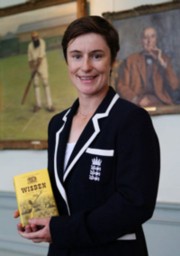
Wisden, the cricket-lover’s bible (if there can be a new bible every year), yesterday announced its five Cricketers of the Year. It’s an odd arrangement, because you can only win this title once. So, you can be a totally dominant cricketer, but because you also did fairly well in 2003 and were picked then, you can’t be picked now, again. This year’s crop are accordingly the usual collection of pretty good cricketers who did very well, but who didn’t exactly grab many headlines: perennial nearly-man James Anderson, the best of a rather bad lot of England bowlers, someone called Benkenstein who did well for champion English county Durham, and a couple of the South Africans who recently beat England in England and then Australia in Australia. But one cricketer on the latest list really has done indisputably great things in the previous few months:
Taylor and the England team had been in magnificent form leading up to their World Cup triumph: early in 2008, they retained the Ashes by winning only their fourth Test in Australia; they then went through the entire summer undefeated. Taylor was instrumental in both achievements, and established …
Pay attention:
… herself …
Indeed.
… as the leading batsman in women’s cricket after sealing victory in the Bowral Test.
Said Wisden’s Scyld Berry, of Claire Taylor, the first woman ever to receive this particular form sporting recognition:
Beating Australia in Australia is the objective for all cricketers, at least in England, and Claire almost single-handedly saw England through to victory and the retention of the Ashes in Australia last year, not to mention her success in the World Cup just a couple of weeks back. It would be a sin of omission, an act of prejudice, to exclude her from the accolade.
I wonder if a woman will ever play in one of the international men’s teams, so to speak. The immediate response would probably be: never, except maybe, one day, as a spin bowler, before then collapsing dead of exhaustion. Women, it is now assumed, just don’t have the necessary strength or stamina to challenge the men as top class cricketers. Well, power is certainly one way to do well as a cricketer, as men like Botham, and now Flintoff (who by the way took a match- and one-day series-clinching hat trick yesterday against the West Indians), have proved. But some quite small, even slight, men have excelled at cricket, especially as batsmen. Surely the real reason women do not now regularly challenge men at cricket is that until recently few women have played cricket at all, a state of affairs that is now changing quite fast. Because of the example of women like Claire Taylor, it will probably change quite a bit more in the near future.
|
Who Are We? The Samizdata people are a bunch of sinister and heavily armed globalist illuminati who seek to infect the entire world with the values of personal liberty and several property. Amongst our many crimes is a sense of humour and the intermittent use of British spelling.
We are also a varied group made up of social individualists, classical liberals, whigs, libertarians, extropians, futurists, ‘Porcupines’, Karl Popper fetishists, recovering neo-conservatives, crazed Ayn Rand worshipers, over-caffeinated Virginia Postrel devotees, witty Frédéric Bastiat wannabes, cypherpunks, minarchists, kritarchists and wild-eyed anarcho-capitalists from Britain, North America, Australia and Europe.
|





Recent Comments